
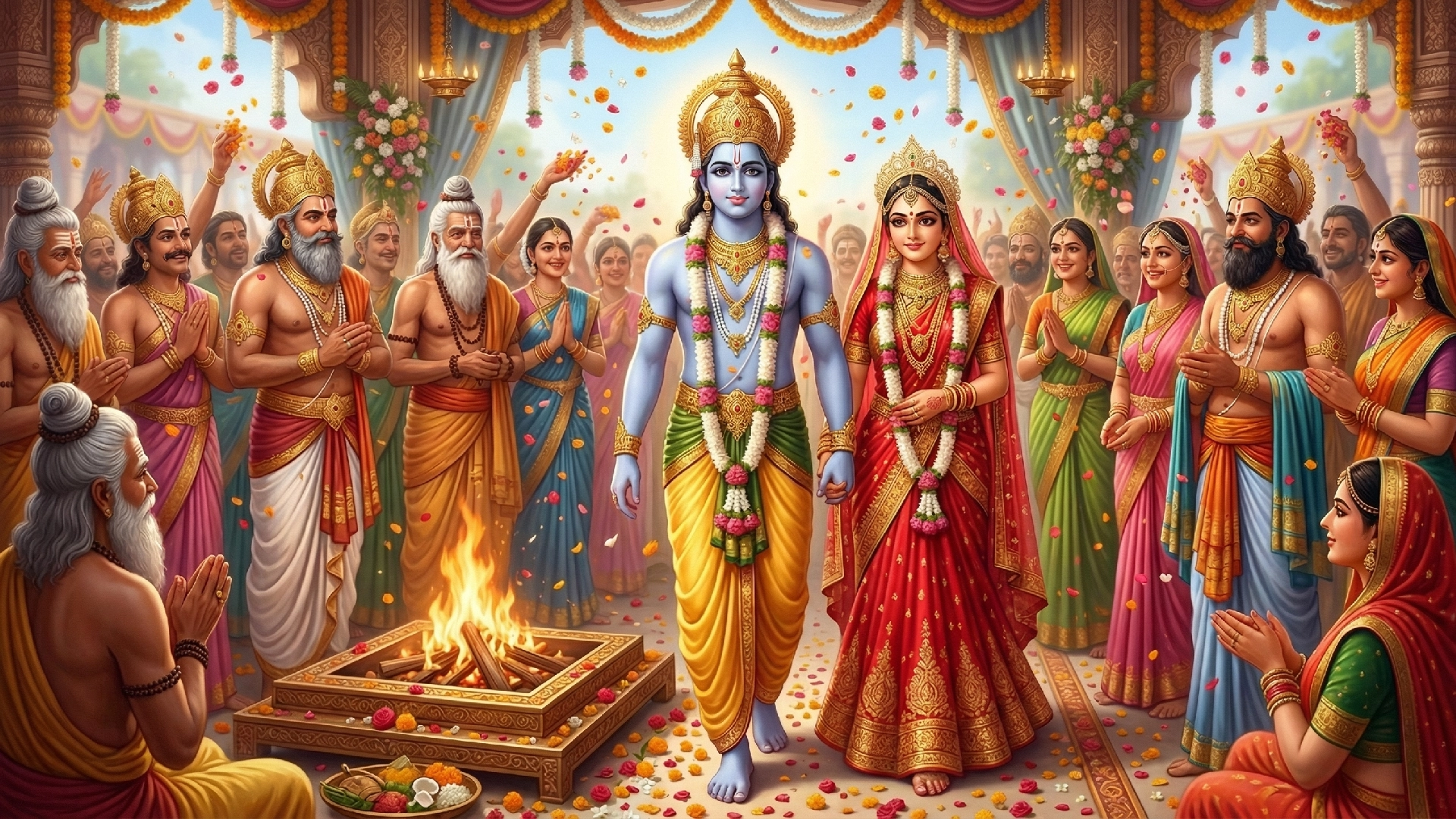
श्री सीता-राम विवाह, विदाई – The wedding of Shri Ram and Sita ji and Their departure
छन्द :
* पहिचान को केहि जान सबहि अपान सुधि भोरी भई।
आनंद कंदु बिलोकि दूलहु उभय दिसि आनँदमई॥
सुर लखे राम सुजान पूजे मानसिक आसन दए।
अवलोकि सीलु सुभाउ प्रभु को बिबुध मन प्रमुदित भए॥
भावार्थ:-कौन किसको जाने-पहिचाने! सबको अपनी ही सुध भूली हुई है। आनंदकन्द दूलह को देखकर दोनों ओर आनंदमयी स्थिति हो रही है। सुजान (सर्वज्ञ) श्री रामचन्द्रजी ने देवताओं को पहिचान लिया और उनकी मानसिक पूजा करके उन्हें मानसिक आसन दिए। प्रभु का शील-स्वभाव देखकर देवगण मन में बहुत आनंदित हुए।
Who could care to recognize anyone else when they were all so deeply immersed in joy and had forgotten even their own selves? As they gazed upon the very embodiment of bliss, Bridegroom Shri Ram, delight overflowed on both the Groom’s and Bride’s sides. The all-wise, all-knowing Shri Ram recognized the Gods present in the gathering and, offering them reverence within, respectfully welcomed them with seats in His heart. Moved by the Lord’s humility, the Gods rejoiced inwardly.
दोहा :
* रामचन्द्र मुख चंद्र छबि लोचन चारु चकोर।
करत पान सादर सकल प्रेमु प्रमोदु न थोर॥321॥
भावार्थ:-श्री रामचन्द्रजी के मुख रूपी चन्द्रमा की छबि को सभी के सुंदर नेत्र रूपी चकोर आदरपूर्वक पान कर रहे हैं, प्रेम और आनंद कम नहीं है (अर्थात बहुत है)॥321॥
Everyone’s beautiful eyes drank in the Moon-like radiance of Shri Ram’s face, just as the chakor bird lovingly feeds on moonlight. Love and joy knew no bounds.
चौपाई :
* समउ बिलोकि बसिष्ठ बोलाए। सादर सतानंदु सुनि आए॥
बेगि कुअँरि अब आनहु जाई। चले मुदित मुनि आयसु पाई॥1॥
भावार्थ:-समय देखकर वशिष्ठजी ने शतानंदजी को आदरपूर्वक बुलाया। वे सुनकर आदर के साथ आए। वशिष्ठजी ने कहा- अब जाकर राजकुमारी को शीघ्र ले आइए। मुनि की आज्ञा पाकर वे प्रसन्न होकर चले॥1॥
Sensing that the auspicious moment for the wedding had arrived, Guru Vashishth respectfully summoned Sage Shatanand. Upon hearing the call, the Sage came forward with full reverence. Vashishth ji said, “Please go now and bring the Bride without delay.” Receiving the command with joy, Shatanand ji gladly departed to escort Sita ji to the marriage pavilion.
* रानी सुनि उपरोहित बानी। प्रमुदित सखिन्ह समेत सयानी॥
बिप्र बधू कुल बृद्ध बोलाईं। करि कुल रीति सुमंगल गाईं॥2॥
भावार्थ:-बुद्धिमती रानी पुरोहित की वाणी सुनकर सखियों समेत बड़ी प्रसन्न हुईं। ब्राह्मणों की स्त्रियों और कुल की बूढ़ी स्त्रियों को बुलाकर उन्होंने कुलरीति करके सुंदर मंगल गीत गाए॥2॥
Upon hearing the message from the family priest, Sage Shatanand, the wise Queen Sunaina and her companions were filled with joy. She gathered the wives of the Brahmins and the elderly women of the household, who then performed the traditional family rituals and sang sweet, auspicious songs.
* नारि बेष जे सुर बर बामा। सकल सुभायँ सुंदरी स्यामा॥
तिन्हहि देखि सुखु पावहिं नारी। बिनु पहिचानि प्रानहु ते प्यारीं॥3॥
भावार्थ:-श्रेष्ठ देवांगनाएँ, जो सुंदर मनुष्य-स्त्रियों के वेश में हैं, सभी स्वभाव से ही सुंदरी और श्यामा (सोलह वर्ष की अवस्था वाली) हैं। उनको देखकर रनिवास की स्त्रियाँ सुख पाती हैं और बिना पहिचान के ही वे सबको प्राणों से भी प्यारी हो रही हैं॥3॥
The wives of the Demigods, disguised as graceful and youthful earthly women, radiated natural beauty and charm. Their presence brought immense joy to the hearts of the womenfolk. Unaware of their divine nature, the women embraced them with such love and warmth as if they were dearer than life itself.
* बार बार सनमानहिं रानी। उमा रमा सारद सम जानी॥
सीय सँवारि समाजु बनाई। मुदित मंडपहिं चलीं लवाई॥4॥
भावार्थ:-उन्हें पार्वती, लक्ष्मी और सरस्वती के समान जानकर रानी बार-बार उनका सम्मान करती हैं। (रनिवास की स्त्रियाँ और सखियाँ) सीताजी का श्रृंगार करके, मंडली बनाकर, प्रसन्न होकर उन्हें मंडप में लिवा चलीं॥4॥
The Queen honoured them again and again, revering them as she would Goddess Uma, Goddess Rama, and Goddess Saraswati. Forming a graceful circle around the Bride, they joyfully adorned Sita ji and lovingly escorted Her to the marriage pavilion.
छन्द :
* चलि ल्याइ सीतहि सखीं सादर सजि सुमंगल भामिनीं।
नवसप्त साजें सुंदरी सब मत्त कुंजर गामिनीं॥
कल गान सुनि मुनि ध्यान त्यागहिं काम कोकिल लाजहीं।
मंजीर नूपुर कलित कंकन ताल गति बर बाजहीं॥
भावार्थ:-सुंदर मंगल का साज सजकर (रनिवास की) स्त्रियाँ और सखियाँ आदर सहित सीताजी को लिवा चलीं। सभी सुंदरियाँ सोलहों श्रृंगार किए हुए मतवाले हाथियों की चाल से चलने वाली हैं। उनके मनोहर गान को सुनकर मुनि ध्यान छोड़ देते हैं और कामदेव की कोयलें भी लजा जाती हैं। पायजेब, पैंजनी और सुंदर कंकण ताल की गति पर बड़े सुंदर बज रहे हैं।
Carrying auspicious items in their hands, Sita ji’s companions and the other ladies respectfully escorted Her to the marriage pavilion. Each graceful woman was adorned with the sixteen traditional embellishments, and their elegant movements resembled the gentle sway of an intoxicated elephant. Their melodious songs were so enchanting that even meditating Sages might abandon their trance, and the cuckoo of Kaamdev would fall silent in awe. The soft jingling of their toe rings, anklets, and delicate bangles created a harmonious rhythm, perfectly accompanying their sweet songs.
दोहा :
* सोहति बनिता बृंद महुँ सहज सुहावनि सीय।
छबि ललना गन मध्य जनु सुषमा तिय कमनीय॥322॥
भावार्थ:-सहज ही सुंदरी सीताजी स्त्रियों के समूह में इस प्रकार शोभा पा रही हैं, मानो छबि रूपी ललनाओं के समूह के बीच साक्षात परम मनोहर शोभा रूपी स्त्री सुशोभित हो॥322॥
The naturally radiant Sita ji shone brilliantly among the group of women, appearing as the very embodiment of beauty amidst a gathering of graceful young ladies. She stood out as the most exquisite and desirable presence among them all.
चौपाई :
* सिय सुंदरता बरनि न जाई। लघु मति बहुत मनोहरताई॥
आवत दीखि बरातिन्ह सीता। रूप रासि सब भाँति पुनीता॥1॥
भावार्थ:-सीताजी की सुंदरता का वर्णन नहीं हो सकता, क्योंकि बुद्धि बहुत छोटी है और मनोहरता बहुत बड़ी है। रूप की राशि और सब प्रकार से पवित्र सीताजी को बारातियों ने आते देखा॥1॥
Tulsidas ji exclaims, “I cannot describe the beauty of Sita ji, my intellect is limited, while Her grace is boundless.” As the Bridegroom’s party beheld Sita ji approaching, the very embodiment of beauty and virtue, their hearts were filled with wonder and reverence.
* सबहिं मनहिं मन किए प्रनामा। देखि राम भए पूरनकामा॥
हरषे दसरथ सुतन्ह समेता। कहि न जाइ उर आनँदु जेता॥2॥
भावार्थ:-सभी ने उन्हें मन ही मन प्रणाम किया। श्री रामचन्द्रजी को देखकर तो सभी पूर्णकाम (कृतकृत्य) हो गए। राजा दशरथजी पुत्रों सहित हर्षित हुए। उनके हृदय में जितना आनंद था, वह कहा नहीं जा सकता॥2॥
Everyone bowed to Sita ji in their hearts. And with just a glance at Shri Ram, all their desires felt fulfilled, leaving them feeling deeply grateful. King Dashrath rejoiced along with his Sons, and the joy that filled their hearts cannot be expressed in words.
* सुर प्रनामु करि बरिसहिं फूला। मुनि असीस धुनि मंगल मूला॥
गान निसान कोलाहलु भारी। प्रेम प्रमोद मगन नर नारी॥3॥
भावार्थ:-देवता प्रणाम करके फूल बरसा रहे हैं। मंगलों की मूल मुनियों के आशीर्वादों की ध्वनि हो रही है। गानों और नगाड़ों के शब्द से बड़ा शोर मच रहा है। सभी नर-नारी प्रेम और आनंद में मग्न हैं॥3॥
The Demigods bowed to Sita ji and showered divine flowers from above. Sages chanted Vedic hymns, the source of all auspiciousness. The air resounded with the beats of kettledrums and joyful singing, as men and women alike were swept away in waves of happiness and ecstatic bliss.
*एहि बिधि सीय मंडपहिं आई। प्रमुदित सांति पढ़हिं मुनिराई॥
तेहि अवसर कर बिधि ब्यवहारु। दुहुँ कुलगुर सब कीन्ह अचारु॥4॥
भावार्थ:-इस प्रकार सीताजी मंडप में आईं। मुनिराज बहुत ही आनंदित होकर शांतिपाठ पढ़ रहे हैं। उस अवसर की सब रीति, व्यवहार और कुलाचार दोनों कुलगुरुओं ने किए॥4॥
In this manner, Sita ji entered the marriage pavilion as the foremost Sages joyfully chanted Vedic hymns. At that sacred moment, the family priests from both sides (Vashishth ji and Shatanand ji) performed the religious rites along with various family customs and traditions.
छन्द :
* आचारु करि गुर गौरि गनपति मुदित बिप्र पुजावहीं।
सुर प्रगटि पूजा लेहिं देहिं असीस अति सुखु पावहीं॥
मधुपर्क मंगल द्रब्य जो जेहि समय मुनि मन महुँ चहें।
भरे कनक कोपर कलस सो तब लिएहिं परिचारक रहैं॥1॥
भावार्थ:-कुलाचार करके गुरुजी प्रसन्न होकर गौरीजी, गणेशजी और ब्राह्मणों की पूजा करा रहे हैं (अथवा ब्राह्मणों के द्वारा गौरी और गणेश की पूजा करवा रहे हैं)। देवता प्रकट होकर पूजा ग्रहण करते हैं, आशीर्वाद देते हैं और अत्यन्त सुख पा रहे हैं। मधुपर्क आदि जिस किसी भी मांगलिक पदार्थ की मुनि जिस समय भी मन में चाह मात्र करते हैं, सेवकगण उसी समय सोने की परातों में और कलशों में भरकर उन पदार्थों को लिए तैयार रहते हैं॥1॥
After completing the family customs, the Gurus joyfully invoked and worshipped Goddess Gauri and Lord Ganesh through the Brahmins. The deities manifested in visible forms, graciously accepted the offerings, and bestowed their blessings with great joy. Attendants stood ready with golden trays and urns filled with Madhupark (a sacred mixture of curd, ghee, and honey) and all other auspicious items the Sages might require for the rituals. Remarkably, the moment a thought of a specific item arose in the hearts of the Sages, the attendants had it prepared and presented without delay.
* कुल रीति प्रीति समेत रबि कहि देत सबु सादर कियो।
एहि भाँति देव पुजाइ सीतहि सुभग सिंघासनु दियो॥
सिय राम अवलोकनि परसपर प्रेमु काहुँ न लखि परै।
मन बुद्धि बर बानी अगोचर प्रगट कबि कैसें करै॥2॥
भावार्थ:-स्वयं सूर्यदेव प्रेम सहित अपने कुल की सब रीतियाँ बता देते हैं और वे सब आदरपूर्वक की जा रही हैं। इस प्रकार देवताओं की पूजा कराके मुनियों ने सीताजी को सुंदर सिंहासन दिया। श्री सीताजी और श्री रामजी का आपस में एक-दूसरे को देखना तथा उनका परस्पर का प्रेम किसी को लख नहीं पड़ रहा है, जो बात श्रेष्ठ मन, बुद्धि और वाणी से भी परे है, उसे कवि क्यों कर प्रकट करे?॥2॥
All the sacred rituals of the Raghu clan were lovingly explained by the Sun God himself and were carried out with utmost reverence. After the worship of the Demigods, Sita ji was gracefully offered a beautiful seat. The divine glances exchanged between Sita ji and Shri Ram ji were so subtle and filled with profound love that none could comprehend them. Their mutual affection was beyond the grasp of even the highest intellect, mind, or speech, how then could a mere poet ever hope to describe it?
दोहा :
* होम समय तनु धरि अनलु अति सुख आहुति लेहिं।
बिप्र बेष धरि बेद सब कहि बिबाह बिधि देहिं॥323॥
भावार्थ:-हवन के समय अग्निदेव शरीर धारण करके बड़े ही सुख से आहुति ग्रहण करते हैं और सारे वेद ब्राह्मण वेष धरकर विवाह की विधियाँ बताए देते हैं॥323॥
The Fire God himself appeared and joyfully accepted the oblations offered into the sacred fire. The four Vedas, taking the form of Brahmins, presided over the ceremony, guiding every ritual and procedure of the divine marriage with precision and grace.
चौपाई :
* जनक पाटमहिषी जग जानी। सीय मातु किमि जाइ बखानी॥॥
सुजसु सुकृत सुख सुंदरताई। सब समेटि बिधि रची बनाई॥1॥
भावार्थ:-जनकजी की जगविख्यात पटरानी और सीताजी की माता का बखान तो हो ही कैसे सकता है। सुयश, सुकृत (पुण्य), सुख और सुंदरता सबको बटोरकर विधाता ने उन्हें सँवारकर तैयार किया है॥1॥
How can one truly describe the world-famous Queen Sunaina, the revered wife of King Janak and the noble mother of Sita ji? The Creator adorned her by weaving together the finest glory, virtues, profound joy, and radiant beauty.
* समउ जानि मुनिबरन्ह बोलाईं। सुनत सुआसिनि सादर ल्याईं॥
जनक बाम दिसि सोह सुनयना। हिमगिरि संग बनी जनु मयना॥2॥
भावार्थ:-समय जानकर श्रेष्ठ मुनियों ने उनको बुलवाया। यह सुनते ही सुहागिनी स्त्रियाँ उन्हें आदरपूर्वक ले आईं। सुनयनाजी (जनकजी की पटरानी) जनकजी की बाईं ओर ऐसी सोह रही हैं, मानो हिमाचल के साथ मैनाजी शोभित हों॥2॥
Sensing the appropriate moment, the foremost sages summoned Sunaina ji. Hearing this, the married women brought her forth with great reverence and honour. Queen Sunaina seated herself gracefully on the left side of King Janak, just as Maina ji once sat gloriously beside King Himavan.
* कनक कलस मनि कोपर रूरे। सुचि सुगंध मंगल जल पूरे॥
निज कर मुदित रायँ अरु रानी। धरे राम के आगें आनी॥3॥
भावार्थ:-पवित्र, सुगंधित और मंगल जल से भरे सोने के कलश और मणियों की सुंदर परातें राजा और रानी ने आनंदित होकर अपने हाथों से लाकर श्री रामचन्द्रजी के आगे रखीं॥3॥
The King and Queen, brimming with joy, personally filled golden urns and jewel-studded trays with sacred, fragrant, and auspicious water, and reverently placed them before Shri Ram.
* पढ़हिं बेद मुनि मंगल बानी। गगन सुमन झरि अवसरु जानी॥
बरु बिलोकि दंपति अनुरागे। पाय पुनीत पखारन लागे॥4॥
भावार्थ:-मुनि मंगलवाणी से वेद पढ़ रहे हैं। सुअवसर जानकर आकाश से फूलों की झड़ी लग गई है। दूलह को देखकर राजा-रानी प्रेममग्न हो गए और उनके पवित्र चरणों को पखारने लगे॥4॥
The Sages chanted Vedic hymns in their auspicious voices, and at the appointed moment, a shower of flowers descended from the Heavens. Filled with deep reverence upon beholding the divine Bridegroom, the royal couple lovingly began to wash Shri Ram’s sacred feet.
छन्द :
* लागे पखारन पाय पंकज प्रेम तन पुलकावली।
नभ नगर गान निसान जय धुनि उमगि जनु चहुँ दिसि चली॥
जे पद सरोज मनोज अरि उर सर सदैव बिराजहीं।
जे सुकृत सुमिरत बिमलता मन सकल कलि मल भाजहीं॥1॥
भावार्थ:-वे श्री रामजी के चरण कमलों को पखारने लगे, प्रेम से उनके शरीर में पुलकावली छा रही है। आकाश और नगर में होने वाली गान, नगाड़े और जय-जयकार की ध्वनि मानो चारों दिशाओं में उमड़ चली, जो चरण कमल कामदेव के शत्रु श्री शिवजी के हृदय रूपी सरोवर में सदा ही विराजते हैं, जिनका एक बार भी स्मरण करने से मन में निर्मलता आ जाती है और कलियुग के सारे पाप भाग जाते हैं,॥1॥
Janak ji and Sunaina ji began to wash Shri Ram’s lotus feet, their bodies trembling with overwhelming love and devotion. The sounds of singing, drums, and triumphant cheers echoed across the Heavens and throughout the city, spreading in all directions. These very lotus feet, which eternally dwell in the lake-like heart of Lord Shiv, the vanquisher of Kaamdev, and through whose mere remembrance the heart is sanctified and the impurities of Kaliyug are driven away, were now being lovingly worshipped by the royal couple.
* जे परसि मुनिबनिता लही गति रही जो पातकमई।
मकरंदु जिन्ह को संभु सिर सुचिता अवधि सुर बरनई॥
करि मधुप मन मुनि जोगिजन जे सेइ अभिमत गति लहैं।
ते पद पखारत भाग्यभाजनु जनकु जय जय सब कहैं॥2॥
भावार्थ:-जिनका स्पर्श पाकर गौतम मुनि की स्त्री अहल्या ने, जो पापमयी थी, परमगति पाई, जिन चरणकमलों का मकरन्द रस (गंगाजी) शिवजी के मस्तक पर विराजमान है, जिसको देवता पवित्रता की सीमा बताते हैं, मुनि और योगीजन अपने मन को भौंरा बनाकर जिन चरणकमलों का सेवन करके मनोवांछित गति प्राप्त करते हैं, उन्हीं चरणों को भाग्य के पात्र (बड़भागी) जनकजी धो रहे हैं, यह देखकर सब जय-जयकार कर रहे हैं॥2॥
By merely being touched by them, the sinful wife of Sage Gautam attained salvation; the nectar of those lotus feet, adorning Lord Shiv’s matted locks as the sacred Ganga, is revered as the holiest by the Gods, Sages, and realized Saints. By turning their minds into humble bumblebees and drinking the pollen dust of those lotus feet through deep meditation, they attain liberation of their choice. Witnessing Janak ji and Sunaina ji washing those very lotus feet of Shri Ram, all hailed the royal couple as the most fortunate beings in all creation.
*बर कुअँरि करतल जोरि साखोचारु दोउ कुलगुर करैं।
भयो पानिगहनु बिलोकि बिधि सुर मनुज मुनि आनँद भरैं॥
सुखमूल दूलहु देखि दंपति पुलक तन हुलस्यो हियो।
करि लोक बेद बिधानु कन्यादानु नृपभूषन कियो॥3॥
भावार्थ:-दोनों कुलों के गुरु वर और कन्या की हथेलियों को मिलाकर शाखोच्चार करने लगे। पाणिग्रहण हुआ देखकर ब्रह्मादि देवता, मनुष्य और मुनि आनंद में भर गए। सुख के मूल दूलह को देखकर राजा-रानी का शरीर पुलकित हो गया और हृदय आनंद से उमंग उठा। राजाओं के अलंकार स्वरूप महाराज जनकजी ने लोक और वेद की रीति को करके कन्यादान किया॥3॥
Joining the palms of the Bride and the Bridegroom, the family priests, Vashishth ji and Shatanand ji, solemnly recited the illustrious genealogies of both clans. As the Bridegroom accepted the Bride’s hand, Lord Brahma, along with all the Demigods, Sages, and humans, rejoiced with great delight. As the King and Queen gazed upon the Bridegroom, the very source of all happiness, their bodies thrilled with bliss and their hearts overflowed with divine joy. The jewel among Kings, Janak ji, then performed all the sacred Vedic rites and family traditions, and lovingly gave his daughter Sita ji in marriage to Shri Ram.
* हिमवंत जिमि गिरिजा महेसहि हरिहि श्री सागर दई।
तिमि जनक रामहि सिय समरपी बिस्व कल कीरति नई॥
क्यों करै बिनय बिदेहु कियो बिदेहु मूरति सावँरीं।
करि होमु बिधिवत गाँठि जोरी होन लागीं भावँरीं॥4॥
भावार्थ:-जैसे हिमवान ने शिवजी को पार्वतीजी और सागर ने भगवान विष्णु को लक्ष्मीजी दी थीं, वैसे ही जनकजी ने श्री रामचन्द्रजी को सीताजी समर्पित कीं, जिससे विश्व में सुंदर नवीन कीर्ति छा गई। विदेह (जनकजी) कैसे विनती करें! उस साँवली मूर्ति ने तो उन्हें सचमुच विदेह (देह की सुध-बुध से रहित) ही कर दिया। विधिपूर्वक हवन करके गठजोड़ी की गई और भाँवरें होने लगीं॥4॥
Just as King Himavan gave Girija ji in marriage to the great Lord Shiv, and the presiding Deity of the Seas gave his daughter Lakshmi ji to Lord Hari, in the same way, King Janak gave Sita ji to Lord Ram, establishing a splendid new glory across the three worlds. How could King Videh (Janak ji) make any supplication? The Prince, Lord Ram, with his swarthy complexion, upheld the meaning of Janak ji’s name, Videh, making him forget all sense of bodily attachment. When the sacred fire was offered oblations with due rites, the ends of the garments of the Bride and Bridegroom were ceremoniously tied together as a symbol of their holy union, and the divine couple began to circumambulate the sacred fire.
दोहा :
* जय धुनि बंदी बेद धुनि मंगल गान निसान।
सुनि हरषहिं बरषहिं बिबुध सुरतरु सुमन सुजान॥324॥
भावार्थ:-जय ध्वनि, वन्दी ध्वनि, वेद ध्वनि, मंगलगान और नगाड़ों की ध्वनि सुनकर चतुर देवगण हर्षित हो रहे हैं और कल्पवृक्ष के फूलों को बरसा रहे हैं॥324॥
Hearing the sounds of victorious cheers, the praises sung by bards, the recitation of Vedic hymns, festive songs, and the resonant beating of kettledrums, the all-wise Demigods were filled with joy and showered down flowers from the celestial wish-fulfilling tree, the Kalpavriksh.
चौपाई :
* कुअँरु कुअँरि कल भावँरि देहीं। नयन लाभु सब सादर लेहीं॥
जाइ न बरनि मनोहर जोरी। जो उपमा कछु कहौं सो थोरी॥1॥
भावार्थ:-वर और कन्या सुंदर भाँवरें दे रहे हैं। सब लोग आदरपूर्वक (उन्हें देखकर) नेत्रों का परम लाभ ले रहे हैं। मनोहर जोड़ी का वर्णन नहीं हो सकता, जो कुछ उपमा कहूँ वही थोड़ी होगी॥1॥
The Bride and Groom performed graceful rounds around the sacred fire, while all those present respectfully drank in the sight of the divine pair. The beauty of the lovely couple was beyond description, and any comparison would pale before their radiant reality.
* राम सीय सुंदर प्रतिछाहीं। जगमगात मनि खंभन माहीं
मनहुँ मदन रति धरि बहु रूपा। देखत राम बिआहु अनूपा॥2॥
भावार्थ:-श्री रामजी और श्री सीताजी की सुंदर परछाहीं मणियों के खम्भों में जगमगा रही हैं, मानो कामदेव और रति बहुत से रूप धारण करके श्री रामजी के अनुपम विवाह को देख रहे हैं॥2॥
Charming reflections of Shri Ram and Sita ji shimmered upon the jewel-studded pillars, their images sparkling brilliantly across them. It seemed as though Kaamdev, the God of Love, and his consort Rati had manifested in countless forms to witness the unparalleled wedding ceremony of Shri Ram.
* दरस लालसा सकुच न थोरी। प्रगटत दुरत बहोरि बहोरी॥
भए मगन सब देखनिहारे। जनक समान अपान बिसारे॥3॥
भावार्थ:- उन्हें (कामदेव और रति को) दर्शन की लालसा और संकोच दोनों ही कम नहीं हैं (अर्थात बहुत हैं), इसीलिए वे मानो बार-बार प्रकट होते और छिपते हैं। सब देखने वाले आनंदमग्न हो गए और जनकजी की भाँति सभी अपनी सुध भूल गए॥3॥
Kaamdev and Rati were filled with eagerness to behold the divine sight of Shri Ram and Sita ji, yet were equally apprehensive, causing them to appear and vanish again and again, as if unable to contain their emotions. Everyone witnessing the marriage was immersed in love, and just like King Janak, they too forgot all awareness of their own bodily existence.
* प्रमुदित मुनिन्ह भावँरीं फेरीं। नेगसहित सब रीति निवेरीं॥
राम सीय सिर सेंदुर देहीं। सोभा कहि न जाति बिधि केहीं॥4॥
भावार्थ:-मुनियों ने आनंदपूर्वक भाँवरें फिराईं और नेग सहित सब रीतियों को पूरा किया। श्री रामचन्द्रजी सीताजी के सिर में सिंदूर दे रहे हैं, यह शोभा किसी प्रकार भी कही नहीं जाती॥4॥
The Sages joyfully guided the Bride and Groom to complete the wedding rounds along with all the ceremonial rituals and offerings. Thereafter, Shri Ram reverently applied vermillion to Sita ji’s forehead. This divine and glorious sight was beyond the reach of words to express.
* अरुन पराग जलजु भरि नीकें। ससिहि भूष अहि लोभ अमी कें॥
बहुरि बसिष्ठ दीन्हि अनुसासन। बरु दुलहिनि बैठे एक आसन॥5॥
भावार्थ:-मानो कमल को लाल पराग से अच्छी तरह भरकर अमृत के लोभ से साँप चन्द्रमा को भूषित कर रहा है। (यहाँ श्री राम के हाथ को कमल की, सेंदूर को पराग की, श्री राम की श्याम भुजा को साँप की और सीताजी के मुख को चन्द्रमा की उपमा दी गई है।) फिर वशिष्ठजी ने आज्ञा दी, तब दूलह और दुलहिन एक आसन पर बैठे॥5॥
It appears as though a serpent is holding a lotus and offering vermilion from its petals to the beautiful Moon, yearning to receive nectar in return. Here, Lord Shri Ram’s blue arm is like a serpent, His hand is like a lotus, the five pink fingers of His hand are like lotus petals, the vermilion held between His fingers is like pollen, and Mother Sita’s face is the Moon, with her beauty being the nectar. Thereafter, under the guidance of Guru Vashishth, the Bride and Groom sat together upon the same divine seat.
छन्द :
* बैठे बरासन रामु जानकि मुदित मन दसरथु भए।
तनु पुलक पुनि पुनि देखि अपनें सुकृत सुरतरु पल नए॥
भरि भुवन रहा उछाहु राम बिबाहु भा सबहीं कहा।
केहि भाँति बरनि सिरात रसना एक यहु मंगलु महा॥1॥
भावार्थ:-श्री रामजी और जानकीजी श्रेष्ठ आसन पर बैठे, उन्हें देखकर दशरथजी मन में बहुत आनंदित हुए। अपने सुकृत रूपी कल्प वृक्ष में नए फल (आए) देखकर उनका शरीर बार-बार पुलकित हो रहा है। चौदहों भुवनों में उत्साह भर गया, सबने कहा कि श्री रामचन्द्रजी का विवाह हो गया। जीभ एक है और यह मंगल महान है, फिर भला, वह वर्णन करके किस प्रकार समाप्त किया जा सकता है॥1॥
Upon seeing Shri Ram and Janaki ji seated on the splendid throne, Dashrath ji’s heart brimmed with boundless joy. His body thrilled with ecstasy, as if the tree of his pious deeds had blossomed with the finest fruit. The delight of this moment echoed through the three worlds, with jubilant cries proclaiming the completion of Shri Ram’s marriage. Tulsidas ji says, “How can one possibly describe the conclusion of Shri Ram and Sita ji’s nuptials? I have but one mouth, yet the bliss of this event is infinite.”
* तब जनक पाइ बसिष्ठ आयसु ब्याह साज सँवारि कै।
मांडवी श्रुतकीरति उरमिला कुअँरि लईं हँकारि कै॥
कुसकेतु कन्या प्रथम जो गुन सील सुख सोभामई।
सब रीति प्रीति समेत करि सो ब्याहि नृप भरतहि दई॥2॥
भावार्थ:- तब वशिष्ठजी की आज्ञा पाकर जनकजी ने विवाह का सामान सजाकर माण्डवीजी, श्रुतकीर्तिजी और उर्मिलाजी इन तीनों राजकुमारियों को बुला लिया। कुश ध्वज की बड़ी कन्या माण्डवीजी को, जो गुण, शील, सुख और शोभा की रूप ही थीं, राजा जनक ने प्रेमपूर्वक सब रीतियाँ करके भरतजी को ब्याह दिया॥2॥
Then, following Guru Vashishth ji’s command, King Janak summoned the other three Princesses, Mandavi ji, Shrutkeerti ji, and Urmila ji. They arrived, resplendent in their bridal adornments. King Kusketu (Janak ji’s younger brother and the father of Mandavi ji and Shrutkeerti ji), then lovingly gave his elder daughter, Mandavi ji, a symbol of virtue, joy, and beauty, in marriage to Shri Bharat, completing all the sacred rituals.
* जानकी लघु भगिनी सकल सुंदरि सिरोमनि जानि कै।
सो तनय दीन्ही ब्याहि लखनहि सकल बिधि सनमानि कै॥
जेहि नामु श्रुतकीरति सुलोचनि सुमुखि सब गुन आगरी।
सो दई रिपुसूदनहि भूपति रूप सील उजागरी॥3॥
भावार्थ:-जानकीजी की छोटी बहिन उर्मिलाजी को सब सुंदरियों में शिरोमणि जानकर उस कन्या को सब प्रकार से सम्मान करके, लक्ष्मणजी को ब्याह दिया और जिनका नाम श्रुतकीर्ति है और जो सुंदर नेत्रों वाली, सुंदर मुखवाली, सब गुणों की खान और रूप तथा शील में उजागर हैं, उनको राजा ने शत्रुघ्न को ब्याह दिया॥3॥
Janak ji then gave his younger daughter, Urmila ji, whom he regarded as the crest-jewel among beautiful maidens, in marriage to Shri Lakshman, performing all the sacred rites with great honour. His niece, Shrutkeerti ji, blessed with beautiful eyes, charm, wisdom, countless virtues, and renowned for her grace and sweetness, was given in marriage to Shri Ripusudan (Shatrughan ji) by Janak ji.
* अनुरूप बर दुलहिनि परस्पर लखि सकुच हियँ हरषहीं।
सब मुदित सुंदरता सराहहिं सुमन सुर गन बरषहीं॥
सुंदरीं सुंदर बरन्ह सह सब एक मंडप राजहीं।
जनु जीव उर चारिउ अवस्था बिभुन सहित बिराजहीं॥4॥
भावार्थ:-दूलह और दुलहिनें परस्पर अपने-अपने अनुरूप जोड़ी को देखकर सकुचाते हुए हृदय में हर्षित हो रही हैं। सब लोग प्रसन्न होकर उनकी सुंदरता की सराहना करते हैं और देवगण फूल बरसा रहे हैं। सब सुंदरी दुलहिनें सुंदर दूल्हों के साथ एक ही मंडप में ऐसी शोभा पा रही हैं, मानो जीव के हृदय में चारों अवस्थाएँ (जाग्रत, सुषुप्ति, स्वप्न और तुरीय) अपने चारों स्वामियों (विश्व, तैजस, प्राज्ञ और ब्रह्म) सहित विराजमान हों॥4॥
When the Brides saw how perfectly each pair was matched (Ram ji and Bharat ji, with their dark complexions, were united with Sita ji and Mandavi ji, both fair as the Moon, while Lakshman ji and Shatrughan ji, fair of hue, were wedded to Urmila ji and Shrutkeerti ji, who were gracefully dusky), a shy joy blossomed in their hearts. The entire assembly was filled with delight, praising the beauty of the couples, as the Demigods from the Heavens showered flowers in celebration. The radiant Bridegrooms and their beautiful Brides adorned the sacred wedding pavilion, as if the four states of consciousness were reuniting with their divine masters (Ram ji, the Cosmic Spirit, united with Sita ji, representing Enlightenment; Lakshman ji, the Energy, with Urmila ji, symbolizing Sleep; Bharat ji, the Intellect, with Mandavi ji, embodying Dream; and Shatrughan ji, the World itself, with Shrutkeerti ji, signifying Wakefulness).
दोहा :
* मुदित अवधपति सकल सुत बधुन्ह समेत निहारि।
जनु पाए महिपाल मनि क्रियन्ह सहित फल चारि॥325॥
भावार्थ:-सब पुत्रों को बहुओं सहित देखकर अवध नरेश दशरथजी ऐसे आनंदित हैं, मानो वे राजाओं के शिरोमणि क्रियाओं (यज्ञक्रिया, श्रद्धाक्रिया, योगक्रिया और ज्ञानक्रिया) सहित चारों फल (अर्थ, धर्म, काम और मोक्ष) पा गए हों॥325॥
Seeing all his Sons with their Brides, the King of Awadh, Dashrath ji, felt an overwhelming joy, as if he had attained the four fruits of human life (wealth, righteousness, pleasure, and liberation) along with the four means of their realization (sacrificial rites, piety, yogic practice, and spiritual discipline).
चौपाई :
* जसि रघुबीर ब्याह बिधि बरनी। सकल कुअँर ब्याहे तेहिं करनी॥
कहि न जा कछु दाइज भूरी। रहा कनक मनि मंडपु पूरी॥1॥
भावार्थ:-श्री रामचन्द्रजी के विवाह की जैसी विधि वर्णन की गई, उसी रीति से सब राजकुमार विवाहे गए। दहेज की अधिकता कुछ कही नहीं जाती, सारा मंडप सोने और मणियों से भर गया॥1॥
The marriage of all the Princes was solemnized in the same grand tradition as that of Shri Ram. The abundance of dowry was beyond description, the entire pavilion overflowed with gold, jewels, and priceless treasures.
* कंबल बसन बिचित्र पटोरे। भाँति भाँति बहु मोल न थोरे॥
गज रथ तुरगदास अरु दासी। धेनु अलंकृत कामदुहा सी॥2॥
भावार्थ:-बहुत से कम्बल, वस्त्र और भाँति-भाँति के विचित्र रेशमी कपड़े, जो थोड़ी कीमत के न थे (अर्थात बहुमूल्य थे) तथा हाथी, रथ, घोड़े, दास-दासियाँ और गहनों से सजी हुई कामधेनु सरीखी गायें-॥2॥
There were countless blankets, robes, and exquisite silk garments of many varieties, each of great value. There were also numerous elephants, chariots, horses, male and female attendants, and cows adorned with ornaments, cows as precious as the celestial Kamdhenu herself,…
* बस्तु अनेक करिअ किमि लेखा। कहि न जाइ जानहिं जिन्ह देखा॥
लोकपाल अवलोकि सिहाने। लीन्ह अवधपति सबु सुखु माने॥3॥
भावार्थ:-(आदि) अनेकों वस्तुएँ हैं, जिनकी गिनती कैसे की जाए। उनका वर्णन नहीं किया जा सकता, जिन्होंने देखा है, वही जानते हैं। उन्हें देखकर लोकपाल भी सिहा गए। अवधराज दशरथजी ने सुख मानकर प्रसन्नचित्त से सब कुछ ग्रहण किया॥3॥
…along with countless other treasures that could neither be fully counted nor described. Only those who had witnessed the dowry could truly grasp its grandeur. Even the guardians of the different regions of the Universe gazed with envy at the splendour of it all. The King of Ayodhya, Dashrath ji, gladly accepted these offerings with a heart full of gratitude.
* दीन्ह जाचकन्हि जो जेहि भावा। उबरा सो जनवासेहिं आवा॥
तब कर जोरि जनकु मृदु बानी। बोले सब बरात सनमानी॥4॥
भावार्थ:-उन्होंने वह दहेज का सामान याचकों को, जो जिसे अच्छा लगा, दे दिया। जो बच रहा, वह जनवासे में चला आया। तब जनकजी हाथ जोड़कर सारी बारात का सम्मान करते हुए कोमल वाणी से बोले॥4॥
Dashrath ji generously distributed the treasures among the seekers of alms, fulfilling their wishes. Whatever remained of the dowry was respectfully sent to the guesthouse where the Bridegroom’s party was staying. With folded hands and a heart filled with reverence, Janak ji spoke with utmost humility and affection,…
छन्द :
* सनमानि सकल बरात आदर दान बिनय बड़ाइ कै।
प्रमुदित महामुनि बृंद बंदे पूजि प्रेम लड़ाइ कै॥
सिरु नाइ देव मनाइ सब सन कहत कर संपुट किएँ।
सुर साधु चाहत भाउ सिंधु कि तोष जल अंजलि दिएँ॥1॥
भावार्थ:-आदर, दान, विनय और बड़ाई के द्वारा सारी बारात का सम्मान कर राजा जनक ने महान आनंद के साथ प्रेमपूर्वक लड़ाकर (लाड़ करके) मुनियों के समूह की पूजा एवं वंदना की। सिर नवाकर, देवताओं को मनाकर, राजा हाथ जोड़कर सबसे कहने लगे कि देवता और साधु तो भाव ही चाहते हैं, (वे प्रेम से ही प्रसन्न हो जाते हैं, उन पूर्णकाम महानुभावों को कोई कुछ देकर कैसे संतुष्ट कर सकता है), क्या एक अंजलि जल देने से कहीं समुद्र संतुष्ट हो सकता है॥1॥
…offering honour, gifts, humility, and praises, He warmly and joyfully welcomed the entire Bridegroom’s party. With great delight, he worshipped the assembly of exalted Sages and showered them with love and hospitality. Bowing his head low and joining his palms, Janak ji, after winning over the hearts of the Gods, humbly said, “O Demigods and Sages, you are pleased only by pure love. Can the vast ocean ever be satisfied by the little water held in one’s palms?”
* कर जोरि जनकु बहोरि बंधु समेत कोसलराय सों।
बोले मनोहर बयन सानि सनेह सील सुभाय सों॥
संबंध राजन रावरें हम बड़े अब सब बिधि भए।
एहि राज साज समेत सेवक जानिबे बिनु गथ लए॥2॥
भावार्थ:-फिर जनकजी भाई सहित हाथ जोड़कर कोसलाधीश दशरथजी से स्नेह, शील और सुंदर प्रेम में सानकर मनोहर वचन बोले- हे राजन्! आपके साथ संबंध हो जाने से अब हम सब प्रकार से बड़े हो गए। इस राज-पाट सहित हम दोनों को आप बिना दाम के लिए हुए सेवक ही समझिएगा॥2॥
Then Janak ji, accompanied by his brother Kusaketu, approached the King of Kaushal, Dashrath ji. With words full of love, humility, and sincerity, he said, “O’ King, through our bond with you, we have gained greatness in every way. Kindly consider our Kingdom, along with all our people, as your own attendants, offered to you without any price…
* ए दारिका परिचारिका करि पालिबीं करुना नई।
अपराधु छमिबो बोलि पठए बहुत हौं ढीट्यो कई॥
पुनि भानुकुलभूषन सकल सनमान निधि समधी किए।
कहि जाति नहिं बिनती परस्पर प्रेम परिपूरन हिए॥3॥
भावार्थ:-इन लड़कियों को टहलनी मानकर, नई-नई दया करके पालन कीजिएगा। मैंने बड़ी ढिठाई की कि आपको यहाँ बुला भेजा, अपराध क्षमा कीजिएगा। फिर सूर्यकुल के भूषण दशरथजी ने समधी जनकजी को सम्पूर्ण सम्मान का निधि कर दिया (इतना सम्मान किया कि वे सम्मान के भंडार ही हो गए)। उनकी परस्पर की विनय कही नहीं जाती, दोनों के हृदय प्रेम से परिपूर्ण हैं॥3॥
…Treat these girls as hostesses in your home, and nurture them with fresh affection each day. Forgive me if I have committed any offence by boldly inviting you here.” Hearing these heartfelt words, the crown jewel of the Solar race, King Dashrath, honoured his in-law Janak ji with great warmth. The mutual courtesy and joy they shared were so profound that no words could truly capture their depth.
* बृंदारका गन सुमन बरिसहिं राउ जनवासेहि चले।
दुंदुभी जय धुनि बेद धुनि नभ नगर कौतूहल भले॥
तब सखीं मंगल गान करत मुनीस आयसु पाइ कै।
दूलह दुलहिनिन्ह सहित सुंदरि चलीं कोहबर ल्याइ कै॥4॥
भावार्थ:-देवतागण फूल बरसा रहे हैं, राजा जनवासे को चले। नगाड़े की ध्वनि, जयध्वनि और वेद की ध्वनि हो रही है, आकाश और नगर दोनों में खूब कौतूहल हो रहा है (आनंद छा रहा है), तब मुनीश्वर की आज्ञा पाकर सुंदरी सखियाँ मंगलगान करती हुई दुलहिनों सहित दूल्हों को लिवाकर कोहबर को चलीं॥4॥
Hosts of Gods showered flowers from the Heavens, and King Dashrath then made his way to the palace where the marriage party was staying. The sounds of kettledrums, victorious cheers, and the chanting of Vedic hymns filled the city and echoed through the sky. With Guru Vashishth’s permission, the beautiful female companions joyfully brought the Brides and Bridegrooms to the area prepared for post-wedding games and festivities, under the pretext of paying homage to the family deity. Along the way, they sang auspicious and festive songs, filling the atmosphere with bliss.
दोहा :
* पुनि पुनि रामहि चितव सिय सकुचति मनु सकुचै न।
हरत मनोहर मीन छबि प्रेम पिआसे नैन॥326॥
भावार्थ:-सीताजी बार-बार रामजी को देखती हैं और सकुचा जाती हैं, पर उनका मन नहीं सकुचाता। प्रेम के प्यासे उनके नेत्र सुंदर मछलियों की छबि को हर रहे हैं॥326॥
Sita ji stole glances at Shri Ram again and again, only to shy away each time, though Her heart knew no such hesitation. Her enchanting eyes, brimming with longing for Shri Ram’s love, put even the beauty of graceful fish to shame.
मासपारायण, ग्यारहवाँ विश्राम – Pause 11 of 30 Day Recitation
चौपाई :
* स्याम सरीरु सुभायँ सुहावन। सोभा कोटि मनोज लजावन॥
जावक जुत पद कमल सुहाए। मुनि मन मधुप रहत जिन्ह छाए॥1॥
भावार्थ:-श्री रामचन्द्रजी का साँवला शरीर स्वभाव से ही सुंदर है। उसकी शोभा करोड़ों कामदेवों को लजाने वाली है। महावर से युक्त चरण कमल बड़े सुहावने लगते हैं, जिन पर मुनियों के मन रूपी भौंरे सदा छाए रहते हैं॥1॥
Shri Ram’s dark-hued complexion is naturally beautiful. His handsome form puts millions of Kaamdevs (Cupids) to shame. His crimson lotus feet are so captivating that the hearts of Sages, like swarms of bumblebees, remain forever absorbed in meditation upon them.
* पीत पुनीत मनोहर धोती। हरति बाल रबि दामिनि जोती॥
कल किंकिनि कटि सूत्र मनोहर। बाहु बिसाल बिभूषन सुंदर॥2॥
भावार्थ:-पवित्र और मनोहर पीली धोती प्रातःकाल के सूर्य और बिजली की ज्योति को हरे लेती है। कमर में सुंदर किंकिणी और कटिसूत्र हैं। विशाल भुजाओं में सुंदर आभूषण सुशोभित हैं॥2॥
He wore a sacred yellow-coloured dhoti that delighted the heart, outshining even the rays of the rising Sun and the brilliance of lightning. The girdle tied around His waist, adorned with small sweet-sounding bells, was exceedingly charming. His mighty arms are decorated with splendid ornaments.
* पीत जनेउ महाछबि देई। कर मुद्रिका चोरि चितु लेई॥
सोहत ब्याह साज सब साजे। उर आयत उरभूषन राजे॥3॥
भावार्थ:-पीला जनेऊ महान शोभा दे रहा है। हाथ की अँगूठी चित्त को चुरा लेती है। ब्याह के सब साज सजे हुए वे शोभा पा रहे हैं। चौड़ी छाती पर हृदय पर पहनने के सुंदर आभूषण सुशोभित हैं॥3॥
His yellow-coloured sacred thread shone beautifully, and the ring on His finger could steal anyone’s heart. Adorned with all the wedding ornaments, Shri Ram looked exceptionally handsome. Splendid jewels also graced His broad and majestic chest.
* पिअर उपरना काखासोती। दुहुँ आँचरन्हि लगे मनि मोती॥
नयन कमल कल कुंडल काना। बदनु सकल सौंदर्ज निदाना॥4॥
भावार्थ:-पीला दुपट्टा काँखासोती (जनेऊ की तरह) शोभित है, जिसके दोनों छोरों पर मणि और मोती लगे हैं। कमल के समान सुंदर नेत्र हैं, कानों में सुंदर कुंडल हैं और मुख तो सारी सुंदरता का खजाना ही है॥4॥
The yellow scarf draped across one of His shoulders and under His arm was adorned with gems and pearls at both ends. His eyes were like blooming lotuses, and beautiful pendants swayed gracefully from His earlobes. Shri Ram’s face was a treasure trove of all beauty.
* सुंदर भृकुटि मनोहर नासा। भाल तिलकु रुचिरता निवासा॥
सोहत मौरु मनोहर माथे। मंगलमय मुकुता मनि गाथे॥5॥
भावार्थ:-सुंदर भौंहें और मनोहर नासिका है। ललाट पर तिलक तो सुंदरता का घर ही है, जिसमें मंगलमय मोती और मणि गुँथे हुए हैं, ऐसा मनोहर मौर माथे पर सोह रहा है॥5॥
Lord Ram has graceful eyebrows and a captivating nose. The sectarian mark on His forehead radiated beauty. His head was adorned with a magnificent wedding crown, intricately woven with auspicious pearls and gems.
छन्द :adorned
* गाथे महामनि मौर मंजुल अंग सब चित चोरहीं।
पुर नारि सुर सुंदरीं बरहि बिलोकि सब तिन तोरहीं॥
मनि बसन भूषन वारि आरति करहिं मंगल गावहीं।
सुर सुमन बरिसहिं सूत मागध बंदि सुजसु सुनावहीं॥1॥
भावार्थ:-सुंदर मौर में बहुमूल्य मणियाँ गुँथी हुई हैं, सभी अंग चित्त को चुराए लेते हैं। सब नगर की स्त्रियाँ और देवसुंदरियाँ दूलह को देखकर तिनका तोड़ रही हैं (उनकी बलैयाँ ले रही हैं) और मणि, वस्त्र तथा आभूषण निछावर करके आरती उतार रही और मंगलगान कर रही हैं। देवता फूल बरसा रहे हैं और सूत, मागध तथा भाट सुयश सुना रहे हैं॥1॥
The exquisite wedding crown was studded with priceless gems, and every limb of Shri Ram captured the hearts of all. The women of Janakpur, along with the celestial maidens, gazed upon the Bridegroom, Shri Ram, and tore blades of grass to ward off the evil eye. They waved jewels, garments, and ornaments around Him and joyfully gifted them to those in need. They performed Shri Ram’s arti, singing auspicious festal songs with devotion. The Demigods showered flowers from the heavens, while storytellers, bards, and minstrels chanted Shri Ram’s glories.
*कोहबरहिं आने कुअँर कुअँरि सुआसिनिन्ह सुख पाइ कै।
अति प्रीति लौकिक रीति लागीं करन मंगल गाइ कै॥
लहकौरि गौरि सिखाव रामहि सीय सन सारद कहैं।
रनिवासु हास बिलास रस बस जन्म को फलु सब लहैं॥2॥
भावार्थ:-सुहागिनी स्त्रियाँ सुख पाकर कुँअर और कुमारियों को कोहबर (कुलदेवता के स्थान) में लाईं और अत्यन्त प्रेम से मंगल गीत गा-गाकर लौकिक रीति करने लगीं। पार्वतीजी श्री रामचन्द्रजी को लहकौर (वर-वधू का परस्पर ग्रास देना) सिखाती हैं और सरस्वतीजी सीताजी को सिखाती हैं। रनिवास हास-विलास के आनंद में मग्न है, (श्री रामजी और सीताजी को देख-देखकर) सभी जन्म का परम फल प्राप्त कर रही हैं॥2॥
The married women joyfully brought all the four pairs of Brides and Grooms to the clan’s presiding deity’s temple. Overflowing with affection, they performed the local rituals and sang auspicious festal songs. Goddess Parvati Herself, disguised as a mortal woman, lovingly taught Shri Ram the ritual where the Groom feeds a morsel of food to the Bride. Likewise, Goddess Saraswati, also in human form, guided Sita ji to offer food to Shri Ram. The Queen’s palace was filled with delight and celebration, and as the women gazed again and again at Ram ji and Sita ji, they felt they were truly tasting the divine reward of their lives.
* निज पानि मनि महुँ देखिअति मूरति सुरूपनिधान की।
चालति न भुजबल्ली बिलोकनि बिरह भय बस जानकी॥
कौतुक बिनोद प्रमोदु प्रेमु न जाइ कहि जानहिं अलीं।
बर कुअँरि सुंदर सकल सखीं लवाइ जनवासेहि चलीं॥3॥
भावार्थ:-‘अपने हाथ की मणियों में सुंदर रूप के भण्डार श्री रामचन्द्रजी की परछाहीं दिख रही है। यह देखकर जानकीजी दर्शन में वियोग होने के भय से बाहु रूपी लता को और दृष्टि को हिलाती-डुलाती नहीं हैं। उस समय के हँसी-खेल और विनोद का आनंद और प्रेम कहा नहीं जा सकता, उसे सखियाँ ही जानती हैं। तदनन्तर वर-कन्याओं को सब सुंदर सखियाँ जनवासे को लिवा चलीं॥3॥
Sita ji beheld the reflection of Shri Ram, the very embodiment of beauty, shining on the gem-studded ornaments adorning Her arms. Fearing to disturb this precious sight, She kept Her creeper-like arms and eyes still. The playful banter, light-hearted teasing, and the love and joy shared in those moments were beyond description; only the female friends present could truly understand it. Afterwards, Sita ji’s graceful companions led the couples to the guest house where the Bridegrooms’ party was staying.
* तेहि समय सुनिअ असीस जहँ तहँ नगर नभ आनँदु महा।
चिरु जिअहुँ जोरीं चारु चार्यो मुदित मन सबहीं कहा॥
जोगींद्र सिद्ध मुनीस देव बिलोकि प्रभु दुंदुभि हनी।
चले हरषि बरषि प्रसून निज निज लोक जय जय जय भनी॥4॥
भावार्थ:-उस समय नगर और आकाश में जहाँ सुनिए, वहीं आशीर्वाद की ध्वनि सुनाई दे रही है और महान आनंद छाया है। सभी ने प्रसन्न मन से कहा कि सुंदर चारों जोड़ियाँ चिरंजीवी हों। योगीराज, सिद्ध, मुनीश्वर और देवताओं ने प्रभु श्री रामचन्द्रजी को देखकर दुन्दुभी बजाई और हर्षित होकर फूलों की वर्षा करते हुए तथा ‘जय हो, जय हो, जय हो’ कहते हुए वे अपने-अपने लोक को चले॥4॥
At that moment, the Heavens and the Earth alike resounded with joyful blessings for the newlyweds. With hearts brimming with happiness, everyone called out, “Long live the newly married couples!” Yogis, realized saints, and Demigods sounded kettledrums upon beholding the Lord. Flowers rained down in showers, and after reverently chanting “Glory, Glory, Glory,” they all departed happily for their respective abodes.
दोहा :
* सहित बधूटिन्ह कुअँर सब तब आए पितु पास।
सोभा मंगल मोद भरि उमगेउ जनु जनवास॥327॥
भावार्थ:-तब सब (चारों) कुमार बहुओं सहित पिताजी के पास आए। ऐसा मालूम होता था मानो शोभा, मंगल और आनंद से भरकर जनवासा उमड़ पड़ा हो॥327॥
Then all the Brides, along with their respective Princes, gathered before their father, King Dashrath. It seemed as if the entire guest palace was overflowing with beauty, auspiciousness, and joy.
चौपाई :
* पुनि जेवनार भई बहु भाँती। पठए जनक बोलाइ बराती॥
परत पाँवड़े बसन अनूपा। सुतन्ह समेत गवन कियो भूपा॥1॥
भावार्थ:-फिर बहुत प्रकार की रसोई बनी। जनकजी ने बारातियों को बुला भेजा। राजा दशरथजी ने पुत्रों सहित गमन किया। अनुपम वस्त्रों के पाँवड़े पड़ते जाते हैं॥1॥
Then a grand feast with a variety of exquisite dishes was arranged, to which King Janak invited the Bridegroom’s party. Rich carpets made of rare and luxurious materials were laid out in their honour, and King Dashrath arrived with his Sons to partake in the celebration.
* सादर सब के पाय पखारे। जथाजोगु पीढ़न्ह बैठारे॥
धोए जनक अवधपति चरना। सीलु सनेहु जाइ नहिं बरना॥2॥
भावार्थ:-आदर के साथ सबके चरण धोए और सबको यथायोग्य पीढ़ों पर बैठाया। तब जनकजी ने अवधपति दशरथजी के चरण धोए। उनका शील और स्नेह वर्णन नहीं किया जा सकता॥2॥
With great respect, Janak ji washed the feet of all the Brahmins, Sages and Gurus, and seated everyone appropriately according to their status. Then King Janak washed the feet of Dashrath ji, the Lord of Ayodhya. The humility and affection he displayed cannot be described in words.
* बहुरि राम पद पंकज धोए। जे हर हृदय कमल महुँ गोए॥
तीनिउ भाइ राम सम जानी। धोए चरन जनक निज पानी॥3॥
भावार्थ:-फिर श्री रामचन्द्रजी के चरणकमलों को धोया, जो श्री शिवजी के हृदय कमल में छिपे रहते हैं। तीनों भाइयों को श्री रामचन्द्रजी के समान जानकर जनकजी ने उनके भी चरण अपने हाथों से धोए॥3॥
Then King Janak lovingly washed the lotus feet of Shri Ram, the very feet enshrined in the heart of Lord Shiv. He then washed the feet of the three Brothers as well, honouring them with the same affection and reverence he held for Shri Ram.
* आसन उचित सबहि नृप दीन्हे। बोलि सूपकारी सब लीन्हे॥
सादर लगे परन पनवारे। कनक कील मनि पान सँवारे॥4॥
भावार्थ:-राजा जनकजी ने सभी को उचित आसन दिए और सब परसने वालों को बुला लिया। आदर के साथ पत्तलें पड़ने लगीं, जो मणियों के पत्तों से सोने की कील लगाकर बनाई गई थीं॥4॥
After offering them appropriate regal seats, King Janak summoned the royal chefs. They arranged gem-studded, betel leaf-shaped plates, each fastened with delicate gold pins.
दोहा :
* सूपोदन सुरभी सरपि सुंदर स्वादु पुनीत।
छन महुँ सब कें परुसि गे चतुर सुआर बिनीत॥328॥
भावार्थ:-चतुर और विनीत रसोइए सुंदर, स्वादिष्ट और पवित्र दाल-भात और गाय का (सुगंधित) घी क्षण भर में सबके सामने परस गए॥328॥
Within minutes, the clever and courteous cooks served everyone delightful, pure, and sumptuous lentils and rice, richly garnished with ghee made from cow’s milk.
चौपाई :
* पंच कवल करि जेवन लागे। गारि गान सुनि अति अनुरागे।
भाँति अनेक परे पकवाने। सुधा सरिस नहिं जाहिं बखाने॥1॥
भावार्थ:-सब लोग पंचकौर करके (अर्थात ‘प्राणाय स्वाहा, अपानाय स्वाहा, व्यानाय स्वाहा, उदानाय स्वाहा और समानाय स्वाहा’ इन मंत्रों का उच्चारण करते हुए पहले पाँच ग्रास लेकर) भोजन करने लगे। गाली का गाना सुनकर वे अत्यन्त प्रेममग्न हो गए। अनेकों तरह के अमृत के समान (स्वादिष्ट) पकवान परसे गए, जिनका बखान नहीं हो सकता॥1॥
After first reciting the five sacred mantras (offering food to all beings dwelling in Air, Water, Fire, Earth, and Space), the guests began their meal. They were delighted by the songs and playfully offensive and humorous banter directed at them, following a cherished folk tradition among women. Countless nectar-like dishes were served, beyond the power of words to describe.
* परुसन लगे सुआर सुजाना। बिंजन बिबिध नाम को जाना॥
चारि भाँति भोजन बिधि गाई। एक एक बिधि बरनि न जाई॥2॥
भावार्थ:-चतुर रसोइए नाना प्रकार के व्यंजन परसने लगे, उनका नाम कौन जानता है। चार प्रकार के (चर्व्य, चोष्य, लेह्य, पेय अर्थात चबाकर, चूसकर, चाटकर और पीना-खाने योग्य) भोजन की विधि कही गई है, उनमें से एक-एक विधि के इतने पदार्थ बने थे कि जिनका वर्ण नहीं किया जा सकता॥2॥
The expert chefs served countless dishes, their names beyond anyone’s knowing. As described in the Scriptures, there are four types of food preparations (those to be swallowed, chewed, licked, and sucked). The chefs had prepared an abundance of dishes in each category, so many that they simply defy description.
* छरस रुचिर बिंजन बहु जाती। एक एक रस अगनित भाँती॥
जेवँत देहिं मधुर धुनि गारी। लै लै नाम पुरुष अरु नारी॥3॥
भावार्थ:-छहों रसों के बहुत तरह के सुंदर (स्वादिष्ट) व्यंजन हैं। एक-एक रस के अनगिनत प्रकार के बने हैं। भोजन के समय पुरुष और स्त्रियों के नाम ले-लेकर स्त्रियाँ मधुर ध्वनि से गाली दे रही हैं (गाली गा रही हैं)॥3॥
There were countless sumptuous dishes from six different cuisines, with innumerable preparations under each. Throughout the meal, the women playfully hurled humorous abuses in their sweet voices, cheerfully calling out the names of the men and women.
* समय सुहावनि गारि बिराजा। हँसत राउ सुनि सहित समाजा॥
एहि बिधि सबहीं भोजनु कीन्हा। आदर सहित आचमनु दीन्हा॥4॥
भावार्थ:-समय की सुहावनी गाली शोभित हो रही है। उसे सुनकर समाज सहित राजा दशरथजी हँस रहे हैं। इस रीति से सभी ने भोजन किया और तब सबको आदर सहित आचमन (हाथ-मुँह धोने के लिए जल) दिया गया॥4॥
The playful abuses uttered on this special occasion sounded pleasing to the ears. King Dashrath and his party were thoroughly amused listening to them. In this joyful manner, everyone dined, and afterwards, water was offered for rinsing their mouths and hands.
दोहा :
* देइ पान पूजे जनक दसरथु सहित समाज।
जनवासेहि गवने मुदित सकल भूप सिरताज॥329॥
भावार्थ:-फिर पान देकर जनकजी ने समाज सहित दशरथजी का पूजन किया। सब राजाओं के सिरमौर (चक्रवर्ती) श्री दशरथजी प्रसन्न होकर जनवासे को चले॥329॥
Thereafter, Janak ji offered paans (betel leaves filled with rose petals, herbs, nutmeg, spices, and dry fruits, chewed for their antiseptic, antioxidant, digestive, and breath-freshening qualities) to Dashrath ji and his company. Then the Crown among all Kings, Dashrath ji, joyfully returned to the palace where he was staying.
चौपाई :
* नित नूतन मंगल पुर माहीं। निमिष सरिस दिन जामिनि जाहीं॥
बड़े भोर भूपतिमनि जागे। जाचक गुन गन गावन लागे॥1॥
भावार्थ:-जनकपुर में नित्य नए मंगल हो रहे हैं। दिन और रात पल के समान बीत जाते हैं। बड़े सबेरे राजाओं के मुकुटमणि दशरथजी जागे। याचक उनके गुण समूह का गान करने लगे॥1॥
Each day, a new auspicious event unfolded in the city of Janakpur, and the days and nights seemed to pass like mere moments. At the break of dawn, the crown jewel of all Kings, Dashrath ji, awoke to the melodious praises sung by the bards.
* देखि कुअँर बर बधुन्ह समेता। किमि कहि जात मोदु मन जेता॥
प्रातक्रिया करि गे गुरु पाहीं। महाप्रमोदु प्रेमु मन माहीं॥2॥
भावार्थ:-चारों कुमारों को सुंदर वधुओं सहित देखकर उनके मन में जितना आनंद है, वह किस प्रकार कहा जा सकता है? वे प्रातः क्रिया करके गुरु वशिष्ठजी के पास गए। उनके मन में महान आनंद और प्रेम भरा है॥2॥
Who could possibly describe the joy that filled Dashrath ji’s heart as he gazed upon his Princes with their beautiful Brides? After completing his morning rituals, he went to Guru Vashishth, his heart overflowing with happiness and delight.
* करि प्रनामु पूजा कर जोरी। बोले गिरा अमिअँ जनु बोरी॥
तुम्हरी कृपाँ सुनहु मुनिराजा। भयउँ आजु मैं पूरन काजा॥3॥|
भावार्थ:-राजा प्रणाम और पूजन करके, फिर हाथ जोड़कर मानो अमृत में डुबोई हुई वाणी बोले- हे मुनिराज! सुनिए, आपकी कृपा से आज मैं पूर्णकाम हो गया॥3॥
…After bowing and paying homage to his Guru, King Dashrath folded his palms and spoke words as if dipped in nectar, “Listen, O’ Chief of Sages, by your grace today all my desires have been fulfilled…
* अब सब बिप्र बोलाइ गोसाईं। देहु धेनु सब भाँति बनाईं॥
सुनि गुर करि महिपाल बड़ाई। पुनि पठए मुनिबृंद बोलाई॥4॥
भावार्थ:-हे स्वामिन्! अब सब ब्राह्मणों को बुलाकर उनको सब तरह (गहनों-कपड़ों) से सजी हुई गायें दीजिए। यह सुनकर गुरुजी ने राजा की बड़ाई करके फिर मुनिगणों को बुलवा भेजा॥4॥
…Now, O’ Master of the senses, kindly summon all the Brahmins and offer them cows adorned with various gifts.” Hearing his humble request, the Guru praised the King of Earth and then called upon groups of Sages.
दोहा :
* बामदेउ अरु देवरिषि बालमीकि जाबालि।
आए मुनिबर निकर तब कौसिकादि तपसालि॥330॥
भावार्थ:-तब वामदेव, देवर्षि नारद, वाल्मीकि, जाबालि और विश्वामित्र आदि तपस्वी श्रेष्ठ मुनियों के समूह के समूह आए॥330॥
Then Vaamdev ji, the celestial Sages Narad ji, Valmiki ji, Jabali ji, Vishwamitra ji, along with many groups of eminent ascetic Sages, gathered there.
चौपाई :
* दंड प्रनाम सबहि नृप कीन्हे। पूजि सप्रेम बरासन दीन्हे॥
चारि लच्छ बर धेनु मगाईं। काम सुरभि सम सील सुहाईं॥1॥
भावार्थ:-राजा ने सबको दण्डवत् प्रणाम किया और प्रेम सहित पूजन करके उन्हें उत्तम आसन दिए। चार लाख उत्तम गायें मँगवाईं, जो कामधेनु के समान अच्छे स्वभाव वाली और सुहावनी थीं॥1॥
King Dashrath prostrated before all of them and, after worshipping them with great affection, offered them splendid seats. He then summoned four hundred thousand prime cows, each gentle and beautiful like the wish-yielding celestial cow, Kaamdhenu.
* सब बिधि सकल अलंकृत कीन्हीं। मुदित महिप महिदेवन्ह दीन्हीं॥
करत बिनय बहु बिधि नरनाहू। लहेउँ आजु जग जीवन लाहू॥2॥
भावार्थ:-उन सबको सब प्रकार से (गहनों-कपड़ों से) सजाकर राजा ने प्रसन्न होकर भूदेव ब्राह्मणों को दिया। राजा बहुत तरह से विनती कर रहे हैं कि जगत में मैंने आज ही जीने का लाभ पाया॥2॥
The cows were adorned in every possible way and then joyfully presented to the Brahmins by the King. With deep humility, the King made heartfelt supplications in many ways, saying, “Today, I have attained the true fruit of my birth.”
* पाइ असीस महीसु अनंदा। लिए बोलि पुनि जाचक बृंदा॥
कनक बसन मनि हय गय स्यंदन। दिए बूझि रुचि रबिकुलनंदन॥3॥
भावार्थ:-(ब्राह्मणों से) आशीर्वाद पाकर राजा आनंदित हुए। फिर याचकों के समूहों को बुलवा लिया और सबको उनकी रुचि पूछकर सोना, वस्त्र, मणि, घोड़ा, हाथी और रथ (जिसने जो चाहा सो) सूर्यकुल को आनंदित करने वाले दशरथजी ने दिए॥3॥
The King, filled with joy after receiving the blessings of the Sages, then summoned groups of alms seekers. The delight of the Solar race generously bestowed upon them, according to the desires of their hearts, gold, clothes, jewels, horses, elephants, and chariots.
* चले पढ़त गावत गुन गाथा। जय जय जय दिनकर कुल नाथा॥
एहि बिधि राम बिआह उछाहू। सकइ न बरनि सहस मुख जाहू॥4॥
भावार्थ:-वे सब गुणानुवाद गाते और ‘सूर्यकुल के स्वामी की जय हो, जय हो, जय हो’ कहते हुए चले। इस प्रकार श्री रामचन्द्रजी के विवाह का उत्सव हुआ, जिन्हें सहस्र मुख हैं, वे शेषजी भी उसका वर्णन नहीं कर सकते॥4॥
Singing the King’s praises and chanting, “Glory, glory, all glory to the Master of the Solar race,” they all departed joyfully. In this way, the celebrations surrounding Lord Ram’s wedding were so grand that even the thousand-mouthed Serpent-King, Shesh ji could not fully describe them.
दोहा :
* बार बार कौसिक चरन सीसु नाइ कह राउ।
यह सबु सुखु मुनिराज तव कृपा कटाच्छ पसाउ॥331॥
भावार्थ:-बार-बार विश्वामित्रजी के चरणों में सिर नवाकर राजा कहते हैं- हे मुनिराज! यह सब सुख आपके ही कृपाकटाक्ष का प्रसाद है॥331॥
Janak ji humbly bowed again and again at the feet of Sage Vishwamitra and said, “O’ Revered Chief of Sages, this joy is but the result of your compassionate gaze upon me.”
चौपाई :
* जनक सनेहु सीलु करतूती। नृपु सब भाँति सराह बिभूती॥
दिन उठि बिदा अवधपति मागा। राखहिं जनकु सहित अनुरागा॥1॥
भावार्थ:-राजा दशरथजी जनकजी के स्नेह, शील, करनी और ऐश्वर्य की सब प्रकार से सराहना करते हैं। प्रतिदिन (सबेरे) उठकर अयोध्या नरेश विदा माँगते हैं। पर जनकजी उन्हें प्रेम से रख लेते हैं॥1॥
King Dashrath wholeheartedly praised Janak ji’s affection, humility, gracious conduct, and royal splendour. Every morning, he sought leave to return to Ayodhya, but Janak ji would lovingly persuade him to stay a little longer.
* नित नूतन आदरु अधिकाई। दिन प्रति सहस भाँति पहुनाई॥
नित नव नगर अनंद उछाहू। दसरथ गवनु सोहाइ न काहू॥2॥
भावार्थ:-आदर नित्य नया बढ़ता जाता है। प्रतिदिन हजारों प्रकार से मेहमानी होती है। नगर में नित्य नया आनंद और उत्साह रहता है, दशरथजी का जाना किसी को नहीं सुहाता॥2॥
With each passing day, the honour and celebration only grew. Countless forms of gracious hospitality were offered daily, and every day brought new festivities and joy throughout the town. No one wished for Dashrath ji to depart.
* बहुत दिवस बीते एहि भाँती। जनु सनेह रजु बँधे बराती॥
कौसिक सतानंद तब जाई। कहा बिदेह नृपहि समुझाई॥3॥
भावार्थ:-इस प्रकार बहुत दिन बीत गए, मानो बाराती स्नेह की रस्सी से बँध गए हैं। तब विश्वामित्रजी और शतानंदजी ने जाकर राजा जनक को समझाकर कहा-॥3॥
Many days passed in this way, as if the Bridegroom’s party was bound by a cord of love and affection. Then, Sages Vishwamitra and Shatanand approached King Videh and gently said,…
* अब दसरथ कहँ आयसु देहू। जद्यपि छाड़ि न सकहु सनेहू॥
भलेहिं नाथ कहि सचिव बोलाए। कहि जय जीव सीस तिन्ह नाए॥4॥
भावार्थ:-यद्यपि आप स्नेह (वश उन्हें) नहीं छोड़ सकते, तो भी अब दशरथजी को आज्ञा दीजिए। ‘हे नाथ! बहुत अच्छा’ कहकर जनकजी ने मंत्रियों को बुलवाया। वे आए और ‘जय जीव’ कहकर उन्होंने मस्तक नवाया॥4॥
…“Now, please grant Dashrath ji permission to return, even though your affection makes it difficult to let him go.” Janak ji replied, “So be it, O’ Revered Ones,” and summoned his ministers. The ministers arrived, bowed their heads, and proclaimed, “Victory to you! May you live long!”
दोहा :
* अवधनाथु चाहत चलन भीतर करहु जनाउ।
भए प्रेमबस सचिव सुनि बिप्र सभासद राउ॥332॥
भावार्थ:-(जनकजी ने कहा-) अयोध्यानाथ चलना चाहते हैं, भीतर (रनिवास में) खबर कर दो। यह सुनकर मंत्री, ब्राह्मण, सभासद और राजा जनक भी प्रेम के वश हो गए॥332॥
Janak ji said, “The King of Ayodhya wishes to return, inform everyone inside the palace.” Hearing this, the ministers, Brahmins, councillors, and King Janak himself were overcome with emotion.
चौपाई :
* पुरबासी सुनि चलिहि बराता। बूझत बिकल परस्पर बाता॥
सत्य गवनु सुनि सब बिलखाने। मनहुँ साँझ सरसिज सकुचाने॥1॥
भावार्थ:-जनकपुरवासियों ने सुना कि बारात जाएगी, तब वे व्याकुल होकर एक-दूसरे से बात पूछने लगे। जाना सत्य है, यह सुनकर सब ऐसे उदास हो गए मानो संध्या के समय कमल सकुचा गए हों॥1॥
When the townspeople heard that the Bridegroom’s party was preparing to leave, they anxiously asked one another if it was true. Upon learning that the news was indeed true, their hearts sank, like lotuses that wither at the approach of dusk.
* जहँ जहँ आवत बसे बराती। तहँ तहँ सिद्ध चला बहु भाँती॥
बिबिध भाँति मेवा पकवाना। भोजन साजु न जाइ बखाना॥2॥
भावार्थ:-आते समय जहाँ-जहाँ बाराती ठहरे थे, वहाँ-वहाँ बहुत प्रकार का सीधा (रसोई का सामान) भेजा गया। अनेकों प्रकार के मेवे, पकवान और भोजन की सामग्री जो बखानी नहीं जा सकती-॥2॥
To every place where the marriage procession had halted on its way from Ayodhya, abundant provisions were sent (flour, rice, lentils, fresh fruits, vegetables, and a wide array of food items). The variety of fresh and dry fruits, sweets, desserts, refreshments, and delicacies was so vast, it defied description.
* भरि भरि बसहँ अपार कहारा। पठईं जनक अनेक सुसारा॥
तुरग लाख रथ सहस पचीसा। सकल सँवारे नख अरु सीसा॥3॥
भावार्थ:-अनगिनत बैलों और कहारों पर भर-भरकर (लाद-लादकर) भेजी गई। साथ ही जनकजी ने अनेकों सुंदर शय्याएँ (पलंग) भेजीं। एक लाख घोड़े और पचीस हजार रथ सब नख से शिखा तक (ऊपर से नीचे तक) सजाए हुए,॥3॥
The items were loaded onto the backs of oxen and countless porters. King Janak also sent numerous beds, along with a hundred thousand horses and twenty-five thousand chariots, each beautifully adorned from top to bottom.
दोहा :
* मत्त सहस दस सिंधुर साजे। जिन्हहि देखि दिसिकुंजर लाजे॥
कनक बसन मनि भरि भरि जाना। महिषीं धेनु बस्तु बिधि नाना॥4॥
भावार्थ:-दस हजार सजे हुए मतवाले हाथी, जिन्हें देखकर दिशाओं के हाथी भी लजा जाते हैं, गाड़ियों में भर-भरकर सोना, वस्त्र और रत्न (जवाहरात) और भैंस, गाय तथा और भी नाना प्रकार की चीजें दीं॥4॥
In addition, ten thousand richly adorned elephants with a cheerful gait were sent, so majestic that even the celestial Elephants of the ten directions, who uphold the Cosmos, would feel shy in comparison. Countless cartloads of gold, fine clothes, jewels, as well as milk giving buffaloes, cows, and numerous other gifts were also offered.
दोहा :
* दाइज अमित न सकिअ कहि दीन्ह बिदेहँ बहोरि।
जो अवलोकत लोकपति लोक संपदा थोरि॥333॥
भावार्थ:-(इस प्रकार) जनकजी ने फिर से अपरिमित दहेज दिया, जो कहा नहीं जा सकता और जिसे देखकर लोकपालों के लोकों की सम्पदा भी थोड़ी जान पड़ती थी॥333॥
In this way, King Videh once again bestowed an immeasurable dowry, beyond description, so grand that even the riches of the Guardians of the various regions of the Cosmos would seem insignificant in comparison.
चौपाई :
* सबु समाजु एहि भाँति बनाई। जनक अवधपुर दीन्ह पठाई॥
चलिहि बरात सुनत सब रानीं। बिकल मीनगन जनु लघु पानीं॥1॥
भावार्थ:-इस प्रकार सब सामान सजाकर राजा जनक ने अयोध्यापुरी को भेज दिया। बारात चलेगी, यह सुनते ही सब रानियाँ ऐसी विकल हो गईं, मानो थोड़े जल में मछलियाँ छटपटा रही हों॥1॥
In this way, Janak ji had all the items beautifully adorned and sent off toward Ayodhya. Upon hearing the news of the marriage procession’s departure, all the Queens of Janakpur grew restless, like a school of fish struggling in a dwindling pool of water.
* पुनि पुनि सीय गोद करि लेहीं। देह असीस सिखावनु देहीं॥
होएहु संतत पियहि पिआरी। चिरु अहिबात असीस हमारी॥2॥
भावार्थ:-वे बार-बार सीताजी को गोद कर लेती हैं और आशीर्वाद देकर सिखावन देती हैं- तुम सदा अपने पति की प्यारी होओ, तुम्हारा सोहाग अचल हो, हमारी यही आशीष है॥2॥
They took Sita ji into their laps, blessed Her again and again, and gently instructed Her in the duties of a devoted wife. They said, “May You always remain the cherished one of Your husband. May He be blessed with a long life, this is our heartfelt blessing to you…
* सासु ससुर गुर सेवा करेहू। पति रुख लखि आयसु अनुसरेहू॥
अति सनेह बस सखीं सयानी। नारि धरम सिखवहिं मृदु बानी॥3॥
भावार्थ:-सास, ससुर और गुरु की सेवा करना। पति का रुख देखकर उनकी आज्ञा का पालन करना। सयानी सखियाँ अत्यन्त स्नेह के वश कोमल वाणी से स्त्रियों के धर्म सिखलाती हैं॥3॥
…Serve your mother-in-law, father-in-law, and the Guru with devotion. Understand Your husband’s innermost feelings and act in harmony with them.” Out of deep affection, Sita ji’s wise companions also gently advised Her on the noble duties of a wife, speaking in soft and loving tones.
* सादर सकल कुअँरि समुझाईं। रानिन्ह बार बार उर लाईं॥
बहुरि बहुरि भेटहिं महतारीं। कहहिं बिरंचि रचीं कत नारीं॥4॥
भावार्थ:-आदर के साथ सब पुत्रियों को (स्त्रियों के धर्म) समझाकर रानियों ने बार-बार उन्हें हृदय से लगाया। माताएँ फिर-फिर भेंटती और कहती हैं कि ब्रह्मा ने स्त्री जाति को क्यों रचा॥4॥
The Queens also lovingly guided all the other Princesses and embraced them again and again. The mothers held their daughters close, over and over, and with heavy hearts said, “Why did Brahma ever create a woman?”
दोहा :
* तेहि अवसर भाइन्ह सहित रामु भानु कुल केतु।
चले जनक मंदिर मुदित बिदा करावन हेतु॥334॥
भावार्थ:-उसी समय सूर्यवंश के पताका स्वरूप श्री रामचन्द्रजी भाइयों सहित प्रसन्न होकर विदा कराने के लिए जनकजी के महल को चले॥334॥
At that moment, Shri Ram, the crest-jewel of the Solar dynasty, along with His brothers, joyfully set out for King Janak’s palace to take leave (before returning home with the Brides).
चौपाई :
* चारिउ भाइ सुभायँ सुहाए। नगर नारि नर देखन धाए॥
कोउ कह चलन चहत हहिं आजू। कीन्ह बिदेह बिदा कर साजू॥1॥
भावार्थ:-स्वभाव से ही सुंदर चारों भाइयों को देखने के लिए नगर के स्त्री-पुरुष दौड़े। कोई कहता है- आज ये जाना चाहते हैं। विदेह ने विदाई का सब सामान तैयार कर लिया है॥1॥
The men and women of Janakpur rushed eagerly to catch a glimpse of the four Brothers, whose natural beauty captivated every heart. Someone exclaimed, “They plan to leave today itself, King Videh has already arranged their farewell…
* लेहु नयन भरि रूप निहारी। प्रिय पाहुने भूप सुत चारी॥
को जानै केहिं सुकृत सयानी। नयन अतिथि कीन्हे बिधि आनी॥2॥
भावार्थ:-राजा के चारों पुत्र, इन प्यारे मेहमानों के (मनोहर) रूप को नेत्र भरकर देख लो। हे सयानी! कौन जाने, किस पुण्य से विधाता ने इन्हें यहाँ लाकर हमारे नेत्रों का अतिथि किया है॥2॥
…Feast your eyes on these beloved guests, the four Sons of King Dashrath. O’ Wise lady, who knows what meritorious deed of ours has earned us the fortune of beholding them with our own eyes as honoured guests?…
* मरनसीलु जिमि पाव पिऊषा। सुरतरु लहै जनम कर भूखा॥
पाव नार की हरिपदु जैसें। इन्ह कर दरसनु हम कहँ तैसें॥3॥
भावार्थ:-मरने वाला जिस तरह अमृत पा जाए, जन्म का भूखा कल्पवृक्ष पा जाए और नरक में रहने वाला (या नरक के योग्य) जीव जैसे भगवान के परमपद को प्राप्त हो जाए, हमारे लिए इनके दर्शन वैसे ही हैं॥3॥
…Just as nectar brings life to the dying, or a lifelong starving soul is granted the wish-fulfilling celestial tree, or a sinner attains liberation by reaching the lotus-feet of Lord Hari, so is the blessing of beholding their divine presence for us…
* निरखि राम सोभा उर धरहू। निज मन फनि मूरति मनि करहू॥
एहि बिधि सबहि नयन फलु देता। गए कुअँर सब राज निकेता॥4॥
भावार्थ:-श्री रामचन्द्रजी की शोभा को निरखकर हृदय में धर लो। अपने मन को साँप और इनकी मूर्ति को मणि बना लो। इस प्रकार सबको नेत्रों का फल देते हुए सब राजकुमार राजमहल में गए॥4॥
…Gaze upon Shri Ram’s divine beauty and enshrine His form in your heart, just as a serpent safeguards the gem in its hood.” In this way, all the Princes offered the joy of their radiant presence to every eye and gracefully made their way to the royal palace.
दोहा :
* रूप सिंधु सब बंधु लखि हरषि उठा रनिवासु।
करहिं निछावरि आरती महा मुदित मन सासु॥335॥
भावार्थ:-रूप के समुद्र सब भाइयों को देखकर सारा रनिवास हर्षित हो उठा। सासुएँ महान प्रसन्न मन से निछावर और आरती करती हैं॥335॥|
The royal chamber of the Queens overflowed with joy at the sight of the four Brothers, each a boundless ocean of beauty. Their hearts brimming with happiness, the mothers-in-law began offering gifts (cash, jewels, ornaments, and fine clothing) and performed aarti (waving lighted lamps around the Bridegrooms in reverence).
चौपाई :
* देखि राम छबि अति अनुरागीं। प्रेमबिबस पुनि पुनि पद लागीं॥
रही न लाज प्रीति उर छाई। सहज सनेहु बरनि किमि जाई॥1॥
भावार्थ:-श्री रामचन्द्रजी की छबि देखकर वे प्रेम में अत्यन्त मग्न हो गईं और प्रेम के विशेष वश होकर बार-बार चरणों लगीं। हृदय में प्रीति छा गई, इससे लज्जा नहीं रह गई। उनके स्वाभाविक स्नेह का वर्णन किस तरह किया जा सकता है॥1॥
Overwhelmed by the divine beauty of Shri Ram, the mothers-in-law were filled with boundless joy. Swept away by a surge of love, they fell at His feet again and again. Their hearts overflowed with affection, unrestrained and sincere. How could one possibly describe such naturally pure and spontaneous love?
* भाइन्ह सहित उबटि अन्हवाए। छरस असन अति हेतु जेवाँए॥
बोले रामु सुअवसरु जानी। सील सनेह सकुचमय बानी॥2॥
भावार्थ:-उन्होंने भाइयों सहित श्री रामजी को उबटन करके स्नान कराया और बड़े प्रेम से षट्रस भोजन कराया। सुअवसर जानकर श्री रामचन्द्रजी शील, स्नेह और संकोचभरी वाणी बोले-॥2॥
They applied fragrant herbal paste to Shri Ram and His brothers, and then bathed them with great care. Afterwards, they lovingly served the Brothers a grand meal featuring six varieties of exquisite dishes. Sensing it was the right moment, Lord Ram gently spoke in a humble, affectionate, and slightly hesitant tone,…
* राउ अवधपुर चहत सिधाए। बिदा होन हम इहाँ पठाए॥
मातु मुदित मन आयसु देहू। बालक जानि करब नित नेहू॥3॥
भावार्थ:-महाराज अयोध्यापुरी को चलाना चाहते हैं, उन्होंने हमें विदा होने के लिए यहाँ भेजा है। हे माता! प्रसन्न मन से आज्ञा दीजिए और हमें अपने बालक जानकर सदा स्नेह बनाए रखिएगा॥3॥
…“King Dashrath wishes to return to Ayodhya and has sent us to seek your blessings and bid you farewell. O’ Mother, please grant us your permission with a joyful heart, and continue to shower your love upon us as if we were your own sons.”
* सुनत बचन बिलखेउ रनिवासू। बोलि न सकहिं प्रेमबस सासू॥
हृदयँ लगाई कुअँरि सब लीन्ही। पतिन्ह सौंपि बिनती अति कीन्ही॥4॥
भावार्थ:-इन वचनों को सुनते ही रनिवास उदास हो गया। सासुएँ प्रेमवश बोल नहीं सकतीं। उन्होंने सब कुमारियों को हृदय से लगा लिया और उनके पतियों को सौंपकर बहुत विनती की॥4॥
Hearing Lord Ram’s words, a deep sorrow filled the chamber of the Queens. The mothers-in-law, overwhelmed with love, found themselves unable to speak. Embracing the Princesses tightly against their hearts, they gently entrusted them to their respective Princes and, with folded hands, made humble requests before the Grooms.
छन्द :
* करि बिनय सिय रामहि समरपी जोरि कर पुनि पुनि कहै।
बलि जाउँ तात सुजान तुम्ह कहुँ बिदित गति सब की अहै॥
परिवार पुरजन मोहि राजहि प्रानप्रिय सिय जानिबी।
तुलसीस सीलु सनेहु लखि निज किंकरी करि मानिबी॥
भावार्थ:-विनती करके उन्होंने सीताजी को श्री रामचन्द्रजी को समर्पित किया और हाथ जोड़कर बार-बार कहा- हे तात! हे सुजान! मैं बलि जाती हूँ, तुमको सबकी गति (हाल) मालूम है। परिवार को, पुरवासियों को, मुझको और राजा को सीता प्राणों के समान प्रिय है, ऐसा जानिएगा। हे तुलसी के स्वामी! इसके शील और स्नेह को देखकर इसे अपनी दासी करके मानिएगा।
With folded hands, Sunaina ji lovingly placed Sita ji in the care of Shri Ram and earnestly pleaded again and again, “O’ All-knowing Son, I bow before You. You are aware of every heart’s innermost feelings. Know this, Sita is as dear as life itself to every member of our family, to the people of Janakpur, to the King, and to me. O’ Lord of Tulsidas, honour Her modest and gentle nature, and treat Her with the same kindness as one would show to a devoted maidservant…
सोरठा :
* तुम्ह परिपूरन काम जान सिरोमनि भावप्रिय।
जन गुन गाहक राम दोष दलन करुनायतन॥336॥
भावार्थ:-तुम पूर्ण काम हो, सुजान शिरोमणि हो और भावप्रिय हो (तुम्हें प्रेम प्यारा है)। हे राम! तुम भक्तों के गुणों को ग्रहण करने वाले, दोषों को नाश करने वाले और दया के धाम हो॥336॥
…You are ever content, free from all desires, and the crown jewel among the wise. You are moved only by the sincerity of one’s love. O’ Ram, You cherish the virtues of Your devotees, absolve them of all their sins, and are the very embodiment of compassion.”
चौपाई :
* अस कहि रही चरन गहि रानी। प्रेम पंक जनु गिरा समानी॥
सुनि सनेहसानी बर बानी। बहुबिधि राम सासु सनमानी॥1॥
भावार्थ:-ऐसा कहकर रानी चरणों को पकड़कर (चुप) रह गईं। मानो उनकी वाणी प्रेम रूपी दलदल में समा गई हो। स्नेह से सनी हुई श्रेष्ठ वाणी सुनकर श्री रामचन्द्रजी ने सास का बहुत प्रकार से सम्मान किया॥1॥
After speaking these heartfelt words, Sunaina ji remained bowed at Shri Ram’s feet, as though her voice had sunk into the depths of overwhelming love. Moved by her tender affection, Lord Ram honoured her with the utmost respect in many gracious ways.
* राम बिदा मागत कर जोरी। कीन्ह प्रनामु बहोरि बहोरी॥
पाइ असीस बहुरि सिरु नाई। भाइन्ह सहित चले रघुराई॥2॥
भावार्थ:-तब श्री रामचन्द्रजी ने हाथ जोड़कर विदा माँगते हुए बार-बार प्रणाम किया। आशीर्वाद पाकर और फिर सिर नवाकर भाइयों सहित श्री रघुनाथजी चले॥2॥
With folded hands, Shri Ram humbly sought her permission to take leave, bowing before her again and again. After receiving her heartfelt blessings, He once more lowered His head in reverence and departed with His brothers.
* मंजु मधुर मूरति उर आनी। भईं सनेह सिथिल सब रानी॥
पुनि धीरजु धरि कुअँरि हँकारीं। बार बार भेटहि महतारीं॥3॥
भावार्थ:-श्री रामजी की सुंदर मधुर मूर्ति को हृदय में लाकर सब रानियाँ स्नेह से शिथिल हो गईं। फिर धीरज धारण करके कुमारियों को बुलाकर माताएँ बारंबार उन्हें (गले लगाकर) भेंटने लगीं॥3॥
All the Queens engraved the beautiful and enchanting image of Shri Ram in their hearts, and overwhelmed with emotion, they stood still, lost in a trance. Regaining their composure, they called the Princesses to their side and embraced them again and again.
* पहुँचावहिं फिरि मिलहिं बहोरी। बढ़ी परस्पर प्रीति न थोरी॥
पुनि पुनि मिलत सखिन्ह बिलगाई। बाल बच्छ जिमि धेनु लवाई॥4॥
भावार्थ:-पुत्रियों को पहुँचाती हैं, फिर लौटकर मिलती हैं। परस्पर में कुछ थोड़ी प्रीति नहीं बढ़ी (अर्थात बहुत प्रीति बढ़ी)। बार-बार मिलती हुई माताओं को सखियों ने अलग कर दिया। जैसे हाल की ब्यायी हुई गाय को कोई उसके बालक बछड़े (या बछिया) से अलग कर दे॥4॥
They walked a short distance with their Daughters before embracing them once more, their love overflowing and intense on both sides. Sita ji’s female companions gently pulled the sorrowful mothers away, who kept clinging to their daughters again and again. The scene resembled the heart-wrenching sight of a mother cow being separated from her newborn calf.
दोहा :
* प्रेमबिबस नर नारि सब सखिन्ह सहित रनिवासु।
मानहुँ कीन्ह बिदेहपुर करुनाँ बिरहँ निवासु॥337॥
भावार्थ:-सब स्त्री-पुरुष और सखियों सहित सारा रनिवास प्रेम के विशेष वश हो रहा है। (ऐसा लगता है) मानो जनकपुर में करुणा और विरह ने डेरा डाल दिया है॥337॥
All the men and women, the Princesses’ companions, and everyone in the Queens’ quarters were overwhelmed with deep emotion. It felt as though sorrow and the pain of parting had made Janakpur their permanent home.
चौपाई :
* सुक सारिका जानकी ज्याए। कनक पिंजरन्हि राखि पढ़ाए॥
ब्याकुल कहहिं कहाँ बैदेही। सुनि धीरजु परिहरइ न केही॥1॥
भावार्थ:-जानकी ने जिन तोता और मैना को पाल-पोसकर बड़ा किया था और सोने के पिंजड़ों में रखकर पढ़ाया था, वे व्याकुल होकर कह रहे हैं- वैदेही कहाँ हैं। उनके ऐसे वचनों को सुनकर धीरज किसको नहीं त्याग देगा (अर्थात सबका धैर्य जाता रहा)॥1॥
The parrot and mynah, birds lovingly raised by Sita ji and kept in a golden cage, cried out in anguish, “Where is Videhi?” Who wouldn’t be moved to restlessness upon hearing their sorrowful cries?
* भए बिकल खग मृग एहि भाँती। मनुज दसा कैसें कहि जाती॥
बंधु समेत जनकु तब आए। प्रेम उमगि लोचन जल छाए॥2॥
भावार्थ:-जब पक्षी और पशु तक इस तरह विकल हो गए, तब मनुष्यों की दशा कैसे कही जा सकती है! तब भाई सहित जनकजी वहाँ आए। प्रेम से उमड़कर उनके नेत्रों में (प्रेमाश्रुओं का) जल भर आया॥2॥
When even the birds and animals were so deeply distressed, how can one describe the state of the people? At that moment, Janak ji arrived with his younger brother, his eyes brimming with tears, overwhelmed by emotion.
* सीय बिलोकि धीरता भागी। रहे कहावत परम बिरागी॥
लीन्हि रायँ उर लाइ जानकी। मिटी महामरजाद ग्यान की॥3॥
भावार्थ:-वे परम वैराग्यवान कहलाते थे, पर सीताजी को देखकर उनका भी धीरज भाग गया। राजा ने जानकीजी को हृदय से लगा लिया। (प्रेम के प्रभाव से) ज्ञान की महान मर्यादा मिट गई (ज्ञान का बाँध टूट गया)॥3॥
King Videh, renowned for his ascetic nature, was deeply moved at the sight of Sita ji. As he embraced her, it felt as though even the highest bounds of his detachment had been swept away.
* समुझावत सब सचिव सयाने। कीन्ह बिचारु न अवसर जाने॥
बारहिं बार सुता उर लाईं। सजि सुंदर पालकीं मगाईं॥4॥
भावार्थ:-सब बुद्धिमान मंत्री उन्हें समझाते हैं। तब राजा ने विषाद करने का समय न जानकर विचार किया। बारंबार पुत्रियों को हृदय से लगाकर सुंदर सजी हुई पालकियाँ मँगवाई॥4॥
His wise ministers gently urged Janak ji to compose himself. Realizing it was not a time for sorrow, the King regained his composure. He embraced his Daughters again and again, then gave the order for the beautifully decorated palanquins to be brought forth.
दोहा :
* प्रेमबिबस परिवारु सबु जानि सुलगन नरेस।
कुअँरि चढ़ाईं पालकिन्ह सुमिरे सिद्धि गनेस॥338॥
भावार्थ:-सारा परिवार प्रेम में विवश है। राजा ने सुंदर मुहूर्त जानकर सिद्धि सहित गणेशजी का स्मरण करके कन्याओं को पालकियों पर चढ़ाया॥338॥
Seeing his entire family overcome with emotion, yet mindful that the auspicious hour had arrived, King Janak invoked Lord Ganesh and His consort Siddhi ji, and then helped all the Princesses board the palanquins.
चौपाई :
* बहुबिधि भूप सुता समुझाईं। नारिधरमु कुलरीति सिखाईं॥
दासीं दास दिए बहुतेरे। सुचि सेवक जे प्रिय सिय केरे॥1॥
भावार्थ:-राजा ने पुत्रियों को बहुत प्रकार से समझाया और उन्हें स्त्रियों का धर्म और कुल की रीति सिखाई। बहुत से दासी-दास दिए, जो सीताजी के प्रिय और विश्वास पात्र सेवक थे॥1॥
King Janak offered his Daughters heartfelt guidance, explaining the duties of a married woman and the customs of family life. He also sent with Sita ji a group of male and female attendants, including Her most trusted and beloved companions.
* सीय चलत ब्याकुल पुरबासी। होहिं सगुन सुभ मंगल रासी॥
भूसुर सचिव समेत समाजा। संग चले पहुँचावन राजा॥2॥
भावार्थ:-सीताजी के चलते समय जनकपुरवासी व्याकुल हो गए। मंगल की राशि शुभ शकुन हो रहे हैं। ब्राह्मण और मंत्रियों के समाज सहित राजा जनकजी उन्हें पहुँचाने के लिए साथ चले॥2॥
As Sita ji began Her journey, a wave of sorrow swept through the citizens of Janakpur. Yet, numerous auspicious omens appeared, signalling divine blessings. King Janak, joined by a group of Brahmins and ministers, accompanied the Princesses to bid them farewell.
* समय बिलोकि बाजने बाजे। रथ गज बाजि बरातिन्ह साजे॥
दसरथ बिप्र बोलि सब लीन्हे। दान मान परिपूरन कीन्हे॥3॥
भावार्थ:-समय देखकर बाजे बजने लगे। बारातियों ने रथ, हाथी और घोड़े सजाए। दशरथजी ने सब ब्राह्मणों को बुला लिया और उन्हें दान और सम्मान से परिपूर्ण कर दिया॥3॥
Sensing that the moment of departure had arrived, musical instruments began to play, and the Bridegroom’s party adorned the chariots, elephants, and horses with great care. Dashrath ji summoned all the Brahmins and offered them generous gifts and heartfelt honour.
* चरन सरोज धूरि धरि सीसा। मुदित महीपति पाइ असीसा॥
सुमिरि गजाननु कीन्ह पयाना। मंगल मूल सगुन भए नाना॥4॥
भावार्थ:-उनके चरण कमलों की धूलि सिर पर धरकर और आशीष पाकर राजा आनंदित हुए और गणेशजी का स्मरण करके उन्होंने प्रस्थान किया। मंगलों के मूल अनेकों शकुन हुए॥4॥
The King humbly placed the dust of their lotus feet upon his head and felt overjoyed to receive their blessings. After offering prayers to the elephant-faced Lord Ganesh, the marriage procession began its journey. Being the source of all auspiciousness, numerous favourable omens appeared along the way.
दोहा :
* सुर प्रसून बरषहिं हरषि करहिं अपछरा गान।
चले अवधपति अवधपुर मुदित बजाइ निसान॥339॥
भावार्थ:-देवता हर्षित होकर फूल बरसा रहे हैं और अप्सराएँ गान कर रही हैं। अवधपति दशरथजी नगाड़े बजाकर आनंदपूर्वक अयोध्यापुरी चले॥339॥
The Demigods joyfully showered flowers from above, while celestial maidens sang melodious tunes. Amidst the resounding beats of kettledrums, the King of Ayodhya set off for his Kingdom with a heart full of joy.
चौपाई :
* नृप करि बिनय महाजन फेरे। सादर सकल मागने टेरे॥
भूषन बसन बाजि गज दीन्हे। प्रेम पोषि ठाढ़े सब कीन्हे॥1॥
भावार्थ:-राजा दशरथजी ने विनती करके प्रतिष्ठित जनों को लौटाया और आदर के साथ सब मँगनों को बुलवाया। उनको गहने-कपड़े, घोड़े-हाथी दिए और प्रेम से पुष्ट करके सबको सम्पन्न अर्थात बलयुक्त कर दिया॥1॥
The King gently urged all the prominent tradespeople to return to Janakpur, and then graciously invited all those who sought alms. With affection, he gifted them ornaments, clothes, horses, and elephants, fulfilling their needs and empowering them to become strong and self-reliant.
* बार बार बिरिदावलि भाषी। फिरे सकल रामहि उर राखी॥
बहुरि बहुरि कोसलपति कहहीं। जनकु प्रेमबस फिरै न चहहीं॥2॥
भावार्थ:-वे सब बारंबार विरुदावली (कुलकीर्ति) बखानकर और श्री रामचन्द्रजी को हृदय में रखकर लौटे। कोसलाधीश दशरथजी बार-बार लौटने को कहते हैं, परन्तु जनकजी प्रेमवश लौटना नहीं चाहते॥2॥|
After singing King Dashrath’s praises again and again, they all returned, carrying Lord Ram in their hearts. Dashrath ji, the King of Koshal, repeatedly urged Janak ji to head back home, but out of deep affection, Janak ji gently refused to leave.
* पुनि कह भूपत बचन सुहाए। फिरिअ महीस दूरि बड़ि आए॥
राउ बहोरि उतरि भए ठाढ़े। प्रेम प्रबाह बिलोचन बाढ़े॥3॥
भावार्थ:-दशरथजी ने फिर सुहावने वचन कहे- हे राजन्! बहुत दूर आ गए, अब लौटिए। फिर राजा दशरथजी रथ से उतरकर खड़े हो गए। उनके नेत्रों में प्रेम का प्रवाह बढ़ आया (प्रेमाश्रुओं की धारा बह चली)॥3॥
Dashrath ji once again spoke gently, “O’ King, you’ve come a long way, please turn back now.” At last, he stepped down from his chariot and stood on the ground, his eyes brimming with tears of love.
* तब बिदेह बोले कर जोरी। बचन सनेह सुधाँ जनु बोरी॥
करौं कवन बिधि बिनय बनाई। महाराज मोहि दीन्हि बड़ाई॥4॥
भावार्थ:-तब जनकजी हाथ जोड़कर मानो स्नेह रूपी अमृत में डुबोकर वचन बोले- मैं किस तरह बनाकर (किन शब्दों में) विनती करूँ। हे महाराज! आपने मुझे बड़ी बड़ाई दी है॥4॥
Then King Videh, with folded hands, spoke words so tender they seemed dipped in nectar: “How can I possibly express my feelings or make a proper request to you? O’ Lord, you have bestowed upon me such immense honour.”
दोहा :
* कोसलपति समधी सजन सनमाने सब भाँति।
मिलनि परसपर बिनय अति प्रीति न हृदयँ समाति॥340॥
भावार्थ:-अयोध्यानाथ दशरथजी ने अपने स्वजन समधी का सब प्रकार से सम्मान किया। उनके आपस के मिलने में अत्यन्त विनय थी और इतनी प्रीति थी जो हृदय में समाती न थी॥340॥
The King of Koshal, Dashrath ji, honoured his relative and in-law, Janak ji, in numerous heartfelt ways. Their embrace was filled with deep humility, and their love for each other overflowed beyond words.
चौपाई :
* मुनि मंडलिहि जनक सिरु नावा। आसिरबादु सबहि सन पावा॥
सादर पुनि भेंटे जामाता। रूप सील गुन निधि सब भ्राता॥1॥
भावार्थ:-जनकजी ने मुनि मंडली को सिर नवाया और सभी से आशीर्वाद पाया। फिर आदर के साथ वे रूप, शील और गुणों के निधान सब भाइयों से, अपने दामादों से मिले,॥1॥
Janak ji bowed before the assembled Sages and received blessings from each of them. He then warmly embraced his four Sons-in-law, each a treasure trove of beauty, humility, and noble virtues.
* जोरि पंकरुह पानि सुहाए। बोले बचन प्रेम जनु जाए॥
राम करौं केहि भाँति प्रसंसा। मुनि महेस मन मानस हंसा॥2॥
भावार्थ:-और सुंदर कमल के समान हाथों को जोड़कर ऐसे वचन बोले जो मानो प्रेम से ही जन्मे हों। हे रामजी! मैं किस प्रकार आपकी प्रशंसा करूँ! आप मुनियों और महादेवजी के मन रूपी मानसरोवर के हंस हैं॥2॥
With his graceful, lotus-like hands joined in reverence, Janak ji spoke to Shri Ram words steeped in love, “O’ Ram, how can I ever praise You? You are the divine swan who dwells in the lake-like hearts of Lord Shiv and the great Sages…
* करहिं जोग जोगी जेहि लागी। कोहु मोहु ममता मदु त्यागी॥
ब्यापकु ब्रह्मु अलखु अबिनासी। चिदानंदु निरगुन गुनरासी॥3॥
भावार्थ:-योगी लोग जिनके लिए क्रोध, मोह, ममता और मद को त्यागकर योग साधन करते हैं, जो सर्वव्यापक, ब्रह्म, अव्यक्त, अविनाशी, चिदानंद, निर्गुण और गुणों की राशि हैं,॥3॥
…You are the One for whom realized Saints perform penance, having renounced anger, delusion, attachment, and ego. You are all-pervading and beyond the grasp of the senses, unmanifest, immortal, the very embodiment of consciousness, knowledge, and bliss. Free from all material qualities, You are a boundless treasure of divine virtues…
*मन समेत जेहि जान न बानी। तरकि न सकहिं सकल अनुमानी॥
महिमा निगमु नेति कहि कहई। जो तिहुँ काल एकरस रहई॥4॥
भावार्थ:- जिनको मन सहित वाणी नहीं जानती और सब जिनका अनुमान ही करते हैं, कोई तर्कना नहीं कर सकते, जिनकी महिमा को वेद ‘नेति’ कहकर वर्णन करता है और जो (सच्चिदानंद) तीनों कालों में एकरस (सर्वदा और सर्वथा निर्विकार) रहते हैं,॥4॥
…You are the One who cannot be grasped by speech or mind, who can be envisioned through devotion but not comprehended through logic. The Vedas and Scriptures proclaim Your glories to be infinite, and You remain ever the same (unchanged across the past, present, and future)…
दोहा :
* नयन बिषय मो कहुँ भयउ सो समस्त सुख मूल।
सबइ लाभु जग जीव कहँ भएँ ईसु अनुकूल॥341॥
भावार्थ:-वे ही समस्त सुखों के मूल (आप) मेरे नेत्रों के विषय हुए। ईश्वर के अनुकूल होने पर जगत में जीव को सब लाभ ही लाभ है॥341॥
…You are that very Lord, the source of all true happiness, who has now appeared before my eyes. When the Supreme Being bestows grace upon a living being, then everything in the world turns favourable for him…
चौपाई :
* सबहि भाँति मोहि दीन्हि बड़ाई। निज जन जानि लीन्ह अपनाई॥
होहिं सहस दस सारद सेषा। करहिं कलप कोटिक भरि लेखा॥1॥
भावार्थ:- आपने मुझे सभी प्रकार से बड़ाई दी और अपना जन जानकर अपना लिया। यदि दस हजार सरस्वती और शेष हों और करोड़ों कल्पों तक गणना करते रहें॥1॥
…You bestowed honour upon me in every possible way, and recognising me as Your devotee, You have accepted me. Even if ten thousand Goddess Saraswatis and countless Sheshnags were to speak continuously for millions of cosmic lifespans…
* मोर भाग्य राउर गुन गाथा। कहि न सिराहिं सुनहु रघुनाथा॥
मैं कछु कहउँ एक बल मोरें। तुम्ह रीझहु सनेह सुठि थोरें॥2॥
भावार्थ:- तो भी हे रघुनाजी! सुनिए, मेरे सौभाग्य और आपके गुणों की कथा कहकर समाप्त नहीं की जा सकती। मैं जो कुछ कह रहा हूँ, वह अपने इस एक ही बल पर कि आप अत्यन्त थोड़े प्रेम से प्रसन्न हो जाते हैं॥2॥
…they would still be unable to fully praise my good fortune or recount the endless tales of Your divine virtues, O’ Shri Ram. Whatever I speak now comes from the firm conviction that You are easily pleased by even the smallest offering of devotion…
* बार बार मागउँ कर जोरें। मनु परिहरै चरन जनि भोरें॥
सुनि बर बचन प्रेम जनु पोषे। पूरनकाम रामु परितोषे॥3॥
भावार्थ:- मैं बार-बार हाथ जोड़कर यह माँगता हूँ कि मेरा मन भूलकर भी आपके चरणों को न छोड़े। जनकजी के श्रेष्ठ वचनों को सुनकर, जो मानो प्रेम से पुष्ट किए हुए थे, पूर्ण काम श्री रामचन्द्रजी संतुष्ट हुए॥3॥
…With folded hands, I humbly pray again and again that my heart may never, even by mistake, forget Your holy feet.” Hearing these tender, love-filled words, Lord Ram, the desireless One (complete in Himself) felt deeply gratified.
* करि बर बिनय ससुर सनमाने। पितु कौसिक बसिष्ठ सम जाने॥
बिनती बहुरि भरत सन कीन्ही। मिलि सप्रेमु पुनि आसिष दीन्ही॥4॥
भावार्थ:- उन्होंने सुंदर विनती करके पिता दशरथजी, गुरु विश्वामित्रजी और कुलगुरु वशिष्ठजी के समान जानकर ससुर जनकजी का सम्मान किया। फिर जनकजी ने भरतजी से विनती की और प्रेम के साथ मिलकर फिर उन्हें आशीर्वाद दिया॥4॥
With great humility, Lord Ram honoured His father-in-law, revering him as He would His own father and revered Gurus, Kaushik ji and Vashishth ji. Janak ji then approached Bharat ji, offered respectful words, and bestowed his heartfelt blessings upon him.
दोहा :
* मिले लखन रिपुसूदनहि दीन्हि असीस महीस।
भए परसपर प्रेमबस फिरि फिरि नावहिं सीस॥342॥
भावार्थ:- फिर राजा ने लक्ष्मणजी और शत्रुघ्नजी से मिलकर उन्हें आशीर्वाद दिया। वे परस्पर प्रेम के वश होकर बार-बार आपस में सिर नवाने लगे॥342॥
Thereafter, King Janak met Lakshman ji and Ripusudan ji (Shatrughan ji) and blessed them both. Filled with mutual love and reverence, they bowed to each other repeatedly, their hearts brimming with affection.
चौपाई :
* बार बार करि बिनय बड़ाई। रघुपति चले संग सब भाई॥
जनक गहे कौसिक पद जाई। चरन रेनु सिर नयनन्ह लाई॥1॥
भावार्थ:- जनकजी की बार-बार विनती और बड़ाई करके श्री रघुनाथजी सब भाइयों के साथ चले। जनकजी ने जाकर विश्वामित्रजी के चरण पकड़ लिए और उनके चरणों की रज को सिर और नेत्रों में लगाया॥1॥
After repeatedly offering praises to Janak ji, Shri Ram departed on His journey along with His Brothers. Janak ji then approached Guru Kaushik (Vishwamitra ji), lovingly clasped his feet, and reverently applied the sacred dust from the Guru’s feet to his head and eyes.
* सुनु मुनीस बर दरसन तोरें। अगमु न कछु प्रतीति मन मोरें॥
जो सुखु सुजसु लोकपति चहहीं। करत मनोरथ सकुचत अहहीं॥2॥
भावार्थ:- (उन्होंने कहा-) हे मुनीश्वर! सुनिए, आपके सुंदर दर्शन से कुछ भी दुर्लभ नहीं है, मेरे मन में ऐसा विश्वास है, जो सुख और सुयश लोकपाल चाहते हैं, परन्तु (असंभव समझकर) जिसका मनोरथ करते हुए सकुचाते हैं,॥2॥
Janak ji said, “Listen, O’ Great Sage, nothing is beyond reach for one who is blessed with a glimpse of you, this firm faith resides in my heart. The joy and divine glory that even the Guardians of the Cosmic Realms long for, yet hesitate to voice,…
* सो सुखु सुजसु सुलभ मोहि स्वामी। सब सिधि तव दरसन अनुगामी॥
कीन्हि बिनय पुनि पुनि सिरु नाई। फिरे महीसु आसिषा पाई॥3॥
भावार्थ:- हे स्वामी! वही सुख और सुयश मुझे सुलभ हो गया, सारी सिद्धियाँ आपके दर्शनों की अनुगामिनी अर्थात पीछे-पीछे चलने वाली हैं। इस प्रकार बार-बार विनती की और सिर नवाकर तथा उनसे आशीर्वाद पाकर राजा जनक लौटे॥3॥
…that very joy and splendour has come to me effortlessly. O’ Master, it is because all attainments follow naturally from merely beholding you.” With deep humility, Janak ji bowed his head again and again in reverence, and returned after receiving the Guru’s blessings.
* चली बरात निसान बजाई। मुदित छोट बड़ सब समुदाई॥
रामहि निरखि ग्राम नर नारी। पाइ नयन फलु होहिं सुखारी॥4॥