
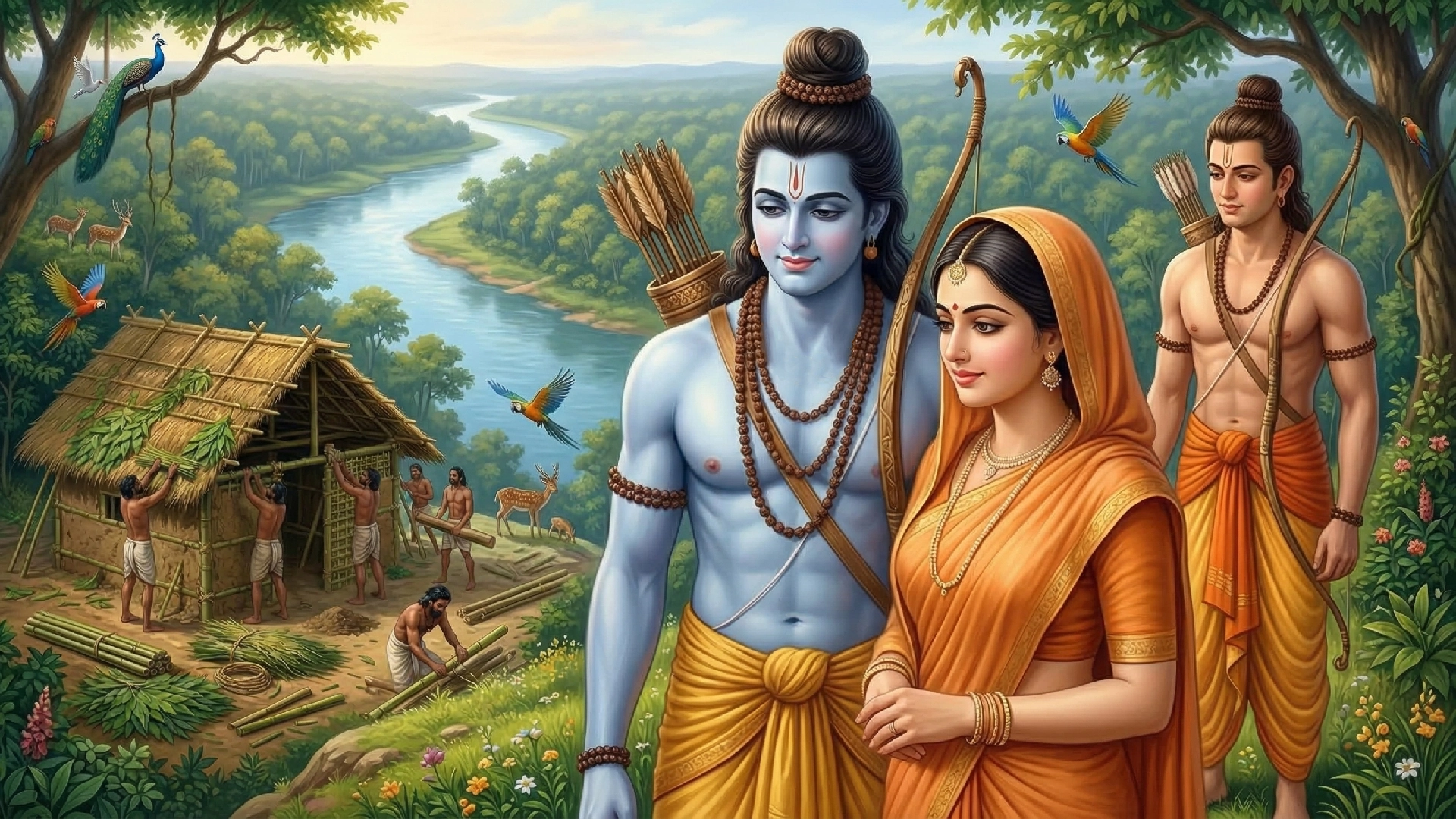
चित्रकूट में निवास, कोल-भीलों के द्वारा सेवा – Lord Ram takes up His abode at Chitrakoot, service rendered by tribals
दोहा :
* चित्रकूट महिमा अमित कही महामुनि गाइ।
आइ नहाए सरित बर सिय समेत दोउ भाइ॥132॥
भावार्थ:-महामुनि वाल्मीकिजी ने चित्रकूट की अपरिमित महिमा बखान कर कही। तब सीताजी सहित दोनों भाइयों ने आकर श्रेष्ठ नदी मंदाकिनी में स्नान किया॥132॥
The great Sage Valmiki ji narrated the boundless glory of Chitrakoot. Then Sita ji, accompanied by the two Brothers, arrived there and bathed in the sacred Mandakini River.
चौपाई :
* रघुबर कहेउ लखन भल घाटू। करहु कतहुँ अब ठाहर ठाटू॥
लखन दीख पय उतर करारा। चहुँ दिसि फिरेउ धनुष जिमि नारा॥1॥
भावार्थ:-श्री रामचन्द्रजी ने कहा- लक्ष्मण! बड़ा अच्छा घाट है। अब यहीं कहीं ठहरने की व्यवस्था करो। तब लक्ष्मणजी ने पयस्विनी नदी के उत्तर के ऊँचे किनारे को देखा (और कहा कि-) इसके चारों ओर धनुष के जैसा एक नाला फिरा हुआ है॥।1॥
Shri Raghuveer said to Lakshman ji, “The riverbank is beautiful, please find a suitable place for us to stay.” Lakshman ji surveyed the surroundings and replied, “The northern bank of this milky Mandakini River is gracefully enclosed by a bow-shaped stream on all sides…
* नदी पनच सर सम दम दाना। सकल कलुष कलि साउज नाना॥
चित्रकूट जनु अचल अहेरी। चुकइ न घात मार मुठभेरी॥2॥
भावार्थ:-नदी (मंदाकिनी) उस धनुष की प्रत्यंचा (डोरी) है और शम, दम, दान बाण हैं। कलियुग के समस्त पाप उसके अनेक हिंसक पशु (रूप निशाने) हैं। चित्रकूट ही मानो अचल शिकारी है, जिसका निशाना कभी चूकता नहीं और जो सामने से मारता है॥2॥
…and the Mandakini River itself appears like the string of this bow, with self-control and charity as its arrows. The sins of Kaliyug are like wild beasts that are relentlessly hunted down. Chitrakoot stands as a steadfast hunter, never missing its mark in this divine pursuit.”
* अस कहि लखन ठाउँ देखरावा। थलु बिलोकि रघुबर सुखु पावा॥
रमेउ राम मनु देवन्ह जाना। चले सहित सुर थपति प्रधाना॥3॥
भावार्थ:-ऐसा कहकर लक्ष्मणजी ने स्थान दिखाया। स्थान को देखकर श्री रामचन्द्रजी ने सुख पाया। जब देवताओं ने जाना कि श्री रामचन्द्रजी का मन यहाँ रम गया, तब वे देवताओं के प्रधान थवई (मकान बनाने वाले) विश्वकर्मा को साथ लेकर चले॥3॥
Saying this, Lakshman ji pointed out the suitable spot. Shri Ram was pleased upon seeing it. When the Demigods saw that Shri Ram’s heart was gladdened by the site, they all made their way to Chitrakoot, accompanied by their Chief Architect, Vishwakarma ji.
* कोल किरात बेष सब आए। रचे परन तृन सदन सुहाए॥
बरनि न जाहिं मंजु दुइ साला। एक ललित लघु एक बिसाला॥4॥
भावार्थ:-सब देवता कोल-भीलों के वेष में आए और उन्होंने (दिव्य) पत्तों और घासों के सुंदर घर बना दिए। दो ऐसी सुंदर कुटिया बनाईं जिनका वर्णन नहीं हो सकता। उनमें एक बड़ी सुंदर छोटी सी थी और दूसरी बड़ी थी॥4॥
Disguised as tribals, they all arrived and built charming huts from grass and leaves. Two beautiful dwellings were constructed, so captivating that words fall short. One was a modest little cottage, and the other, more spacious and grand in appearance.
दोहा :
* लखन जानकी सहित प्रभु राजत रुचिर निकेत।
सोह मदनु मुनि बेष जनु रति रितुराज समेत॥133॥
भावार्थ:-लक्ष्मणजी और जानकीजी सहित प्रभु श्री रामचन्द्रजी सुंदर घास-पत्तों के घर में शोभायमान हैं। मानो कामदेव मुनि का वेष धारण करके पत्नी रति और वसंत ऋतु के साथ सुशोभित हो॥133॥
The Lord looked radiant in the charming cottage with Sita ji and Lakshman ji by His side, like Kaamdev, the God of Love, appearing in the form of an ascetic, adorned by the presence of his consort Rati and the splendour of Spring, the King of all Seasons.
मासपारायण, सत्रहवाँ विश्राम – Pause 17 of 30 Day Recitation
चौपाई :
* अमर नाग किंनर दिसिपाला। चित्रकूट आए तेहि काला॥
राम प्रनामु कीन्ह सब काहू। मुदित देव लहि लोचन लाहू॥1॥
भावार्थ:-उस समय देवता, नाग, किन्नर और दिक्पाल चित्रकूट में आए और श्री रामचन्द्रजी ने सब किसी को प्रणाम किया। देवता नेत्रों का लाभ पाकर आनंदित हुए॥1॥
On that occasion, all the Demigods, celestial Serpents, Kinnars, and Guardians of the Directions gathered at Chitrakoot. They bowed in reverence before Shri Ram, overjoyed to receive the supreme reward of beholding Him with their eyes.
* बरषि सुमन कह देव समाजू। नाथ सनाथ भए हम आजू॥
करि बिनती दुख दुसह सुनाए। हरषित निज निज सदन सिधाए॥2॥
भावार्थ:-फूलों की वर्षा करके देव समाज ने कहा- हे नाथ! आज (आपका दर्शन पाकर) हम सनाथ हो गए। फिर विनती करके उन्होंने अपने दुःसह दुःख सुनाए और (दुःखों के नाश का आश्वासन पाकर) हर्षित होकर अपने-अपने स्थानों को चले गए॥2॥
Showering flowers from above, the host of Demigods exclaimed, “O’ Lord, today we feel truly protected.” With deep reverence, they shared their grievous sorrows, and upon receiving Shri Ram’s gracious assurance, they joyfully returned to their respective abodes.
* चित्रकूट रघुनंदनु छाए। समाचार सुनि सुनि मुनि आए॥
आवत देखि मुदित मुनिबृंदा। कीन्ह दंडवत रघुकुल चंदा॥3॥
भावार्थ:-श्री रघुनाथजी चित्रकूट में आ बसे हैं, यह समाचार सुन-सुनकर बहुत से मुनि आए। रघुकुल के चन्द्रमा श्री रामचन्द्रजी ने मुदित हुई मुनि मंडली को आते देखकर दंडवत प्रणाम किया॥3॥
Upon hearing that Shri Ragunandan had made Chitrakoot His abode, many revered hermits arrived there. Seeing the radiant assembly of Sages, Shri Ram, the Moon of the Raghu race, humbly prostrated before them.
* मुनि रघुबरहि लाइ उर लेहीं। सुफल होन हित आसिष देहीं॥
सिय सौमित्रि राम छबि देखहिं। साधन सकल सफल करि लेखहिं॥4॥
भावार्थ:-मुनिगण श्री रामजी को हृदय से लगा लेते हैं और सफल होने के लिए आशीर्वाद देते हैं। वे सीताजी, लक्ष्मणजी और श्री रामचन्द्रजी की छबि देखते हैं और अपने सारे साधनों को सफल हुआ समझते हैं॥4॥
The Sages embraced Shri Ram and bestowed their heartfelt blessings for His success. As they gazed upon the divine forms of Shri Ram, Soumitri (Lakshman ji), and Sita ji, they felt as though all their spiritual efforts had borne fruit.
दोहा :
* जथाजोग सनमानि प्रभु बिदा किए मुनिबृंद।
करहिं जोग जप जाग तप निज आश्रमन्हि सुछंद॥134॥
भावार्थ:-प्रभु श्री रामचन्द्रजी ने यथायोग्य सम्मान करके मुनि मंडली को विदा किया। (श्री रामचन्द्रजी के आ जाने से) वे सब अपने-अपने आश्रमों में अब स्वतंत्रता के साथ योग, जप, यज्ञ और तप करने लगे॥134॥
After offering due respect and honour to the assembly of Sages, the Lord gracefully bade them farewell. With Shri Ram’s arrival, the Sages resumed their practices of austerity, yoga, chanting, and penance in their hermitages, now free from fear.
चौपाई :
* यह सुधि कोल किरातन्ह पाई। हरषे जनु नव निधि घर आई॥
कंद मूल फल भरि भरि दोना। चले रंक जनु लूटन सोना॥1॥
भावार्थ:-यह (श्री रामजी के आगमन का) समाचार जब कोल-भीलों ने पाया, तो वे ऐसे हर्षित हुए मानो नवों निधियाँ उनके घर ही पर आ गई हों। वे दोनों में कंद, मूल, फल भर-भरकर चले, मानो दरिद्र सोना लूटने चले हों॥1॥
When news of Shri Ram’s arrival reached the tribals and hunters, they rejoiced as if the very power to give and receive the nine types of wealth had entered their homes. Eagerly, they filled leaf-cups with roots, bulbs, and fruits and rushed to meet Shri Ram, like paupers running to seize a treasure of gold.
* तिन्ह महँ जिन्ह देखे दोउ भ्राता। अपर तिन्हहि पूँछहिं मगु जाता॥
कहत सुनत रघुबीर निकाई। आइ सबन्हि देखे रघुराई॥2॥
भावार्थ:-उनमें से जो दोनों भाइयों को (पहले) देख चुके थे, उनसे दूसरे लोग रास्ते में जाते हुए पूछते हैं। इस प्रकार श्री रामचन्द्रजी की सुंदरता कहते-सुनते सबने आकर श्री रघुनाथजी के दर्शन किए॥2॥
Those who had already seen the two Brothers were eagerly questioned by others travelling the same path. In this manner, through describing and hearing of Shri Ram’s divine beauty, they all made their way and beheld Shri Raghuveer.
* करहिं जोहारु भेंट धरि आगे। प्रभुहि बिलोकहिं अति अनुरागे॥
चित्र लिखे जनु जहँ तहँ ठाढ़े। पुलक सरीर नयन जल बाढ़े॥3॥
भावार्थ:-भेंट आगे रखकर वे लोग जोहार करते हैं और अत्यन्त अनुराग के साथ प्रभु को देखते हैं। वे मुग्ध हुए जहाँ के तहाँ मानो चित्र लिखे से खड़े हैं। उनके शरीर पुलकित हैं और नेत्रों में प्रेमाश्रुओं के जल की बाढ़ आ रही है॥3॥
With humble salutations, they offered their gifts to the Lord and gazed upon Him with heartfelt devotion. They stood still in various places, as if captured in a painting, bodies trembling with joy, and eyes overflowing with tears of love.
* राम सनेह मगन सब जाने। कहि प्रिय बचन सकल सनमाने॥
प्रभुहि जोहारि बहोरि बहोरी। बचन बिनीत कहहिंकर जोरी॥4॥
भावार्थ:-श्री रामजी ने उन सबको प्रेम में मग्न जाना और प्रिय वचन कहकर सबका सम्मान किया। वे बार-बार प्रभु श्री रामचन्द्रजी को जोहार करते हुए हाथ जोड़कर विनीत वचन कहते हैं-॥4॥
Seeing them overwhelmed with emotion, Shri Ram spoke to them with gentle words and deep respect. They bowed to the Lord repeatedly, and with folded hands, offered humble and heartfelt words.
दोहा :
* अब हम नाथ सनाथ सब भए देखि प्रभु पाय।
भाग हमारें आगमनु राउर कोसलराय॥135॥
भावार्थ:-हे नाथ! प्रभु (आप) के चरणों का दर्शन पाकर अब हम सब सनाथ हो गए। हे कोसलराज! हमारे ही भाग्य से आपका यहाँ शुभागमन हुआ है॥135॥
They said, “O’ Lord! Having the divine vision of Your feet, we now feel truly protected and blessed. O’ King of Koshal! It is by our good fortune that You have arrived here…
चौपाई :
* धन्य भूमि बन पंथ पहारा। जहँ जहँ नाथ पाउ तुम्ह धारा॥
धन्य बिहग मृग काननचारी। सफल जनम भए तुम्हहि निहारी॥1॥
भावार्थ:-हे नाथ! जहाँ-जहाँ आपने अपने चरण रखे हैं, वे पृथ्वी, वन, मार्ग और पहाड़ धन्य हैं, वे वन में विचरने वाले पक्षी और पशु धन्य हैं, जो आपको देखकर सफल जन्म हो गए॥1॥
…O’ Lord, blessed are the lands, forests, paths, and mountains touched by Your feet. Fortunate are the birds and animals that roam those woods, their lives have found true purpose through the sight of You…
* हम सब धन्य सहित परिवारा। दीख दरसु भरि नयन तुम्हारा॥
कीन्ह बासु भल ठाउँ बिचारी। इहाँ सकल रितु रहब सुखारी॥2॥
भावार्थ:-हम सब भी अपने परिवार सहित धन्य हैं, जिन्होंने नेत्र भरकर आपका दर्शन किया। आपने बड़ी अच्छी जगह विचारकर निवास किया है। यहाँ सभी ऋतुओं में आप सुखी रहिएगा॥2॥
…We and our families feel truly blessed to feast our eyes upon Your divine presence. You have chosen a perfect place for Your abode, one where You will dwell in comfort through every season…
* हम सब भाँति करब सेवकाई। करि केहरि अहि बाघ बराई॥
बन बेहड़ गिरि कंदर खोहा। सब हमार प्रभु पग पग जोहा॥3॥
भावार्थ:-हम लोग सब प्रकार से हाथी, सिंह, सर्प और बाघों से बचाकर आपकी सेवा करेंगे। हे प्रभो! यहाँ के बीहड़ वन, पहाड़, गुफाएँ और खोह (दर्रे) सब पग-पग हमारे देखे हुए हैं॥3॥
…We will serve You in every way, protecting You from elephants, lions, snakes, and tigers. O’ Lord, we have explored every corner of these perilous forests, deep mountains, hollows, and caves…
* तहँ तहँ तुम्हहि अहेर खेलाउब। सर निरझर जलठाउँ देखाउब॥
हम सेवक परिवार समेता। नाथ न सकुचब आयसु देता॥4॥
भावार्थ:-हम वहाँ-वहाँ (उन-उन स्थानों में) आपको शिकार खिलाएँगे और तालाब, झरने आदि जलाशयों को दिखाएँगे। हम कुटुम्ब समेत आपके सेवक हैं। हे नाथ! इसलिए हमें आज्ञा देने में संकोच न कीजिए॥4॥
…We will take You on hunts and show You the rivers, waterfalls, and hidden water reservoirs. We and our families are Your devoted servants, O’ Lord, please do not hesitate to command us.”
दोहा :
* बेद बचन मुनि मन अगम ते प्रभु करुना ऐन।
बचन किरातन्ह के सुनत जिमि पितु बालक बैन॥136॥
भावार्थ:-जो वेदों के वचन और मुनियों के मन को भी अगम हैं, वे करुणा के धाम प्रभु श्री रामचन्द्रजी भीलों के वचन इस तरह सुन रहे हैं, जैसे पिता बालकों के वचन सुनता है॥136॥
The same compassionate Lord, whom even the Vedas and the minds of enlightened Sages struggle to grasp, listened to the words of the tribals as lovingly as a father listens to his children.
चौपाई :
* रामहि केवल प्रेमु पिआरा। जानि लेउ जो जान निहारा॥
राम सकल बनचर तब तोषे। कहि मृदु बचन प्रेम परिपोषे॥1॥
भावार्थ:-श्री रामचन्द्रजी को केवल प्रेम प्यारा है, जो जानने वाला हो (जानना चाहता हो), वह जान ले। तब श्री रामचन्द्रजी ने प्रेम से परिपुष्ट हुए (प्रेमपूर्ण) कोमल वचन कहकर उन सब वन में विचरण करने वाले लोगों को संतुष्ट किया॥1॥
Shri Ramchandra values only pure love, let the one who wishes to understand, understand this well. Lord Ram then delighted all the forest dwellers with tender words, filled with affection.
* बिदा किए सिर नाइ सिधाए। प्रभु गुन कहत सुनत घर आए॥
एहि बिधि सिय समेत दोउ भाई। बसहिं बिपिन सुर मुनि सुखदाई॥2॥
भावार्थ:-फिर उनको विदा किया। वे सिर नवाकर चले और प्रभु के गुण कहते-सुनते घर आए। इस प्रकार देवता और मुनियों को सुख देने वाले दोनों भाई सीताजी समेत वन में निवास करने लगे॥2॥
Thereafter Shri Ram bid them farewell. Bowing at His feet and praising His virtues along the way, they returned to their homes. In this manner, the two Brothers, along with Sita ji, dwelled in the forest, bringing joy to the Demigods and Sages.
* जब तें आइ रहे रघुनायकु। तब तें भयउ बनु मंगलदायकु॥
फूलहिं फलहिं बिटप बिधि नाना। मंजु बलित बर बेलि बिताना॥3॥
भावार्थ:-जब से श्री रघुनाथजी वन में आकर रहे तब से वन मंगलदायक हो गया। अनेक प्रकार के वृक्ष फूलते और फलते हैं और उन पर लिपटी हुई सुंदर बेलों के मंडप तने हैं॥3॥
From the moment Shri Ram made the forest His abode, it became a source of all auspiciousness. Trees of many kinds burst into bloom and bore abundant fruits, while graceful creepers twined around them, creating enchanting canopies.
* सुरतरु सरिस सुभायँ सुहाए। मनहुँ बिबुध बन परिहरि आए॥
गुंज मंजुतर मधुकर श्रेनी। त्रिबिध बयारि बहइ सुख देनी॥4॥
भावार्थ:-वे कल्पवृक्ष के समान स्वाभाविक ही सुंदर हैं। मानो वे देवताओं के वन (नंदन वन) को छोड़कर आए हों। भौंरों की पंक्तियाँ बहुत ही सुंदर गुंजार करती हैं और सुख देने वाली शीतल, मंद, सुगंधित हवा चलती रहती है॥4॥
They were all naturally beautiful, as if the celestial trees of the Demigods had forsaken Heaven to be near Lord Ram. Sweet humming echoed from rows of bumblebees, while a cool, gentle, and fragrant breeze wafted through the forest.
दोहा :
* नीलकंठ कलकंठ सुक चातक चक्क चकोर।
भाँति भाँति बोलहिं बिहग श्रवन सुखद चित चोर॥137॥
भावार्थ:-नीलकंठ, कोयल, तोते, पपीहे, चकवे और चकोर आदि पक्षी कानों को सुख देने वाली और चित्त को चुराने वाली तरह-तरह की बोलियाँ बोलते हैं॥137॥
Blue jays, cuckoos, parrots, chataks, chakwas, partridges, and many other birds filled the air with melodious calls, delighting the heart and soothing the ears.
चौपाई :
* करि केहरि कपि कोल कुरंगा। बिगतबैर बिचरहिं सब संगा॥
फिरत अहेर राम छबि देखी। होहिं मुदित मृग बृंद बिसेषी॥1॥
भावार्थ:-हाथी, सिंह, बंदर, सूअर और हिरन, ये सब वैर छोड़कर साथ-साथ विचरते हैं। शिकार के लिए फिरते हुए श्री रामचन्द्रजी की छबि को देखकर पशुओं के समूह विशेष आनंदित होते हैं॥1॥
Elephants, lions, monkeys, wild boars, and deer wandered together in harmony, free from hostility. The herds of deer were especially overjoyed to catch glimpses of Shri Ram’s radiant form during the hunting outings.
* बिबुध बिपिन जहँ लगि जग माहीं। देखि रामबनु सकल सिहाहीं॥
सुरसरि सरसइ दिनकर कन्या। मेकलसुता गोदावरि धन्या॥2॥
भावार्थ:-जगत में जहाँ तक (जितने) देवताओं के वन हैं, सब श्री रामजी के वन को देखकर सिहाते हैं, गंगा, सरस्वती, सूर्यकुमारी यमुना, नर्मदा, गोदावरी आदि धन्य (पुण्यमयी) नदियाँ,॥2॥
All the forest deities across the Universe felt a tinge of envy upon seeing the splendour of Shri Ram’s forest. The celestial rivers Ganga, Saraswati, Yamuna (daughter of the Sun God) and Narmada (daughter of the Mekal mountain), along with the sacred river Godavari…
* सब सर सिंधु नदीं नद नाना। मंदाकिनि कर करहिं बखाना॥
उदय अस्त गिरि अरु कैलासू। मंदर मेरु सकल सुरबासू॥3॥
भावार्थ:-सारे तालाब, समुद्र, नदी और अनेकों नद सब मंदाकिनी की बड़ाई करते हैं। उदयाचल, अस्ताचल, कैलास, मंदराचल और सुमेरु आदि सब, जो देवताओं के रहने के स्थान हैं,॥3॥
…and countless other lakes, oceans, rivers, and streams all praised the Mandakini river. Great mountains (which are the divine dwellings of the Demigods) such as Udhyanchal (from where the Sun rises), Asta Mountain (where the Sun sets), Kailash (the abode of Lord Shiv), Mandrachal, and Meru also glorified Chitrakoot…
* सैल हिमाचल आदिक जेते। चित्रकूट जसु गावहिं तेते॥
बिंधि मुदित मन सुखु न समाई। श्रम बिनु बिपुल बड़ाई पाई॥4॥
भावार्थ:-और हिमालय आदि जितने पर्वत हैं, सभी चित्रकूट का यश गाते हैं। विन्ध्याचल बड़ा आनंदित है, उसके मन में सुख समाता नहीं, क्योंकि उसने बिना परिश्रम ही बहुत बड़ी बड़ाई पा ली है॥4॥
…and mountains like the Himalayas and others all sang the praises of Chitrakoot. The Vindhyachal mountain (of which Chitrakoot is a peak) felt immense joy within, knowing it had gained such glory and honour with little effort.
दोहा :
* चित्रकूट के बिहग मृग बेलि बिटप तृन जाति।
पुन्य पुंज सब धन्य अस कहहिं देव दिन राति॥138॥
भावार्थ:-चित्रकूट के पक्षी, पशु, बेल, वृक्ष, तृण-अंकुरादि की सभी जातियाँ पुण्य की राशि हैं और धन्य हैं- देवता दिन-रात ऐसा कहते हैं॥138॥
Day and night, the Demigods praised the birds, animals, trees, creepers, and all plant life of Chitrakoot, declaring them blessed and the very source of all auspiciousness.
चौपाई :
* नयनवंत रघुबरहि बिलोकी। पाइ जनम फल होहिं बिसोकी॥
परसि चरन रज अचर सुखारी। भए परम पद के अधिकारी॥1॥
भावार्थ:-आँखों वाले जीव श्री रामचन्द्रजी को देखकर जन्म का फल पाकर शोकरहित हो जाते हैं और अचर (पर्वत, वृक्ष, भूमि, नदी आदि) भगवान की चरण रज का स्पर्श पाकर सुखी होते हैं। यों सभी परम पद (मोक्ष) के अधिकारी हो गए॥1॥
Beings with eyes, upon seeing Shri Ramchandra ji, attained the ultimate purpose of their birth and became free from sorrow. Even the immovable beings, such as mountains, trees, land, and rivers, rejoiced at the touch of the dust from the Lord’s feet. In this way, all became worthy of attaining the supreme state of liberation from the cycle of birth and death.
* सो बनु सैलु सुभायँ सुहावन। मंगलमय अति पावन पावन॥
महिमा कहिअ कवनि बिधि तासू। सुखसागर जहँ कीन्ह निवासू॥2॥
भावार्थ:-वह वन और पर्वत स्वाभाविक ही सुंदर, मंगलमय और अत्यन्त पवित्रों को भी पवित्र करने वाला है। उसकी महिमा किस प्रकार कही जाए, जहाँ सुख के समुद्र श्री रामजी ने निवास किया है॥2॥
The forest and mountain range were naturally beautiful, deeply auspicious, and the holiest of all places, for the ocean of bliss, Shri Ram, had made it His abode. How can its glory ever be described in words?
* पय पयोधि तजि अवध बिहाई। जहँ सिय लखनु रामु रहे आई॥
कहि न सकहिं सुषमा जसि कानन। जौं सत सहस होहिं सहसानन॥3॥
भावार्थ:-क्षीर सागर को त्यागकर और अयोध्या को छोड़कर जहाँ सीताजी, लक्ष्मणजी और श्री रामचन्द्रजी आकर रहे, उस वन की जैसी परम शोभा है, उसको हजार मुख वाले जो लाख शेषजी हों तो वे भी नहीं कह सकते॥3॥
The supreme beauty of the forest where Shri Ram, Sita ji, and Lakshman ji came to dwell, having left behind the Milky Ocean and renounced Ayodhya, cannot be described. Even a hundred thousand Sheshnags, each with a thousand pairs of tongues, would fall short in capturing its splendour.
* सो मैं बरनि कहौं बिधि केहीं। डाबर कमठ कि मंदर लेहीं॥
सेवहिं लखनु करम मन बानी। जाइ न सीलु सनेहु बखानी॥4॥
भावार्थ:-उसे भला, मैं किस प्रकार से वर्णन करके कह सकता हूँ। कहीं पोखरे का (क्षुद्र) कछुआ भी मंदराचल उठा सकता है? लक्ष्मणजी मन, वचन और कर्म से श्री रामचन्द्रजी की सेवा करते हैं। उनके शील और स्नेह का वर्णन नहीं किया जा सकता॥4॥
Tulsidas ji says, “Then how can I possibly describe its beauty? Can a tortoise from a small muddy pond lift the mighty Mandrachal mountain?” Lakshman ji served Shri Ram with complete dedication, in thought, word, and deed. His devotion and humility are beyond the reach of words.
दोहा :
* छिनु छिनु लखि सिय राम पद जानि आपु पर नेहु।
करत न सपनेहुँ लखनु चितु बंधु मातु पितु गेहु॥139॥
भावार्थ:-क्षण-क्षण पर श्री सीता-रामजी के चरणों को देखकर और अपने ऊपर उनका स्नेह जानकर लक्ष्मणजी स्वप्न में भी भाइयों, माता-पिता और घर की याद नहीं करते॥139॥
Constantly gazing at the feet of Shri Ram and Sita ji, and feeling their boundless love for him, Shri Lakshman never once longed for his other brothers, parents, or home, even in his dreams.
चौपाई :
* राम संग सिय रहति सुखारी। पुर परिजन गृह सुरति बिसारी॥
छिनु छिनु पिय बिधु बदनु निहारी। प्रमुदित मनहुँ चकोर कुमारी॥1॥
भावार्थ:-श्री रामचन्द्रजी के साथ सीताजी अयोध्यापुरी, कुटुम्ब के लोग और घर की याद भूलकर बहुत ही सुखी रहती हैं। क्षण-क्षण पर पति श्री रामचन्द्रजी के चन्द्रमा के समान मुख को देखकर वे वैसे ही परम प्रसन्न रहती हैं, जैसे चकोर कुमारी (चकोरी) चन्द्रमा को देखकर !॥1॥
Sita ji joyfully lived with Shri Ram, forgetting Her own town, relatives, and home. Constantly gazing at His moon-like face, She felt immense bliss, like a female chakor bird mesmerized by the Moon.
* नाह नेहु नित बढ़त बिलोकी। हरषित रहति दिवस जिमि कोकी॥
सिय मनु राम चरन अनुरागा। अवध सहस सम बनु प्रिय लागा॥2॥
भावार्थ:-स्वामी का प्रेम अपने प्रति नित्य बढ़ता हुआ देखकर सीताजी ऐसी हर्षित रहती हैं, जैसे दिन में चकवी! सीताजी का मन श्री रामचन्द्रजी के चरणों में अनुरक्त है, इससे उनको वन हजारों अवध के समान प्रिय लगता है॥2॥
Seeing Her beloved Lord’s love grow day by day, Sita ji felt constant joy, like a female chakwa bird basking in the daylight. Her heart was fully absorbed in Shri Ram’s feet, and the forest felt as dear to Her as a thousand Ayodhyas.
* परनकुटी प्रिय प्रियतम संगा। प्रिय परिवारु कुरंग बिहंगा॥
सासु ससुर सम मुनितिय मुनिबर। असनु अमिअ सम कंद मूल फर॥3॥
भावार्थ:-प्रियतम (श्री रामचन्द्रजी) के साथ पर्णकुटी प्यारी लगती है। मृग और पक्षी प्यारे कुटुम्बियों के समान लगते हैं। मुनियों की स्त्रियाँ सास के समान, श्रेष्ठ मुनि ससुर के समान और कंद-मूल-फलों का आहार उनको अमृत के समान लगता है॥3॥
In the company of Her beloved, Sita ji found the hut of leaves enchanting. The deer and birds felt like dear family, while the great Sages and their wives appeared as Her own father-in-law and mother-in-law. Even a simple diet of roots, bulbs, and fruits tasted like nectar to Her.
* नाथ साथ साँथरी सुहाई। मयन सयन सय सम सुखदाई॥
लोकप होहिं बिलोकत जासू। तेहि कि मोहि सक बिषय बिलासू॥4॥
भावार्थ:-स्वामी के साथ सुंदर साथरी (कुश और पत्तों की सेज) सैकड़ों कामदेव की सेजों के समान सुख देने वाली है। जिनके (कृपापूर्वक) देखने मात्र से जीव लोकपाल हो जाते हैं, उनको कहीं भोग-विलास मोहित कर सकते हैं!॥4॥
The simple bed of grass and leaves that Sita ji shared with Her Lord felt more comforting than the luxurious beds of millions of Cupids. She, whose mere glance can elevate beings to Guardians of Cosmic Realms, how could She ever be drawn to worldly pleasures or grandeur?
दोहा :
* सुमिरत रामहि तजहिं जन तृन सम बिषय बिलासु।
रामप्रिया जग जननि सिय कछु न आचरजु तासु॥140॥
भावार्थ:-जिन श्री रामचन्द्रजी का स्मरण करने से ही भक्तजन तमाम भोग-विलास को तिनके के समान त्याग देते हैं, उन श्री रामचन्द्रजी की प्रिय पत्नी और जगत की माता सीताजी के लिए यह (भोग-विलास का त्याग) कुछ भी आश्चर्य नहीं है॥140॥
By meditating on Him, Shri Ram’s devotees easily renounce material pleasures, seeing them as no more than blades of grass. So it is no wonder that Sita ji, the Mother of the Universe and beloved consort of Shri Ram, let go of worldly luxuries with such ease.
चौपाई :
* सीय लखन जेहि बिधि सुखु लहहीं। सोइ रघुनाथ करहिं सोइ कहहीं॥
कहहिं पुरातन कथा कहानी। सुनहिं लखनु सिय अति सुखु मानी॥1॥
भावार्थ:-सीताजी और लक्ष्मणजी को जिस प्रकार सुख मिले, श्री रघुनाथजी वही करते और वही कहते हैं। भगवान प्राचीन कथाएँ और कहानियाँ कहते हैं और लक्ष्मणजी तथा सीताजी अत्यन्त सुख मानकर सुनते हैं॥1॥
Shri Ram would say and do whatever brought joy to Sita ji and Lakshman ji. He often narrated ancient legends and stories, which they listened to with great delight.
* जब जब रामु अवध सुधि करहीं। तब तब बारि बिलोचन भरहीं॥
सुमिरि मातु पितु परिजन भाई। भरत सनेहु सीलु सेवकाई॥2॥
भावार्थ:-जब-जब श्री रामचन्द्रजी अयोध्या की याद करते हैं, तब-तब उनके नेत्रों में जल भर आता है। माता-पिता, कुटुम्बियों और भाइयों तथा भरत के प्रेम, शील और सेवाभाव को याद करके-॥2॥
Whenever Shri Ram remembered Ayodhya, His eyes would well up with tears. Thoughts of His Mother, Father, Brothers, relatives, and especially the love, humility, and devotion of Bharat ji…
* कृपासिंधु प्रभु होहिं दुखारी। धीरजु धरहिं कुसमउ बिचारी॥
लखि सिय लखनु बिकल होइ जाहीं। जिमि पुरुषहि अनुसर परिछाहीं॥3॥
भावार्थ:-कृपा के समुद्र प्रभु श्री रामचन्द्रजी दुःखी हो जाते हैं, किन्तु फिर कुसमय समझकर धीरज धारण कर लेते हैं। श्री रामचन्द्रजी को दुःखी देखकर सीताजी और लक्ष्मणजी भी व्याकुल हो जाते हैं, जैसे किसी मनुष्य की परछाहीं उस मनुष्य के समान ही चेष्टा करती है॥3॥
…would fill the ocean of mercy with sorrow. Yet, recognising the time as inauspicious, He would compose Himself. Seeing Shri Ram in pain, Sita ji and Lakshman ji too would grow sorrowful, just as a shadow naturally mirrors the body.
* प्रिया बंधु गति लखि रघुनंदनु। धीर कृपाल भगत उर चंदनु॥
लगे कहन कछु कथा पुनीता। सुनि सुखु लहहिं लखनु अरु सीता॥4॥