
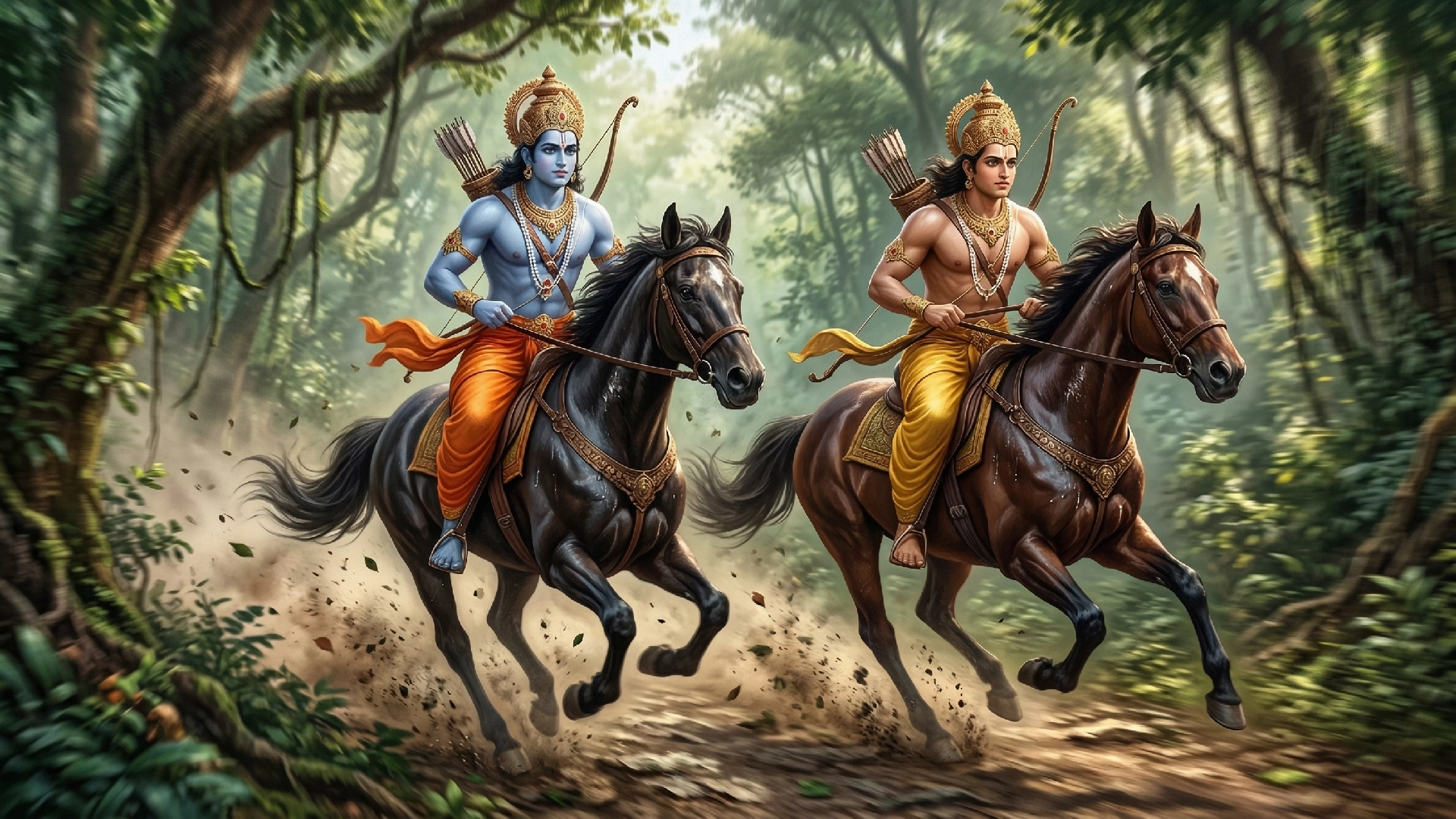
मुनि वशिष्ठ का भरतजी को बुलाने के लिए दूत भेजना – Sage Vashishth sends envoys to call Bharat ji
दोहा :
* तब बसिष्ठ मुनि समय सम कहि अनेक इतिहास।
सोक नेवारेउ सबहि कर निज बिग्यान प्रकास॥156॥
भावार्थ:-तब वशिष्ठ मुनि ने समय के अनुकूल अनेक इतिहास कहकर अपने विज्ञान के प्रकाश से सबका शोक दूर किया॥156॥
Then Guru Vashishth recounted many ancient legends, each suited to the moment, and through the radiance of his wisdom, he dispelled the sorrow in everyone’s hearts.
चौपाई :
* तेल नावँ भरि नृप तनु राखा। दूत बोलाइ बहुरि अस भाषा॥
धावहु बेगि भरत पहिं जाहू। नृप सुधि कतहुँ कहहु जनि काहू॥1॥
भावार्थ:-वशिष्ठजी ने नाव में तेल भरवाकर राजा के शरीर को उसमें रखवा दिया। फिर दूतों को बुलवाकर उनसे ऐसा कहा- तुम लोग जल्दी दौड़कर भरत के पास जाओ। राजा की मृत्यु का समाचार कहीं किसी से न कहना॥1॥
The King’s body was then placed in a boat filled with oil to preserve it from decay. Guru Vashishth summoned the royal messengers and instructed them, “Hurry at once and go to Bharat, but do not reveal the news of the King’s passing to anyone…
* एतनेइ कहेहु भरत सन जाई। गुर बोलाइ पठयउ दोउ भाई॥
सुनि मुनि आयसु धावन धाए। चले बेग बर बाजि लजाए॥2॥
भावार्थ:-जाकर भरत से इतना ही कहना कि दोनों भाइयों को गुरुजी ने बुलवा भेजा है। मुनि की आज्ञा सुनकर धावन (दूत) दौड़े। वे अपने वेग से उत्तम घोड़ों को भी लजाते हुए चले॥2॥
…Simply tell Bharat that his Guru is calling both him and his brother.” Hearing the Sage’s command, the messengers set off at such speed that even the swiftest horses would be put to shame.
* अनरथु अवध अरंभेउ जब तें। कुसगुन होहिं भरत कहुँ तब तें॥
देखहिं राति भयानक सपना। जागि करहिं कटु कोटि कलपना॥3॥
भावार्थ:-जब से अयोध्या में अनर्थ प्रारंभ हुआ, तभी से भरतजी को अपशकुन होने लगे। वे रात को भयंकर स्वप्न देखते थे और जागने पर (उन स्वप्नों के कारण) करोड़ों (अनेकों) तरह की बुरी-बुरी कल्पनाएँ किया करते थे॥3॥
Ever since ominous events began unfolding in Ayodhya, Bharat ji started witnessing troubling signs. He would have fearful dreams at night, and upon waking, his mind would be filled with uneasy thoughts and unsettling speculations.
* बिप्र जेवाँइ देहिं दिन दाना। सिव अभिषेक करहिं बिधि नाना॥
मागहिं हृदयँ महेस मनाई। कुसल मातु पितु परिजन भाई॥4॥
भावार्थ:-(अनिष्टशान्ति के लिए) वे प्रतिदिन ब्राह्मणों को भोजन कराकर दान देते थे। अनेकों विधियों से रुद्राभिषेक करते थे। महादेवजी को हृदय में मनाकर उनसे माता-पिता, कुटुम्बी और भाइयों का कुशल-क्षेम माँगते थे॥4॥
He would honour Brahmins with food and offer various kinds of donations. Devotedly, he performed different forms of worship to Lord Shiv, invoking the great Lord Mahesh in his heart and earnestly praying for the well-being of his parents, family, and brothers.
दोहा :
* एहि बिधि सोचत भरत मन धावन पहुँचे आइ।
गुर अनुसासन श्रवन सुनि चले गनेसु मनाई॥157॥
भावार्थ:-भरतजी इस प्रकार मन में चिंता कर रहे थे कि दूत आ पहुँचे। गुरुजी की आज्ञा कानों से सुनते ही वे गणेशजी को मनाकर चल पड़े॥157॥
While Bharat ji was deep in contemplation, the envoys arrived. Upon hearing the Guru’s message, he paid homage to Lord Ganesh and promptly set out with them.
चौपाई :
* चले समीर बेग हय हाँके। नाघत सरित सैल बन बाँके॥
हृदयँ सोचु बड़ कछु न सोहाई। अस जानहिं जियँ जाउँ उड़ाई॥1॥
भावार्थ:-हवा के समान वेग वाले घोड़ों को हाँकते हुए वे विकट नदी, पहाड़ तथा जंगलों को लाँघते हुए चले। उनके हृदय में बड़ा सोच था, कुछ सुहाता न था। मन में ऐसा सोचते थे कि उड़कर पहुँच जाऊँ॥1॥
Riding their horses with the speed of the wind, they crossed great rivers, towering mountains, and dense forests. Bharat ji’s heart was restless, and nothing could bring him peace. He longed deeply to sprout wings and fly to Ayodhya that very moment.
* एक निमेष बरष सम जाई। एहि बिधि भरत नगर निअराई॥
असगुन होहिं नगर पैठारा। रटहिं कुभाँति कुखेत करारा॥2॥
भावार्थ:-एक-एक निमेष वर्ष के समान बीत रहा था। इस प्रकार भरतजी नगर के निकट पहुँचे। नगर में प्रवेश करते समय अपशकुन होने लगे। कौए बुरी जगह बैठकर बुरी तरह से काँव-काँव कर रहे हैं॥2॥
Each passing moment felt like an entire year. At last, Bharat ji neared Ayodhya. As he entered the city, inauspicious signs began to appear, crows perched in unfavourable spots, cawing ominously again and again.
* खर सिआर बोलहिं प्रतिकूला। सुनि सुनि होइ भरत मन सूला॥
श्रीहत सर सरिता बन बागा। नगरु बिसेषि भयावनु लागा॥3॥
भावार्थ:-गदहे और सियार विपरीत बोल रहे हैं। यह सुन-सुनकर भरत के मन में बड़ी पीड़ा हो रही है। तालाब, नदी, वन, बगीचे सब शोभाहीन हो रहे हैं। नगर बहुत ही भयानक लग रहा है॥3॥
Donkeys and jackals cried out in ominous tones, and their eerie voices pierced Bharat ji’s heart. The lakes, rivers, forests, and gardens had all lost their beauty, and the city itself appeared grim and foreboding.
* खग मृग हय गय जाहिं न जोए। राम बियोग कुरोग बिगोए॥
नगर नारि नर निपट दुखारी। मनहुँ सबन्हि सब संपति हारी॥4॥
भावार्थ:-श्री रामजी के वियोग रूपी बुरे रोग से सताए हुए पक्षी-पशु, घोड़े-हाथी (ऐसे दुःखी हो रहे हैं कि) देखे नहीं जाते। नगर के स्त्री-पुरुष अत्यन्त दुःखी हो रहे हैं। मानो सब अपनी सारी सम्पत्ति हार बैठे हों॥4॥
It was painful to behold the birds, animals, horses, and elephants, they appeared gravely afflicted from the torment of separation from Shri Ram. The men and women of the city looked utterly dejected, as though they had lost everything they held dear.
* पुरजन मिलहिं न कहहिं कछु गवँहि जोहारहिं जाहिं।
भरत कुसल पूँछि न सकहिं भय बिषाद मन माहिं॥158॥
भावार्थ:-नगर के लोग मिलते हैं, पर कुछ कहते नहीं, गौं से (चुपके से) जोहार (वंदना) करके चले जाते हैं। भरतजी भी किसी से कुशल नहीं पूछ सकते, क्योंकि उनके मन में भय और विषाद छा रहा है॥158॥
The citizens came to meet Bharat ji, but not a word was spoken. After offering their greetings, they quietly turned away. Bharat ji, too, could not bring himself to ask after their well-being, his heart was weighed down with fear and sorrow.
* हाट बाट नहिं जाइ निहारी। जनु पुर दहँ दिसि लागि दवारी॥
आवत सुत सुनि कैकयनंदिनि। हरषी रबिकुल जलरुह चंदिनि॥1॥
भावार्थ:-बाजार और रास्ते देखे नहीं जाते। मानो नगर में दसों दिशाओं में दावाग्नि लगी है! पुत्र को आते सुनकर सूर्यकुल रूपी कमल के लिए चाँदनी रूपी कैकेयी (बड़ी) हर्षित हुई॥1॥
The roads and marketplaces were deserted, as if all ten directions of the city had been consumed by a wildfire. But when Queen Kaikeyi, daughter of King Kaikey, heard of Bharat ji’s arrival, she rejoiced. Like a moonbeam to the lotus-like Solar dynasty, she was overjoyed to know that her son had returned.
* सजि आरती मुदित उठि धाई। द्वारेहिं भेंटि भवन लेइ आई॥
भरत दुखित परिवारु निहारा॥ मानहुँ तुहिन बनज बनु मारा॥2॥
भावार्थ:-वह आरती सजाकर आनंद में भरकर उठ दौड़ी और दरवाजे पर ही मिलकर भरत-शत्रुघ्न को महल में ले आई। भरत ने सारे परिवार को दुःखी देखा। मानो कमलों के वन को पाला मार गया हो॥2॥
Adorning a ceremonial aarti, she rose with joy and hurried to welcome Bharat ji. Meeting him at the palace entrance, she led him inside. There, Bharat ji saw the entire family overcome with sorrow, like a lotus-filled forest devastated by harsh frost.
* कैकेई हरषित एहि भाँती। मनहुँ मुदित दव लाइ किराती॥
सुतिह ससोच देखि मनु मारें। पूँछति नैहर कुसल हमारें॥3॥
भावार्थ:-एक कैकेयी ही इस तरह हर्षित दिखती है मानो भीलनी जंगल में आग लगाकर आनंद में भर रही हो। पुत्र को सोच वश और मन मारे (बहुत उदास) देखकर वह पूछने लगी- हमारे नैहर में कुशल तो है?॥3॥
Queen Kaikeyi was overjoyed, like a tribal woman rejoicing after setting a forest ablaze. Noticing her son’s anxious and troubled expression, she asked, “Is all well at your maternal grandfather’s palace?”
* सकल कुसल कहि भरत सुनाई। पूँछी निज कुल कुसल भलाई॥
कहु कहँ तात कहाँ सब माता। कहँ सिय राम लखन प्रिय भ्राता॥4॥