
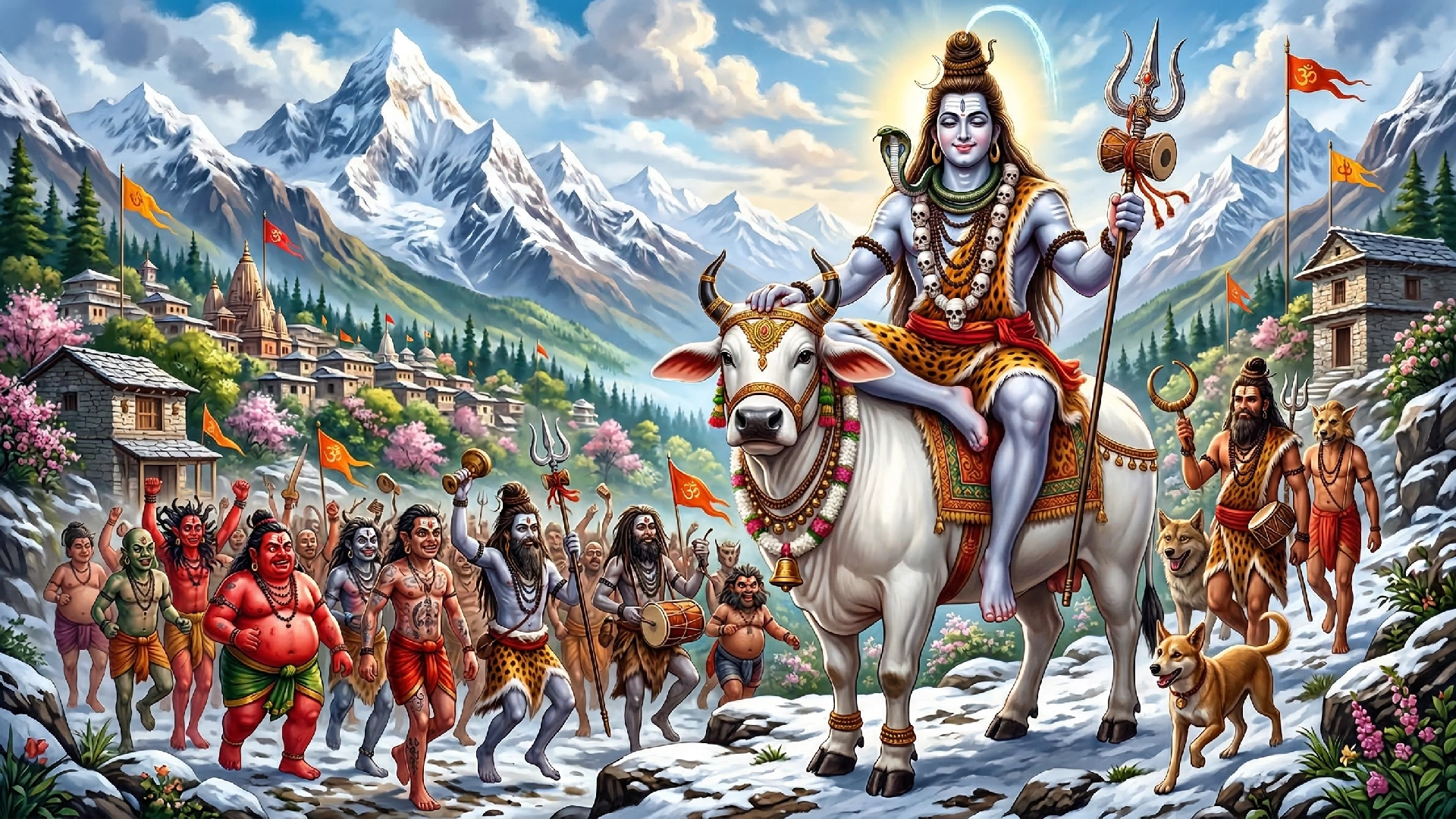
शिवजी की बारात और विवाह की तैयारी – Lord Shiv’s marriage procession and celebrations
चौपाई :
* सबु प्रसंगु गिरिपतिहि सुनावा। मदन दहन सुनि अति दुखु पावा॥
बहुरि कहेउ रति कर बरदाना। सुनि हिमवंत बहुत सुखु माना॥1॥
भावार्थ:-उन्होंने पर्वतराज हिमाचल को सब हाल सुनाया। कामदेव का भस्म होना सुनकर हिमाचल बहुत दुःखी हुए। फिर मुनियों ने रति के वरदान की बात कही, उसे सुनकर हिमवान् ने बहुत सुख माना॥1॥
The Sages recounted the entire episode of Kaamdev to King Himvan. Upon hearing of Kaamdev’s demise, he was deeply grieved. However, when they spoke of Rati’s boon, King Himvan was filled with joy.
* हृदयँ बिचारि संभु प्रभुताई। सादर मुनिबर लिए बोलाई।
सुदिनु सुनखतु सुघरी सोचाई। बेगि बेदबिधि लगन धराई॥2॥
भावार्थ:-शिवजी के प्रभाव को मन में विचार कर हिमाचल ने श्रेष्ठ मुनियों को आदरपूर्वक बुला लिया और उनसे शुभ दिन, शुभ नक्षत्र और शुभ घड़ी शोधवाकर वेद की विधि के अनुसार शीघ्र ही लग्न निश्चय कराकर लिखवा लिया॥2॥
With Lord Shambhu’s glories in his heart, King Himvan respectfully welcomed the great Sages. After determining an auspicious day, a favourable alignment of stars, and a propitious time with them, he promptly confirmed and recorded a suitable wedding date as per Vedic rituals.
* पत्री सप्तरिषिन्ह सोइ दीन्ही। गहि पद बिनय हिमाचल कीन्ही॥
जाइ बिधिहि तिन्ह दीन्हि सो पाती। बाचत प्रीति न हृदयँ समाती॥3॥
भावार्थ:-फिर हिमाचल ने वह लग्नपत्रिका सप्तर्षियों को दे दी और चरण पकड़कर उनकी विनती की। उन्होंने जाकर वह लग्न पत्रिका ब्रह्माजी को दी। उसको पढ़ते समय उनके हृदय में प्रेम समाता न था॥3॥
King Himvan then handed the wedding invitation to the Seven Sages and humbly touched their feet, requesting them to present it to Lord Brahma. The Sages carried the invitation to Brahma ji, and as he read it, His heart overflowed with love.
* लगन बाचि अज सबहि सुनाई। हरषे मुनि सब सुर समुदाई॥
सुमन बृष्टि नभ बाजन बाजे। मंगल कलस दसहुँ दिसि साजे॥4॥
भावार्थ:-ब्रह्माजी ने लग्न पढ़कर सबको सुनाया, उसे सुनकर सब मुनि और देवताओं का सारा समाज हर्षित हो गया। आकाश से फूलों की वर्षा होने लगी, बाजे बजने लगे और दसों दिशाओं में मंगल कलश सजा दिए गए॥4॥
Lord Brahma then read the invitation aloud to everyone. The Sages and the assembly of Demigods were filled with joy. Flowers rained from the skies, melodious music echoed from various instruments, and auspicious jars were placed in all ten directions.
दोहा :
* लगे सँवारन सकल सुर बाहन बिबिध बिमान।
होहिं सगुन मंगल सुभद करहिं अपछरा गान॥91॥
भावार्थ:-सब देवता अपने भाँति-भाँति के वाहन और विमान सजाने लगे, कल्याणप्रद मंगल शकुन होने लगे और अप्सराएँ गाने लगीं॥91॥
All the Demigods then began adorning their divine vehicles and celestial aircraft. Auspicious and joyful omens appeared, while celestial damsels sang melodious songs.
चौपाई :
* सिवहि संभु गन करहिं सिंगारा। जटा मुकुट अहि मौरु सँवारा॥
कुंडल कंकन पहिरे ब्याला। तन बिभूति पट केहरि छाला॥1॥
भावार्थ:-शिवजी के गण शिवजी का श्रृंगार करने लगे। जटाओं का मुकुट बनाकर उस पर साँपों का मौर सजाया गया। शिवजी ने साँपों के ही कुंडल और कंकण पहने, शरीर पर विभूति रमायी और वस्त्र की जगह बाघम्बर लपेट लिया॥1॥
The attendants of the bridegroom, Lord Shambhu, began adorning Him. They fashioned a crown from His matted hair and decorated it with serpents. Snakes served as His earrings and bracelets, while His body was smeared with the sacred ashes of the dead. A lion’s skin was wrapped around Him as His attire.
* ससि ललाट सुंदर सिर गंगा। नयन तीनि उपबीत भुजंगा॥
गरल कंठ उर नर सिर माला। असिव बेष सिवधाम कृपाला॥2॥
भावार्थ:-शिवजी के सुंदर मस्तक पर चन्द्रमा, सिर पर गंगाजी, तीन नेत्र, साँपों का जनेऊ, गले में विष और छाती पर नरमुण्डों की माला थी। इस प्रकार उनका वेष अशुभ होने पर भी वे कल्याण के धाम और कृपालु हैं॥2॥
Lord Shiv adorned the crescent Moon on His beautiful forehead, with the sacred river Ganga flowing from His matted locks, and His three eyes radiating divine wisdom. He wore snakes as His sacred thread, held poison in His neck, and wore a garland of human skulls on His chest. Despite His seemingly inauspicious appearance, Lord Shiv is ever the ultimate source of auspiciousness and boundless mercy.
* कर त्रिसूल अरु डमरु बिराजा। चले बसहँ चढ़ि बाजहिं बाजा॥
देखि सिवहि सुरत्रिय मुसुकाहीं। बर लायक दुलहिनि जग नाहीं॥3॥
भावार्थ:-एक हाथ में त्रिशूल और दूसरे में डमरू सुशोभित है। शिवजी बैल पर चढ़कर चले। बाजे बज रहे हैं। शिवजी को देखकर देवांगनाएँ मुस्कुरा रही हैं (और कहती हैं कि) इस वर के योग्य दुलहिन संसार में नहीं मिलेगी॥3॥
In one hand, He holds His trishul (trident), while His damru (hourglass-shaped drum) adorns the other, adding to His divine splendour. Mounting His bull, Nandi ji, Lord Shiv sets forth, accompanied by the sounds of countless musical instruments. Seeing Him, the wives of the Demigods smiled and remarked that no bride in the world could truly be a match for this unique bridegroom.
* बिष्नु बिरंचि आदि सुरब्राता। चढ़ि चढ़ि बाहन चले बराता॥
सुर समाज सब भाँति अनूपा। नहिं बरात दूलह अनुरुपा॥4॥
भावार्थ:-विष्णु और ब्रह्मा आदि देवताओं के समूह अपने-अपने वाहनों (सवारियों) पर चढ़कर बारात में चले। देवताओं का समाज सब प्रकार से अनुपम (परम सुंदर) था, पर दूल्हे के योग्य बारात न थी॥4॥
Lord Vishnu, Lord Brahma, and the hosts of Demigods ascended their divine vehicles and joined the grand marriage procession. Though the Demigods and their entourages were magnificent in every way, the procession itself appeared unbefitting for the groom.
दोहा :
* बिष्नु कहा अस बिहसि तब बोलि सकल दिसिराज।
बिलग बिलग होइ चलहु सब निज निज सहित समाज॥92॥
भावार्थ:-तब विष्णु भगवान ने सब दिक्पालों को बुलाकर हँसकर ऐसा कहा- सब लोग अपने-अपने दल समेत अलग-अलग होकर चलो॥92॥
Lord Vishnu then summoned the guardians of all directions and, laughing heartily, said, “Let everyone proceed with their respective groups separately…
चौपाई :
* बर अनुहारि बरात न भाई। हँसी करैहहु पर पुर जाई॥
बिष्नु बचन सुनि सुर मुसुकाने। निज निज सेन सहित बिलगाने॥1॥
भावार्थ:-हे भाई! हम लोगों की यह बारात वर के योग्य नहीं है। क्या पराए नगर में जाकर हँसी कराओगे? विष्णु भगवान की बात सुनकर देवता मुस्कुराए और वे अपनी-अपनी सेना सहित अलग हो गए॥1॥
…O’ Brothers, this marriage procession does not match the groom. Do you wish to be laughed at in another city?” Hearing Lord Vishnu’s words, the Demigods smiled and advanced with their respective troops, keeping a slight distance from Lord Shiv.
* मनहीं मन महेसु मुसुकाहीं। हरि के बिंग्य बचन नहिं जाहीं॥
अति प्रिय बचन सुनत प्रिय केरे। भृंगिहि प्रेरि सकल गन टेरे॥2॥
भावार्थ:-महादेवजी (यह देखकर) मन-ही-मन मुस्कुराते हैं कि विष्णु भगवान के व्यंग्य-वचन (दिल्लगी) नहीं छूटते! अपने प्यारे (विष्णु भगवान) के इन अति प्रिय वचनों को सुनकर शिवजी ने भी भृंगी को भेजकर अपने सब गणों को बुलवा लिया॥2॥
Seeing this, Lord Mahesh smiled to Himself and said, “Lord Hari’s playful humour never fades.” Hearing the sweet words of His beloved Vishnu, Shiv ji sent His attendant Bhringi to summon all His attendants.
* सिव अनुसासन सुनि सब आए। प्रभु पद जलज सीस तिन्ह नाए॥
नाना बाहन नाना बेषा। बिहसे सिव समाज निज देखा॥3॥
भावार्थ:-शिवजी की आज्ञा सुनते ही सब चले आए और उन्होंने स्वामी के चरण कमलों में सिर नवाया। तरह-तरह की सवारियों और तरह-तरह के वेष वाले अपने समाज को देखकर शिवजी हँसे॥3॥
Upon hearing Lord Shiv’s command, all His attendants gathered and bowed their heads at His lotus feet. They had various forms and rode different kinds of vehicles. Seeing His diverse and unique followers, Lord Shiv burst into a hearty laughter.
* कोउ मुख हीन बिपुल मुख काहू। बिनु पद कर कोउ बहु पद बाहू॥
बिपुल नयन कोउ नयन बिहीना। रिष्टपुष्ट कोउ अति तनखीना॥4॥
भावार्थ:-कोई बिना मुख का है, किसी के बहुत से मुख हैं, कोई बिना हाथ-पैर का है तो किसी के कई हाथ-पैर हैं। किसी के बहुत आँखें हैं तो किसी के एक भी आँख नहीं है। कोई बहुत मोटा-ताजा है, तो कोई बहुत ही दुबला-पतला है॥4॥
Some were headless, while others had multiple heads. Some lacked hands and feet, while others had countless limbs. Some had many eyes, while others had none at all. Some were robust and powerful, whereas others were frail and emaciated.
छंद :
* तन कीन कोउ अति पीन पावन कोउ अपावन गति धरें।
भूषन कराल कपाल कर सब सद्य सोनित तन भरें॥
खर स्वान सुअर सृकाल मुख गन बेष अगनित को गनै।
बहु जिनस प्रेत पिसाच जोगि जमात बरनत नहिं बनै॥
भावार्थ:-कोई बहुत दुबला, कोई बहुत मोटा, कोई पवित्र और कोई अपवित्र वेष धारण किए हुए है। भयंकर गहने पहने हाथ में कपाल लिए हैं और सब के सब शरीर में ताजा खून लपेटे हुए हैं। गधे, कुत्ते, सूअर और सियार के से उनके मुख हैं। गणों के अनगिनत वेषों को कौन गिने? बहुत प्रकार के प्रेत, पिशाच और योगिनियों की जमाते हैं। उनका वर्णन करते नहीं बनता।
Some were extremely thin, while others were fat; some appeared pure, while others had an impure look. They wore fearsome ornaments, carried skulls in their hands, and were smeared with fresh blood. Their heads resembled those of donkeys, dogs, pigs, and jackals. Who could possibly count the endless forms of these attendants? There were countless groups of ghosts, spirits, and demonesses, many of which were beyond description.
सोरठा :
* नाचहिं गावहिं गीत परम तरंगी भूत सब।
देखत अति बिपरीत बोलहिं बचन बिचित्र बिधि॥93॥
भावार्थ:-भूत-प्रेत नाचते और गाते हैं, वे सब बड़े मौजी हैं। देखने में बहुत ही बेढंगे जान पड़ते हैं और बड़े ही विचित्र ढंग से बोलते हैं॥93॥
All the ghosts and goblins danced and sang, full of mischief and joy. They had bizarre appearances and spoke in a peculiar manner.
चौपाई :
* जस दूलहु तसि बनी बराता। कौतुक बिबिध होहिं मग जाता॥
इहाँ हिमाचल रचेउ बिताना। अति बिचित्र नहिं जाइ बखाना॥1॥
भावार्थ:-जैसा दूल्हा है, अब वैसी ही बारात बन गई है। मार्ग में चलते हुए भाँति-भाँति के कौतुक (तमाशे) होते जाते हैं। इधर हिमाचल ने ऐसा विचित्र मण्डप बनाया कि जिसका वर्णन नहीं हो सकता॥1॥
The marriage procession was in perfect harmony with the bridegroom, Lord Shiv. Along the way, various playful acts added to the joyous celebration. Meanwhile, King Himvan had created a magnificent ceremonial pavilion, so unique and exquisite that it defied description.
* सैल सकल जहँ लगि जग माहीं। लघु बिसाल नहिं बरनि सिराहीं॥
बन सागर सब नदी तलावा। हिमगिरि सब कहुँ नेवत पठावा॥2॥
भावार्थ:-जगत में जितने छोटे-बड़े पर्वत थे, जिनका वर्णन करके पार नहीं मिलता तथा जितने वन, समुद्र, नदियाँ और तालाब थे, हिमाचल ने सबको नेवता भेजा॥2॥
Himvan ji sent invitations to all the great and small mountains across the world, countless and beyond description, along with all the forests, oceans, rivers, lakes, and ponds.
* कामरुप सुंदर तन धारी। सहित समाज सहित बर नारी॥
गए सकल तुहिनाचल गेहा। गावहिं मंगल सहित सनेहा॥3॥
भावार्थ:-वे सब अपनी इच्छानुसार रूप धारण करने वाले सुंदर शरीर धारण कर सुंदरी स्त्रियों और समाजों के साथ हिमाचल के घर गए। सभी स्नेह सहित मंगल गीत गाते हैं॥3॥
Capable of assuming any form at will, they took on charming human appearances and arrived at King Himvan’s home with their beautiful wives and clan members. With heartfelt affection, they sang auspicious songs.
* प्रथमहिं गिरि बहु गृह सँवराए। जथाजोगु तहँ तहँ सब छाए॥
पुर सोभा अवलोकि सुहाई। लागइ लघु बिरंचि निपुनाई॥4॥
भावार्थ:-हिमाचल ने पहले ही से बहुत से घर सजवा रखे थे। यथायोग्य उन-उन स्थानों में सब लोग उतर गए। नगर की सुंदर शोभा देखकर ब्रह्मा की रचना चातुरी भी तुच्छ लगती थी॥4॥
Himvan ji had already adorned numerous rest houses, where guests settled according to their social status. The city’s grandeur was so magnificent that even Lord Brahma’s creative prowess seemed modest in comparison.
छन्द :
* लघु लाग बिधि की निपुनता अवलोकि पुर सोभा सही।
बन बाग कूप तड़ाग सरिता सुभग सब सक को कही॥
मंगल बिपुल तोरन पताका केतु गृह गृह सोहहीं।
बनिता पुरुष सुंदर चतुर छबि देखि मुनि मन मोहहीं॥
भावार्थ:-नगर की शोभा देखकर ब्रह्मा की निपुणता सचमुच तुच्छ लगती है। वन, बाग, कुएँ, तालाब, नदियाँ सभी सुंदर हैं, उनका वर्णन कौन कर सकता है? घर-घर बहुत से मंगल सूचक तोरण और ध्वजा-पताकाएँ सुशोभित हो रही हैं। वहाँ के सुंदर और चतुर स्त्री-पुरुषों की छबि देखकर मुनियों के भी मन मोहित हो जाते हैं॥
Upon witnessing the splendour of King Himvan’s city, even Lord Brahma’s creative skills seemed insignificant. The forests, gardens, wells, ponds, and rivers were so enchanting that their beauty defied description. Every home was adorned with auspicious decorative hangings, flags, and banners. The men and women were exceptionally handsome, intelligent, and graceful, their presence captivated even the hearts of sages.
दोहा :
* जगदंबा जहँ अवतरी सो पुरु बरनि कि जाइ।
रिद्धि सिद्धि संपत्ति सुख नित नूतन अधिकाइ॥94॥
भावार्थ:-जिस नगर में स्वयं जगदम्बा ने अवतार लिया, क्या उसका वर्णन हो सकता है? वहाँ ऋद्धि, सिद्धि, सम्पत्ति और सुख नित-नए बढ़ते जाते हैं॥94॥
Can anyone truly describe the beauty of the city where the Mother of the Universe, Goddess Jagdamba, Herself has incarnated? Auspiciousness, noble virtues, wealth, and happiness are ever-present and continue to grow each day.
चौपाई :
* नगर निकट बरात सुनि आई। पुर खरभरु सोभा अधिकाई॥
करि बनाव सजि बाहन नाना। चले लेन सादर अगवाना॥1॥
भावार्थ:-बारात को नगर के निकट आई सुनकर नगर में चहल-पहल मच गई, जिससे उसकी शोभा बढ़ गई। अगवानी करने वाले लोग बनाव-श्रृंगार करके तथा नाना प्रकार की सवारियों को सजाकर आदर सहित बारात को लेने चले॥1॥
As news spread that the marriage procession had arrived near the city, excitement filled the air, further enhancing its charm. Adorned in their finest attire and decorating their various vehicles, a grand welcome party set out to receive the procession with reverence.
* हियँ हरषे सुर सेन निहारी। हरिहि देखि अति भए सुखारी॥
सिव समाज जब देखन लागे। बिडरि चले बाहन सब भागे॥2॥
भावार्थ:-देवताओं के समाज को देखकर सब मन में प्रसन्न हुए और विष्णु भगवान को देखकर तो बहुत ही सुखी हुए, किन्तु जब शिवजी के दल को देखने लगे तब तो उनके सब वाहन (सवारियों के हाथी, घोड़े, रथ के बैल आदि) डरकर भाग चले॥2॥
Beholding the gathering of the Demigods, the welcome party was filled with joy, and the sight of Lord Vishnu brought them great happiness. However, upon seeing Lord Shiv’s entourage, they were overcome with fear and fled in terror.
* धरि धीरजु तहँ रहे सयाने। बालक सब लै जीव पराने॥
गएँ भवन पूछहिं पितु माता। कहहिं बचन भय कंपित गाता॥3॥
भावार्थ:-कुछ बड़ी उम्र के समझदार लोग धीरज धरकर वहाँ डटे रहे। लड़के तो सब अपने प्राण लेकर भागे। घर पहुँचने पर जब माता-पिता पूछते हैं, तब वे भय से काँपते हुए शरीर से ऐसा वचन कहते हैं॥3॥
The elders remained composed and stayed in place, while the young boys fled to save their lives. Upon reaching home, their parents questioned them, but with their bodies trembling in fear, they could only utter these words,…
* कहिअ काह कहि जाइ न बाता। जम कर धार किधौं बरिआता॥
बरु बौराह बसहँ असवारा। ब्याल कपाल बिभूषन छारा॥4॥
भावार्थ:-क्या कहें, कोई बात कही नहीं जाती। यह बारात है या यमराज की सेना? दूल्हा पागल है और बैल पर सवार है। साँप, कपाल और राख ही उसके गहने हैं॥4॥
“What can we even say? It’s hard to tell whether this is a marriage procession or an army of Yamraj, the God of Death! The groom appears utterly wild, He rides a bull, wears snakes and skulls as ornaments, and His body is smeared with ashes…
छन्द :
* तन छार ब्याल कपाल भूषन नगन जटिल भयंकरा।
सँग भूत प्रेत पिसाच जोगिनि बिकट मुख रजनीचरा॥
जो जिअत रहिहि बरात देखत पुन्य बड़ तेहि कर सही।
देखिहि सो उमा बिबाहु घर घर बात असि लरिकन्ह कही॥
भावार्थ:-दूल्हे के शरीर पर राख लगी है, साँप और कपाल के गहने हैं, वह नंगा, जटाधारी और भयंकर है। उसके साथ भयानक मुखवाले भूत, प्रेत, पिशाच, योगिनियाँ और राक्षस हैं, जो बारात को देखकर जीता बचेगा, सचमुच उसके बड़े ही पुण्य हैं और वही पार्वती का विवाह देखेगा। लड़कों ने घर-घर यही बात कही।
…His body is smeared with ashes, snakes and skulls are His ornaments, He is naked, has matted hair, and looks terrifying. He is surrounded by fearsome ghosts, spirits, phantoms, demons, and demonesses. Anyone who survives after witnessing this dreadful marriage procession should consider themselves extremely fortunate, for only they will have the chance to see Goddess Uma’s wedding.” These were the words the boys carried from house to house.
दोहा :
* समुझि महेस समाज सब जननि जनक मुसुकाहिं।
बाल बुझाए बिबिध बिधि निडर होहु डरु नाहिं॥95॥
भावार्थ:-महेश्वर (शिवजी) का समाज समझकर सब लड़कों के माता-पिता मुस्कुराते हैं। उन्होंने बहुत तरह से लड़कों को समझाया कि निडर हो जाओ, डर की कोई बात नहीं है॥95॥
The parents smiled, understanding that the children were speaking about Lord Shiv’s entourage. Gently reassuring them in various ways, they said, “Do not be afraid; there is no reason to fear.”
चौपाई :
* लै अगवान बरातहि आए। दिए सबहि जनवास सुहाए॥
मैनाँ सुभ आरती सँवारी। संग सुमंगल गावहिं नारी॥1॥
भावार्थ:-अगवान लोग बारात को लिवा लाए, उन्होंने सबको सुंदर जनवासे ठहरने को दिए। मैना (पार्वतीजी की माता) ने शुभ आरती सजाई और उनके साथ की स्त्रियाँ उत्तम मंगलगीत गाने लगीं॥1॥
The welcoming party respectfully received the groom’s marriage procession, arranging elegant rest houses for their stay. Maina ji, Parvati ji’s mother, adorned the sacred items for the aarti tradition, while the accompanying women began singing melodious and auspicious songs.
* कंचन थार सोह बर पानी। परिछन चली हरहि हरषानी॥
बिकट बेष रुद्रहि जब देखा। अबलन्ह उर भय भयउ बिसेषा॥2॥
भावार्थ:-सुंदर हाथों में सोने का थाल शोभित है, इस प्रकार मैना हर्ष के साथ शिवजी का परछन करने चलीं। जब महादेवजी को भयानक वेष में देखा तब तो स्त्रियों के मन में बड़ा भारी भय उत्पन्न हो गया॥2॥
Holding a golden plate in her graceful hands, filled with sacred items for the aarti ceremony, Maina ji joyfully approached to offer aarti to Lord Shambhu. However, upon seeing Lord Rudra’s fierce and formidable appearance, all the women were struck with fear in their hearts.
* भागि भवन पैठीं अति त्रासा। गए महेसु जहाँ जनवासा॥
मैना हृदयँ भयउ दुखु भारी। लीन्ही बोली गिरीसकुमारी॥3॥
भावार्थ:-बहुत ही डर के मारे भागकर वे घर में घुस गईं और शिवजी जहाँ जनवासा था, वहाँ चले गए। मैना के हृदय में बड़ा दुःख हुआ, उन्होंने पार्वतीजी को अपने पास बुला लिया॥3॥
Terrified, she hurried inside her home, while Lord Mahesh proceeded to where the groom’s party was staying. Maina ji’s heart was heavy with sorrow. She called for Parvati ji, the daughter of the Lord of the Mountains, to come to her.
* अधिक सनेहँ गोद बैठारी। स्याम सरोज नयन भरे बारी॥
जेहिं बिधि तुम्हहि रूपु अस दीन्हा। तेहिं जड़ बरु बाउर कस कीन्हा॥4॥
भावार्थ:-और अत्यन्त स्नेह से गोद में बैठाकर अपने नीलकमल के समान नेत्रों में आँसू भरकर कहा- जिस विधाता ने तुमको ऐसा सुंदर रूप दिया, उस मूर्ख ने तुम्हारे दूल्हे को बावला कैसे बनाया?॥4॥
With deep affection, she seated Parvati ji on her lap, her blue lotus-like eyes brimming with tears. She said, “The very Creator who blessed You with such divine beauty, how could He be so merciless as to choose a madman for Your groom?…
छन्द :
* कस कीन्ह बरु बौराह बिधि जेहिं तुम्हहि सुंदरता दई।
जो फलु चहिअ सुरतरुहिं सो बरबस बबूरहिं लागई॥
तुम्ह सहित गिरि तें गिरौं पावक जरौं जलनिधि महुँ परौं।
घरु जाउ अपजसु होउ जग जीवत बिबाहु न हौं करौं॥
भावार्थ:-जिस विधाता ने तुमको सुंदरता दी, उसने तुम्हारे लिए वर बावला कैसे बनाया? जो फल कल्पवृक्ष में लगना चाहिए, वह जबर्दस्ती बबूल में लग रहा है। मैं तुम्हें लेकर पहाड़ से गिर पड़ूँगी, आग में जल जाऊँगी या समुद्र में कूद पड़ूँगी। चाहे घर उजड़ जाए और संसार भर में अपकीर्ति फैल जाए, पर जीते जी मैं इस बावले वर से तुम्हारा विवाह न करूँगी।
…How could the same Creator who blessed You with such beauty choose a lunatic as Your groom? A fruit meant to grow on the divine Kalpavriksha is instead being forced onto a thorny bush. I would rather take You and leap from a mountaintop, be consumed by fire, or drown in the sea. Let our home be ruined, let the world speak ill of us, no matter the consequences, as long as I live, I will never allow this marriage to happen.”
दोहा :
* भईं बिकल अबला सकल दुखित देखि गिरिनारि।
करि बिलापु रोदति बदति सुता सनेहु सँभारि॥96॥।
भावार्थ:-हिमाचल की स्त्री (मैना) को दुःखी देखकर सारी स्त्रियाँ व्याकुल हो गईं। मैना अपनी कन्या के स्नेह को याद करके विलाप करती, रोती और कहती थीं-॥96॥
Seeing King Himvan’s wife in such sorrow, all the women around her became deeply distressed. Overcome with motherly love for Parvati ji, Maina ji wailed in anguish, crying out in grief.
चौपाई :
* नारद कर मैं काह बिगारा। भवनु मोर जिन्ह बसत उजारा॥
अस उपदेसु उमहि जिन्ह दीन्हा। बौरे बरहि लागि तपु कीन्हा॥1॥
भावार्थ:-मैंने नारद का क्या बिगाड़ा था, जिन्होंने मेरा बसता हुआ घर उजाड़ दिया और जिन्होंने पार्वती को ऐसा उपदेश दिया कि जिससे उसने बावले वर के लिए तप किया॥1॥
Maina ji cried out, “What wrong have I done to Sage Narad that he destroyed my home before it could even flourish? It was he who advised Uma to undergo severe penance for a madman as Her groom…
* साचेहुँ उन्ह कें मोह न माया। उदासीन धनु धामु न जाया॥
पर घर घालक लाज न भीरा। बाँझ कि जान प्रसव कै पीरा॥2॥
भावार्थ:-सचमुच उनके न किसी का मोह है, न माया, न उनके धन है, न घर है और न स्त्री ही है, वे सबसे उदासीन हैं। इसी से वे दूसरे का घर उजाड़ने वाले हैं। उन्हें न किसी की लाज है, न डर है। भला, बाँझ स्त्री प्रसव की पीड़ा को क्या जाने॥2॥
…It is true that he has no attachments or desires, he is an ascetic, without wealth, home, or wife. He ruins the homes of others without shame or fear. How can a barren woman ever understand the pain of childbirth?”
* जननिहि बिकल बिलोकि भवानी। बोली जुत बिबेक मृदु बानी॥
अस बिचारि सोचहि मति माता। सो न टरइ जो रचइ बिधाता॥3॥
भावार्थ:-माता को विकल देखकर पार्वतीजी विवेकयुक्त कोमल वाणी बोलीं- हे माता! जो विधाता रच देते हैं, वह टलता नहीं, ऐसा विचार कर तुम सोच मत करो!॥3॥
Seeing Her mother in distress, Goddess Bhawani gently spoke words of wisdom: “O’ Mother, please do not grieve. Remember that whatever is destined by the Divine cannot be altered…
* करम लिखा जौं बाउर नाहू। तौ कत दोसु लगाइअ काहू॥
तुम्ह सन मिटहिं कि बिधि के अंका। मातु ब्यर्थ जनि लेहु कलंका॥4॥
भावार्थ:-जो मेरे भाग्य में बावला ही पति लिखा है, तो किसी को क्यों दोष लगाया जाए? हे माता! क्या विधाता के अंक तुमसे मिट सकते हैं? वृथा कलंक का टीका मत लो॥4॥
…If a lunatic husband is my destiny, then why blame anyone? O’ Mother, can you erase what has been written by the Creator? Then why bring unnecessary disgrace upon yourself by blaming Sage Narad?…
छन्द :
* जनि लेहु मातु कलंकु करुना परिहरहु अवसर नहीं।
दुखु सुखु जो लिखा लिलार हमरें जाब जहँ पाउब तहीं॥
सुनि उमा बचन बिनीत कोमल सकल अबला सोचहीं।
बहु भाँति बिधिहि लगाइ दूषन नयन बारि बिमोचहीं॥
भावार्थ:-हे माता! कलंक मत लो, रोना छोड़ो, यह अवसर विषाद करने का नहीं है। मेरे भाग्य में जो दुःख-सुख लिखा है, उसे मैं जहाँ जाऊँगी, वहीं पाऊँगी! पार्वतीजी के ऐसे विनय भरे कोमल वचन सुनकर सारी स्त्रियाँ सोच करने लगीं और भाँति-भाँति से विधाता को दोष देकर आँखों से आँसू बहाने लगीं।
…O’ Mother, do not bring blame upon yourself, and stop lamenting—this is not the time for sorrow. The joy and suffering destined for me are inscribed on my forehead, and I will bear them wherever I go.” Hearing Uma ji’s gentle and humble words, all the women grew even more troubled. Tears streamed from their eyes as they cursed the Creator in many ways.
दोहा :
* तेहि अवसर नारद सहित अरु रिषि सप्त समेत।
समाचार सुनि तुहिनगिरि गवने तुरत निकेत॥97॥
भावार्थ:-इस समाचार को सुनते ही हिमाचल उसी समय नारदजी और सप्त ऋषियों को साथ लेकर अपने घर गए॥97॥
Upon hearing this news, the King of Mountains, King Himvan, hurried to his palace, accompanied by Sage Narad and the Seven Sages.
चौपाई :
* तब नारद सबही समुझावा। पूरुब कथा प्रसंगु सुनावा॥
मयना सत्य सुनहु मम बानी। जगदंबा तव सुता भवानी॥1॥
भावार्थ:-तब नारदजी ने पूर्वजन्म की कथा सुनाकर सबको समझाया (और कहा) कि हे मैना! तुम मेरी सच्ची बात सुनो, तुम्हारी यह लड़की साक्षात जगज्जनी भवानी है॥1॥
Then, Sage Narad began recounting the events of Uma ji’s past life to everyone. He said, “O’ Maina, listen to my words of truth, your daughter is none other than the Mother of the Universe, Goddess Bhawani…
* अजा अनादि सक्ति अबिनासिनि। सदा संभु अरधंग निवासिनि॥
जग संभव पालन लय कारिनि। निज इच्छा लीला बपु धारिनि॥2॥
भावार्थ:-ये अजन्मा, अनादि और अविनाशिनी शक्ति हैं। सदा शिवजी के अर्द्धांग में रहती हैं। ये जगत की उत्पत्ति, पालन और संहार करने वाली हैं और अपनी इच्छा से ही लीला शरीर धारण करती हैं॥2॥
…She is unborn, without beginning, and an eternal divine energy. She forever dwells with the immortal Lord Shambhu as His inseparable other half. She is the very source of creation, preservation, and dissolution of the Universe. By Her own will, She takes on a physical form to enact Her divine exploits…
* जनमीं प्रथम दच्छ गृह जाई। नामु सती सुंदर तनु पाई॥
तहँहुँ सती संकरहि बिबाहीं। कथा प्रसिद्ध सकल जग माहीं॥3॥
भावार्थ:-पहले ये दक्ष के घर जाकर जन्मी थीं, तब इनका सती नाम था, बहुत सुंदर शरीर पाया था। वहाँ भी सती शंकरजी से ही ब्याही गई थीं। यह कथा सारे जगत में प्रसिद्ध है॥3॥
…First, She was born in the house of Daksha Prajapati, blessed with divine beauty, and was named Sati. Even then, She was married to Lord Shankar. This story is well known across the world…
* एक बार आवत सिव संगा। देखेउ रघुकुल कमल पतंगा॥
भयउ मोहु सिव कहा न कीन्हा। भ्रम बस बेषु सीय कर लीन्हा॥4॥
भावार्थ:-एक बार इन्होंने शिवजी के साथ आते हुए (राह में) रघुकुल रूपी कमल के सूर्य श्री रामचन्द्रजी को देखा, तब इन्हें मोह हो गया और इन्होंने शिवजी का कहना न मानकर भ्रमवश सीताजी का वेष धारण कर लिया॥4॥
…One day, while accompanying Lord Shiv, She beheld Lord Ram, the radiant Sun of the Raghu dynasty. Ignoring Lord Shankar’s counsel, She was overcome by illusion and, in Her delusion, assumed the form of Sita ji, the wife of Lord Ram…
छन्द :
* सिय बेषु सतीं जो कीन्ह तेहिं अपराध संकर परिहरीं।
हर बिरहँ जाइ बहोरि पितु कें जग्य जोगानल जरीं॥
अब जनमि तुम्हरे भवन निज पति लागि दारुन तपु किया।
अस जानि संसय तजहु गिरिजा सर्बदा संकरप्रिया॥
भावार्थ:-सतीजी ने जो सीता का वेष धारण किया, उसी अपराध के कारण शंकरजी ने उनको त्याग दिया। फिर शिवजी के वियोग में ये अपने पिता के यज्ञ में जाकर वहीं योगाग्नि से भस्म हो गईं। अब इन्होंने तुम्हारे घर जन्म लेकर अपने पति के लिए कठिन तप किया है ऐसा जानकर संदेह छोड़ दो, पार्वतीजी तो सदा ही शिवजी की प्रिया (अर्द्धांगिनी) हैं।
Lord Shankar renounced Sati ji because She had taken the form of Sita ji, (the wife of Lord Ram, whom Shiv ji reveres as His supreme deity). First, She grieved due to Her abandonment by Lord Shiv, and later, at Her father’s yajna, She endured further sorrow. Ultimately, She immolated Herself through Her yogic energy. Now, She has been reborn in your household and has undertaken rigorous penance for the sake of Her groom, Lord Shiv. Knowing this, cast aside all doubts, Girija has always been and will always remain the beloved of Lord Shankar.”
दोहा :
* सुनि नारद के बचन तब सब कर मिटा बिषाद।
छन महुँ ब्यापेउ सकल पुर घर घर यह संबाद॥98॥
भावार्थ:-तब नारद के वचन सुनकर सबका विषाद मिट गया और क्षणभर में यह समाचार सारे नगर में घर-घर फैल गया॥98॥
Listening to Sage Narad’s words, everyone’s sorrow vanished, and soon, the news spread to every household in the town.
चौपाई :
* तब मयना हिमवंतु अनंदे। पुनि पुनि पारबती पद बंदे॥
नारि पुरुष सिसु जुबा सयाने। नगर लोग सब अति हरषाने॥1॥
भावार्थ:-तब मैना और हिमवान आनंद में मग्न हो गए और उन्होंने बार-बार पार्वती के चरणों की वंदना की। स्त्री, पुरुष, बालक, युवा और वृद्ध नगर के सभी लोग बहुत प्रसन्न हुए॥1॥
Then, Maina ji and King Himvan were overjoyed and repeatedly bowed at the feet of Parvati ji in reverence. Men, women, children, elders, and all the townspeople rejoiced with immense happiness.
* लगे होन पुर मंगल गाना। सजे सबहिं हाटक घट नाना॥
भाँति अनेक भई जेवनारा। सूपसास्त्र जस कछु ब्यवहारा॥2॥
भावार्थ:-नगर में मंगल गीत गाए जाने लगे और सबने भाँति-भाँति के सुवर्ण के कलश सजाए। पाक शास्त्र में जैसी रीति है, उसके अनुसार अनेक भाँति की ज्योनार हुई (रसोई बनी)॥2॥
Auspicious festive songs echoed throughout the town as people adorned their homes with countless golden pitchers. Lavish feasts were prepared and served, following the tradition of offering gourmet delicacies on such sacred occasions.
*सो जेवनार कि जाइ बखानी। बसहिं भवन जेहिं मातु भवानी॥
सादर बोले सकल बराती। बिष्नु बिरंचि देव सब जाती॥3॥
भावार्थ:-जिस घर में स्वयं माता भवानी रहती हों, वहाँ की ज्योनार (भोजन सामग्री) का वर्णन कैसे किया जा सकता है? हिमाचल ने आदरपूर्वक सब बारातियों, विष्णु, ब्रह्मा और सब जाति के देवताओं को बुलवाया॥3॥
Who can truly describe the grandeur of the lavish feasts in a home where Mother Bhawani resides? Lord Vishnu, Lord Brahma, numerous groups of Demigods, and the entire wedding procession were respectfully invited to partake in the divine celebration.
* बिबिधि पाँति बैठी जेवनारा। लागे परुसन निपुन सुआरा॥
नारिबृंद सुर जेवँत जानी। लगीं देन गारीं मृदु बानी॥4॥
भावार्थ:-भोजन (करने वालों) की बहुत सी पंगतें बैठीं। चतुर रसोइए परोसने लगे। स्त्रियों की मंडलियाँ देवताओं को भोजन करते जानकर कोमल वाणी से गालियाँ देने लगीं॥4॥
They were all seated in neat rows, and the highly skilled chefs began serving the grand feast. When the groups of women saw the Demigods enjoying the meal, they playfully hurled sweet-toned mock abuses (a delightful part of traditional wedding rituals).
छन्द :
* गारीं मधुर स्वर देहिं सुंदरि बिंग्य बचन सुनावहीं।
भोजनु करहिं सुर अति बिलंबु बिनोदु सुनि सचु पावहीं॥
जेवँत जो बढ्यो अनंदु सो मुख कोटिहूँ न परै कह्यो।
अचवाँइ दीन्हें पान गवने बास जहँ जाको रह्यो॥
भावार्थ:-सब सुंदरी स्त्रियाँ मीठे स्वर में गालियाँ देने लगीं और व्यंग्य भरे वचन सुनाने लगीं। देवगण विनोद सुनकर बहुत सुख अनुभव करते हैं, इसलिए भोजन करने में बड़ी देर लगा रहे हैं। भोजन के समय जो आनंद बढ़ा वह करोड़ों मुँह से भी नहीं कहा जा सकता। (भोजन कर चुकने पर) सबके हाथ-मुँह धुलवाकर पान दिए गए। फिर सब लोग, जो जहाँ ठहरे थे, वहाँ चले गए।
The beautiful women spoke in sweet voices, playfully teasing the Demigods with lighthearted banter. The Demigods, thoroughly enjoying their words, took their time to finish the feast. The joy of this divine celebration was beyond description, even if a million mouths tried to express it. After the meal, water was provided for washing hands and rinsing mouths, followed by the offering of betel leaves as a mouth freshener. With hearts full of joy, everyone then retired to their respective rest houses.
दोहा :
*बहुरि मुनिन्ह हिमवंत कहुँ लगन सुनाई आइ।
समय बिलोकि बिबाह कर पठए देव बोलाइ॥99॥
भावार्थ:-फिर मुनियों ने लौटकर हिमवान् को लगन (लग्न पत्रिका) सुनाई और विवाह का समय देखकर देवताओं को बुला भेजा॥99॥
Then, the Sages returned and informed Himvan of the auspicious time for the wedding. Upon seeing the propitious moment, the Demigods were invited to gather for the sacred ceremony.
चौपाई :
* बोलि सकल सुर सादर लीन्हे। सबहि जथोचित आसन दीन्हे॥
बेदी बेद बिधान सँवारी। सुभग सुमंगल गावहिं नारी॥1॥
भावार्थ:-सब देवताओं को आदर सहित बुलवा लिया और सबको यथायोग्य आसन दिए। वेद की रीति से वेदी सजाई गई और स्त्रियाँ सुंदर श्रेष्ठ मंगल गीत गाने लगीं॥1॥
All the Gods were respectfully welcomed and seated in their designated places. The sacred altar for the wedding ceremony was meticulously constructed and adorned according to Vedic traditions. Graceful women began singing auspicious ceremonial songs, filling the atmosphere with divine joy.
* सिंघासनु अति दिब्य सुहावा। जाइ न बरनि बिरंचि बनावा॥
बैठे सिव बिप्रन्ह सिरु नाई। हृदयँ सुमिरि निज प्रभु रघुराई॥2॥
भावार्थ:-वेदिका पर एक अत्यन्त सुंदर दिव्य सिंहासन था, जिस (की सुंदरता) का वर्णन नहीं किया जा सकता, क्योंकि वह स्वयं ब्रह्माजी का बनाया हुआ था। ब्राह्मणों को सिर नवाकर और हृदय में अपने स्वामी श्री रघुनाथजी का स्मरण करके शिवजी उस सिंहासन पर बैठ गए॥2॥
A divine and exquisitely beautiful throne was created on the altar by Lord Brahma, its magnificence beyond description. Lord Shiv, with utmost reverence, bowed to the Brahmins and, with Lord Ram—the finest among the Raghus, firmly in His heart, gracefully took His seat upon the celestial throne.
* बहुरि मुनीसन्ह उमा बोलाईं। करि सिंगारु सखीं लै आईं॥
देखत रूपु सकल सुर मोहे। बरनै छबि अस जग कबि को है॥3॥
भावार्थ:-फिर मुनीश्वरों ने पार्वतीजी को बुलाया। सखियाँ श्रृंगार करके उन्हें ले आईं। पार्वतीजी के रूप को देखते ही सब देवता मोहित हो गए। संसार में ऐसा कवि कौन है, जो उस सुंदरता का वर्णन कर सके?॥3॥
Then, the great Sages called for Goddess Uma. After adorning Parvati ji in splendid attire, Her friends gracefully escorted Her to the altar. The moment the Gods beheld Her divine beauty, they were utterly mesmerized. Who in this world could possibly have the words to describe the unparalleled radiance of Goddess Parvati?
* जगदंबिका जानि भव भामा। सुरन्ह मनहिं मन कीन्ह प्रनामा॥
सुंदरता मरजाद भवानी। जाइ न कोटिहुँ बदन बखानी॥4॥
भावार्थ:-पार्वतीजी को जगदम्बा और शिवजी की पत्नी समझकर देवताओं ने मन ही मन प्रणाम किया। भवानीजी सुंदरता की सीमा हैं। करोड़ों मुखों से भी उनकी शोभा नहीं कही जा सकती॥4॥
Recognizing Goddess Parvati as the Mother of the Universe and the eternal wife of Lord Shiv, all the Gods bowed to Her in their hearts. The beauty of Goddess Bhawani is boundless, beyond description, and not even a million mouths can express it.
छन्द :
* कोटिहुँ बदन नहिं बनै बरनत जग जननि सोभा महा।
सकुचहिं कहत श्रुति सेष सारद मंदमति तुलसीकहा॥
छबिखानि मातु भवानि गवनीं मध्य मंडप सिव जहाँ।
अवलोकि सकहिं न सकुच पति पद कमल मनु मधुकरु तहाँ॥
भावार्थ:-जगज्जननी पार्वतीजी की महान शोभा का वर्णन करोड़ों मुखों से भी करते नहीं बनता। वेद, शेषजी और सरस्वतीजी तक उसे कहते हुए सकुचा जाते हैं, तब मंदबुद्धि तुलसी किस गिनती में है? सुंदरता और शोभा की खान माता भवानी मंडप के बीच में, जहाँ शिवजी थे, वहाँ गईं। वे संकोच के मारे पति (शिवजी) के चरणकमलों को देख नहीं सकतीं, परन्तु उनका मन रूपी भौंरा तो वहीं (रसपान कर रहा) था।
Millions of mouths cannot fully describe the divine beauty of the Mother of the Universe, Parvati ji. Even the Vedas, Lord Shesha, and Goddess Saraswati hesitate to express it, so how can the dull-witted Tulsidas find the words? (Tulsidas ji utters these humble words.) The embodiment of beauty, Goddess Bhawani, gracefully stepped into the center of the wedding pavilion, where Lord Shiv was seated. Though Her heart clung to His lotus feet like a bumblebee to a flower, She felt shy to lift Her gaze upon them.
दोहा :
* मुनि अनुसासन गनपतिहि पूजेउ संभु भवानि।
कोउ सुनि संसय करै जनि सुर अनादि जियँ जानि॥100॥