
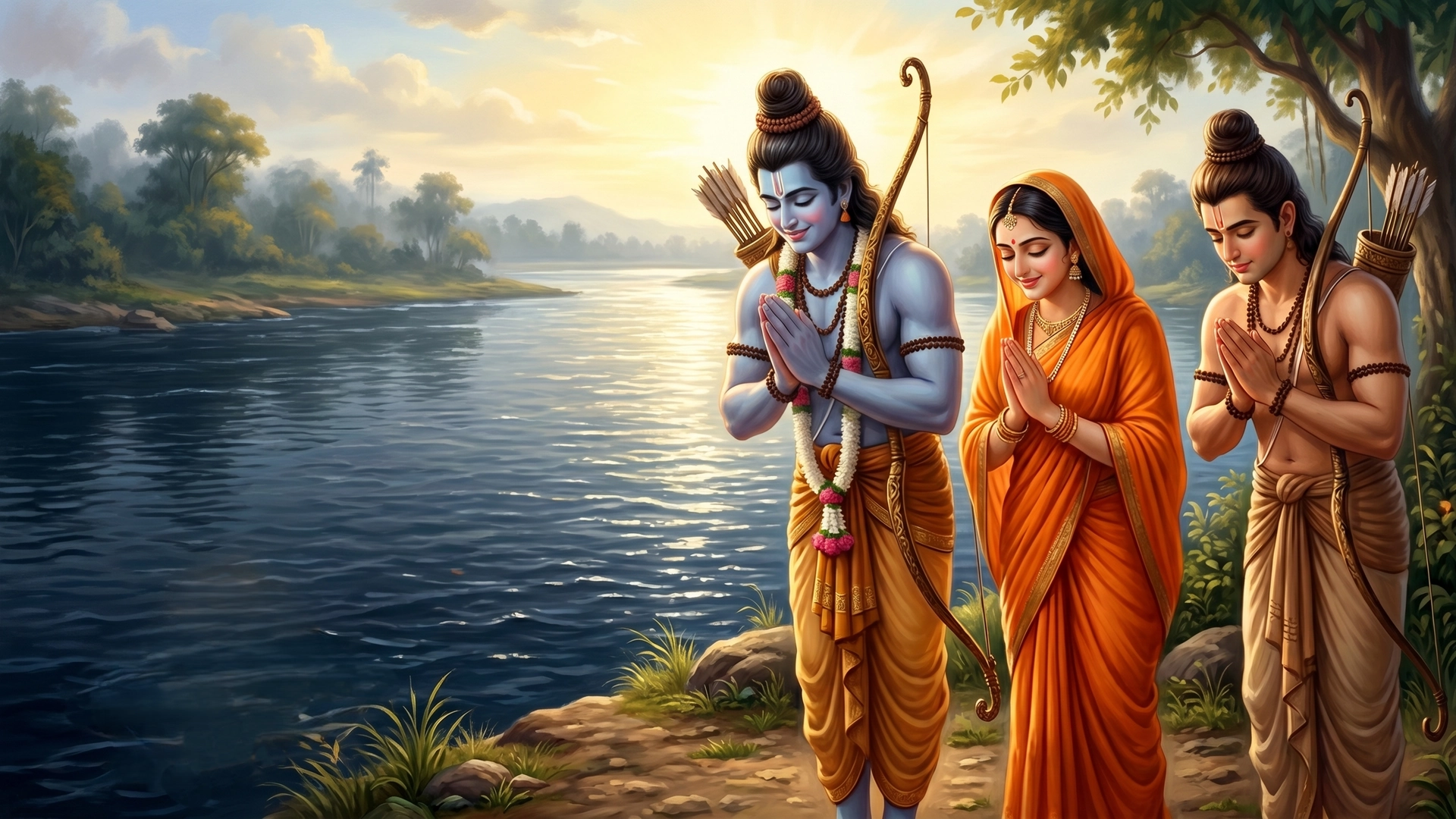
यमुना को प्रणाम, वनवासियों का प्रेम – Shri Ram greets Yamuna river. Love of the villagers towards Shri Ram
दोहा :
* तब रघुबीर अनेक बिधि सखहि सिखावनु दीन्ह।।
राम रजायसु सीस धरि भवन गवनु तेइँ कीन्ह॥111॥
भावार्थ:-तब श्री रामचन्द्रजी ने सखा गुह को अनेकों तरह से (घर लौट जाने के लिए) समझाया। श्री रामचन्द्रजी की आज्ञा को सिर चढ़ाकर उसने अपने घर को गमन किया॥111॥
Then Raghuveer lovingly urged his friend Guh in many ways to return. Obeying Shri Ram’s command with reverence, Guh took leave and headed home.
चौपाई :
* पुनि सियँ राम लखन कर जोरी। जमुनहि कीन्ह प्रनामु बहोरी॥
चले ससीय मुदित दोउ भाई। रबितनुजा कइ करत बड़ाई॥1॥
भावार्थ:-फिर सीताजी, श्री रामजी और लक्ष्मणजी ने हाथ जोड़कर यमुनाजी को पुनः प्रणाम किया और सूर्यकन्या यमुनाजी की बड़ाई करते हुए सीताजी सहित दोनों भाई प्रसन्नतापूर्वक आगे चले॥1॥
Sita ji, Shri Ram, and Lakshman ji once again bowed with folded hands before Yamuna ji. Then, with joyful hearts, the two Brothers continued their journey with Sita ji, praising Yamuna ji, the radiant daughter of the Sun God.
* पथिक अनेक मिलहिं मग जाता। कहहिं सप्रेम देखि दोउ भ्राता॥
राज लखन सब अंग तुम्हारें। देखि सोचु अति हृदय हमारें॥2॥
भावार्थ:-रास्ते में जाते हुए उन्हें अनेकों यात्री मिलते हैं। वे दोनों भाइयों को देखकर उनसे प्रेमपूर्वक कहते हैं कि तुम्हारे सब अंगों में राज चिह्न देखकर हमारे हृदय में बड़ा सोच होता है॥2॥
Along the way, they encountered many travellers on foot. Seeing the two Brothers, the people affectionately said, “Beholding your radiant royal form (your strong warrior-like limbs, faces like the autumnal Moon, lotus-shaped eyes, broad chests, long and powerful arms, and sturdy shoulders bearing bow and arrows) fills our hearts with sorrow…
* मारग चलहु पयादेहि पाएँ। ज्योतिषु झूठ हमारें भाएँ॥
अगमु पंथु गिरि कानन भारी। तेहि महँ साथ नारि सुकुमारी॥3॥
भावार्थ:-(ऐसे राजचिह्नों के होते हुए भी) तुम लोग रास्ते में पैदल ही चल रहे हो, इससे हमारी समझ में आता है कि ज्योतिष शास्त्र झूठा ही है। भारी जंगल और बड़े-बड़े पहाड़ों का दुर्गम रास्ता है। तिस पर तुम्हारे साथ सुकुमारी स्त्री है॥3॥
…to see you walking barefoot along this rugged path. It makes us question the truth of astrology (which declares that those blessed with such divine features are born to royalty and should travel in grand chariots). This journey winds through treacherous terrain, with towering mountains and fearsome forests. And to add to our concern, You have a delicate woman accompanying You…
* करि केहरि बन जाइ न जोई। हम सँग चलहिं जो आयसु होई॥
जाब जहाँ लगि तहँ पहुँचाई। फिरब बहोरि तुम्हहि सिरु नाई॥4॥
भावार्थ:-हाथी और सिंहों से भरा यह भयानक वन देखा तक नहीं जाता। यदि आज्ञा हो तो हम साथ चलें। आप जहाँ तक जाएँगे, वहाँ तक पहुँचाकर, फिर आपको प्रणाम करके हम लौट आवेंगे॥4॥
…The forest is filled with elephants and lions and is dreadful even to behold. If You would permit us, we would gladly accompany You. We will escort You wherever You wish to go, and then, after offering our humble obeisance, we shall return.”
दोहा :
* एहि बिधि पूँछहिं प्रेम बस पुलक गात जलु नैन।
कृपासिंधु फेरहिं तिन्हहि कहि बिनीत मृदु बैन॥112॥
भावार्थ:-इस प्रकार वे यात्री प्रेमवश पुलकित शरीर हो और नेत्रों में (प्रेमाश्रुओं का) जल भरकर पूछते हैं, किन्तु कृपा के समुद्र श्री रामचन्द्रजी कोमल विनययुक्त वचन कहकर उन्हें लौटा देते हैं॥112॥
In this manner, the people lovingly offered their services, their eyes brimming with tears and their bodies trembling with emotion. The ocean of compassion replied with gentle words and, with utmost grace, kindly sent them back.
चौपाई :
* जे पुर गाँव बसहिं मग माहीं। तिन्हहि नाग सुर नगर सिहाहीं॥
केहि सुकृतीं केहि घरीं बसाए। धन्य पुन्यमय परम सुहाए॥1॥
भावार्थ:-जो गाँव और पुरवे रास्ते में बसे हैं, नागों और देवताओं के नगर उनको देखकर प्रशंसा पूर्वक ईर्षा करते और ललचाते हुए कहते हैं कि किस पुण्यवान् ने किस शुभ घड़ी में इनको बसाया था, जो आज ये इतने धन्य और पुण्यमय तथा परम सुंदर हो रहे हैं॥1॥
The abodes of Serpents and Demigods praised the towns and villages inhabited along the way. Filled with envy and longing, they exclaimed, “Who is that noble soul who settled people in these places, and under what auspicious hour were they established, that today they are so fortunate, blessed, and beautiful!”
* जहँ जहँ राम चरन चलि जाहीं। तिन्ह समान अमरावति नाहीं॥
पुन्यपुंज मग निकट निवासी। तिन्हहि सराहहिं सुरपुरबासी॥2॥
भावार्थ:-जहाँ-जहाँ श्री रामचन्द्रजी के चरण चले जाते हैं, उनके समान इन्द्र की पुरी अमरावती भी नहीं है। रास्ते के समीप बसने वाले भी बड़े पुण्यात्मा हैं- स्वर्ग में रहने वाले देवता भी उनकी सराहना करते हैं-॥2॥
Even the celestial city of Amravati, ruled by the Lord of Heaven, could not compare to the places where Shri Ram set His divine feet. The people living in those regions were reservoirs of virtues, so much so that even the dwellers of Heaven looked upon them with envy.
* जे भरि नयन बिलोकहिं रामहि। सीता लखन सहित घनस्यामहि॥
जे सर सरित राम अवगाहहिं। तिन्हहि देव सर सरित सराहहिं॥3॥
भावार्थ:-जो नेत्र भरकर सीताजी और लक्ष्मणजी सहित घनश्याम श्री रामजी के दर्शन करते हैं, जिन तालाबों और नदियों में श्री रामजी स्नान कर लेते हैं, देवसरोवर और देवनदियाँ भी उनकी बड़ाई करती हैं॥3॥
These blessed people rejoiced beholding the sight of Sita ji, Lakshman ji, and Shri Ram, whose dark-hued form shone like a rain-laden cloud. The lakes and rivers in which Shri Ram bathed were so sanctified that even the celestial river Ganga and the divine Mansarovar Lake sang their praises.
* जेहि तरु तर प्रभु बैठहिं जाई। करहिं कलपतरु तासु बड़ाई॥
परसि राम पद पदुम परागा। मानति भूमि भूरि निज भागा॥4॥
भावार्थ:-जिस वृक्ष के नीचे प्रभु जा बैठते हैं, कल्पवृक्ष भी उसकी बड़ाई करते हैं। श्री रामचन्द्रजी के चरणकमलों की रज का स्पर्श करके पृथ्वी अपना बड़ा सौभाग्य मानती है॥4॥
The trees under which the Lord sat were praised even by the celestial wish-fulfilling tree. The Earth, upon receiving the dust of Shri Ram’s lotus feet, considered herself truly blessed.
दोहा :
* छाँह करहिं घन बिबुधगन बरषहिं सुमन सिहाहिं।
देखत गिरि बन बिहग मृग रामु चले मग जाहिं॥113॥
भावार्थ:-रास्ते में बादल छाया करते हैं और देवता फूल बरसाते और सिहाते हैं। पर्वत, वन और पशु-पक्षियों को देखते हुए श्री रामजी रास्ते में चले जा रहे हैं॥113॥
The clouds offered their shade, and the Demigods showered flowers while singing praises of Shri Ram. As He walked, Shri Ram gazed with serene joy upon the mountains, forests, birds, and animals along the path.
चौपाई :
* सीता लखन सहित रघुराई। गाँव निकट जब निकसहिं जाई॥
सुनि सब बाल बृद्ध नर नारी। चलहिं तुरत गृह काजु बिसारी॥1॥
भावार्थ:-सीताजी और लक्ष्मणजी सहित श्री रघुनाथजी जब किसी गाँव के पास जा निकलते हैं, तब उनका आना सुनते ही बालक-बूढ़े, स्त्री-पुरुष सब अपने घर और काम-काज को भूलकर तुरंत उन्हें देखने के लिए चल देते हैं॥1॥
Whenever Sita ji and Lakshman ji, along with Shri Raghuveer, passed by a village, the moment the news spread, children, youth, elders, and women alike would drop everything and rush out eagerly to catch a glimpse of them.
* राम लखन सिय रूप निहारी। पाइ नयन फलु होहिं सुखारी॥
सजल बिलोचन पुलक सरीरा। सब भए मगन देखि दोउ बीरा॥2॥
भावार्थ:-श्री राम, लक्ष्मण और सीताजी का रूप देखकर, नेत्रों का (परम) फल पाकर वे सुखी होते हैं। दोनों भाइयों को देखकर सब प्रेमानन्द में मग्न हो गए। उनके नेत्रों में जल भर आया और शरीर पुलकित हो गए॥2॥
Beholding the divine beauty of Shri Ram, Lakshman ji, and Sita ji, the villagers felt their eyes had received the ultimate reward. Mesmerized by the sight of the courageous Brothers, their eyes brimmed with tears and their bodies quivered with devotion and bliss.
* बरनि न जाइ दसा तिन्ह केरी। लहि जनु रंकन्ह सुरमनि ढेरी॥
एकन्ह एक बोलि सिख देहीं। लोचन लाहु लेहु छन एहीं॥3॥
भावार्थ:-उनकी दशा वर्णन नहीं की जाती। मानो दरिद्रों ने चिन्तामणि की ढेरी पा ली हो। वे एक-एक को पुकारकर सीख देते हैं कि इसी क्षण नेत्रों का लाभ ले लो॥3॥
Their condition was beyond words, like paupers who had suddenly found a treasure of wish-fulfilling gems. They called out to one another, saying, “Come quickly and claim the reward of your eyes this very moment!”
* रामहि देखि एक अनुरागे। चितवत चले जाहिं सँग लागे॥
एक नयन मग छबि उर आनी। होहिं सिथिल तन मन बर बानी॥4॥
भावार्थ:-कोई श्री रामचन्द्रजी को देखकर ऐसे अनुराग में भर गए हैं कि वे उन्हें देखते हुए उनके साथ लगे चले जा रहे हैं। कोई नेत्र मार्ग से उनकी छबि को हृदय में लाकर शरीर, मन और श्रेष्ठ वाणी से शिथिल हो जाते हैं (अर्थात् उनके शरीर, मन और वाणी का व्यवहार बंद हो जाता है)॥4॥
Some were so lost in love while gazing at Shri Ram that they walked beside Him, unable to take their eyes off Him. Others absorbed His divine image through their eyes into their hearts and became utterly still, unable to speak, move, or even think.
दोहा :
* एक देखि बट छाँह भलि डासि मृदुल तृन पात।
कहहिं गवाँइअ छिनुकु श्रमु गवनब अबहिंकि प्रात॥114॥
भावार्थ:-कोई बड़ की सुंदर छाया देखकर, वहाँ नरम घास और पत्ते बिछाकर कहते हैं कि क्षण भर यहाँ बैठकर थकावट मिटा लीजिए। फिर चाहे अभी चले जाइएगा, चाहे सबेरे॥114॥
Upon seeing the soothing shade of a banyan tree, some villagers laid out soft grass and leaves beneath it and earnestly requested, “Please rest here for a while and relieve Your fatigue. You may resume Your journey after some rest or later in the morning, as You wish.”
चौपाई :
* एक कलस भरि आनहिं पानी। अँचइअ नाथ कहहिं मृदु बानी॥
सुनि प्रिय बचन प्रीति अति देखी। राम कृपाल सुसील बिसेषी॥1॥
भावार्थ:-कोई घड़ा भरकर पानी ले आते हैं और कोमल वाणी से कहते हैं- नाथ! आचमन तो कर लीजिए। उनके प्यारे वचन सुनकर और उनका अत्यन्त प्रेम देखकर दयालु और परम सुशील श्री रामचन्द्रजी ने-॥1॥
Some others brought a pitcher filled with water and gently said, “O’ Lord, please refresh Yourself with a drink.” Hearing their kind words and witnessing their heartfelt devotion, the ever-compassionate Shri Ram…
* जानी श्रमित सीय मन माहीं। घरिक बिलंबु कीन्ह बट छाहीं॥
मुदित नारि नर देखहिं सोभा। रूप अनूप नयन मनु लोभा॥2॥
भावार्थ:-मन में सीताजी को थकी हुई जानकर घड़ी भर बड़ की छाया में विश्राम किया। स्त्री-पुरुष आनंदित होकर शोभा देखते हैं। अनुपम रूप ने उनके नेत्र और मनों को लुभा लिया है॥2॥
…thought in His heart that Sita ji must be weary. So, they paused to rest beneath the shade of the banyan tree for about twenty-four minutes. As the villagers beheld their divine forms, their hearts overflowed with joy. Captivated by their celestial beauty, the people’s eyes and souls became absorbed in love.
* एकटक सब सोहहिं चहुँ ओरा। रामचन्द्र मुख चंद चकोरा॥
तरुन तमाल बरन तनु सोहा। देखत कोटि मदन मनु मोहा॥3॥
भावार्थ:-सब लोग टकटकी लगाए श्री रामचन्द्रजी के मुख चन्द्र को चकोर की तरह (तन्मय होकर) देखते हुए चारों ओर सुशोभित हो रहे हैं। श्री रामजी का नवीन तमाल वृक्ष के रंग का (श्याम) शरीर अत्यन्त शोभा दे रहा है, जिसे देखते ही करोड़ों कामदेवों के मन मोहित हो जाते हैं॥3॥
They gracefully gathered around Shri Ramchandra, their eyes fixed upon His enchanting face, much like chakor birds drawn to the moonlight. Beholding His radiant form, dark-hued like a tender bay leaf tree, even the hearts of countless Cupids would be spellbound.
* दामिनि बरन लखन सुठि नीके। नख सिख सुभग भावते जी के॥
मुनि पट कटिन्ह कसें तूनीरा। सोहहिं कर कमलनि धनु तीरा॥4॥
भावार्थ:-बिजली के से रंग के लक्ष्मणजी बहुत ही भले मालूम होते हैं। वे नख से शिखा तक सुंदर हैं और मन को बहुत भाते हैं। दोनों मुनियों के (वल्कल आदि) वस्त्र पहने हैं और कमर में तरकस कसे हुए हैं। कमल के समान हाथों में धनुष-बाण शोभित हो रहे हैं॥4॥
Shri Lakshman, with a complexion like the brilliance of lightning, looked exceedingly graceful. From head to toe, his divine form delighted the hearts of all who beheld him. Dressed in the simple attire of a hermit, a quiver was tied around his waist, while a bow and arrow adorned his lotus-like hands, adding to his radiant glory.
दोहा :
* जटा मुकुट सीसनि सुभग उर भुज नयन बिसाल।
सरद परब बिधु बदन बर लसत स्वेद कन जाल॥115॥
भावार्थ:-उनके सिरों पर सुंदर जटाओं के मुकुट हैं, वक्षः स्थल, भुजा और नेत्र विशाल हैं और शरद पूर्णिमा के चन्द्रमा के समान सुंदर मुखों पर पसीने की बूँदों का समूह शोभित हो रहा है॥115॥
A crown of beautifully matted hair adorned their heads. With broad chests, long arms, and large, expressive eyes, their graceful faces shone like the autumnal Moon, glistening with delicate beads of sweat, enhancing their divine charm.
चौपाई :
* बरनि न जाइ मनोहर जोरी। सोभा बहुत थोरि मति मोरी॥
राम लखन सिय सुंदरताई। सब चितवहिं चित मन मति लाई॥1॥
भावार्थ:-उस मनोहर जोड़ी का वर्णन नहीं किया जा सकता, क्योंकि शोभा बहुत अधिक है और मेरी बुद्धि थोड़ी है। श्री राम, लक्ष्मण और सीताजी की सुंदरता को सब लोग मन, चित्त और बुद्धि तीनों को लगाकर देख रहे हैं॥1॥
Poet Tulsidas ji humbly admits that his intellect is far too limited to describe the boundless beauty of the divine duo, whose splendour enchants every heart. All who beheld Shri Ram, Sita ji, and Lakshman ji stood utterly captivated, their minds, hearts, and very souls absorbed in that divine vision.
* थके नारि नर प्रेम पिआसे। मनहुँ मृगी मृग देखि दिआ से॥
सीय समीप ग्रामतिय जाहीं। पूँछत अति सनेहँ सकुचाहीं॥2॥
भावार्थ:-प्रेम के प्यासे (वे गाँवों के) स्त्री-पुरुष (इनके सौंदर्य-माधुर्य की छटा देखकर) ऐसे थकित रह गए जैसे दीपक को देखकर हिरनी और हिरन (निस्तब्ध रह जाते हैं)! गाँवों की स्त्रियाँ सीताजी के पास जाती हैं, परन्तु अत्यन्त स्नेह के कारण पूछते सकुचाती हैं॥2॥
The men and women, overwhelmed with love at the sight of their beauty, stood still, like deer and doe transfixed by a sudden flash of light. The village women, drawn by deep affection, quietly approached Sita ji, yet felt too shy to speak or ask Her anything.
* बार बार सब लागहिं पाएँ। कहहिं बचन मृदु सरल सुभाएँ॥
राजकुमारि बिनय हम करहीं। तिय सुभायँ कछु पूँछत डरहीं॥3॥
भावार्थ:-बार-बार सब उनके पाँव लगतीं और सहज ही सीधे-सादे कोमल वचन कहती हैं- हे राजकुमारी! हम विनती करती (कुछ निवेदन करना चाहती) हैं, परन्तु स्त्री स्वभाव के कारण कुछ पूछते हुए डरती हैं॥3॥
Again and again, they bowed at Her feet and spoke in gentle, heartfelt words, “O’ Princess, we wish to make a humble request, but our feminine modesty holds us back, and we feel hesitant to speak…
* स्वामिनि अबिनय छमबि हमारी। बिलगु न मानब जानि गवाँरी॥
राजकुअँर दोउ सहज सलोने। इन्ह तें लही दुति मरकत सोने॥4॥
भावार्थ:-हे स्वामिनी! हमारी ढिठाई क्षमा कीजिएगा और हमको गँवारी जानकर बुरा न मानिएगा। ये दोनों राजकुमार स्वभाव से ही लावण्यमय (परम सुंदर) हैं। मरकतमणि (पन्ने) और सुवर्ण ने कांति इन्हीं से पाई है (अर्थात मरकतमणि में और स्वर्ण में जो हरित और स्वर्ण वर्ण की आभा है, वह इनकी हरिताभ नील और स्वर्ण कान्ति के एक कण के बराबर भी नहीं है।)॥4॥
…O’ Madam, please forgive our boldness, and knowing that we are simple and uneducated, kindly do not take offence. These two Princes are beyond beautiful. The radiance seen in emeralds (the greenish glow of Shri Ram) and in gold (the golden hue of Shri Lakshman) seems to have taken its brilliance from them alone…
दोहा :
* स्यामल गौर किसोर बर सुंदर सुषमा ऐन।
सरद सर्बरीनाथ मुखु सरद सरोरुह नैन॥116॥
भावार्थ:-श्याम और गौर वर्ण है, सुंदर किशोर अवस्था है, दोनों ही परम सुंदर और शोभा के धाम हैं। शरद पूर्णिमा के चन्द्रमा के समान इनके मुख और शरद ऋतु के कमल के समान इनके नेत्र हैं॥116॥
…One is dark-hued, the other fair, both are youthful, extraordinarily handsome, and embodiments of divine beauty. Their faces shine like the autumnal Moon, and their eyes are shaped like graceful lotus petals…
मासपारायण, सोलहवाँ विश्राम – Pause 16 of 30 Day Recitation
नवाह्नपारायण, चौथा विश्राम – Pause 4 of 9 Day Recitation
चौपाई :
* कोटि मनोज लजावनिहारे। सुमुखि कहहु को आहिं तुम्हारे॥
सुनि सनेहमय मंजुल बानी। सकुची सिय मन महुँ मुसुकानी॥1॥
भावार्थ:-हे सुमुखि! कहो तो अपनी सुंदरता से करोड़ों कामदेवों को लजाने वाले ये तुम्हारे कौन हैं? उनकी ऐसी प्रेममयी सुंदर वाणी सुनकर सीताजी सकुचा गईं और मन ही मन मुस्कुराईं॥1॥
…Their beauty surpasses that of millions of Cupids. O’ Lady with a radiant face, please tell us, what is Your relation to them?” Hearing their affectionate and tender words, Sita ji blushed softly and smiled to Herself in modesty.
* तिन्हहि बिलोकि बिलोकति धरनी। दुहुँ सकोच सकुचति बरबरनी॥
सकुचि सप्रेम बाल मृग नयनी। बोली मधुर बचन पिकबयनी॥2॥
भावार्थ:-उत्तम (गौर) वर्णवाली सीताजी उनको देखकर (संकोचवश) पृथ्वी की ओर देखती हैं। वे दोनों ओर के संकोच से सकुचा रही हैं (अर्थात न बताने में ग्राम की स्त्रियों को दुःख होने का संकोच है और बताने में लज्जा रूप संकोच)। हिरन के बच्चे के सदृश नेत्र वाली और कोकिल की सी वाणी वाली सीताजी सकुचाकर प्रेम सहित मधुर वचन बोलीं-॥2॥
Glancing at the women, Sita ji gently lowered Her eyes to the ground. The graceful Sita ji found Herself caught in a dilemma (if She remained silent, the village women might feel disheartened; yet Her modesty held Her back to speak). With gentle hesitation, the doe-eyed Princess finally responded in a voice as sweet as a cuckoo’s call…
* सहज सुभाय सुभग तन गोरे। नामु लखनु लघु देवर मोरे॥
बहुरि बदनु बिधु अंचल ढाँकी। पिय तन चितइ भौंह करि बाँकी॥3॥
भावार्थ:-ये जो सहज स्वभाव, सुंदर और गोरे शरीर के हैं, उनका नाम लक्ष्मण है, ये मेरे छोटे देवर हैं। फिर सीताजी ने (लज्जावश) अपने चन्द्रमुख को आँचल से ढँककर और प्रियतम (श्री रामजी) की ओर निहारकर भौंहें टेढ़ी करके,॥3॥
…“The one who is gentle by nature, fair-complexioned, and charming, his name is Lakshman. He is my younger brother-in-law.” After saying this, Sita ji shyly covered Her moon-like face with the end of Her sari and cast a tender glance at Her beloved Lord. With slightly arched brows, She looked towards Him with a sidelong, love-filled gaze…
* खंजन मंजु तिरीछे नयननि। निज पति कहेउ तिन्हहि सियँ सयननि॥
भईं मुदित सब ग्रामबधूटीं। रंकन्ह राय रासि जनु लूटीं॥4॥
भावार्थ:-खंजन पक्षी के से सुंदर नेत्रों को तिरछा करके सीताजी ने इशारे से उन्हें कहा कि ये (श्री रामचन्द्रजी) मेरे पति हैं। यह जानकर गाँव की सब युवती स्त्रियाँ इस प्रकार आनंदित हुईं, मानो कंगालों ने धन की राशियाँ लूट ली हों॥4॥
…and with a graceful movement of Her khanjan bird-like eyes, She subtly gestured towards Shri Ram, indicating that He was Her husband. Understanding Her silent expression, the young village women were filled with immense joy, like paupers who had suddenly discovered a priceless royal treasure.
दोहा :
* अति सप्रेम सिय पाँय परि बहुबिधि देहिं असीस।
सदा सोहागिनि होहु तुम्ह जब लगि महि अहि सीस॥117॥
भावार्थ:-वे अत्यन्त प्रेम से सीताजी के पैरों पड़कर बहुत प्रकार से आशीष देती हैं (शुभ कामना करती हैं), कि जब तक शेषजी के सिर पर पृथ्वी रहे, तब तक तुम सदा सुहागिनी बनी रहो,॥117॥
Then, with great love, they bowed at Sita ji’s feet and offered their many heartfelt blessings, saying, “May Your married life remain blissful for as long as the Earth rests upon the mighty hood of Shesh Naag ji…
चौपाई :
* पारबती सम पतिप्रिय होहू। देबि न हम पर छाड़ब छोहू॥
पुनि पुनि बिनय करिअ कर जोरी। जौं एहि मारग फिरिअ बहोरी॥1॥
भावार्थ:-और पार्वतीजी के समान अपने पति की प्यारी होओ। हे देवी! हम पर कृपा न छोड़ना (बनाए रखना)। हम बार-बार हाथ जोड़कर विनती करती हैं, जिसमें आप फिर इसी रास्ते लौटें,॥1॥
…May You be as beloved to Your Lord as Parvati ji is to Lord Shiv. And O’ Goddess, may Your grace always remain upon us. With folded hands, we humbly beg You again and again, when Your exile ends, please return to us through this very path…
* दरसनु देब जानि निज दासी। लखीं सीयँ सब प्रेम पिआसी॥
मधुर बचन कहि कहि परितोषीं। जनु कुमुदिनीं कौमुदीं पोषीं॥2॥
भावार्थ:-और हमें अपनी दासी जानकर दर्शन दें। सीताजी ने उन सबको प्रेम की प्यासी देखा और मधुर वचन कह-कहकर उनका भलीभाँति संतोष किया। मानो चाँदनी ने कुमुदिनियों को खिलाकर पुष्ट कर दिया हो॥2॥
…and grant us the joy of seeing You once more, for we are but Your humble servants.” Seeing the women overwhelmed with love and longing, Sita ji comforted them with many gentle and tender words, like moonlight soothing and nourishing a field of lilies.
* तबहिं लखन रघुबर रुख जानी। पूँछेउ मगु लोगन्हि मृदु बानी॥
सुनत नारि नर भए दुखारी। पुलकित गात बिलोचन बारी॥3॥
भावार्थ:-उसी समय श्री रामचन्द्रजी का रुख जानकर लक्ष्मणजी ने कोमल वाणी से लोगों से रास्ता पूछा। यह सुनते ही स्त्री-पुरुष दुःखी हो गए। उनके शरीर पुलकित हो गए और नेत्रों में (वियोग की सम्भावना से प्रेम का) जल भर आया॥3॥
At that very moment, sensing Shri Ram’s thoughts, Lakshman ji softly requested the villagers to guide them on their way. The moment his words were spoken, a deep sorrow fell upon the men and women. Their bodies overwhelmed with emotion, and tears welled up in their eyes.
* मिटा मोदु मन भए मलीने। बिधि निधि दीन्ह लेत जनु छीने॥
समुझि करम गति धीरजु कीन्हा। सोधि सुगम मगु तिन्ह कहि दीन्हा॥4॥
भावार्थ:-उनका आनंद मिट गया और मन ऐसे उदास हो गए मानो विधाता दी हुई सम्पत्ति छीने लेता हो। कर्म की गति समझकर उन्होंने धैर्य धारण किया और अच्छी तरह निर्णय करके सुगम मार्ग बतला दिया॥4॥
Their joy vanished, and they were overcome with sorrow, as if the Lord had taken back the precious gift He had just bestowed upon them. Realizing it to be the will of fate, they gradually composed themselves. After a brief discussion among themselves, the villagers told them about the easiest path forward.
दोहा :
* लखन जानकी सहित तब गवनु कीन्ह रघुनाथ।
फेरे सब प्रिय बचन कहि लिए लाइ मन साथ॥118॥
भावार्थ:-तब लक्ष्मणजी और जानकीजी सहित श्री रघुनाथजी ने गमन किया और सब लोगों को प्रिय वचन कहकर लौटाया, किन्तु उनके मनों को अपने साथ ही लगा लिया॥118॥
Then Shri Raghunath, along with Lakshman ji and Sita ji, departed on His journey after gently consoling the villagers with kind and comforting words and urging them to return. Though the feet of the villagers turned back, their hearts remained behind, with Shri Ram.
चौपाई :
* फिरत नारि नर अति पछिताहीं। दैअहि दोषु देहिं मन माहीं॥
सहित बिषाद परसपर कहहीं। बिधि करतब उलटे सब अहहीं॥1॥
भावार्थ:-लौटते हुए वे स्त्री-पुरुष बहुत ही पछताते हैं और मन ही मन दैव को दोष देते हैं। परस्पर (बड़े ही) विषाद के साथ कहते हैं कि विधाता के सभी काम उलटे हैं॥1॥
As they made their way back, the men and women were filled with deep remorse, silently cursing fate in their hearts. Grief-stricken, they said to one another, “The ways of the Lord are always the opposite of what we expect…
* निपट निरंकुस निठुर निसंकू। जेहिं ससि कीन्ह सरुज सकलंकू॥
रूख कलपतरु सागरु खारा। तेहिं पठए बन राजकुमारा॥2॥
भावार्थ:-वह विधाता बिल्कुल निरंकुश (स्वतंत्र), निर्दय और निडर है, जिसने चन्द्रमा को रोगी (घटने-बढ़ने वाला) और कलंकी बनाया, कल्पवृक्ष को पेड़ और समुद्र को खारा बनाया। उसी ने इन राजकुमारों को वन में भेजा है॥2॥
…He is utterly independent; unbound by anyone’s wishes, cruel, and fearless. It is He who afflicted even the Moon with a disease, making it wane and wax, and marked it with blemishes. He turned the divine wish-fulfilling Kalpavriksha into just another tree among countless plants, and made the vast ocean undrinkable with salt. And now, it is He who has sent these noble Princes into the forest…
* जौं पै इन्हहिं दीन्ह बनबासू। कीन्ह बादि बिधि भोग बिलासू॥
ए बिचरहिं मग बिनु पदत्राना। रचे बादि बिधि बाहन नाना॥3॥
भावार्थ:-जब विधाता ने इनको वनवास दिया है, तब उसने भोग-विलास व्यर्थ ही बनाए। जब ये बिना जूते के (नंगे ही पैरों) रास्ते में चल रहे हैं, तब विधाता ने अनेकों वाहन (सवारियाँ) व्यर्थ ही रचे॥3॥
…If the Creator intended to send such divine beings into exile, then what was the purpose of creating all the pleasures and comforts of life? And if they were destined to walk barefoot through the forest, then all the chariots, palanquins, and grand vehicles have been crafted in vain by Him…
* ए महि परहिं डासि कुस पाता। सुभग सेज कत सृजत बिधाता॥
तरुबर बास इन्हहि बिधि दीन्हा। धवल धाम रचि रचि श्रमु कीन्हा॥4॥
भावार्थ:-जब ये कुश और पत्ते बिछाकर जमीन पर ही पड़े रहते हैं, तब विधाता सुंदर सेज (पलंग और बिछौने) किसलिए बनाता है? विधाता ने जब इनको बड़े-बड़े पेड़ों (के नीचे) का निवास दिया, तब उज्ज्वल महलों को बना-बनाकर उसने व्यर्थ ही परिश्रम किया॥4॥
…If they were meant to sleep on the bare Earth, upon beds of grass and leaves, then why did the Creator bother to fashion such splendid beds? And if their dwelling was to be beneath the shade of great trees, then what was the need for Him to construct so many grand, milky-white palaces?…
दोहा :
* जौं ए मुनि पट धर जटिल सुंदर सुठि सुकुमार।
बिबिध भाँति भूषन बसन बादि किए करतार॥119॥
भावार्थ:-जो ये सुंदर और अत्यन्त सुकुमार होकर मुनियों के (वल्कल) वस्त्र पहनते और जटा धारण करते हैं, तो फिर करतार (विधाता) ने भाँति-भाँति के गहने और कपड़े वृथा ही बनाए॥119॥
…If these two tender and exceptionally handsome Princes were destined to wear matted locks and simple hermit robes, then what was the need for the Creator to design such exquisite garments and ornaments in the first place?…
चौपाई :
* जौं ए कंदमूल फल खाहीं। बादि सुधादि असन जग माहीं॥
एक कहहिं ए सहज सुहाए। आपु प्रगट भए बिधि न बनाए॥1॥
भावार्थ:-जो ये कन्द, मूल, फल खाते हैं, तो जगत में अमृत आदि भोजन व्यर्थ ही हैं। कोई एक कहते हैं- ये स्वभाव से ही सुंदर हैं (इनका सौंदर्य-माधुर्य नित्य और स्वाभाविक है)। ये अपने-आप प्रकट हुए हैं, ब्रह्मा के बनाए नहीं हैं॥1॥
…If they were meant to survive on roots, bulbs, and forest fruits, then the creation of nectar and countless other delicacies serves no purpose.” Some among the villagers said, “They are not creations of Brahma, they are naturally divine and have manifested on their own…
* जहँ लगिबेद कही बिधि करनी। श्रवन नयन मन गोचर बरनी॥
देखहु खोजि भुअन दस चारी। कहँ अस पुरुष कहाँ असि नारी॥2॥
भावार्थ:-हमारे कानों, नेत्रों और मन के द्वारा अनुभव में आने वाली विधाता की करनी को जहाँ तक वेदों ने वर्णन करके कहा है, वहाँ तक चौदहों लोकों में ढूँढ देखो, ऐसे पुरुष और ऐसी स्त्रियाँ कहाँ हैं? (कहीं भी नहीं हैं, इसी से सिद्ध है कि ये विधाता के चौदहों लोकों से अलग हैं और अपनी महिमा से ही आप निर्मित हुए हैं)॥2॥
…Within the bounds of what the Vedas describe as Lord Brahma’s creation, we have neither seen, heard of, nor experienced such men and women. Could such divine beings even be found if one were to search through all the fourteen realms of existence in the Cosmos?…
* इन्हहि देखि बिधि मनु अनुरागा। पटतर जोग बनावै लागा॥
कीन्ह बहुत श्रम ऐक न आए। तेहिं इरिषा बन आनि दुराए॥3॥
भावार्थ:-इन्हें देखकर विधाता का मन अनुरक्त (मुग्ध) हो गया, तब वह भी इन्हीं की उपमा के योग्य दूसरे स्त्री-पुरुष बनाने लगा। उसने बहुत परिश्रम किया, परन्तु कोई उसकी अटकल में ही नहीं आए (पूरे नहीं उतरे)। इसी ईर्षा के मारे उसने इनको जंगल में लाकर छिपा दिया है॥3॥
…Beholding their divine beauty, the Creator was overjoyed and sought to fashion more beings like them. But despite all His efforts, He failed to match their perfection. Overcome with jealousy and helplessness, He exiled them to the forest, hiding them away from the world’s gaze”.
* एक कहहिं हम बहुत न जानहिं। आपुहि परम धन्य करि मानहिं॥
ते पुनि पुन्यपुंज हम लेखे। जे देखहिं देखिहहिं जिन्ह देखे॥4॥
भावार्थ:-कोई एक कहते हैं- हम बहुत नहीं जानते। हाँ, अपने को परम धन्य अवश्य मानते हैं (जो इनके दर्शन कर रहे हैं) और हमारी समझ में वे भी बड़े पुण्यवान हैं, जिन्होंने इनको देखा है, जो देख रहे हैं और जो देखेंगे॥4॥
Some said, “We may not know much, but we count ourselves truly fortunate. In our eyes, those who have seen them, who are seeing them now, or who will behold them in the future, all such souls are truly blessed and virtuous.”
दोहा :
* एहि बिधि कहि कहि बचन प्रिय लेहिं नयन भरि नीर।
किमि चलिहहिं मारग अगम सुठि सुकुमार सरीर॥120॥
भावार्थ:-इस प्रकार प्रिय वचन कह-कहकर सब नेत्रों में (प्रेमाश्रुओं का) जल भर लेते हैं और कहते हैं कि ये अत्यन्त सुकुमार शरीर वाले दुर्गम (कठिन) मार्ग में कैसे चलेंगे॥120॥
With tear-filled eyes, the people spoke with deep affection, “How will the young Princess and Princes, so delicate in form, endure the hardships of this rugged path?”
चौपाई :
* नारि सनेह बिकल बस होहीं। चकईं साँझ समय जनु सोहीं॥
मृदु पद कमल कठिन मगु जानी। गहबरि हृदयँ कहहिं बर बानी॥1॥
भावार्थ:-स्त्रियाँ स्नेहवश विकल हो जाती हैं। मानो संध्या के समय चकवी (भावी वियोग की पीड़ा से) सोह रही हो। (दुःखी हो रही हो)। इनके चरणकमलों को कोमल तथा मार्ग को कठोर जानकर वे व्यथित हृदय से उत्तम वाणी कहती हैं-॥1॥
Overwhelmed with emotion, all the women were grief-stricken, like chakvi birds at dusk. Aware that their lotus-like feet were tender and the path ahead was harsh, they spoke in gentle, sorrowful tones…
* परसत मृदुल चरन अरुनारे। सकुचति महि जिमि हृदय हमारे॥
जौं जगदीस इन्हहि बनु दीन्हा। कस न सुमनमय मारगु कीन्हा॥2॥
भावार्थ:-इनके कोमल और लाल-लाल चरणों (तलवों) को छूते ही पृथ्वी वैसे ही सकुचा जाती है, जैसे हमारे हृदय सकुचा रहे हैं। जगदीश्वर ने यदि इन्हें वनवास ही दिया, तो सारे रास्ते को पुष्पमय क्यों नहीं बना दिया?॥2॥
…“The touch of their tender, red-hued, lotus-like soles could cause even the Earth to shrink, just as our hearts have. If the Lord of the Universe has willed their exile to the forest, then why did He not adorn their path with flowers?…
* जौं मागा पाइअ बिधि पाहीं। ए रखिअहिं सखि आँखिन्ह माहीं॥
जे नर नारि न अवसर आए। तिन्ह सिय रामु न देखन पाए॥3॥
भावार्थ:-यदि ब्रह्मा से माँगे मिले तो हे सखी! (हम तो उनसे माँगकर) इन्हें अपनी आँखों में ही रखें! जो स्त्री-पुरुष इस अवसर पर नहीं आए, वे श्री सीतारामजी को नहीं देख सके॥3॥
…If the Lord were to grant us a boon, O’ Friend, we would ask Him to keep them sheltered within the lids of our eyes.” Those men and women who could not arrive in time were left heartbroken, having missed the divine sight of Sita ji and Ram ji.
* सुनि सुरूपु बूझहिं अकुलाई। अब लगि गए कहाँ लगि भाई॥
समरथ धाइ बिलोकहिं जाई। प्रमुदित फिरहिं जनमफलु पाई॥4॥
भावार्थ:-उनके सौंदर्य को सुनकर वे व्याकुल होकर पूछते हैं कि भाई! अब तक वे कहाँ तक गए होंगे? और जो समर्थ हैं, वे दौड़ते हुए जाकर उनके दर्शन कर लेते हैं और जन्म का परम फल पाकर, विशेष आनंदित होकर लौटते हैं॥4॥
Upon hearing of their divine beauty, they anxiously asked, “O’ Brother, how far might they have gone by now?” Those who were able, rushed ahead to catch a glimpse of them, and returned with hearts brimming with joy, having felt they had fulfilled the very purpose of their birth.
दोहा :
* अबला बालक बृद्ध जन कर मीजहिं पछिताहिं।
होहिं प्रेमबस लोग इमि रामु जहाँ जहँ जाहिं॥121॥
भावार्थ:-(गर्भवती, प्रसूता आदि) अबला स्त्रियाँ, बच्चे और बूढ़े (दर्शन न पाने से) हाथ मलते और पछताते हैं। इस प्रकार जहाँ-जहाँ श्री रामचन्द्रजी जाते हैं, वहाँ-वहाँ लोग प्रेम के वश में हो जाते हैं॥121॥
Helpless women, children, and the elderly, unable to go and behold the sight of Shri Ram, Sita ji, and Lakshman ji, rubbed their hands in sorrow and wept. In this manner, wherever Shri Ram passed, people’s hearts brimmed with deep love and longing.
चौपाई :
* गाँव गाँव अस होइ अनंदू। देखि भानुकुल कैरव चंदू॥
जे कछु समाचार सुनि पावहिं। ते नृप रानिहि दोसु लगावहिं॥1॥
भावार्थ:-सूर्यकुल रूपी कुमुदिनी को प्रफुल्लित करने वाले चन्द्रमा स्वरूप श्री रामचन्द्रजी के दर्शन कर गाँव-गाँव में ऐसा ही आनंद हो रहा है, जो लोग (वनवास दिए जाने का) कुछ भी समाचार सुन पाते हैं, वे राजा-रानी (दशरथ-कैकेयी) को दोष लगाते हैं॥1॥
In every village that Shri Ram passed through, the people rejoiced at the sight of the Moon of the lily-like Solar dynasty. And those who merely heard the news of the exile condemned the King and Queen with sorrow and disbelief.
* कहहिं एक अति भल नरनाहू। दीन्ह हमहि जोइ लोचन लाहू॥
कहहिं परसपर लोग लोगाईं। बातें सरल सनेह सुहाईं॥2॥
भावार्थ:-कोई एक कहते हैं कि राजा बहुत ही अच्छे हैं, जिन्होंने हमें अपने नेत्रों का लाभ दिया। स्त्री-पुरुष सभी आपस में सीधी, स्नेहभरी सुंदर बातें कह रहे हैं॥2॥
Someone remarked, “The King has done a noble deed by sending them to the forest, for through this, he has granted us the reward of our eyes.” In this way, men and women spoke to one another in tender and heartfelt words.
* ते पितु मातु धन्य जिन्ह जाए। धन्य सो नगरु जहाँ तें आए॥
धन्य सो देसु सैलु बन गाऊँ। जहँ-जहँ जाहिं धन्य सोइ ठाऊँ॥3॥
भावार्थ:-(कहते हैं-) वे माता-पिता धन्य हैं, जिन्होंने इन्हें जन्म दिया। वह नगर धन्य है, जहाँ से ये आए हैं। वह देश, पर्वत, वन और गाँव धन्य है और वही स्थान धन्य है, जहाँ-जहाँ ये जाते हैं॥3॥
They said, “Blessed are the father and mother who gave birth to them. Fortunate is the city from where they have come. And truly sacred are all the lands, mountains, forests, villages, and every place their feet touch…
* सुखु पायउ बिरंचि रचि तेही। ए जेहि के सब भाँति सनेही॥
राम लखन पथि कथा सुहाई। रही सकल मग कानन छाई॥4॥
भावार्थ:-ब्रह्मा ने उसी को रचकर सुख पाया है, जिसके ये (श्री रामचन्द्रजी) सब प्रकार से स्नेही हैं। पथिक रूप श्री राम-लक्ष्मण की सुंदर कथा सारे रास्ते और जंगल में छा गई है॥4॥
…Lord Brahma must have found true joy in creating those who hold Shri Ram, Lakshman ji, and Sita ji dear in every way. The charming tale of Shri Ram and Lakshman ji journeying through the forest has now spread all along the path and deep into the woods”.
दोहा :
* एहि बिधि रघुकुल कमल रबि मग लोगन्ह सुख देत।
जाहिं चले देखत बिपिन सिय सौमित्रि समेत॥122॥
भावार्थ:-रघुकुल रूपी कमल को खिलाने वाले सूर्य श्री रामचन्द्रजी इस प्रकार मार्ग के लोगों को सुख देते हुए सीताजी और लक्ष्मणजी सहित वन को देखते हुए चले जा रहे हैं॥122॥
Thus, spreading joy among all who beheld Him, Shri Ram, the radiant Sun of the lotus-like Solar dynasty, continued on His way, casting gentle glances at the forest, accompanied by Sita ji and Lakshman ji, the noble son of Mother Sumitra.
चौपाई :
* आगें रामु लखनु बने पाछें। तापस बेष बिराजत काछें॥
उभय बीच सिय सोहति कैसें। ब्रह्म जीव बिच माया जैसें॥1॥
भावार्थ:-आगे श्री रामजी हैं, पीछे लक्ष्मणजी सुशोभित हैं। तपस्वियों के वेष बनाए दोनों बड़ी ही शोभा पा रहे हैं। दोनों के बीच में सीताजी कैसी सुशोभित हो रही हैं, जैसे ब्रह्म और जीव के बीच में माया!॥1॥
Shri Ram walked in front, with Lakshman ji following behind, singing His glories. Both were dressed in simple hermit robes. In between them walked Sita ji, gracing the path like Maya (the illusory energy of the Lord), standing between Brahm (the Supreme Being), and the individual soul.
* बहुरि कहउँ छबि जसि मन बसई। जनु मधु मदन मध्य रति लसई॥
उपमा बहुरि कहउँ जियँ जोही। जनु बुध बिधु बिच रोहिनि सोही॥2॥
भावार्थ:-फिर जैसी छबि मेरे मन में बस रही है, उसको कहता हूँ- मानो वसंत ऋतु और कामदेव के बीच में रति (कामेदव की स्त्री) शोभित हो। फिर अपने हृदय में खोजकर उपमा कहता हूँ कि मानो बुध (चंद्रमा के पुत्र) और चन्द्रमा के बीच में रोहिणी (चन्द्रमा की स्त्री) सोह रही हो॥2॥
Tulsidas ji says he will now describe how their divine forms appear in his heart: “Sita ji shone like Rati, the consort of Cupid, standing between the God of Love and the Spring season.” Then, searching deeper within, he found another beautiful comparison: “Sita ji appeared like Rohini, the beloved of the Moon, standing between the Moon God and her son, the celestial body Mercury.”
* प्रभु पद रेख बीच बिच सीता। धरति चरन मग चलति सभीता॥
सीय राम पद अंक बराएँ। लखन चलहिं मगु दाहिन लाएँ॥3॥
भावार्थ:-प्रभु श्री रामचन्द्रजी के (जमीन पर अंकित होने वाले दोनों) चरण चिह्नों के बीच-बीच में पैर रखती हुई सीताजी (कहीं भगवान के चरण चिह्नों पर पैर न टिक जाए इस बात से) डरती हुईं मार्ग में चल रही हैं और लक्ष्मणजी (मर्यादा की रक्षा के लिए) सीताजी और श्री रामचन्द्रजी दोनों के चरण चिह्नों को बचाते हुए दाहिने रखकर रास्ता चल रहे हैं॥3॥
Sita ji walked with great care, placing Her feet gently in the middle of Her Lord’s footprints, hesitant to tread upon the sacred ground touched by Shri Ram’s feet. To protect and preserve the footprints of Sita ji and Shri Ram, Lakshman ji walked along the path keeping to the right side.
* राम लखन सिय प्रीति सुहाई। बचन अगोचर किमि कहि जाई॥
खग मृग मगन देखि छबि होहीं। लिए चोरि चित राम बटोहीं॥4॥