
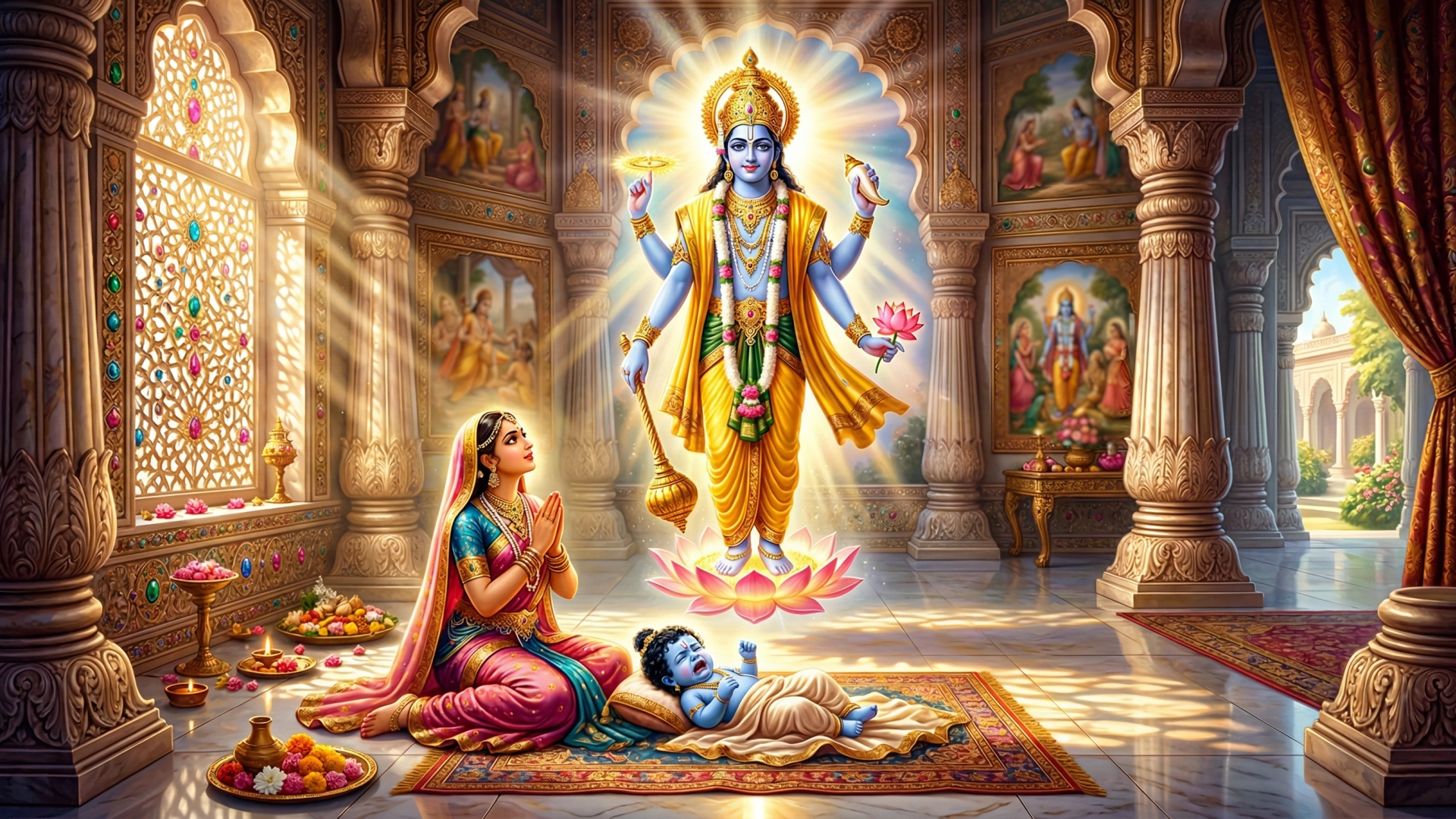
श्री भगवान् का प्राकट्य और बाललीला का आनंद – The Lord’s Avatar and His charming childhood pastimes
दोहा :
* तब अदृस्य भए पावक सकल सभहि समुझाइ।
परमानंद मगन नृप हरष न हृदयँ समाइ॥189॥
भावार्थ:-तदनन्तर अग्निदेव सारी सभा को समझाकर अन्तर्धान हो गए। राजा परमानंद में मग्न हो गए, उनके हृदय में हर्ष समाता न था॥189॥
After delivering his message to the entire gathering, the Fire God vanished. The King, overwhelmed with ecstasy, felt his heart overflow with joy.
चौपाई :
* तबहिं रायँ प्रिय नारि बोलाईं। कौसल्यादि तहाँ चलि आईं॥
अर्ध भाग कौसल्यहि दीन्हा। उभय भाग आधे कर कीन्हा॥1॥
भावार्थ:-उसी समय राजा ने अपनी प्यारी पत्नियों को बुलाया। कौसल्या आदि सब (रानियाँ) वहाँ चली आईं। राजा ने (पायस का) आधा भाग कौसल्या को दिया, (और शेष) आधे के दो भाग किए॥1॥
The King then summoned his beloved wives. Kaushalya ji, along with Sumitra ji and Kaikeyi ji, arrived. He gave half of the rice pudding to Kaushalya ji and divided the remaining half into two equal portions.
* कैकेई कहँ नृप सो दयऊ। रह्यो सो उभय भाग पुनि भयऊ॥
कौसल्या कैकेई हाथ धरि। दीन्ह सुमित्रहि मन प्रसन्न करि॥2॥
भावार्थ:-वह (उनमें से एक भाग) राजा ने कैकेयी को दिया। शेष जो बच रहा उसके फिर दो भाग हुए और राजा ने उनको कौसल्या और कैकेयी के हाथ पर रखकर (अर्थात् उनकी अनुमति लेकर) और इस प्रकार उनका मन प्रसन्न करके सुमित्रा को दिया॥2॥
King Dashrath then gave one portion of the remaining half to Kaikeyi ji. He further divided the leftover pudding into two equal parts and placed them in the hands of Kaushalya ji and Kaikeyi ji, as if seeking their approval. With a joyful heart, he then offered both portions to Saumitra ji.
* एहि बिधि गर्भसहित सब नारी। भईं हृदयँ हरषित सुख भारी॥
जा दिन तें हरि गर्भहिं आए। सकल लोक सुख संपति छाए॥3॥
भावार्थ:-इस प्रकार सब स्त्रियाँ गर्भवती हुईं। वे हृदय में बहुत हर्षित हुईं। उन्हें बड़ा सुख मिला। जिस दिन से श्री हरि (लीला से ही) गर्भ में आए, सब लोकों में सुख और सम्पत्ति छा गई॥3॥
In this way, all the Queens conceived. They were very delighted in their hearts. They experienced great joy. From the day Lord Hari (through His divine play) entered the womb, happiness and prosperity spread throughout all the worlds.
* मंदिर महँ सब राजहिं रानीं। सोभा सील तेज की खानीं॥
सुख जुत कछुक काल चलि गयऊ। जेहिं प्रभु प्रगट सो अवसर भयऊ॥4॥
भावार्थ:-शोभा, शील और तेज की खान (बनी हुई) सब रानियाँ महल में सुशोभित हुईं। इस प्रकार कुछ समय सुखपूर्वक बीता और वह अवसर आ गया, जिसमें प्रभु को प्रकट होना था॥4॥
The Queens, embodying beauty, grace, and glory, adorned the palace with their presence. Time passed joyfully, and then the divine moment arrived for the Lord’s manifestation.
दोहा :
* जोग लगन ग्रह बार तिथि सकल भए अनुकूल।
चर अरु अचर हर्षजुत राम जनम सुखमूल॥190॥
भावार्थ:-योग, लग्न, ग्रह, वार और तिथि सभी अनुकूल हो गए। जड़ और चेतन सब हर्ष से भर गए। (क्योंकि) श्री राम का जन्म सुख का मूल है॥190॥
The alignment of planets, time, zodiac, day, and date turned auspicious. Both the animate and inanimate world brimmed with joy, for the birth of Lord Ram is the source of all happiness.
चौपाई :
* नौमी तिथि मधु मास पुनीता। सुकल पच्छ अभिजित हरिप्रीता॥
मध्यदिवस अति सीत न घामा। पावन काल लोक बिश्रामा॥1॥
भावार्थ:-पवित्र चैत्र का महीना था, नवमी तिथि थी। शुक्ल पक्ष और भगवान का प्रिय अभिजित् मुहूर्त था। दोपहर का समय था। न बहुत सर्दी थी, न धूप (गरमी) थी। वह पवित्र समय सब लोकों को शांति देने वाला था॥1॥
On the ninth day of the sacred Spring month, under the waxing Moon and the Sun at its zenith (Abhijit Muhurat), a planetary alignment beloved by Lord Hari, midday arrived with a perfect balance. Neither too cold nor too hot, this divine moment brought peace and rest to all the worlds.
* सीतल मंद सुरभि बह बाऊ। हरषित सुर संतन मन चाऊ॥
बन कुसुमित गिरिगन मनिआरा। स्रवहिं सकल सरिताऽमृतधारा॥2॥
भावार्थ:-शीतल, मंद और सुगंधित पवन बह रहा था। देवता हर्षित थे और संतों के मन में (बड़ा) चाव था। वन फूले हुए थे, पर्वतों के समूह मणियों से जगमगा रहे थे और सारी नदियाँ अमृत की धारा बहा रही थीं॥2॥
A cool, gentle, and fragrant breeze drifted through the air. The Demigods rejoiced, and the hearts of the saints swelled with excitement. The forests bloomed in abundance, the mountains sparkled with precious gems, and the rivers flowed like streams of nectar.
* सो अवसर बिरंचि जब जाना। चले सकल सुर साजि बिमाना॥
गगन बिमल संकुल सुर जूथा। गावहिं गुन गंधर्ब बरुथा॥3॥
भावार्थ:-जब ब्रह्माजी ने वह (भगवान के प्रकट होने का) अवसर जाना तब (उनके समेत) सारे देवता विमान सजा-सजाकर चले। निर्मल आकाश देवताओं के समूहों से भर गया। गंधर्वों के दल गुणों का गान करने लगे॥3॥
Upon learning of this divine moment, Lord Brahma, along with all the Demigods, adorned their celestial planes and set forth in joyous anticipation. The sacred sky became radiant with their presence, while clusters of Gandharvas (Demigods known for their enchanting music), sang in praise of the Lord’s virtues.
* बरषहिं सुमन सुअंजुलि साजी। गहगहि गगन दुंदुभी बाजी॥
अस्तुति करहिं नाग मुनि देवा। बहुबिधि लावहिं निज निज सेवा॥4॥
भावार्थ:-और सुंदर अंजलियों में सजा-सजाकर पुष्प बरसाने लगे। आकाश में घमाघम नगाड़े बजने लगे। नाग, मुनि और देवता स्तुति करने लगे और बहुत प्रकार से अपनी-अपनी सेवा (उपहार) भेंट करने लगे॥4॥
They gathered flowers in their beautiful palms and showered them upon the Earth in divine celebration. The sky echoed with the rhythmic beat of kettledrums, while serpents, sages, and Demigods offered exaltations. Each brought sacred offerings and rendered their services in countless ways, rejoicing in the Lord’s imminent arrival.
दोहा :
* सुर समूह बिनती करि पहुँचे निज निज धाम।
जगनिवास प्रभु प्रगटे अखिल लोक बिश्राम॥191
भावार्थ:-देवताओं के समूह विनती करके अपने-अपने लोक में जा पहुँचे। समस्त लोकों को शांति देने वाले, जगदाधार प्रभु प्रकट हुए॥191॥
After offering their humble prayers, the groups of Demigods returned to their celestial abodes. Then, the Supreme Lord, within whom the entire cosmos resides, who is the essence of all that exists, and the giver of peace and harmony to the world, manifested Himself.
छन्द :
* भए प्रगट कृपाला दीनदयाला कौसल्या हितकारी।
हरषित महतारी मुनि मन हारी अद्भुत रूप बिचारी॥
लोचन अभिरामा तनु घनस्यामा निज आयुध भुजचारी।
भूषन बनमाला नयन बिसाला सोभासिंधु खरारी॥1॥
भावार्थ:-दीनों पर दया करने वाले, कौसल्याजी के हितकारी कृपालु प्रभु प्रकट हुए। मुनियों के मन को हरने वाले उनके अद्भुत रूप का विचार करके माता हर्ष से भर गई। नेत्रों को आनंद देने वाला मेघ के समान श्याम शरीर था, चारों भुजाओं में अपने (खास) आयुध (धारण किए हुए) थे, (दिव्य) आभूषण और वनमाला पहने थे, बड़े-बड़े नेत्र थे। इस प्रकार शोभा के समुद्र तथा खर राक्षस को मारने वाले भगवान प्रकट हुए॥1॥
The merciful Lord, ever gracious to the humble, and the benefactor of Mother Kaushalya, appeared. The mere thought of His divine form, which captivates the hearts of sages, filled her with boundless joy. His radiant body, dark as rain-laden clouds, shone blissfully. With four arms, He held His divine weapons – the Conch (shankh), Discus (Sudarshan Chakra), Mace (Gada), and Bow (Sharang) and arrow. He wore celestial ornaments and a garland woven from Tulsi, Jasmine, Mandar, Parijaat, and Lotus flowers and had large, beautiful eyes. In this way, the ocean of beauty, and the Lord who killed the demon Khar, manifested Himself.
* कह दुइ कर जोरी अस्तुति तोरी केहि बिधि करौं अनंता।
माया गुन ग्यानातीत अमाना बेद पुरान भनंता॥
करुना सुख सागर सब गुन आगर जेहि गावहिं श्रुति संता।
सो मम हित लागी जन अनुरागी भयउ प्रगट श्रीकंता॥2॥
भावार्थ:-दोनों हाथ जोड़कर माता कहने लगी- हे अनंत! मैं किस प्रकार तुम्हारी स्तुति करूँ। वेद और पुराण तुम को माया, गुण और ज्ञान से परे और परिमाण रहित बतलाते हैं। श्रुतियाँ और संतजन दया और सुख का समुद्र, सब गुणों का धाम कहकर जिनका गान करते हैं, वही भक्तों पर प्रेम करने वाले लक्ष्मीपति भगवान मेरे कल्याण के लिए प्रकट हुए हैं॥2॥
Mother Kaushalya folded her palms in devotion and said, “O’ Limitless Lord, how can I ever praise You? The Vedas and Puranas describe You as beyond all pride, beyond material nature, and beyond the three modes of nature (Goodness, Passion, and Ignorance). You transcend all knowledge, and the sages and Scriptures sing of You as an ocean of mercy and bliss, the abode of all virtues. That very Lord of Lakshmi ji, the beloved of His devotees, has now revealed Himself for my welfare…
* ब्रह्मांड निकाया निर्मित माया रोम रोम प्रति बेद कहै।
मम उर सो बासी यह उपहासी सुनत धीर मति थिर न रहै॥
उपजा जब ग्याना प्रभु मुसुकाना चरित बहुत बिधि कीन्ह चहै।
कहि कथा सुहाई मातु बुझाई जेहि प्रकार सुत प्रेम लहै॥3॥
भावार्थ:-वेद कहते हैं कि तुम्हारे प्रत्येक रोम में माया के रचे हुए अनेकों ब्रह्माण्डों के समूह (भरे) हैं। वे तुम मेरे गर्भ में रहे- इस हँसी की बात के सुनने पर धीर (विवेकी) पुरुषों की बुद्धि भी स्थिर नहीं रहती (विचलित हो जाती है)। जब माता को ज्ञान उत्पन्न हुआ, तब प्रभु मुस्कुराए। वे बहुत प्रकार के चरित्र करना चाहते हैं। अतः उन्होंने (पूर्व जन्म की) सुंदर कथा कहकर माता को समझाया, जिससे उन्हें पुत्र का (वात्सल्य) प्रेम प्राप्त हो (भगवान के प्रति पुत्र भाव हो जाए)॥3॥
…The Vedas declare that countless Universes reside within every pore of Your divine form, created by Your Maya (illusory energy). Yet, that same Supreme Lord has dwelled in my womb, it seems almost like a divine play! Even the most steadfast minds would waver upon hearing this.” As Mother Kaushalya attained this realization, the Lord smiled, eager to perform His divine exploits. To nurture her maternal love, He lovingly recounted the beautiful tale of her past birth and reassured her in many ways.
* माता पुनि बोली सो मति डोली तजहु तात यह रूपा।
कीजै सिसुलीला अति प्रियसीला यह सुख परम अनूपा॥
सुनि बचन सुजाना रोदन ठाना होइ बालक सुरभूपा।
यह चरित जे गावहिं हरिपद पावहिं ते न परहिं भवकूपा॥4॥
भावार्थ:-माता की वह बुद्धि बदल गई, तब वह फिर बोली- हे तात! यह रूप छोड़कर अत्यन्त प्रिय बाललीला करो, (मेरे लिए) यह सुख परम अनुपम होगा। (माता का) यह वचन सुनकर देवताओं के स्वामी सुजान भगवान ने बालक (रूप) होकर रोना शुरू कर दिया। (तुलसीदासजी कहते हैं-) जो इस चरित्र का गान करते हैं, वे श्री हरि का पद पाते हैं और (फिर) संसार रूपी कूप में नहीं गिरते॥4॥
Then, Mother Kaushalya’s heart was filled with maternal affection, and she spoke again, “O’ My dearest, set aside this divine form and reveal Yourself as a playful child. Your innocent pastimes are most delightful, bringing unparalleled joy.” Hearing her plea, the all-knowing Lord, the Master of the Demigods, took the form of an infant and began to cry. Tulsidas ji proclaims, “Those who sing of these divine exploits will attain the feet of Lord Hari, securing liberation, and will never fall into the endless cycle of birth and death.”
दोहा :
* बिप्र धेनु सुर संत हित लीन्ह मनुज अवतार।
निज इच्छा निर्मित तनु माया गुन गो पार॥192॥
भावार्थ:-ब्राह्मण, गो, देवता और संतों के लिए भगवान ने मनुष्य का अवतार लिया। वे (अज्ञानमयी, मलिना) माया और उसके गुण (सत्, रज, तम) और (बाहरी तथा भीतरी) इन्द्रियों से परे हैं। उनका (दिव्य) शरीर अपनी इच्छा से ही बना है (किसी कर्म बंधन से परवश होकर त्रिगुणात्मक भौतिक पदार्थों के द्वारा नहीं)॥192॥
The Lord took on a human form for the welfare of Brahmins, cows, Demigods, and sages. His divine body is self-manifested, beyond maya (illusory energy), the three modes of nature (goodness, passion and ignorance), and the limitations of the senses.
चौपाई :
* सुनि सिसु रुदन परम प्रिय बानी। संभ्रम चलि आईं सब रानी॥
हरषित जहँ तहँ धाईं दासी। आनँद मगन सकल पुरबासी॥1॥
भावार्थ:-बच्चे के रोने की बहुत ही प्यारी ध्वनि सुनकर सब रानियाँ उतावली होकर दौड़ी चली आईं। दासियाँ हर्षित होकर जहाँ-तहाँ दौड़ीं। सारे पुरवासी आनंद में मग्न हो गए॥1॥
Hearing the sweet and endearing cries of the infant, the Queens rushed there in excitement. The maidservants ran about joyfully, while the city dwellers were immersed in blissful love.
* दसरथ पुत्रजन्म सुनि काना। मानहु ब्रह्मानंद समाना॥
परम प्रेम मन पुलक सरीरा। चाहत उठन करत मति धीरा॥2॥
भावार्थ:-राजा दशरथजी पुत्र का जन्म कानों से सुनकर मानो ब्रह्मानंद में समा गए। मन में अतिशय प्रेम है, शरीर पुलकित हो गया। (आनंद में अधीर हुई) बुद्धि को धीरज देकर (और प्रेम में शिथिल हुए शरीर को संभालकर) वे उठना चाहते हैं॥2॥
When King Dashrath heard the news of his son’s birth, he was immersed in divine bliss. His mind was absorbed in deep love, his body thrilled with joy, and he sought to compose himself before rising.
* जाकर नाम सुनत सुभ होई। मोरें गृह आवा प्रभु सोई॥
परमानंद पूरि मन राजा। कहा बोलाइ बजावहु बाजा॥3॥
भावार्थ:-जिनका नाम सुनने से ही कल्याण होता है, वही प्रभु मेरे घर आए हैं। (यह सोचकर) राजा का मन परम आनंद से पूर्ण हो गया। उन्होंने बाजे वालों को बुलाकर कहा कि बाजा बजाओ॥3॥
The Lord, hearing whose name itself brings welfare, the same Lord has come to my home. With a heart overflowing with joy, he summoned the musicians and instructed them to begin playing their instruments.
* गुर बसिष्ठ कहँ गयउ हँकारा। आए द्विजन सहित नृपद्वारा॥
अनुपम बालक देखेन्हि जाई। रूप रासि गुन कहि न सिराई॥4॥
भावार्थ:-गुरु वशिष्ठजी के पास बुलावा गया। वे ब्राह्मणों को साथ लिए राजद्वार पर आए। उन्होंने जाकर अनुपम बालक को देखा, जो रूप की राशि है और जिसके गुण कहने से समाप्त नहीं होते॥4॥
Guru Vashishth was then respectfully invited. Accompanied by Brahmins, he arrived at the King’s doorstep, and together they went to behold the divine child, an embodiment of beauty, whose virtues are boundless and beyond description.
दोहा :
* नंदीमुख सराध करि जातकरम सब कीन्ह।
हाटक धेनु बसन मनि नृप बिप्रन्ह कहँ दीन्ह॥193॥
भावार्थ:-फिर राजा ने नांदीमुख श्राद्ध करके सब जातकर्म-संस्कार आदि किए और ब्राह्मणों को सोना, गो, वस्त्र और मणियों का दान दिया॥193॥
After performing the Nandimukh Shraadh (a ritual to honour the ancestors), the King completed all the Jaatkarm rites (ceremonies performed at the birth of a Hindu child) and generously offered gold, cows, clothes, and jewels to the Brahmins.
चौपाई :
* ध्वज पताक तोरन पुर छावा। कहि न जाइ जेहि भाँति बनावा॥
सुमनबृष्टि अकास तें होई। ब्रह्मानंद मगन सब लोई॥1॥
भावार्थ:-ध्वजा, पताका और तोरणों से नगर छा गया। जिस प्रकार से वह सजाया गया, उसका तो वर्णन ही नहीं हो सकता। आकाश से फूलों की वर्षा हो रही है, सब लोग ब्रह्मानंद में मग्न हैं॥1॥
Flags, banners, and decorative door hangings adorned every corner of the city. Its splendour was beyond words. Flowers rained down from the sky, and the people were immersed in the ecstasy of divine joy.
* बृंद बृंद मिलि चलीं लोगाईं। सहज सिंगार किएँ उठि धाईं॥
कनक कलस मंगल भरि थारा। गावत पैठहिं भूप दुआरा॥2॥
भावार्थ:-स्त्रियाँ झुंड की झुंड मिलकर चलीं। स्वाभाविक श्रृंगार किए ही वे उठ दौड़ीं। सोने का कलश लेकर और थालों में मंगल द्रव्य भरकर गाती हुईं राजद्वार में प्रवेश करती हैं॥2॥
Groups of women, filled with excitement, hurriedly rose and rushed forward with natural adornment. Holding golden urns and trays filled with auspicious items, they entered the palace, singing joyous songs to celebrate the birth.
* करि आरति नेवछावरि करहीं। बार बार सिसु चरनन्हि परहीं॥
मागध सूत बंदिगन गायक। पावन गुन गावहिं रघुनायक॥3॥
भावार्थ:-वे आरती करके निछावर करती हैं और बार-बार बच्चे के चरणों पर गिरती हैं। मागध, सूत, वन्दीजन और गवैये रघुकुल के स्वामी के पवित्र गुणों का गान करते हैं॥3॥
They performed Aarti and offered gifts, money, and presents to ward off the evil eye. Again and again, they bowed at the feet of baby Ram ji. Special singers who recite the glories of the lineage, storytellers, choirs, and many other musicians sang of the divine deeds of the Lord of the Raghu dynasty.
* सर्बस दान दीन्ह सब काहू। जेहिं पावा राखा नहिं ताहू॥
मृगमद चंदन कुंकुम कीचा। मची सकल बीथिन्ह बिच बीचा॥4॥
भावार्थ:-राजा ने सब किसी को भरपूर दान दिया। जिसने पाया उसने भी नहीं रखा (लुटा दिया)। (नगर की) सभी गलियों के बीच-बीच में कस्तूरी, चंदन और केसर की कीच मच गई॥4॥
The King gave generously to all, and those who received his gifts did not keep them for themselves, but passed them on to others. The streets of the city were drenched in a fragrant mixture of deer musk, sandalwood, and saffron.
दोहा :
* गृह गृह बाज बधाव सुभ प्रगटे सुषमा कंद।
हरषवंत सब जहँ तहँ नगर नारि नर बृंद॥194॥
भावार्थ:-घर-घर मंगलमय बधावा बजने लगा, क्योंकि शोभा के मूल भगवान प्रकट हुए हैं। नगर के स्त्री-पुरुषों के झुंड के झुंड जहाँ-तहाँ आनंदमग्न हो रहे हैं॥194॥
Joyous celebrations and the sounds of musical instruments fill every home, as the Lord, the very source of all beauty and auspiciousness, has appeared. Everywhere, groups of men and women rejoice in boundless delight.
चौपाई :
* कैकयसुता सुमित्रा दोऊ। सुंदर सुत जनमत भैं ओऊ॥
वह सुख संपति समय समाजा। कहि न सकइ सारद अहिराजा॥1॥
भावार्थ:-कैकेयी और सुमित्रा- इन दोनों ने भी सुंदर पुत्रों को जन्म दिया। उस सुख, सम्पत्ति, समय और समाज का वर्णन सरस्वती और सर्पों के राजा शेषजी भी नहीं कर सकते॥1॥
Kaikeyi ji (the daughter of King Kaikey), and Saumitra ji each gave birth to radiant sons. The joy, prosperity, and grandeur of that moment in society were so profound that even Goddess Saraswati and the mighty Serpent King Shesha, could not fully describe it.
* अवधपुरी सोहइ एहि भाँती। प्रभुहि मिलन आई जनु राती॥
देखि भानु जनु मन सकुचानी। तदपि बनी संध्या अनुमानी॥2॥
भावार्थ:-अवधपुरी इस प्रकार सुशोभित हो रही है, मानो रात्रि प्रभु से मिलने आई हो और सूर्य को देखकर मानो मन में सकुचा गई हो, परन्तु फिर भी मन में विचार कर वह मानो संध्या बन (कर रह) गई हो॥2॥
The city of Ayodhya glowed as if the Night had come to meet the Lord. Upon seeing the Sun, her divine consort, she seemed to blush with shyness and, after contemplating in her heart, transformed herself into a gentle twilight.
* अगर धूप बहु जनु अँधिआरी। उड़इ अबीर मनहुँ अरुनारी॥
मंदिर मनि समूह जनु तारा। नृप गृह कलस सो इंदु उदारा॥3॥
भावार्थ:-अगर की धूप का बहुत सा धुआँ मानो (संध्या का) अंधकार है और जो अबीर उड़ रहा है, वह उसकी ललाई है। महलों में जो मणियों के समूह हैं, वे मानो तारागण हैं। राज महल का जो कलश है, वही मानो श्रेष्ठ चन्द्रमा है॥3॥
Thick smoke from burning aloe wood incense creates the illusion of dusk, while the red-coloured powder floating in the air resembles the hues of twilight. The clusters of embedded jewels on the palace walls sparkle like stars, and the grand, round pinnacle atop the King’s palace shines like the sacred Moon.
* भवन बेदधुनि अति मृदु बानी। जनु खग मुखर समयँ जनु सानी॥
कौतुक देखि पतंग भुलाना। एक मास तेइँ जात न जाना॥4॥
भावार्थ:-राजभवन में जो अति कोमल वाणी से वेदध्वनि हो रही है, वही मानो समय से (समयानुकूल) सनी हुई पक्षियों की चहचहाहट है। यह कौतुक देखकर सूर्य भी (अपनी चाल) भूल गए। एक महीना उन्होंने जाता हुआ न जाना (अर्थात उन्हें एक महीना वहीं बीत गया)॥4॥
Vedic mantras resonated through the palace in soft, melodious tones, like birds gently chirping in harmony with the sacred moment. Witnessing these divine festivities, even the Sun forgot his natural course, unable to turn away. Lost in the splendour, what was meant to be a single night of celebration stretched into an entire month before he realized it.
दोहा :
* मास दिवस कर दिवस भा मरम न जानइ कोइ।
रथ समेत रबि थाकेउ निसा कवन बिधि होइ॥195॥
भावार्थ:- महीने भर का दिन हो गया। इस रहस्य को कोई नहीं जानता। सूर्य अपने रथ सहित वहीं रुक गए, फिर रात किस तरह होती॥195॥
One day stretched into a month, yet no one uncovered the secret. The Sun remained motionless with his chariot, leaving no room for night to fall.
चौपाई :
* यह रहस्य काहूँ नहिं जाना। दिनमनि चले करत गुनगाना॥
देखि महोत्सव सुर मुनि नागा। चले भवन बरनत निज भागा॥1॥
भावार्थ:-यह रहस्य किसी ने नहीं जाना। सूर्यदेव (भगवान श्री रामजी का) गुणगान करते हुए चले। यह महोत्सव देखकर देवता, मुनि और नाग अपने भाग्य की सराहना करते हुए अपने-अपने घर चले॥1॥
No one discovered this mystery, and Lord Surya, the jewel of the daytime, departed while singing the glories of Lord Ram. After witnessing the grand celebrations, the Demigods, sages, and serpents returned to their abodes, rejoicing in their good fortune.
* औरउ एक कहउँ निज चोरी। सुनु गिरिजा अति दृढ़ मति तोरी॥
काकभुसुंडि संग हम दोऊ। मनुजरूप जानइ नहिं कोऊ॥2॥
भावार्थ:-हे पार्वती! तुम्हारी बुद्धि (श्री रामजी के चरणों में) बहुत दृढ़ है, इसलिए मैं और भी अपनी एक चोरी (छिपाव) की बात कहता हूँ, सुनो। काकभुशुण्डि और मैं दोनों वहाँ साथ-साथ थे, परन्तु मनुष्य रूप में होने के कारण हमें कोई जान न सका॥2॥
Lord Shiv said, “Listen, O’ Girija, I will share a secret with you. Your devotion to the feet of Lord Ram is unwavering. Both Kak Bhushundi and I were present as well, but no one recognized us, for we had taken human forms…
* परमानंद प्रेम सुख फूले। बीथिन्ह फिरहिं मगन मन भूले॥
यह सुभ चरित जान पै सोई। कृपा राम कै जापर होई॥3॥
भावार्थ:-परम आनंद और प्रेम के सुख में फूले हुए हम दोनों मगन मन से (मस्त हुए) गलियों में (तन-मन की सुधि) भूले हुए फिरते थे, परन्तु यह शुभ चरित्र वही जान सकता है, जिस पर श्री रामजी की कृपा हो॥3॥
…Immersed in divine bliss and radiant with joy born of our love, we wandered through the alleys, lost in deep ecstasy. But this sacred experience can only be known to those upon whom Lord Ram bestows His grace.”
* तेहि अवसर जो जेहि बिधि आवा। दीन्ह भूप जो जेहि मन भावा॥
गज रथ तुरग हेम गो हीरा। दीन्हे नृप नानाबिधि चीरा॥4॥
भावार्थ:-उस अवसर पर जो जिस प्रकार आया और जिसके मन को जो अच्छा लगा, राजा ने उसे वही दिया। हाथी, रथ, घोड़े, सोना, गायें, हीरे और भाँति-भाँति के वस्त्र राजा ने दिए॥4॥
On that occasion, whoever came and wished for anything, King Dashrath fulfilled their desires. He generously bestowed elephants, chariots, horses, gold, cows, jewels, and a variety of fine clothing.
दोहा :
* मन संतोषे सबन्हि के जहँ तहँ देहिं असीस।
सकल तनय चिर जीवहुँ तुलसिदास के ईस॥196॥
भावार्थ:-राजा ने सबके मन को संतुष्ट किया। (इसी से) सब लोग जहाँ-तहाँ आशीर्वाद दे रहे थे कि तुलसीदास के स्वामी सब पुत्र (चारों राजकुमार) चिरजीवी (दीर्घायु) हों॥196॥
The King fulfilled everyone’s hearts’ desires, and blessings echoed all around: “May all the four sons of King Dashrath be blessed with long lives. They are the Lords of Tulsidas.”
चौपाई :
* कछुक दिवस बीते एहि भाँती। जात न जानिअ दिन अरु राती॥
नामकरन कर अवसरु जानी। भूप बोलि पठए मुनि ग्यानी॥1॥
भावार्थ:-इस प्रकार कुछ दिन बीत गए। दिन और रात जाते हुए जान नहीं पड़ते। तब नामकरण संस्कार का समय जानकर राजा ने ज्ञानी मुनि श्री वशिष्ठजी को बुला भेजा॥1॥
Thus, several days passed, yet no one noticed how quickly time slipped away. When the moment for the naming ceremony of the four Brothers arrived, the King reverently summoned the wise Sage Vashishth.
* करि पूजा भूपति अस भाषा। धरिअ नाम जो मुनि गुनि राखा॥
इन्ह के नाम अनेक अनूपा। मैं नृप कहब स्वमति अनुरुपा॥2॥
भावार्थ:-मुनि की पूजा करके राजा ने कहा- हे मुनि! आपने मन में जो विचार रखे हों, वे नाम रखिए। (मुनि ने कहा-) हे राजन्! इनके अनुपम नाम हैं, फिर भी मैं अपनी बुद्धि के अनुसार कहूँगा॥2॥
After offering his respects to Guru Vashishth, the King said, “O’ Muni, please bestow upon my sons the names you have chosen in your heart.” The sage replied, “O’ King, they have countless divine names, yet I shall reveal the most fitting ones according to my wisdom…
*जो आनंद सिंधु सुखरासी। सीकर तें त्रैलोक सुपासी॥
सो सुखधाम राम अस नामा। अखिल लोक दायक बिश्रामा॥3॥
भावार्थ:-ये जो आनंद के समुद्र और सुख की राशि हैं, जिस (आनंदसिंधु) के एक कण से तीनों लोक सुखी होते हैं, उन (आपके सबसे बड़े पुत्र) का नाम ‘राम’ है, जो सुख का भवन और सम्पूर्ण लोकों को शांति देने वाला है॥3॥
…The One who is an ocean of bliss and joy, from which even a hundredth part of a single drop fills all three worlds with happiness, that divine source of delight, your eldest son, shall be named “Ram”. He is the giver of peace to the entire Universe…
* बिस्व भरन पोषन कर जोई। ताकर नाम भरत अस होई॥
जाके सुमिरन तें रिपु नासा। नाम सत्रुहन बेद प्रकासा॥4॥
भावार्थ:-जो संसार का भरण-पोषण करते हैं, उन (आपके दूसरे पुत्र) का नाम ‘भरत’ होगा, जिनके स्मरण मात्र से शत्रु का नाश होता है, उनका वेदों में प्रसिद्ध ‘शत्रुघ्न’ नाम है॥4॥
…The one who nurtures and sustains the entire Universe shall be named “Bharat”. The one whose mere remembrance vanquishes enemies shall be called “Shatrughan”, whose glory is praised in the Vedas.”
दोहा :
* लच्छन धाम राम प्रिय सकल जगत आधार।
गुरु बसिष्ठ तेहि राखा लछिमन नाम उदार॥197॥
भावार्थ:-जो शुभ लक्षणों के धाम, श्री रामजी के प्यारे और सारे जगत के आधार हैं, गुरु वशिष्ठजी ने उनका ‘लक्ष्मण’ ऐसा श्रेष्ठ नाम रखा है॥197॥
He who embodies all noble virtues, is the beloved of Lord Ram, and serves as the foundation of the entire Universe, Guru Vashishth named him “Lakshman”, the compassionate one.
चौपाई :
* धरे नाम गुर हृदयँ बिचारी। बेद तत्व नृप तव सुत चारी॥
मुनि धन जन सरबस सिव प्राना। बाल केलि रस तेहिं सुख माना॥1॥
भावार्थ:-गुरुजी ने हृदय में विचार कर ये नाम रखे (और कहा-) हे राजन्! तुम्हारे चारों पुत्र वेद के तत्त्व (साक्षात् परात्पर भगवान) हैं। जो मुनियों के धन, भक्तों के सर्वस्व और शिवजी के प्राण हैं, उन्होंने (इस समय तुम लोगों के प्रेमवश) बाल लीला के रस में सुख माना है॥1॥
The Guru bestowed these names after deep contemplation and then said, “O’ King, all four of your sons are the very essence of the Vedas, the Divine Brahm itself. They are the treasure of sages, the ultimate refuge of devotees, and the life force of Lord Shiv. At this moment, they find joy in the playful innocence of childhood.”
* बारेहि ते निज हित पति जानी। लछिमन राम चरन रति मानी॥
भरत सत्रुहन दूनउ भाई। प्रभु सेवक जसि प्रीति बड़ाई॥2॥
भावार्थ:-बचपन से ही श्री रामचन्द्रजी को अपना परम हितैषी स्वामी जानकर लक्ष्मणजी ने उनके चरणों में प्रीति जोड़ ली। भरत और शत्रुघ्न दोनों भाइयों में स्वामी और सेवक की जिस प्रीति की प्रशंसा है, वैसी प्रीति हो गई॥2॥
From his very childhood, Lakshman ji developed deep love for the feet of Lord Ram, considering Him his supreme benefactor and master. The bond praised between a master and a devoted servant was mirrored in the relationship between Bharat ji and Shatrughan ji, with Shatrughan ji regarding Bharat ji as his master.
*स्याम गौर सुंदर दोउ जोरी। निरखहिं छबि जननीं तृन तोरी॥
चारिउ सील रूप गुन धामा। तदपि अधिक सुखसागर रामा॥3॥
भावार्थ:-श्याम और गौर शरीर वाली दोनों सुंदर जोड़ियों की शोभा को देखकर माताएँ तृण तोड़ती हैं (जिसमें दीठ न लग जाए)। यों तो चारों ही पुत्र शील, रूप और गुण के धाम हैं, तो भी सुख के समुद्र श्री रामचन्द्रजी सबसे अधिक हैं॥3॥
Seeing the divine grace of the two pairs of brothers—Lord Ram and Bharat ji, dark-hued, and Lakshman ji and Shatrughan ji, fair-complexioned, the mothers lovingly performed the ritual of breaking a blade of grass to ward off the evil eye. All four were the embodiment of humility, exceedingly handsome, and adorned with noble virtues. Yet, Shri Ram, the ocean of bliss, possessed these qualities in their fullest measure.
* हृदयँ अनुग्रह इंदु प्रकासा। सूचत किरन मनोहर हासा॥
कबहुँ उछंग कबहुँ बर पलना। मातु दुलारइ कहि प्रिय ललना॥4॥
भावार्थ:-उनके हृदय में कृपा रूपी चन्द्रमा प्रकाशित है। उनकी मन को हरने वाली हँसी उस (कृपा रूपी चन्द्रमा) की किरणों को सूचित करती है। कभी गोद में (लेकर) और कभी उत्तम पालने में (लिटाकर) माता ‘प्यारे ललना!’ कहकर दुलार करती है॥4॥
The soothing radiance of the Moon glowed in Shri Ram’s heart, and His heartwarming smile spread rays of compassion. His mother lovingly called Him by endearing names like “O’ Dear Lalna.” Sometimes, she cradled Him in her lap, and at other times, she gently laid Him down in His beautiful cradle.
दोहा :
* ब्यापक ब्रह्म निरंजन निर्गुन बिगत बिनोद।
सो अज प्रेम भगति बस कौसल्या कें गोद॥198॥
भावार्थ:-जो सर्वव्यापक, निरंजन (मायारहित), निर्गुण, विनोदरहित और अजन्मे ब्रह्म हैं, वही प्रेम और भक्ति के वश कौसल्याजी की गोद में (खेल रहे) हैं॥198॥
The all-pervading Brahm, untouched by Maya (delusion), beyond the three modes of nature (goodness, passion, and ignorance) devoid of worldly attributes, that same unborn Lord, surrendering to the love and devotion of Mother Kaushalya, now plays in her lap.
चौपाई :
* काम कोटि छबि स्याम सरीरा। नील कंज बारिद गंभीरा॥
अरुन चरन पंकज नख जोती। कमल दलन्हि बैठे जनु मोती॥1॥
भावार्थ:-उनके नीलकमल और गंभीर (जल से भरे हुए) मेघ के समान श्याम शरीर में करोड़ों कामदेवों की शोभा है। लाल-लाल चरण कमलों के नखों की (शुभ्र) ज्योति ऐसी मालूम होती है जैसे (लाल) कमल के पत्तों पर मोती स्थिर हो गए हों॥1॥
Baby Ram’s form possessed the charm of countless Cupids, with a bluish complexion resembling a blue lotus and a dense, water-laden cloud. The radiance from the toenails of His red, lotus-like feet shimmered like pearls resting on delicate lotus petals.
* रेख कुलिस ध्वज अंकुस सोहे। नूपुर धुनि सुनि मुनि मन मोहे॥
कटि किंकिनी उदर त्रय रेखा। नाभि गभीर जान जेहिं देखा॥2॥
भावार्थ:-(चरणतलों में) वज्र, ध्वजा और अंकुश के चिह्न शोभित हैं। नूपुर (पेंजनी) की ध्वनि सुनकर मुनियों का भी मन मोहित हो जाता है। कमर में करधनी और पेट पर तीन रेखाएँ (त्रिवली) हैं। नाभि की गंभीरता को तो वही जानते हैं, जिन्होंने उसे देखा है॥2॥
The soles of His feet bore auspicious marks of a thunderbolt, a flag, and an elephant goad. The sweet chime of His anklets mesmerized the hearts of sages. A chain of bells graced His waist, while three delicate folds adorned His belly. His navel was deep, its true depth known only to those who had seen it.
* भुज बिसाल भूषन जुत भूरी। हियँ हरि नख अति सोभा रूरी॥
उर मनिहार पदिक की सोभा। बिप्र चरन देखत मन लोभा॥3॥
भावार्थ:-बहुत से आभूषणों से सुशोभित विशाल भुजाएँ हैं। हृदय पर बाघ के नख की बहुत ही निराली छटा है। छाती पर रत्नों से युक्त मणियों के हार की शोभा और ब्राह्मण (भृगु) के चरण चिह्न को देखते ही मन लुभा जाता है॥3॥
His massive arms were adorned with many ornaments, enhancing His divine splendour. The tiger’s claw hanging over His heart shone with exceptional grace. The jeweled necklace on His chest radiated beauty, while the sacred mark of the Brahmin’s (Rishi Bhrigu) foot captivated the mind.
* कंबु कंठ अति चिबुक सुहाई। आनन अमित मदन छबि छाई॥
दुइ दुइ दसन अधर अरुनारे। नासा तिलक को बरनै पारे॥4॥
भावार्थ:-कंठ शंख के समान (उतार-चढ़ाव वाला, तीन रेखाओं से सुशोभित) है और ठोड़ी बहुत ही सुंदर है। मुख पर असंख्य कामदेवों की छटा छा रही है। दो-दो सुंदर दँतुलियाँ हैं, लाल-लाल होठ हैं। नासिका और तिलक (के सौंदर्य) का तो वर्णन ही कौन कर सकता है॥4॥
His neck was gracefully shaped like a conch, and his charming chin radiated delight. His face possessed the beauty of countless Cupids, adorned with two pairs of tiny, pearly teeth and rosy lips. Who can truly describe the elegance of His nose and the divine tilak on His forehead?
* सुंदर श्रवन सुचारु कपोला। अति प्रिय मधुर तोतरे बोला॥
चिक्कन कच कुंचित गभुआरे। बहु प्रकार रचि मातु सँवारे॥5॥
भावार्थ:-सुंदर कान और बहुत ही सुंदर गाल हैं। मधुर तोतले शब्द बहुत ही प्यारे लगते हैं। जन्म के समय से रखे हुए चिकने और घुँघराले बाल हैं, जिनको माता ने बहुत प्रकार से बनाकर सँवार दिया है॥5॥
His ears were beautifully shaped, and his cheeks radiated charm. His childish lisp was incredibly sweet to hear. His soft, curly newborn hair was lovingly groomed in various ways by His mother.
* पीत झगुलिआ तनु पहिराई। जानु पानि बिचरनि मोहि भाई॥
रूप सकहिं नहिं कहि श्रुति सेषा। सो जानइ सपनेहुँ जेहिं देखा॥6॥
भावार्थ:-शरीर पर पीली झँगुली पहनाई हुई है। उनका घुटनों और हाथों के बल चलना मुझे बहुत ही प्यारा लगता है। उनके रूप का वर्णन वेद और शेषजी भी नहीं कर सकते। उसे वही जानता है, जिसने कभी स्वप्न में भी देखा हो॥6॥
He wore a flowing yellow garment that adorned His divine form. Lord Shiv declares that watching Baby Ram crawl on His hands and knees fills Him with immense joy. Even the Vedas and Sheshnag fail to describe His beauty, which can only be truly known by those who have ever glimpsed this enchanting vision, even in a dream.
दोहा :
* सुख संदोह मोह पर ग्यान गिरा गोतीत।
दंपति परम प्रेम बस कर सिसुचरित पुनीत॥199॥
भावार्थ:-जो सुख के पुंज, मोह से परे तथा ज्ञान, वाणी और इन्द्रियों से अतीत हैं, वे भगवान दशरथ-कौसल्या के अत्यन्त प्रेम के वश होकर पवित्र बाललीला करते हैं॥199॥
The Supreme Lord, an infinite source of bliss, beyond attachment, knowledge, speech, and the senses, was now immersed in sacred childish exploits, completely captivated by the boundless love of King Dashrath and Queen Kaushalya.
चौपाई :
* एहि बिधि राम जगत पितु माता। कोसलपुर बासिन्ह सुखदाता॥
जिन्ह रघुनाथ चरन रति मानी। तिन्ह की यह गति प्रगट भवानी॥1॥
भावार्थ:-इस प्रकार (सम्पूर्ण) जगत के माता-पिता श्री रामजी अवधपुर के निवासियों को सुख देते हैं, जिन्होंने श्री रामचन्द्रजी के चरणों में प्रीति जोड़ी है, हे भवानी! उनकी यह प्रत्यक्ष गति है (कि भगवान उनके प्रेमवश बाललीला करके उन्हें आनंद दे रहे हैं)॥1॥
Thus, Lord Ram, the divine Father and Mother of all creation, filled the hearts of the people of Ayodhya, with boundless joy. Lord Shiv says, “O’ Bhawani, those who hold unwavering love for the lotus feet of Shri Raghunath are truly blessed to witness the divine childhood exploits of Shri Ram.”
* रघुपति बिमुख जतन कर कोरी। कवन सकइ भव बंधन छोरी॥
जीव चराचर बस कै राखे। सो माया प्रभु सों भय भाखे॥2॥
भावार्थ:-श्री रघुनाथजी से विमुख रहकर मनुष्य चाहे करोड़ों उपाय करे, परन्तु उसका संसार बंधन कौन छुड़ा सकता है। जिसने सब चराचर जीवों को अपने वश में कर रखा है, वह माया भी प्रभु से भय खाती है॥2॥
By opposing Shri Raghupati and making countless efforts, who can ever free themselves from the bondage of worldly existence? Even Maya, the illusory energy that governs all beings, both animate and inanimate, trembles in fear before the Lord.
* भृकुटि बिलास नचावइ ताही। अस प्रभु छाड़ि भजिअ कहु काही॥
मन क्रम बचन छाड़ि चतुराई। भजत कृपा करिहहिं रघुराई॥3॥
भावार्थ:-भगवान उस माया को भौंह के इशारे पर नचाते हैं। ऐसे प्रभु को छोड़कर कहो, (और) किसका भजन किया जाए। मन, वचन और कर्म से चतुराई छोड़कर भजते ही श्री रघुनाथजी कृपा करेंगे॥3॥
The Lord (Shri Ram) makes Maya dance at the mere movement of His eyebrows. Tell me, whom else should one worship, leaving such a Supreme Lord? By simply renouncing all deceit and worshipping Shri Raghunath with thought, word, and deed, devotees are blessed with His divine grace.
* एहि बिधि सिसुबिनोद प्रभु कीन्हा। सकल नगरबासिन्ह सुख दीन्हा॥
लै उछंग कबहुँक हलरावै। कबहुँ पालने घालि झुलावै॥4॥
भावार्थ:-इस प्रकार से प्रभु श्री रामचन्द्रजी ने बालक्रीड़ा की और समस्त नगर निवासियों को सुख दिया। कौसल्याजी कभी उन्हें गोद में लेकर हिलाती-डुलाती और कभी पालने में लिटाकर झुलाती थीं॥4॥
In this way, the Lord delighted the people of the city with His playful childhood pastimes. Mother Kaushalya would sometimes lift Him in her arms, swaying Him lovingly from side to side, and at other times, she would lay Him down and gently rock Him in the cradle.
दोहा :
* प्रेम मगन कौसल्या निसि दिन जात न जान।
सुत सनेह बस माता बालचरित कर गान॥200॥
भावार्थ:-प्रेम में मग्न कौसल्याजी रात और दिन का बीतना नहीं जानती थीं। पुत्र के स्नेहवश माता उनके बालचरित्रों का गान किया करतीं॥200॥
Lost in love, Mother Kaushalya remains unaware of how day and night pass by. Filled with devotion, she sings praises of her son’s divine playfulness, cherishing every moment with Him.
चौपाई :
* एक बार जननीं अन्हवाए। करि सिंगार पलनाँ पौढ़ाए॥
निज कुल इष्टदेव भगवाना। पूजा हेतु कीन्ह अस्नाना॥1॥
भावार्थ:-एक बार माता ने श्री रामचन्द्रजी को स्नान कराया और श्रृंगार करके पालने पर पौढ़ा दिया। फिर अपने कुल के इष्टदेव भगवान की पूजा के लिए स्नान किया॥1॥
One day, Mother Kaushalya bathed baby Shri Ram, adorned Him beautifully, and gently placed Him in the cradle to sleep. Thereafter, she took a bath herself to offer prayers to the prime deity of the Raghu clan, Lord Ranganath.
* करि पूजा नैबेद्य चढ़ावा। आपु गई जहँ पाक बनावा॥
बहुरि मातु तहवाँ चलि आई। भोजन करत देख सुत जाई॥2॥
भावार्थ:-पूजा करके नैवेद्य चढ़ाया और स्वयं वहाँ गईं, जहाँ रसोई बनाई गई थी। फिर माता वहीं (पूजा के स्थान में) लौट आई और वहाँ आने पर पुत्र को (इष्टदेव भगवान के लिए चढ़ाए हुए नैवेद्य का) भोजन करते देखा॥2॥
After worshipping Lord Ranganath, Mother Kaushalya offered food to the deity and then went to the kitchen where the meal had been prepared. When she returned, she was astonished to see her son eating the very food she had just offered to the deity.
* गै जननी सिसु पहिं भयभीता। देखा बाल तहाँ पुनि सूता॥
बहुरि आइ देखा सुत सोई। हृदयँ कंप मन धीर न होई॥3॥
भावार्थ:-माता भयभीत होकर (पालने में सोया था, यहाँ किसने लाकर बैठा दिया, इस बात से डरकर) पुत्र के पास गई, तो वहाँ बालक को सोया हुआ देखा। फिर (पूजा स्थान में लौटकर) देखा कि वही पुत्र वहाँ (भोजन कर रहा) है। उनके हृदय में कम्प होने लगा और मन को धीरज नहीं होता॥3॥
Worried that she had put baby Ram to sleep, Mother Kaushalya went to check on him and found him soundly asleep. However, when she returned to the place of worship, she saw the same child eating the food that had been offered to the deity. Her heart trembled, and her mind was filled with anxious restlessness.
* इहाँ उहाँ दुइ बालक देखा। मतिभ्रम मोर कि आन बिसेषा॥
देखि राम जननी अकुलानी। प्रभु हँसि दीन्ह मधुर मुसुकानी॥4॥
भावार्थ:-(वह सोचने लगी कि) यहाँ और वहाँ मैंने दो बालक देखे। यह मेरी बुद्धि का भ्रम है या और कोई विशेष कारण है? प्रभु श्री रामचन्द्रजी माता को घबड़ाई हुई देखकर मधुर मुस्कान से हँस दिए॥4॥
When Mother Kaushalya saw two identical children, one in the temple and the other in the cradle, she was bewildered and thought, “Is this merely an illusion of my mind, or is there some divine mystery behind it?” Noticing His mother deeply troubled, Lord Ram smiled sweetly and laughed.
दोहा :
* देखरावा मातहि निज अद्भुत रूप अखंड।
रोम रोम प्रति लागे कोटि कोटि ब्रह्मंड॥201॥
भावार्थ:-फिर उन्होंने माता को अपना अखंड अद्भुत रूप दिखलाया, जिसके एक-एक रोम में करोड़ों ब्रह्माण्ड लगे हुए हैं॥201॥
Then Lord Ram revealed His divine, magnificent form to His mother, with countless Universes visible within every pore of His being.
चौपाई :
* अगनित रबि ससि सिव चतुरानन। बहु गिरि सरित सिंधु महि कानन॥
काल कर्म गुन ग्यान सुभाऊ। सोउ देखा जो सुना न काऊ॥1॥
भावार्थ:-अगणित सूर्य, चन्द्रमा, शिव, ब्रह्मा, बहुत से पर्वत, नदियाँ, समुद्र, पृथ्वी, वन, काल, कर्म, गुण, ज्ञान और स्वभाव देखे और वे पदार्थ भी देखे जो कभी सुने भी न थे॥1॥
There were infinite Suns, Moons, Lord Shivs, and four-faced Lord Brahmas. She beheld countless mountains, rivers, oceans, planets, and forests, along with time, karma (the principle of actions), the three modes of nature (goodness, passion, and ignorance), knowledge, and temperament. She also witnessed many wonders beyond anything she had ever heard of before.
* देखी माया सब बिधि गाढ़ी। अति सभीत जोरें कर ठाढ़ी॥
देखा जीव नचावइ जाही। देखी भगति जो छोरइ ताही॥2॥
भावार्थ:-सब प्रकार से बलवती माया को देखा कि वह (भगवान के सामने) अत्यन्त भयभीत हाथ जोड़े खड़ी है। जीव को देखा, जिसे वह माया नचाती है और (फिर) भक्ति को देखा, जो उस जीव को (माया से) छुड़ा देती है॥2॥
She saw the ever-powerful Maya standing with folded hands, looking extremely fearful before Shri Ram. She also witnessed the Living Entity (the independent soul), dancing to Maya’s tune, and Bhakti, who liberates the soul from Maya’s grasp.
* तन पुलकित मुख बचन न आवा। नयन मूदि चरननि सिरु नावा॥
बिसमयवंत देखि महतारी। भए बहुरि सिसुरूप खरारी॥3॥
भावार्थ:-(माता का) शरीर पुलकित हो गया, मुख से वचन नहीं निकलता। तब आँखें मूँदकर उसने श्री रामचन्द्रजी के चरणों में सिर नवाया। माता को आश्चर्यचकित देखकर खर के शत्रु श्री रामजी फिर बाल रूप हो गए॥3॥
A thrill ran through Mother Kaushalya’s body, leaving her speechless. Overwhelmed, she closed her eyes and bowed her head at Lord Ram’s feet. Seeing His mother awestruck, the slayer of the demon Khar, Lord Ram returned to His child form.
* अस्तुति करि न जाइ भय माना। जगत पिता मैं सुत करि जाना॥
हरि जननी बहुबिधि समुझाई। यह जनि कतहुँ कहसि सुनु माई॥4॥
भावार्थ:-(माता से) स्तुति भी नहीं की जाती। वह डर गई कि मैंने जगत्पिता परमात्मा को पुत्र करके जाना। श्री हरि ने माता को बहुत प्रकार से समझाया (और कहा-) हे माता! सुनो, यह बात कहीं पर कहना नहीं॥4॥
Overcome with fear, she was unable to pray, realizing that she had considered the Father of the Universe as her own child. Lord Hari gently consoled her in many ways and said, “Listen, O’ Mother, do not speak of this vision to anyone.”
दोहा :
* बार बार कौसल्या बिनय करइ कर जोरि।
अब जनि कबहूँ ब्यापै प्रभु मोहि माया तोरि॥202॥
भावार्थ:-कौसल्याजी बार-बार हाथ जोड़कर विनय करती हैं कि हे प्रभो! मुझे आपकी माया अब कभी न व्यापे॥202॥
Again and again, Mother Kaushalya humbly folded her hands and prayed to Lord Ram, saying, “O’ Lord, may Your illusory energy never overpower me.”
चौपाई :
* बालचरित हरि बहुबिधि कीन्हा। अति अनंद दासन्ह कहँ दीन्हा॥
कछुक काल बीतें सब भाई। बड़े भए परिजन सुखदाई॥1॥
भावार्थ:-भगवान ने बहुत प्रकार से बाललीलाएँ कीं और अपने सेवकों को अत्यन्त आनंद दिया। कुछ समय बीतने पर चारों भाई बड़े होकर कुटुम्बियों को सुख देने वाले हुए॥1॥
Shri Hari delighted His devotees with His divine childhood pastimes. As time passed, all the infant Brothers grew into toddlers, bringing immense joy to their family.
* चूड़ाकरन कीन्ह गुरु जाई। बिप्रन्ह पुनि दछिना बहु पाई॥
परम मनोहर चरित अपारा। करत फिरत चारिउ सुकुमारा॥2॥
भावार्थ:-तब गुरुजी ने जाकर चूड़ाकर्म-संस्कार किया। ब्राह्मणों ने फिर बहुत सी दक्षिणा पाई। चारों सुंदर राजकुमार बड़े ही मनोहर अपार चरित्र करते फिरते हैं॥2॥
One day, Guru Vashishth performed their tonsure ceremony, and once again, the Brahmins received abundant donations. The four handsome Princes roamed about, performing countless divine exploits that filled everyone’s hearts with joy.
* मन क्रम बचन अगोचर जोई। दसरथ अजिर बिचर प्रभु सोई॥
भोजन करत बोल जब राजा। नहिं आवत तजि बाल समाजा॥3॥
भावार्थ:-जो मन, वचन और कर्म से अगोचर हैं, वही प्रभु दशरथजी के आँगन में विचर रहे हैं। भोजन करने के समय जब राजा बुलाते हैं, तब वे अपने बाल सखाओं के समाज को छोड़कर नहीं आते॥3॥
The One who is beyond mind, action, speech, and the senses, that very Lord now roamed freely in King Dashrath’s courtyard. When it was time for meals and the King called for Lord Ram, He would hesitate to leave His group of playmates behind.
* कौसल्या जब बोलन जाई। ठुमुकु ठुमुकु प्रभु चलहिं पराई॥
निगम नेति सिव अंत न पावा। ताहि धरै जननी हठि धावा॥4॥
भावार्थ:-कौसल्या जब बुलाने जाती हैं, तब प्रभु ठुमुक-ठुमुक भाग चलते हैं। जिनका वेद ‘नेति’ (इतना ही नहीं) कहकर निरूपण करते हैं और शिवजी ने जिनका अन्त नहीं पाया, माता उन्हें हठपूर्वक पकड़ने के लिए दौड़ती हैं॥4॥
When Mother Kaushalya went to call Him, He would toddle away playfully. The One whom the Vedas declare as infinite, whose depths even Lord Shiv cannot fathom, was now being chased by His mother, who tried to catch Him by force.
* धूसर धूरि भरें तनु आए। भूपति बिहसि गोद बैठाए॥5॥
भावार्थ:-वे शरीर में धूल लपेटे हुए आए और राजा ने हँसकर उन्हें गोद में बैठा लिया॥5॥
When little Lord Ram returned covered in dust, the King would laugh heartily and seat Him on his lap with great joy.
दोहा :
*भोजन करत चपल चित इत उत अवसरु पाइ।
भाजि चले किलकत मुख दधि ओदन लपटाइ॥203॥
भावार्थ:-भोजन करते हैं, पर चित चंचल है। अवसर पाकर मुँह में दही-भात लपटाए किलकारी मारते हुए इधर-उधर भाग चले॥203॥
While eating His meal, His heart remained playful. Seizing the moment, He would run here and there, laughing joyfully, His mouth smeared with curd and rice.
चौपाई :
* बालचरित अति सरल सुहाए। सारद सेष संभु श्रुति गाए॥
जिन्ह कर मन इन्ह सन नहिं राता। ते जन बंचित किए बिधाता॥1॥
भावार्थ:-श्री रामचन्द्रजी की बहुत ही सरल (भोली) और सुंदर (मनभावनी) बाललीलाओं का सरस्वती, शेषजी, शिवजी और वेदों ने गान किया है। जिनका मन इन लीलाओं में अनुरक्त नहीं हुआ, विधाता ने उन मनुष्यों को वंचित कर दिया (नितांत भाग्यहीन बनाया)॥1॥
Goddess Saraswati, Sheshnag, Lord Shambhu, and the Vedas have sung of Shri Ram’s charming and utterly innocent exploits. Those whose hearts do not rejoice upon hearing them have been deceived by Lord Brahma, for they have been deprived of great fortune.
* भए कुमार जबहिं सब भ्राता। दीन्ह जनेऊ गुरु पितु माता॥
गुरगृहँ गए पढ़न रघुराई। अलप काल बिद्या सब आई॥2॥
भावार्थ:-ज्यों ही सब भाई कुमारावस्था के हुए, त्यों ही गुरु, पिता और माता ने उनका यज्ञोपवीत संस्कार कर दिया। श्री रघुनाथजी (भाइयों सहित) गुरु के घर में विद्या पढ़ने गए और थोड़े ही समय में उनको सब विद्याएँ आ गईं॥2॥
When all the Brothers reached adolescence, their Guru and parents performed the Janeyu ceremony (sacred thread ritual). Shri Raghunath, along with His Brothers, went to His Guru’s home to study. In no time, He mastered all branches of knowledge.
* जाकी सहज स्वास श्रुति चारी। सो हरि पढ़ यह कौतुक भारी॥
बिद्या बिनय निपुन गुन सीला। खेलहिंखेल सकल नृपलीला॥3॥
भावार्थ:-चारों वेद जिनके स्वाभाविक श्वास हैं, वे भगवान पढ़ें, यह बड़ा कौतुक (अचरज) है। चारों भाई विद्या, विनय, गुण और शील में (बड़े) निपुण हैं और सब राजाओं की लीलाओं के ही खेल खेलते हैं॥3॥
The very Lord Hari, whose breath is the essence of the four Vedas, going to study seemed like a divine play. All four Brothers excelled in knowledge, humility, virtue, and modesty, skillfully enacting all forms of royal exploits.
* करतल बान धनुष अति सोहा। देखत रूप चराचर मोहा॥
जिन्ह बीथिन्ह बिहरहिं सब भाई। थकित होहिं सब लोग लुगाई॥4॥