
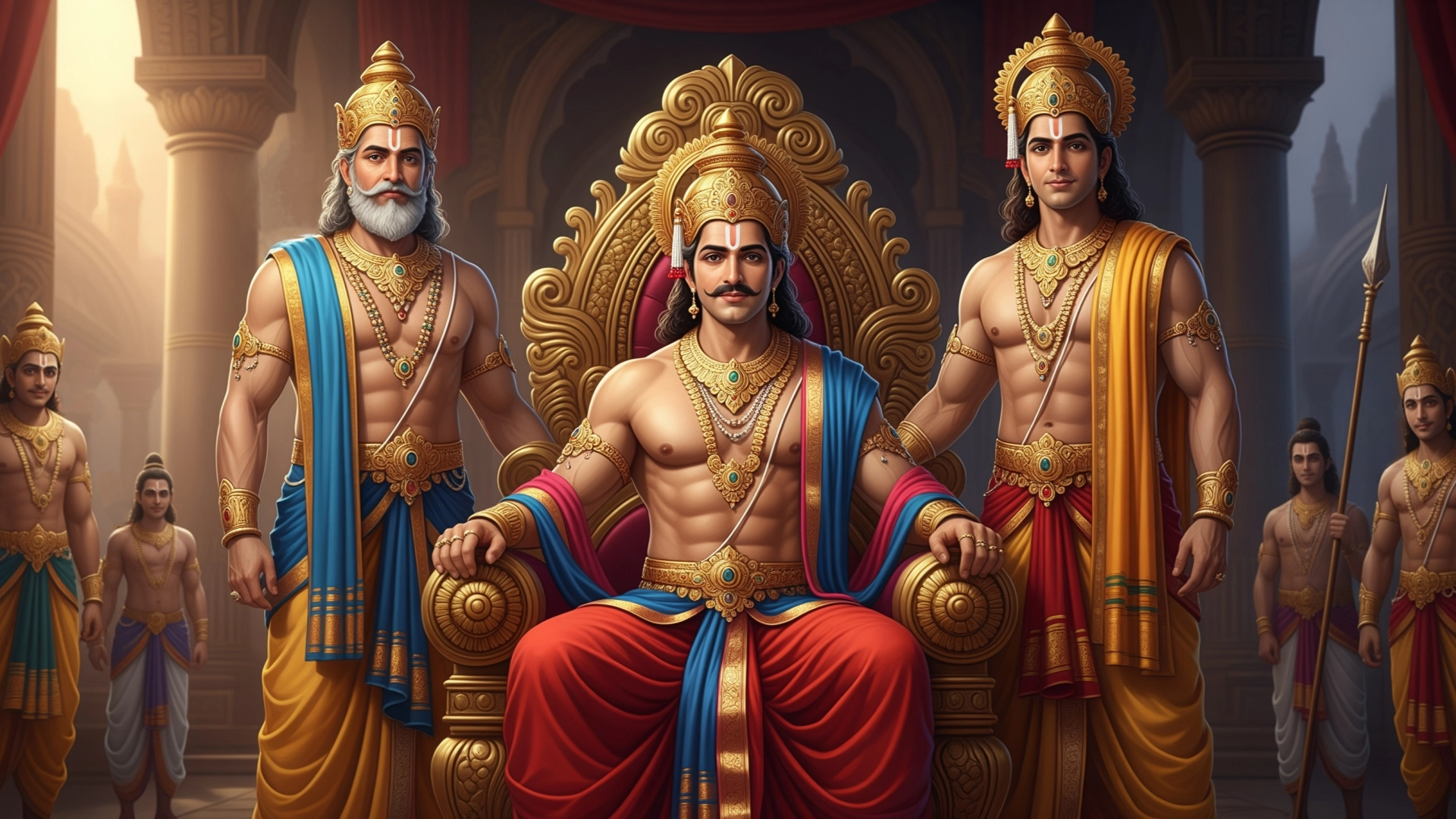
प्रतापभानु की कथा – The Story of King Pratapbhanu
चौपाई :
* सुनु मुनि कथा पुनीत पुरानी। जो गिरिजा प्रति संभु बखानी॥
बिस्व बिदित एक कैकय देसू। सत्यकेतु तहँ बसइ नरेसू॥1॥
भावार्थ:-हे मुनि! वह पवित्र और प्राचीन कथा सुनो, जो शिवजी ने पार्वती से कही थी। संसार में प्रसिद्ध एक कैकय देश है। वहाँ सत्यकेतु नाम का राजा रहता (राज्य करता) था॥1॥
…O’ Sage, listen to this ancient and sacred tale once narrated by Lord Shambhu to Goddess Girija.” In a renowned land called Kaikaye, King Satyaketu reigned.
* धरम धुरंधर नीति निधाना। तेज प्रताप सील बलवाना॥
तेहि कें भए जुगल सुत बीरा। सब गुन धाम महा रनधीरा॥2॥
भावार्थ:-वह धर्म की धुरी को धारण करने वाला, नीति की खान, तेजस्वी, प्रतापी, सुशील और बलवान था, उसके दो वीर पुत्र हुए, जो सब गुणों के भंडार और बड़े ही रणधीर थे॥2॥
He walked the path of righteousness and was a treasure trove of noble principles. Glorious, splendid, humble, and courageous ruler, he was a the epitome of great virtues. He had two valiant sons, who embodied all noble qualities and were exceptional warriors.
* राज धनी जो जेठ सुत आही। नाम प्रतापभानु अस ताही॥
अपर सुतहि अरिमर्दन नामा। भुजबल अतुल अचल संग्रामा॥3॥
भावार्थ:-राज्य का उत्तराधिकारी जो बड़ा लड़का था, उसका नाम प्रतापभानु था। दूसरे पुत्र का नाम अरिमर्दन था, जिसकी भुजाओं में अपार बल था और जो युद्ध में (पर्वत के समान) अटल रहता था॥3॥
The elder son and heir to the throne was named Pratapbhanu. His younger brother, Arimardan (meaning, the vanquisher of enemies), possessed immensely powerful arms and remained unwavering on the battlefield.
* भाइहि भाइहि परम समीती। सकल दोष छल बरजित प्रीती॥
जेठे सुतहि राज नृप दीन्हा। हरि हित आपु गवन बन कीन्हा॥4॥
भावार्थ:-भाई-भाई में बड़ा मेल और सब प्रकार के दोषों और छलों से रहित (सच्ची) प्रीति थी। राजा ने जेठे पुत्र को राज्य दे दिया और आप भगवान (के भजन) के लिए वन को चल दिए॥4॥
The two brothers shared a deep bond, their hearts filled with affection and free from all faults or deceit. In time, the King entrusted his elder son with the throne and retreated to the forest, dedicating himself to penance in worship of Lord Hari.
दोहा :
* जब प्रतापरबि भयउ नृप फिरी दोहाई देस।
प्रजा पाल अति बेदबिधि कतहुँ नहीं अघ लेस॥153॥
भावार्थ:-जब प्रतापभानु राजा हुआ, देश में उसकी दुहाई फिर गई। वह वेद में बताई हुई विधि के अनुसार उत्तम रीति से प्रजा का पालन करने लगा। उसके राज्य में पाप का कहीं लेश भी नहीं रह गया॥153॥
When Pratapbhanu ascended the throne, a proclamation was sent across the Kingdom. He governed his subjects according to the highest principles of the Scriptures, ensuring that not even the slightest trace of sin could be found in his realm.
चौपाई :
* नृप हितकारक सचिव सयाना। नाम धरमरुचि सुक्र समाना॥
सचिव सयान बंधु बलबीरा। आपु प्रतापपुंज रनधीरा॥1॥
भावार्थ:-राजा का हित करने वाला और शुक्राचार्य के समान बुद्धिमान धर्मरुचि नामक उसका मंत्री था। इस प्रकार बुद्धिमान मंत्री और बलवान तथा वीर भाई के साथ ही स्वयं राजा भी बड़ा प्रतापी और रणधीर था॥1॥
The King had a wise and well-meaning minister named Dharamruchi, whose intelligence rivalled that of Shukracharya (the supreme guru of the demons). With such a sagacious advisor and a valiant brother by his side, Pratapbhanu shone with immense glory and unmatched prowess as a warrior.
* सेन संग चतुरंग अपारा। अमित सुभट सब समर जुझारा॥
सेन बिलोकि राउ हरषाना। अरु बाजे गहगहे निसाना॥2॥
भावार्थ:-साथ में अपार चतुरंगिणी सेना थी, जिसमें असंख्य योद्धा थे, जो सब के सब रण में जूझ मरने वाले थे। अपनी सेना को देखकर राजा बहुत प्रसन्न हुआ और घमाघम नगाड़े बजने लगे॥2॥
He commanded a vast and formidable army, consisting of horses, elephants, chariots, and countless warriors, each fearless and fierce in battle. Overjoyed at the sight of his mighty forces, the king rejoiced as the sound of kettledrums echoed across the Kingdom.
* बिजय हेतु कटकई बनाई। सुदिन साधि नृप चलेउ बजाई॥
जहँ तहँ परीं अनेक लराईं। जीते सकल भूप बरिआईं॥3॥
भावार्थ:-दिग्विजय के लिए सेना सजाकर वह राजा शुभ दिन (मुहूर्त) साधकर और डंका बजाकर चला। जहाँ-तहाँ बहुतसी लड़ाइयाँ हुईं। उसने सब राजाओं को बलपूर्वक जीत लिया॥3॥
To secure victory, the King gathered his battalions and, after determining an auspicious day and time, set out with his army to the resounding beats of drums, trumpets, and conch shells. Engaging in numerous battles across different lands, Pratapbhanu vanquished all opposing Kings with his formidable might.
* सप्त दीप भुजबल बस कीन्हे। लै लै दंड छाड़ि नृप दीन्हे॥
सकल अवनि मंडल तेहि काला। एक प्रतापभानु महिपाला॥4॥
भावार्थ:-अपनी भुजाओं के बल से उसने सातों द्वीपों (भूमिखण्डों) को वश में कर लिया और राजाओं से दंड (कर) ले-लेकर उन्हें छोड़ दिया। सम्पूर्ण पृथ्वी मंडल का उस समय प्रतापभानु ही एकमात्र (चक्रवर्ती) राजा था॥4॥
With the sheer strength of his arms, King Pratapbhanu brought all seven islands of the world under his dominion. After securing his rule, he levied fair taxes and reinstated the defeated Kings. During this time, he stood as the undisputed sovereign of the entire world.
दोहा :
* स्वबस बिस्व करि बाहुबल निज पुर कीन्ह प्रबेसु।
अरथ धरम कामादि सुख सेवइ समयँ नरेसु॥154॥
भावार्थ:-संसारभर को अपनी भुजाओं के बल से वश में करके राजा ने अपने नगर में प्रवेश किया। राजा अर्थ, धर्म और काम आदि के सुखों का समयानुसार सेवन करता था॥154॥
Having conquered the entire world with his might, King Pratapbhanu returned triumphantly to his Kingdom. He enjoyed the pleasures of wealth, righteousness, and worldly delights, partaking in them at the right time and in the right measure.
चौपाई :
* भूप प्रतापभानु बल पाई। कामधेनु भै भूमि सुहाई॥
सब दुख बरजित प्रजा सुखारी। धरमसील सुंदर नर नारी॥1॥
भावार्थ:-राजा प्रतापभानु का बल पाकर भूमि सुंदर कामधेनु (मनचाही वस्तु देने वाली) हो गई। (उनके राज्य में) प्रजा सब (प्रकार के) दुःखों से रहित और सुखी थी और सभी स्त्री-पुरुष सुंदर और धर्मात्मा थे॥1॥
Under the powerful reign of King Pratapbhanu, the enchanting Earth flourished like the wish-fulfilling Kamdhenu cow. His subjects were free from all sorrows, blessed with beauty, and devoted to the path of righteousness.
* सचिव धरमरुचि हरि पद प्रीती। नृप हित हेतु सिखव नित नीती॥
गुर सुर संत पितर महिदेवा। करइ सदा नृप सब कै सेवा॥2॥
भावार्थ:-धर्मरुचि मंत्री का श्री हरि के चरणों में प्रेम था। वह राजा के हित के लिए सदा उसको नीति सिखाया करता था। राजा गुरु, देवता, संत, पितर और ब्राह्मण- इन सबकी सदा सेवा करता रहता था॥2॥
Minister Dharamruchi had deep devotion to the feet of Lord Hari. For the King’s welfare, he diligently advised him on matters of state each day. King Pratapbhanu faithfully served his guru, the Demigods, sages, ancestors, and Brahmins with great reverence.
*भूप धरम जे बेद बखाने। सकल करइ सादर सुख माने॥
दिन प्रति देइ बिबिध बिधि दाना। सुनइ सास्त्र बर बेद पुराना॥3॥
भावार्थ:-वेदों में राजाओं के जो धर्म बताए गए हैं, राजा सदा आदरपूर्वक और सुख मानकर उन सबका पालन करता था। प्रतिदिन अनेक प्रकार के दान देता और उत्तम शास्त्र, वेद और पुराण सुनता था॥3॥
King Pratapbhanu faithfully and joyfully followed all the duties prescribed for a ruler in the Vedas. Each day, he engaged in numerous acts of charity and devoted himself to listening to the sacred Scriptures, including the Vedas and Puranas.
* नाना बापीं कूप तड़ागा। सुमन बाटिका सुंदर बागा॥
बिप्रभवन सुरभवन सुहाए। सब तीरथन्ह विचित्र बनाए॥4॥
भावार्थ:-उसने बहुत सी बावलियाँ, कुएँ, तालाब, फुलवाड़ियाँ सुंदर बगीचे, ब्राह्मणों के लिए घर और देवताओं के सुंदर विचित्र मंदिर सब तीर्थों में बनवाए॥4॥
He commissioned the construction of numerous step wells, ponds, and lakes, along with enchanting floral gardens and lush orchards. He also built homes for Brahmins and magnificent, uniquely designed temples for the Gods at various pilgrimage sites.
दोहा :
* जहँ लजि कहे पुरान श्रुति एक एक सब जाग।
बार सहस्र सहस्र नृप किए सहित अनुराग॥155॥
भावार्थ:-वेद और पुराणों में जितने प्रकार के यज्ञ कहे गए हैं, राजा ने एक-एक करके उन सब यज्ञों को प्रेम सहित हजार-हजार बार किया॥155॥
King Pratapbhanu joyfully performed every sacrificial ritual prescribed in the Vedas and Puranas, completing each of them thousands of times with great devotion.
चौपाई :
* हृदयँ न कछु फल अनुसंधाना। भूप बिबेकी परम सुजाना॥
करइ जे धरम करम मन बानी। बासुदेव अर्पित नृप ग्यानी॥1॥
भावार्थ:-(राजा के) हृदय में किसी फल की टोह (कामना) न थी। राजा बड़ा ही बुद्धिमान और ज्ञानी था। वह ज्ञानी राजा कर्म, मन और वाणी से जो कुछ भी धर्म करता था, सब भगवान वासुदेव को अर्पित करते रहता था॥1॥
He had no desire for the rewards of his actions. Wise and immensely intelligent, King Pratapbhanu dedicated all his righteous deeds, whether in thought, word, or action, to Lord Vasudev.
* चढ़ि बर बाजि बार एक राजा। मृगया कर सब साजि समाजा॥
बिंध्याचल गभीर बन गयऊ। मृग पुनीत बहु मारत भयऊ॥2॥
भावार्थ:-एक बार वह राजा एक अच्छे घोड़े पर सवार होकर, शिकार का सब सामान सजाकर विंध्याचल के घने जंगल में गया और वहाँ उसने बहुत से उत्तम-उत्तम हिरन मारे॥2॥
One day, the King mounted a majestic horse and set out on a hunting expedition into the dense Vindhyachal forest, accompanied by his retinue. There, he skillfully hunted many fine animals.
* फिरत बिपिन नृप दीख बराहू। जनु बन दुरेउ ससिहि ग्रसि राहू॥
बड़ बिधु नहिं समात मुख माहीं। मनहुँ क्रोध बस उगिलत नाहीं॥3॥
भावार्थ:-राजा ने वन में फिरते हुए एक सूअर को देखा। (दाँतों के कारण वह ऐसा दिख पड़ता था) मानो चन्द्रमा को ग्रसकर (मुँह में पकड़कर) राहु वन में आ छिपा हो। चन्द्रमा बड़ा होने से उसके मुँह में समाता नहीं है और मानो क्रोधवश वह भी उसे उगलता नहीं है॥3॥
As the King roamed the forest, he spotted a wild boar. Its fearsome tusks made it appear as though Rahu had swallowed the Moon and retreated into the woods. Yet, unable to contain the Moon’s vastness in his mouth and seething with fury, it seemed as though Rahu refused to spit it out.
* कोल कराल दसन छबि गाई। तनु बिसाल पीवर अधिकाई॥
घुरुघुरात हय आरौ पाएँ। चकित बिलोकत कान उठाएँ॥4॥
भावार्थ:-यह तो सूअर के भयानक दाँतों की शोभा कही गई। (इधर) उसका शरीर भी बहुत विशाल और मोटा था। घोड़े की आहट पाकर वह घुरघुराता हुआ कान उठाए चौकन्ना होकर देख रहा था॥4॥
This was merely the grandeur of the boar’s fearsome tusks. Its body was equally massive, and it was extraordinarily stout. Upon hearing the sound of the horse, it perked up its ears attentively, let out a deep growl, and fixed its gaze (in the direction of the approaching rider).
दोहा :
* नील महीधर सिखर सम देखि बिसाल बराहु।
चपरि चलेउ हय सुटुकि नृप हाँकि न होइ निबाहु॥156॥
भावार्थ:-नील पर्वत के शिखर के समान विशाल (शरीर वाले) उस सूअर को देखकर राजा घोड़े को चाबुक लगाकर तेजी से चला और उसने सूअर को ललकारा कि अब तेरा बचाव नहीं हो सकता॥156॥
Seeing the colossal boar, which resembled the peak of a blue mountain, the King spurred his horse forward at full speed. As he charged, he issued a bold challenge, declaring that the beast had no chance of escape.
चौपाई :
* आवत देखि अधिक रव बाजी। चलेउ बराह मरुत गति भाजी॥
तुरत कीन्ह नृप सर संधाना। महि मिलि गयउ बिलोकत बाना॥1॥
भावार्थ:-अधिक शब्द करते हुए घोड़े को (अपनी तरफ) आता देखकर सूअर पवन वेग से भाग चला। राजा ने तुरंत ही बाण को धनुष पर चढ़ाया। सूअर बाण को देखते ही धरती में दुबक गया॥1॥
As the horse thundered forward with great noise, the boar bolted with the speed of the wind. Wasting no time, the King swiftly took aim and released an arrow. Sensing the danger, the boar suddenly crouched low to the ground, evading the shot.
* तकि तकि तीर महीस चलावा। करि छल सुअर सरीर बचावा॥
प्रगटत दुरत जाइ मृग भागा। रिस बस भूप चलेउ सँग लागा॥2॥
भावार्थ:-राजा तक-तककर तीर चलाता है, परन्तु सूअर छल करके शरीर को बचाता जाता है। वह पशु कभी प्रकट होता और कभी छिपता हुआ भाग जाता था और राजा भी क्रोध के वश उसके साथ (पीछे) लगा चला जाता था॥2॥
The King fired many arrows, but the cunning boar skillfully evaded each one, protecting its body. As it fled, it would occasionally appear, only to vanish again into the dense forest. Consumed by fury, the King relentlessly pursued the elusive beast.
* गयउ दूरि घन गहन बराहू। जहँ नाहिन गज बाजि निबाहू॥
अति अकेल बन बिपुल कलेसू। तदपि न मृग मग तजइ नरेसू॥3॥
भावार्थ:-सूअर बहुत दूर ऐसे घने जंगल में चला गया, जहाँ हाथी-घोड़े का निबाह (गमन) नहीं था। राजा बिलकुल अकेला था और वन में क्लेश भी बहुत था, फिर भी राजा ने उस पशु का पीछा नहीं छोड़ा॥3॥
The boar fled deep into a dense and impenetrable forest, where neither horses nor elephants could tread. Separated from his entourage, the King found himself alone, facing countless hardships. Yet, driven by determination, he refused to abandon the chase.
* कोल बिलोकि भूप बड़ धीरा। भागि पैठ गिरिगुहाँ गभीरा॥
अगम देखि नृप अति पछिताई। फिरेउ महाबन परेउ भुलाई॥4॥
भावार्थ:-राजा को बड़ा धैर्यवान देखकर, सूअर भागकर पहाड़ की एक गहरी गुफा में जा घुसा। उसमें जाना कठिन देखकर राजा को बहुत पछताकर लौटना पड़ा, पर उस घोर वन में वह रास्ता भूल गया॥4॥
Witnessing the King’s relentless pursuit, the boar dashed into a deep mountain cave. Unable to follow it inside, the King was forced to turn back in disappointment. However, as he retraced his steps, he realized he had lost his way in the dense forest.
दोहा :
*खेद खिन्न छुद्धित तृषित राजा बाजि समेत।
खोजत ब्याकुल सरित सर जल बिनु भयउ अचेत॥157॥
भावार्थ:-बहुत परिश्रम करने से थका हुआ और घोड़े समेत भूख-प्यास से व्याकुल राजा नदी-तालाब खोजता-खोजता पानी बिना बेहाल हो गया॥157॥
Exhausted and disheartened by the regret of failing to slay the boar after a relentless chase, the King, along with his horse, wandered in search of a river or lake, tormented by thirst, hunger, agitation, and dizziness.
चौपाई :
* फिरत बिपिन आश्रम एक देखा। तहँ बस नृपति कपट मुनिबेषा॥
जासु देस नृप लीन्ह छड़ाई। समर सेन तजि गयउ पराई॥1॥
भावार्थ:- वन में फिरते-फिरते उसने एक आश्रम देखा, वहाँ कपट से मुनि का वेष बनाए एक राजा रहता था, जिसका देश राजा प्रतापभानु ने छीन लिया था और जो सेना को छोड़कर युद्ध से भाग गया था॥1॥
While wandering through the forest, he came across a hermitage where a King, cunningly disguised as a hermit, resided. King Pratapbhanu had defeated him in battle, forcing the impostor sage to flee after abandoning his army.
* समय प्रतापभानु कर जानी। आपन अति असमय अनुमानी॥
गयउ न गृह मन बहुत गलानी। मिला न राजहि नृप अभिमानी॥2॥
भावार्थ:-प्रतापभानु का समय (अच्छे दिन) जानकर और अपना कुसमय (बुरे दिन) अनुमानकर उसके मन में बड़ी ग्लानि हुई। इससे वह न तो घर गया और न अभिमानी होने के कारण राजा प्रतापभानु से ही मिला (मेल किया)॥2॥
Realizing that fortune favored King Pratapbhanu while misfortune loomed over him, he was filled with resentment and refused to return home. His pride would not allow him to accept King Pratapbhanu’s rule.
* रिस उर मारि रंक जिमि राजा। बिपिन बसइ तापस कें साजा॥
तासु समीप गवन नृप कीन्हा। यह प्रतापरबि तेहिं तब चीन्हा॥3॥
भावार्थ:-दरिद्र की भाँति मन ही में क्रोध को मारकर वह राजा तपस्वी के वेष में वन में रहता था। राजा (प्रतापभानु) उसी के पास गया। उसने तुरंत पहचान लिया कि यह प्रतापभानु है॥3॥
Swallowing his anger, the King lived in the forest like a pauper, disguised as a hermit. When King Pratapbhanu approached, the impostor sage recognized him at once.
* राउ तृषित नहिं सो पहिचाना। देखि सुबेष महामुनि जाना॥
उतरि तुरग तें कीन्ह प्रनामा। परम चतुर न कहेउ निज नामा॥4॥
भावार्थ:-राजा प्यासा होने के कारण (व्याकुलता में) उसे पहचान न सका। सुंदर वेष देखकर राजा ने उसे महामुनि समझा और घोड़े से उतरकर उसे प्रणाम किया, परन्तु बड़ा चतुर होने के कारण राजा ने उसे अपना नाम नहीं बताया॥4॥
Overcome by thirst, King Pratapbhanu failed to recognize the hermit. Impressed by his striking appearance, he mistook him for a great sage. Dismounting from his horse, he offered his respects but, being highly astute, refrained from revealing his name.
दोहा :
* भूपति तृषित बिलोकि तेहिं सरबरु दीन्ह देखाइ।
मज्जन पान समेत हय कीन्ह नृपति हरषाइ॥158॥
भावार्थ:-राजा को प्यासा देखकर उसने सरोवर दिखला दिया। हर्षित होकर राजा ने घोड़े सहित उसमें स्नान और जलपान किया॥158॥
Noticing King Pratapbhanu’s thirst, the hermit guided him to a serene lake. The King, along with his horse, bathed in its cool waters, drank deeply, and felt refreshed and delighted.
चौपाई :
* गै श्रम सकल सुखी नृप भयऊ। निज आश्रम तापस लै गयऊ॥
आसन दीन्ह अस्त रबि जानी। पुनि तापस बोलेउ मृदु बानी॥1॥
भावार्थ:-सारी थकावट मिट गई, राजा सुखी हो गया। तब तपस्वी उसे अपने आश्रम में ले गया और सूर्यास्त का समय जानकर उसने (राजा को बैठने के लिए) आसन दिया। फिर वह तपस्वी कोमल वाणी से बोला- ॥1॥
With his fatigue gone, the King felt rejuvenated and joyful. The sage then led him to his hermitage. As the Sun began to set, he offered King Pratapbhanu a seat and, speaking in a gentle tone, said,…
*को तुम्ह कस बन फिरहु अकेलें। सुंदर जुबा जीव परहेलें॥
चक्रबर्ति के लच्छन तोरें। देखत दया लागि अति मोरें॥2॥
भावार्थ:-तुम कौन हो? सुंदर युवक होकर, जीवन की परवाह न करके वन में अकेले क्यों फिर रहे हो? तुम्हारे चक्रवर्ती राजा के से लक्षण देखकर मुझे बड़ी दया आती है॥2॥
“Who are you? How is it that a handsome young man like you wanders alone in this forest, unmindful of the dangers to his life? Your bearing reflects the qualities of an emperor. Seeing you fills my heart with deep sympathy.”
* नाम प्रतापभानु अवनीसा। तासु सचिव मैं सुनहु मुनीसा॥
फिरत अहेरें परेउँ भुलाई। बड़ें भाग देखेउँ पद आई॥3॥
भावार्थ:-(राजा ने कहा-) हे मुनीश्वर! सुनिए, प्रतापभानु नाम का एक राजा है, मैं उसका मंत्री हूँ। शिकार के लिए फिरते हुए राह भूल गया हूँ। बड़े भाग्य से यहाँ आकर मैंने आपके चरणों के दर्शन पाए हैं॥3॥
The King replied, “O’ Chief among Sages, hear me. There is a mighty King named Pratapbhanu who rules over the Earth, I am his minister. While returning from a hunting expedition, I lost my way. By great fortune, I have arrived here and had the blessing of seeing your feet…
* हम कहँ दुर्लभ दरस तुम्हारा। जानत हौं कछु भल होनिहारा॥
कह मुनि तात भयउ अँधिआरा। जोजन सत्तरि नगरु तुम्हारा॥4॥
भावार्थ:-हमें आपका दर्शन दुर्लभ था, इससे जान पड़ता है कुछ भला होने वाला है। मुनि ने कहा- हे तात! अँधेरा हो गया। तुम्हारा नगर यहाँ से सत्तर योजन पर है॥4॥
…Meeting you is a rare blessing, so I feel that something good is destined to happen.” The hermit replied, “Night is falling, and your city lies 840 km (70 yojans) away…
दोहा :
* निसा घोर गंभीर बन पंथ न सुनहु सुजान।
बसहु आजु अस जानि तुम्ह जाएहु होत बिहान॥159 (क)॥
भावार्थ:-हे सुजान! सुनो, घोर अँधेरी रात है, घना जंगल है, रास्ता नहीं है, ऐसा समझकर तुम आज यहीं ठहर जाओ, सबेरा होते ही चले जाना॥159 (क)॥
…Listen, O’ Wise one, the night is pitch dark, the forest is dense, and there is no clear path. Understanding this, stay here and depart at the break of dawn.”
* तुलसी जसि भवतब्यता तैसी मिलइ सहाइ।
आपुनु आवइ ताहि पहिं ताहि तहाँ लै जाइ॥159(ख)॥
भावार्थ:-तुलसीदासजी कहते हैं- जैसी भवितव्यता (होनहार) होती है, वैसी ही सहायता मिल जाती है। या तो वह आप ही उसके पास आती है या उसको वहाँ ले जाती है॥159 (ख)॥
Tulsidas ji says that a person receives help according to their destiny, either it comes to them or leads them to where they are meant to be.
चौपाई :
* भलेहिं नाथ आयसु धरि सीसा। बाँधि तुरग तरु बैठ महीसा॥
नृप बहु भाँति प्रसंसेउ ताही। चरन बंदि निज भाग्य सराही॥1॥
भावार्थ:-हे नाथ! बहुत अच्छा, ऐसा कहकर और उसकी आज्ञा सिर चढ़ाकर, घोड़े को वृक्ष से बाँधकर राजा बैठ गया। राजा ने उसकी बहुत प्रकार से प्रशंसा की और उसके चरणों की वंदना करके अपने भाग्य की सराहना की॥1॥
The King said, “Very well, O’ Lord.” Bowing to the sage’s advice, he tied his horse to a tree and sat down. He then praised the sage in many ways, worshipped his feet, and spoke highly of his own good fortune.
* पुनि बोलेउ मृदु गिरा सुहाई। जानि पिता प्रभु करउँ ढिठाई॥
मोहि मुनीस सुत सेवक जानी। नाथ नाम निज कहहु बखानी॥2॥
भावार्थ:-फिर सुंदर कोमल वाणी से कहा- हे प्रभो! आपको पिता जानकर मैं ढिठाई करता हूँ। हे मुनीश्वर! मुझे अपना पुत्र और सेवक जानकर अपना नाम (धाम) विस्तार से बतलाइए॥2॥
Then the King spoke in soft and beautiful words, “O’ Lord, considering you as my father, I dare to make a humble request. O’ Sage, kindly accept me as your son and servant. Master, please tell me your name.”
* तेहि न जान नृप नृपहि सो जाना। भूप सुहृद सो कपट सयाना॥
बैरी पुनि छत्री पुनि राजा। छल बल कीन्ह चहइ निज काजा॥3॥
भावार्थ:-राजा ने उसको नहीं पहचाना, पर वह राजा को पहचान गया था। राजा तो शुद्ध हृदय था और वह कपट करने में चतुर था। एक तो वैरी, फिर जाति का क्षत्रिय, फिर राजा। वह छल-बल से अपना काम बनाना चाहता था॥3॥
The King did not recognize him, but the impostor sage had recognized King Pratapbhanu at once. The King’s heart was pure, while the sage was a master of deception. As an enemy, a warrior by birth, and a dethroned king, he sought to achieve his goal through cunning and force.
* समुझि राजसुख दुखित अराती। अवाँ अनल इव सुलगइ छाती॥
ससरल बचन नृप के सुनि काना। बयर सँभारि हृदयँ हरषाना॥4॥
भावार्थ:-वह शत्रु अपने राज्य सुख को समझ करके (स्मरण करके) दुःखी था। उसकी छाती (कुम्हार के) आँवे की आग की तरह (भीतर ही भीतर) सुलग रही थी। राजा के सरल वचन कान से सुनकर, अपने वैर को यादकर वह हृदय में हर्षित हुआ॥4॥
The impostor sage, tormented by the loss of his royal luxuries, felt his chest burn like a kiln firing pottery. Hearing the King’s sincere and humble words, he recalled his deep-seated enmity and felt a surge of delight in his heart.
दोहा :
* कपट बोरि बानी मृदल बोलेउ जुगुति समेत।
नाम हमार भिखारि अब निर्धन रहित निकेत॥160॥
भावार्थ:-वह कपट में डुबोकर बड़ी युक्ति के साथ कोमल वाणी बोला- अब हमारा नाम भिखारी है, क्योंकि हम निर्धन और अनिकेत (घर-द्वारहीन) हैं॥160॥
Steeped in deceit, he spoke gently, masking his true intent. “I am known as a beggar, for I am now destitute and without a home.”
चौपाई :
* कह नृप जे बिग्यान निधाना। तुम्ह सारिखे गलित अभिमाना॥
सदा रहहिं अपनपौ दुराएँ। सब बिधि कुसल कुबेष बनाएँ॥1॥
भावार्थ:-राजा ने कहा- जो आपके सदृश विज्ञान के निधान और सर्वथा अभिमानरहित होते हैं, वे अपने स्वरूप को सदा छिपाए रहते हैं, क्योंकि कुवेष बनाकर रहने में ही सब तरह का कल्याण है (प्रकट संत वेश में मान होने की सम्भावना है और मान से पतन की)॥1॥
The King replied, “Wise individuals like you, who possess vast knowledge and remain free from arrogance, often keep their true nature hidden. Despite their mastery in every aspect, they choose to maintain a humble and unassuming appearance…
* तेहि तें कहहिं संत श्रुति टेरें। परम अकिंचन प्रिय हरि केरें॥
तुम्ह सम अधन भिखारि अगेहा। होत बिरंचि सिवहि संदेहा॥2॥
भावार्थ:-इसी से तो संत और वेद पुकारकर कहते हैं कि परम अकिंचन (सर्वथा अहंकार, ममता और मानरहित) ही भगवान को प्रिय होते हैं। आप सरीखे निर्धन, भिखारी और गृहहीनों को देखकर ब्रह्मा और शिवजी को भी संदेह हो जाता है (कि वे वास्तविक संत हैं या भिखारी)॥2॥
…That is why saints and the Vedas declare that those who are truly poor (free from desires, pride, ego, and attachment) are most beloved to Lord Hari. Even Lord Brahma and Lord Shiv find themselves in doubt when they see a penniless, homeless beggar like you, unsure whether they behold a saint or a mere mendicant.
* जोसि सोसि तव चरन नमामी। मो पर कृपा करिअ अब स्वामी॥
सहज प्रीति भूपति कै देखी। आपु बिषय बिस्वास बिसेषी॥3॥
भावार्थ:-आप जो हों सो हों (अर्थात् जो कोई भी हों), मैं आपके चरणों में नमस्कार करता हूँ। हे स्वामी! अब मुझ पर कृपा कीजिए। अपने ऊपर राजा की स्वाभाविक प्रीति और अपने विषय में उसका अधिक विश्वास देखकर॥3॥
…Whoever you may be, I bow at your feet. O’ Master, bless me with your grace.” When the hermit witnessed the King’s sincere devotion and unwavering faith in him,…
* सब प्रकार राजहि अपनाई। बोलेउ अधिक सनेह जनाई॥
सुनु सतिभाउ कहउँ महिपाला। इहाँ बसत बीते बहु काला॥4॥
भावार्थ:-सब प्रकार से राजा को अपने वश में करके, अधिक स्नेह दिखाता हुआ वह (कपट-तपस्वी) बोला- हे राजन्! सुनो, मैं तुमसे सत्य कहता हूँ, मुझे यहाँ रहते बहुत समय बीत गया॥4॥
…he completely won him over. Displaying an abundance of (false) affection, he said, “O’ Protector of the Earth, listen! I speak truthfully, I have been living here for many years…
दोहा :
* अब लगि मोहि न मिलेउ कोउ मैं न जनावउँ काहु।
लोकमान्यता अनल सम कर तप कानन दाहु॥161 क॥
भावार्थ:-अब तक न तो कोई मुझसे मिला और न मैं अपने को किसी पर प्रकट करता हूँ, क्योंकि लोक में प्रतिष्ठा अग्नि के समान है, जो तप रूपी वन को भस्म कर डालती है॥161 (क)॥
…Until now, no one has ever come to see me, nor do I reveal myself to anyone. Fame spreads like a wildfire, consuming the forest of austerity.”
सोरठा :
* तुलसी देखि सुबेषु भूलहिं मूढ़ न चतुर नर।
सुंदर केकिहि पेखु बचन सुधा सम असन अहि॥161 ख॥
भावार्थ:-तुलसीदासजी कहते हैं- सुंदर वेष देखकर मूढ़ नहीं (मूढ़ तो मूढ़ ही हैं), चतुर मनुष्य भी धोखा खा जाते हैं। सुंदर मोर को देखो, उसका वचन तो अमृत के समान है और आहार साँप का है॥161 (ख)॥
Tulsidas ji says, “A beautiful appearance can mislead not only the foolish but also the wise. One should not judge a person by looks alone. Consider the peacock, its radiant beauty and melodious voice captivate the heart, yet it feeds on venomous serpents.”
चौपाई :
* तातें गुपुत रहउँ जग माहीं। हरि तजि किमपि प्रयोजन नाहीं॥
प्रभु जानत सब बिनहिं जनाए। कहहु कवनि सिधि लोक रिझाएँ॥1॥
भावार्थ:-(कपट-तपस्वी ने कहा-) इसी से मैं जगत में छिपकर रहता हूँ। श्री हरि को छोड़कर किसी से कुछ भी प्रयोजन नहीं रखता। प्रभु तो बिना जनाए ही सब जानते हैं। फिर कहो संसार को रिझाने से क्या सिद्धि मिलेगी॥1॥
The impostor sage said, “That is why I remain hidden from the world. Other than Lord Hari, I have no purpose in life. The Lord knows everything without being told, so what is there to gain by seeking the approval of the world…
* तुम्ह सुचि सुमति परम प्रिय मोरें। प्रीति प्रतीति मोहि पर तोरें॥
अब जौं तात दुरावउँ तोही। दारुन दोष घटइ अति मोही॥2॥
भावार्थ:-तुम पवित्र और सुंदर बुद्धि वाले हो, इससे मुझे बहुत ही प्यारे हो और तुम्हारी भी मुझ पर प्रीति और विश्वास है। हे तात! अब यदि मैं तुमसे कुछ छिपाता हूँ, तो मुझे बहुत ही भयानक दोष लगेगा॥2॥
…You have a pure and noble heart, and you are very dear to me. I, too, hold great love and trust in you. If I were to conceal anything from you, O’ Dear one, I would be guilty of the gravest wrongdoing.”
* जिमि जिमि तापसु कथइ उदासा। तिमि तिमि नृपहि उपज बिस्वासा॥
देखा स्वबस कर्म मन बानी। तब बोला तापस बगध्यानी॥3॥
भावार्थ:-ज्यों-ज्यों वह तपस्वी उदासीनता की बातें कहता था, त्यों ही त्यों राजा को विश्वास उत्पन्न होता जाता था। जब उस बगुले की तरह ध्यान लगाने वाले (कपटी) मुनि ने राजा को कर्म, मन और वचन से अपने वश में जाना, तब वह बोला- ॥3॥
The more the sage spoke of detachment, the greater the King’s trust in him grew. Seeing the King completely under his sway, by word, thought, and deed, the impostor sage, like a stork patiently waiting to snatch a fish, said,…
* नाम हमार एकतनु भाई। सुनि नृप बोलेउ पुनि सिरु नाई॥
कहहु नाम कर अरथ बखानी। मोहि सेवक अति आपन जानी॥4॥
भावार्थ:-हे भाई! हमारा नाम एकतनु है। यह सुनकर राजा ने फिर सिर नवाकर कहा- मुझे अपना अत्यन्त (अनुरागी) सेवक जानकर अपने नाम का अर्थ समझाकर कहिए॥4॥
…“O’ Brother, my name is Ektanu.” Hearing this, the King bowed his head and then humbly asked, “Considering me your most devoted and trusted servant, please reveal the meaning of your name.”
दोहा :
* आदिसृष्टि उपजी जबहिं तब उतपति भै मोरि।
नाम एकतनु हेतु तेहि देह न धरी बहोरि॥162॥
भावार्थ:-(कपटी मुनि ने कहा-) जब सबसे पहले सृष्टि उत्पन्न हुई थी, तभी मेरी उत्पत्ति हुई थी। तबसे मैंने फिर दूसरी देह नहीं धारण की, इसी से मेरा नाम एकतनु है॥162॥
(The impostor sage said,) “I was born at the very beginning of creation and have never taken another birth in any body since. That is why my name is Ektanu, the one who has not assumed another form…
चौपाई :
*जनि आचरजु करहु मन माहीं। सुत तप तें दुर्लभ कछु नाहीं॥
तप बल तें जग सृजइ बिधाता। तप बल बिष्नु भए परित्राता॥1॥
भावार्थ:-हे पुत्र! मन में आश्चर्य मत करो, तप से कुछ भी दुर्लभ नहीं है, तप के बल से ब्रह्मा जगत को रचते हैं। तप के ही बल से विष्णु संसार का पालन करने वाले बने हैं॥1॥
…Do not be astonished, my son. There is nothing impossible through penance. With its power, Lord Brahma creates the world, and through its strength, Lord Vishnu sustains and nurtures it…
* तपबल संभु करहिं संघारा। तप तें अगम न कछु संसारा॥
भयउ नृपहि सुनि अति अनुरागा। कथा पुरातन कहै सो लागा॥2॥
भावार्थ:-तप ही के बल से रुद्र संहार करते हैं। संसार में कोई ऐसी वस्तु नहीं जो तप से न मिल सके। यह सुनकर राजा को बड़ा अनुराग हुआ। तब वह (तपस्वी) पुरानी कथाएँ कहने लगा॥2॥
…By the power of penance, Lord Shambhu destroys the world as well. There is nothing in this world that cannot be attained through penance.” Hearing this, King Pratapbhanu was filled with devotion. The sage then began narrating ancient tales.
* करम धरम इतिहास अनेका। करइ निरुपन बिरति बिबेका॥
उदभव पालन प्रलय कहानी। कहेसि अमित आचरज बखानी॥3॥
भावार्थ:-कर्म, धर्म और अनेकों प्रकार के इतिहास कहकर वह वैराग्य और ज्ञान का निरुपन करने लगा। सृष्टि की उत्पत्ति, पालन (स्थिति) और संहार (प्रलय) की अपार आश्चर्यभरी कथाएँ उसने विस्तार से कही॥3॥
After recounting tales of karma (action), dharma (righteousness), and ancient legends, the sage delved into discussions on detachment and wisdom. He narrated countless stories about the creation, preservation, and destruction of the Universe.
* सुनि महीप तापस बस भयऊ। आपन नाम कहन तब लयउ॥
कह तापस नृप जानउँ तोही। कीन्हेहु कपट लाग भल मोही॥4॥
भावार्थ:-राजा सुनकर उस तपस्वी के वश में हो गया और तब वह उसे अपना नाम बताने लगा। तपस्वी ने कहा- राजन ! मैं तुमको जानता हूँ। तुमने कपट किया, वह मुझे अच्छा लगा॥4॥
The King fell completely under the sage’s influence upon hearing his words. Just as King Pratapbhanu was about to reveal his name, the sage interrupted, saying, “O’ King, I already know who you are. I admire your cunning act of concealing your true identity…
सोरठा :
* सुनु महीस असि नीति जहँ तहँ नाम न कहहिं नृप।
मोहि तोहि पर अति प्रीति सोइ चतुरता बिचारि तव॥163॥
भावार्थ:-हे राजन्! सुनो, ऐसी नीति है कि राजा लोग जहाँ-तहाँ अपना नाम नहीं कहते। तुम्हारी वही चतुराई समझकर तुम पर मेरा बड़ा प्रेम हो गया है॥163॥
…O’ King, listen! As a rule, a king must not disclose his name just anywhere. Witnessing your wisdom, I feel a deep affection for you…
चौपाई :
* नाम तुम्हार प्रताप दिनेसा। सत्यकेतु तव पिता नरेसा॥
गुर प्रसाद सब जानिअ राजा। कहिअ न आपन जानि अकाजा॥1॥
भावार्थ:-तुम्हारा नाम प्रतापभानु है, महाराज सत्यकेतु तुम्हारे पिता थे। हे राजन्! गुरु की कृपा से मैं सब जानता हूँ, पर अपनी हानि समझकर कहता नहीं॥1॥
…Your name is Pratapbhanu, and your father was King Satyaketu. O’ King, I know everything by the grace of my guru’s blessings, but I choose to remain silent, fearing it may bring me harm…
* देखि तात तव सहज सुधाई। प्रीति प्रतीति नीति निपुनाई॥
उपजि परी ममता मन मोरें। कहउँ कथा निज पूछे तोरें॥2॥
भावार्थ:-हे तात! तुम्हारा स्वाभाविक सीधापन (सरलता), प्रेम, विश्वास और में निपुणता देखकर मेरे मन में तुम्हारे ऊपर बड़ी ममता उत्पन्न हो गई है, इसीलिए मैं तुम्हारे पूछने पर अपनी कथा कहता हूँ॥2॥
…O’ dear, witnessing your sincerity, love, faith, and political wisdom, my heart has grown deeply fond of you. That is why I shared my story when you asked…
* अब प्रसन्न मैं संसय नाहीं। मागु जो भूप भाव मन माहीं॥
सुनि सुबचन भूपति हरषाना। गहि पद बिनय कीन्हि बिधि नाना॥3॥
भावार्थ:-अब मैं प्रसन्न हूँ, इसमें संदेह न करना। हे राजन्! जो मन को भावे वही माँग लो। सुंदर (प्रिय) वचन सुनकर राजा हर्षित हो गया और (मुनि के) पैर पकड़कर उसने बहुत प्रकार से विनती की॥3॥
…Without a doubt, I am pleased now. O’ King, ask me anything your heart desires.” Hearing these gracious words from Ektanu, the King was overjoyed. He clasped the sage’s feet and pleaded earnestly in many ways.
* कृपासिंधु मुनि दरसन तोरें। चारि पदारथ करतल मोरें॥
प्रभुहि तथापि प्रसन्न बिलोकी। मागि अगम बर होउँ असोकी॥4॥
भावार्थ:-हे दयासागर मुनि! आपके दर्शन से ही चारों पदार्थ (अर्थ, धर्म, काम और मोक्ष) मेरी मुट्ठी में आ गए। तो भी स्वामी को प्रसन्न देखकर मैं यह दुर्लभ वर माँगकर (क्यों न) शोकरहित हो जाऊँ॥4॥
“O’ Ocean of mercy, merely by your sight, I have attained the four ultimate goals of life (righteousness, wealth, pleasure, and liberation). Yet, O’ Sage, seeing my master pleased, I will be truly free of sorrow only after receiving a rare boon from you…
दोहा :
* जरा मरन दुख रहित तनु समर जितै जनि कोउ।
एकछत्र रिपुहीन महि राज कलप सत होउ॥164॥
भावार्थ:-मेरा शरीर वृद्धावस्था, मृत्यु और दुःख से रहित हो जाए, मुझे युद्ध में कोई जीत न सके और पृथ्वी पर मेरा सौ कल्पतक एकछत्र अकण्टक राज्य हो॥164॥
…My body should be free from old age, death, and suffering. No one should be able to defeat me in battle, and I should rule the entire earth without enemies for one hundred kalpas (a kalpa being the lifespan of creation and destruction of a universe).”
चौपाई :
* कह तापस नृप ऐसेइ होऊ। कारन एक कठिन सुनु सोऊ॥
कालउ तुअ पद नाइहि सीसा। एक बिप्रकुल छाड़ि महीसा॥1॥
भावार्थ:-तपस्वी ने कहा- हे राजन्! ऐसा ही हो, पर एक बात कठिन है, उसे भी सुन लो। हे पृथ्वी के स्वामी! केवल ब्राह्मण कुल को छोड़ काल भी तुम्हारे चरणों पर सिर नवाएगा॥1॥
The sage replied, “O’ Master of the Earth, this shall be granted. However, there is one thing that remains difficult, listen carefully. Even the God of Death will bow at your feet, except for the Brahmin clan…
* तपबल बिप्र सदा बरिआरा। तिन्ह के कोप न कोउ रखवारा॥
जौं बिप्रन्ह बस करहु नरेसा। तौ तुअ बस बिधि बिष्नु महेसा॥2॥
भावार्थ:-तप के बल से ब्राह्मण सदा बलवान रहते हैं। उनके क्रोध से रक्षा करने वाला कोई नहीं है। हे नरपति! यदि तुम ब्राह्मणों को वश में कर लो, तो ब्रह्मा, विष्णु और महेश भी तुम्हारे अधीन हो जाएँगे॥2॥
…By the power of their penance, Brahmins remain ever mighty, and no one can escape their wrath. O’ King, if you can win over the Brahmin clan, even Lord Brahma, Lord Vishnu, and Lord Mahesh will be under your command…
* चल न ब्रह्मकुल सन बरिआई। सत्य कहउँ दोउ भुजा उठाई॥
बिप्र श्राप बिनु सुनु महिपाला। तोर नास नहिं कवनेहुँ काला॥3॥
भावार्थ:-ब्राह्मण कुल से जोर जबर्दस्ती नहीं चल सकती, मैं दोनों भुजा उठाकर सत्य कहता हूँ। हे राजन्! सुनो, ब्राह्मणों के शाप बिना तुम्हारा नाश किसी काल में नहीं होगा॥3॥
…With my arms raised, I solemnly declare that no one can ever force the Brahmin clan to do anything. O’ Protector of the Earth, except for a curse from the Brahmins, nothing can ever lead to your destruction.”
* हरषेउ राउ बचन सुनि तासू। नाथ न होइ मोर अब नासू॥
तव प्रसाद प्रभु कृपानिधाना। मो कहुँ सर्बकाल कल्याना॥4॥
भावार्थ:-राजा उसके वचन सुनकर बड़ा प्रसन्न हुआ और कहने लगा- हे स्वामी! मेरा नाश अब नहीं होगा। हे कृपानिधान प्रभु! आपकी कृपा से मेरा सब समय कल्याण होगा॥4॥
Hearing the sage’s words, the King was overjoyed and said, “O’ Master, now I am invincible! O’ Ocean of mercy, by your grace, my lord, I shall remain blessed forever.”
दोहा :
* एवमस्तु कहि कपट मुनि बोला कुटिल बहोरि।
मिलब हमार भुलाब निज कहहु त हमहि न खोरि॥165॥
भावार्थ:-‘एवमस्तु’ (ऐसा ही हो) कहकर वह कुटिल कपटी मुनि फिर बोला- (किन्तु) तुम मेरे मिलने तथा अपने राह भूल जाने की बात किसी से (कहना नहीं, यदि) कह दोगे, तो हमारा दोष नहीं॥165॥
The cunning sage said, “Your wish shall be granted.” Then, with deceitful intent, he added, “But if you reveal our meeting or how you got lost in the forest, the fault shall not be mine…
चौपाई :
* तातें मैं तोहि बरजउँ राजा। कहें कथा तव परम अकाजा॥
छठें श्रवन यह परत कहानी। नास तुम्हार सत्य मम बानी॥1॥
भावार्थ:-हे राजन्! मैं तुमको इसलिए मना करता हूँ कि इस प्रसंग को कहने से तुम्हारी बड़ी हानि होगी। छठे कान में यह बात पड़ते ही तुम्हारा नाश हो जाएगा, मेरा यह वचन सत्य जानना॥1॥
…O’ King, I urge you not to speak of this to anyone because doing so will bring you great misfortune. The moment this story reaches a third person’s ears, you will face destruction. Mark my words as true…
* यह प्रगटें अथवा द्विजश्रापा। नास तोर सुनु भानुप्रतापा॥
आन उपायँ निधन तव नाहीं। जौं हरि हर कोपहिं मन माहीं॥2॥
भावार्थ:-हे प्रतापभानु! सुनो, इस बात के प्रकट करने से अथवा ब्राह्मणों के शाप से तुम्हारा नाश होगा और किसी उपाय से, चाहे ब्रह्मा और शंकर भी मन में क्रोध करें, तुम्हारी मृत्यु नहीं होगी॥2॥
…Listen, O’ Pratapbhanu! You can only be destroyed in one of two ways, either by a Brahmin’s curse or by revealing this episode. No other force can harm you, not even if Lord Hari or Lord Shiv become angry in their hearts.”
* सत्य नाथ पद गहि नृप भाषा। द्विज गुर कोप कहहु को राखा॥
राखइ गुर जौं कोप बिधाता। गुर बिरोध नहिं कोउ जग त्राता॥3॥
भावार्थ:-राजा ने मुनि के चरण पकड़कर कहा- हे स्वामी! सत्य ही है। ब्राह्मण और गुरु के क्रोध से, कहिए, कौन रक्षा कर सकता है? यदि ब्रह्मा भी क्रोध करें, तो गुरु बचा लेते हैं, पर गुरु से विरोध करने पर जगत में कोई भी बचाने वाला नहीं है॥3॥
Pratapbhanu clasped the sage’s feet and said, “O’ Lord, you speak the truth. Who can protect anyone from the wrath of a Brahmin or a guru? If the Creator is displeased, the guru offers protection. But if one goes against a guru, no power on this Earth can save him…
* जौं न चलब हम कहे तुम्हारें। होउ नास नहिं सोच हमारें॥
एकहिं डर डरपत मन मोरा। प्रभु महिदेव श्राप अति घोरा॥4॥
भावार्थ:-यदि मैं आपके कथन के अनुसार नहीं चलूँगा, तो (भले ही) मेरा नाश हो जाए। मुझे इसकी चिन्ता नहीं है। मेरा मन तो हे प्रभो! (केवल) एक ही डर से डर रहा है कि ब्राह्मणों का शाप बड़ा भयानक होता है॥4॥
…If I do not follow your words, then even if I am destroyed, I do not care. O Lord! My heart fears only one thing—that the curse of Brahmins is truly dreadful…
दोहा :
* होहिं बिप्र बस कवन बिधि कहहु कृपा करि सोउ।
तुम्ह तजि दीनदयाल निज हितू न देखउँ कोउ॥166॥
भावार्थ:-वे ब्राह्मण किस प्रकार से वश में हो सकते हैं, कृपा करके वह भी बताइए। हे दीनदयालु! आपको छोड़कर और किसी को मैं अपना हितू नहीं देखता॥166॥
…O’ Merciful one, please tell me the way to bring the Brahmin clan under my control. Apart from you, I see no one as my well-wisher.”
चौपाई :
* सुनु नृप बिबिध जतन जग माहीं। कष्टसाध्य पुनि होहिं कि नाहीं॥
अहइ एक अति सुगम उपाई। तहाँ परन्तु एक कठिनाई॥1॥
भावार्थ:-(तपस्वी ने कहा-) हे राजन् !सुनो, संसार में उपाय तो बहुत हैं, पर वे कष्ट साध्य हैं (बड़ी कठिनता से बनने में आते हैं) और इस पर भी सिद्ध हों या न हों (उनकी सफलता निश्चित नहीं है) हाँ, एक उपाय बहुत सहज है, परन्तु उसमें भी एक कठिनता है॥1॥
The sage replied, “Listen, O’ King, there are many methods in this world, but they are all difficult, and there is no guarantee of success. However, there is one very simple way, but even that comes with a challenge…
* मम आधीन जुगुति नृप सोई। मोर जाब तव नगर न होई॥
आजु लगें अरु जब तें भयऊँ। काहू के गृह ग्राम न गयऊँ॥2॥
भावार्थ:-हे राजन्! वह युक्ति तो मेरे हाथ है, पर मेरा जाना तुम्हारे नगर में हो नहीं सकता। जब से पैदा हुआ हूँ, तब से आज तक मैं किसी के घर अथवा गाँव नहीं गया॥2॥
…O’ King, there is one solution that lies within my power, but I cannot come to your city. From the day I was born until now, I have never set foot in anyone’s home or village…
* जौं न जाउँ तव होइ अकाजू। बना आइ असमंजस आजू॥
सुनि महीस बोलेउ मृदु बानी। नाथ निगम असि नीति बखानी॥3॥
भावार्थ:-परन्तु यदि नहीं जाता हूँ, तो तुम्हारा काम बिगड़ता है। आज यह बड़ा असमंजस आ पड़ा है। यह सुनकर राजा कोमल वाणी से बोला, हे नाथ! वेदों में ऐसी नीति कही है कि- ॥3॥
…But if I do not go, your effort to control the Brahmins will fail. This has created a dilemma today.” Hearing this, the King spoke in a gentle tone, “O’ Lord, the Vedas have declared this rule that…
* बड़े सनेह लघुन्ह पर करहीं। गिरि निज सिरनि सदा तृन धरहीं॥
जलधि अगाध मौलि बह फेनू। संतत धरनि धरत सिर रेनू॥4॥
भावार्थ:-बड़े लोग छोटों पर स्नेह करते ही हैं। पर्वत अपने सिरों पर सदा तृण (घास) को धारण किए रहते हैं। अगाध समुद्र अपने मस्तक पर फेन को धारण करता है और धरती अपने सिर पर सदा धूलि को धारण किए रहती है॥4॥
…”The elders are always affectionate toward the younger ones. The mountain carries blades of grass on its surface, the ocean holds froth upon its crest in the form of waves, and the Earth always bears dust on top of itself.”
दोहा :
* अस कहि गहे नरेस पद स्वामी होहु कृपाल।
मोहि लागि दुख सहिअ प्रभु सज्जन दीनदयाल॥167॥
भावार्थ:-ऐसा कहकर राजा ने मुनि के चरण पकड़ लिए। (और कहा-) हे स्वामी! कृपा कीजिए। आप संत हैं। दीनदयालु हैं। (अतः) हे प्रभो! मेरे लिए इतना कष्ट (अवश्य) सहिए॥167॥
Saying this, the King clasped the sage’s feet and pleaded, “O’ Master, be merciful. Please endure this hardship for my sake. You are my lord, a saint, and a gracious benefactor of the humble.”
चौपाई :
* जानि नृपहि आपन आधीना। बोला तापस कपट प्रबीना॥
सत्य कहउँ भूपति सुनु तोही। जग नाहिन दुर्लभ कछु मोही॥1॥
भावार्थ:-राजा को अपने अधीन जानकर कपट में प्रवीण तपस्वी बोला- हे राजन्! सुनो, मैं तुमसे सत्य कहता हूँ, जगत में मुझे कुछ भी दुर्लभ नहीं है॥1॥
Realizing that the King was now under his control, the sage, skilled in deception, said, “O’ King, listen, I tell you truthfully, there is nothing in this world that is difficult for me to achieve…
* अवसि काज मैं करिहउँ तोरा। मन तन बचन भगत तैं मोरा॥
जोग जुगुति तप मंत्र प्रभाऊ। फलइ तबहिं जब करिअ दुराऊ॥2॥
भावार्थ:-मैं तुम्हारा काम अवश्य करूँगा, (क्योंकि) तुम, मन, वाणी और शरीर (तीनों) से मेरे भक्त हो। पर योग, युक्ति, तप और मंत्रों का प्रभाव तभी फलीभूत होता है जब वे छिपाकर किए जाते हैं॥2॥
…I will certainly fulfill your wish, for you are devoted to me in mind, body, and word. However, the power of penance, special rituals, austerities, and mantras yields results only when they are kept secret…
* जौं नरेस मैं करौं रसोई। तुम्ह परुसहु मोहि जान न कोई॥
अन्न सो जोइ जोइ भोजन करई। सोइ सोइ तव आयसु अनुसरई॥3॥
भावार्थ:-हे नरपति! मैं यदि रसोई बनाऊँ और तुम उसे परोसो और मुझे कोई जानने न पावे, तो उस अन्न को जो-जो खाएगा, सो-सो तुम्हारा आज्ञाकारी बन जाएगा॥3॥
…O’ King, if I prepare the food, you serve it, and no one discovers my identity, then whoever eats that food will come under your control and obey your commands…
* पुनि तिन्ह के गृह जेवँइ जोऊ। तव बस होइ भूप सुनु सोऊ॥
जाइ उपाय रचहु नृप एहू। संबत भरि संकलप करेहू॥4॥
भावार्थ:-यही नहीं, उन (भोजन करने वालों) के घर भी जो कोई भोजन करेगा, हे राजन्! सुनो, वह भी तुम्हारे अधीन हो जाएगा। हे राजन्! जाकर यही उपाय करो और वर्षभर (भोजन कराने) का संकल्प कर लेना॥4॥
…Listen, O’ King, anyone who dines at the homes of these people will also come under your control. Go forth and carry out this process, and take a vow to continue it for a full year…
दोहा :
* नित नूतन द्विज सहस सत बरेहु सहित परिवार।
मैं तुम्हरे संकलप लगि दिनहिं करबि जेवनार॥168॥
भावार्थ:-नित्य नए एक लाख ब्राह्मणों को कुटुम्ब सहित निमंत्रित करना। मैं तुम्हारे सकंल्प (के काल अर्थात एक वर्ष) तक प्रतिदिन भोजन बना दिया करूँगा॥168॥
…Each day, invite a new group of 100,000 Brahmins along with their families for a feast. To uphold your vow, I will personally prepare the food for the feast every day…
चौपाई :
* एहि बिधि भूप कष्ट अति थोरें। होइहहिं सकल बिप्र बस तोरें॥
करिहहिं बिप्र होममख सेवा। तेहिं प्रसंग सहजेहिं बस देवा॥1॥
भावार्थ:-हे राजन्! इस प्रकार बहुत ही थोड़े परिश्रम से सब ब्राह्मण तुम्हारे वश में हो जाएँगे। ब्राह्मण हवन, यज्ञ और सेवा-पूजा करेंगे, तो उस प्रसंग (संबंध) से देवता भी सहज ही वश में हो जाएँगे॥1॥
…O’ King, through this simple process, all the Brahmins will come under your control with minimal effort. Since the Brahmins perform fire yajnas (sacrifice), worship, and serve the Demigods, even the Demigods themselves will ultimately be at your command…
* और एक तोहि कहउँ लखाऊ। मैं एहिं बेष न आउब काऊ॥
तुम्हरे उपरोहित कहुँ राया। हरि आनब मैं करि निज माया॥2॥
भावार्थ:-मैं एक और पहचान तुमको बताए देता हूँ कि मैं इस रूप में कभी न आऊँगा। हे राजन्! मैं अपनी माया से तुम्हारे पुरोहित को हर लाऊँगा॥2॥
…And I will give you another sign by which you can recognize me, for I will never appear in this sage-like form. O’ King, using my illusory powers, I will abduct your religious head priest…
* तपबल तेहि करि आपु समाना। रखिहउँ इहाँ बरष परवाना॥
मैं धरि तासु बेषु सुनु राजा। सब बिधि तोर सँवारब काजा॥3॥
भावार्थ:-तप के बल से उसे अपने समान बनाकर एक वर्ष यहाँ रखूँगा और हे राजन्! सुनो, मैं उसका रूप बनाकर सब प्रकार से तुम्हारा काम सिद्ध करूँगा॥3॥
…Through my power of penance, I will transform him to look like me and keep him here for one year. Listen, O’ King, I will take on his appearance and carry out all your tasks…
* गै निसि बहुत सयन अब कीजे। मोहि तोहि भूप भेंट दिन तीजे॥
मैं तपबल तोहि तुरग समेता। पहुँचैहउँ सोवतहि निकेता॥4॥
भावार्थ:-हे राजन्! रात बहुत बीत गई, अब सो जाओ। आज से तीसरे दिन मुझसे तुम्हारी भेंट होगी। तप के बल से मैं घोड़े सहित तुमको सोते ही में घर पहुँचा दूँगा॥4॥
…O’ King, it is already late at night. You should rest now. We will meet again on the third day from today. Through my penance, I will transport you and your horse to your palace while you sleep…
दोहा :
* मैं आउब सोइ बेषु धरि पहिचानेहु तब मोहि।
जब एकांत बोलाइ सब कथा सुनावौं तोहि॥169॥
भावार्थ:-मैं वही (पुरोहित का) वेश धरकर आऊँगा। जब एकांत में तुमको बुलाकर सब कथा सुनाऊँगा, तब तुम मुझे पहचान लेना॥169॥
…I will approach you in disguise as your head priest and, after leading you to a secluded place, narrate the entire story to you, only then will you recognize me.”
चौपाई :
* सयन कीन्ह नृप आयसु मानी। आसन जाइ बैठ छलग्यानी॥
श्रमित भूप निद्रा अति आई। सो किमि सोव सोच अधिकाई॥1॥
भावार्थ:-राजा ने आज्ञा मानकर शयन किया और वह कपट-ज्ञानी आसन पर जा बैठा। राजा थका था, (उसे) खूब (गहरी) नींद आ गई। पर वह कपटी कैसे सोता। उसे तो बहुत चिन्ता हो रही थी॥1॥
The King accepted the sage’s advice and went to sleep. The cunning and wise sage then sat down. Exhausted, the King quickly fell into a deep slumber. But how could the impostor sage sleep? He was filled with anxiety.
* कालकेतु निसिचर तहँ आवा। जेहिं सूकर होइ नृपहि भुलावा॥
परम मित्र तापस नृप केरा। जानइ सो अति कपट घनेरा॥2॥
भावार्थ:-(उसी समय) वहाँ कालकेतु राक्षस आया, जिसने सूअर बनकर राजा को भटकाया था। वह तपस्वी राजा का बड़ा मित्र था और खूब छल-प्रपंच जानता था॥2॥
The demon Kaalketu then arrived. He was the one who had taken the form of a boar to mislead the King into the forest. A close ally of the impostor sage, Kaalketu was well-versed in cunning tricks and deception.
* तेहि के सत सुत अरु दस भाई। खल अति अजय देव दुखदाई॥
प्रथमहिं भूप समर सब मारे। बिप्र संत सुर देखि दुखारे॥3॥
भावार्थ:-उसके सौ पुत्र और दस भाई थे, जो बड़े ही दुष्ट, किसी से न जीते जाने वाले और देवताओं को दुःख देने वाले थे। ब्राह्मणों, संतों और देवताओं को दुःखी देखकर राजा ने उन सबको पहले ही युद्ध में मार डाला था॥3॥
Kaalketu had one hundred sons and ten brothers, all of whom were exceedingly wicked, undefeated in battle, and a great torment to the Demigods. Witnessing the suffering of Brahmins, saints, and Demigods, King Pratapbhanu had previously slain them all in combat.
* तेहिं खल पाछिल बयरु सँभारा। तापस नृप मिलि मंत्र बिचारा॥
जेहिं रिपु छय सोइ रचेन्हि उपाऊ। भावी बस न जान कछु राऊ॥4॥
भावार्थ:-उस दुष्ट ने पिछला बैर याद करके तपस्वी राजा से मिलकर सलाह विचारी (षड्यंत्र किया) और जिस प्रकार शत्रु का नाश हो, वही उपाय रचा। भावीवश राजा (प्रतापभानु) कुछ भी न समझ सका॥4॥
Harbouring his past resentment, the wretched demon conspired with the impostor king-turned-sage to devise a scheme for their enemy’s downfall. As fate would have it, King Pratapbhanu failed to see through their deceit.
दोहा :
* रिपु तेजसी अकेल अपि लघु करि गनिअ न ताहु।
अजहुँ देत दुख रबि ससिहि सिर अवसेषित राहु॥170॥
भावार्थ:-तेजस्वी शत्रु अकेला भी हो तो भी उसे छोटा नहीं समझना चाहिए। जिसका सिर मात्र बचा था, वह राहु आज तक सूर्य-चन्द्रमा को दुःख देता है॥170॥
Even a powerful enemy, when alone, should never be underestimated. Even today, the severed head of the demon planet Rahu continues to torment the Sun and Moon, causing Solar and Lunar eclipses.
* तापस नृप निज सखहि निहारी। हरषि मिलेउ उठि भयउ सुखारी॥
मित्रहि कहि सब कथा सुनाई। जातुधान बोला सुख पाई॥1॥
भावार्थ:-तपस्वी राजा अपने मित्र को देख प्रसन्न हो उठकर मिला और सुखी हुआ। उसने मित्र को सब कथा कह सुनाई, तब राक्षस आनंदित होकर बोला॥1॥
The hermit-king was overjoyed to see his friend Kaalketu and eagerly rose to greet him. He recounted the entire story, to which the demon, pleased, replied,…
* अब साधेउँ रिपु सुनहु नरेसा। जौं तुम्ह कीन्ह मोर उपदेसा॥
परिहरि सोच रहहु तुम्ह सोई। बिनु औषध बिआधि बिधि खोई॥2॥
भावार्थ:-हे राजन्! सुनो, जब तुमने मेरे कहने के अनुसार (इतना) काम कर लिया, तो अब मैंने शत्रु को काबू में कर ही लिया (समझो)। तुम अब चिन्ता त्याग सो रहो। विधाता ने बिना ही दवा के रोग दूर कर दिया॥2॥
…“Listen, O’ King! Since you have followed my advice, consider your enemy already vanquished. Cast aside all worries and rest easy. The divine has cured the ailment without the need for any medicine…
* कुल समेत रिपु मूल बहाई। चौथें दिवस मिलब मैं आई॥
तापस नृपहि बहुत परितोषी। चला महाकपटी अतिरोषी॥3॥
भावार्थ:-कुल सहित शत्रु को जड़-मूल से उखाड़-बहाकर, (आज से) चौथे दिन मैं तुमसे आ मिलूँगा। (इस प्रकार) तपस्वी राजा को खूब दिलासा देकर वह महामायावी और अत्यन्त क्रोधी राक्षस चला॥3॥
…I will totally destroy the enemy along with his entire clan and meet you on the fourth day.” After fully reassuring the hermit-king in various ways, the cunning and fiercely enraged demon departed.
* भानुप्रतापहि बाजि समेता। पहुँचाएसि छन माझ निकेता॥
नृपहि नारि पहिं सयन कराई। हयगृहँ बाँधेसि बाजि बनाई॥4॥
भावार्थ:-उसने प्रतापभानु राजा को घोड़े सहित क्षणभर में घर पहुँचा दिया। राजा को रानी के पास सुलाकर घोड़े को अच्छी तरह से घुड़साल में बाँध दिया॥4॥
Within moments, he transported King Pratapbhanu along with his horse to the palace. He placed the King beside his Queen as he slept and securely tied the horse in the stable.
दोहा :
* राजा के उपरोहितहि हरि लै गयउ बहोरि।
लै राखेसि गिरि खोह महुँ मायाँ करि मति भोरि॥171॥
भावार्थ:-फिर वह राजा के पुरोहित को उठा ले गया और माया से उसकी बुद्धि को भ्रम में डालकर उसे उसने पहाड़ की खोह में ला रखा॥171॥
Kaalketu then abducted the King’s head priest and, using his illusionary powers, clouded his mind before imprisoning him in a mountain cave.
चौपाई :
* आपु बिरचि उपरोहित रूपा। परेउ जाइ तेहि सेज अनूपा॥
जागेउ नृप अनभएँ बिहाना। देखि भवन अति अचरजु माना॥1॥
भावार्थ:-वह आप पुरोहित का रूप बनाकर उसकी सुंदर सेज पर जा लेटा। राजा सबेरा होने से पहले ही जागा और अपना घर देखकर उसने बड़ा ही आश्चर्य माना॥1॥
Taking the form of the head priest, Kaalketu went and lay on the priest’s exquisite bed. Before dawn, King Pratapbhanu awoke and was utterly astonished to find himself back in his palace.
* मुनि महिमा मन महुँ अनुमानी। उठेउ गवँहिं जेहिं जान न रानी॥
कानन गयउ बाजि चढ़ि तेहीं। पुर नर नारि न जानेउ केहीं॥2॥
भावार्थ:-मन में मुनि की महिमा का अनुमान करके वह धीरे से उठा, जिसमें रानी न जान पावे। फिर उसी घोड़े पर चढ़कर वन को चला गया। नगर के किसी भी स्त्री-पुरुष ने नहीं जाना॥2॥
Believing this miracle to be the sage’s divine power, he quietly rose and left to avoid waking the Queen. Mounting his horse, he rode back to the forest, unnoticed by the men and women of his Kingdom.
* गएँ जाम जुग भूपति आवा। घर घर उत्सव बाज बधावा॥
उपरोहितहि देख जब राजा। चकित बिलोक सुमिरि सोइ काजा॥3॥
भावार्थ:-दो पहर बीत जाने पर राजा आया। घर-घर उत्सव होने लगे और बधावा बजने लगा। जब राजा ने पुरोहित को देखा, तब वह (अपने) उसी कार्य का स्मरणकर उसे आश्चर्य से देखने लगा॥3॥
After six hours (around midday), the King returned, and the entire Kingdom erupted in celebration, with music and festivities in every household. Upon seeing his head priest, the King was taken aback and immediately recalled his mission.
* जुग सम नृपहि गए दिन तीनी। कपटी मुनि पद रह मति लीनी॥
समय जान उपरोहित आवा। नृपहि मते सब कहि समुझावा॥4॥
भावार्थ:-राजा को तीन दिन युग के समान बीते। उसकी बुद्धि कपटी मुनि के चरणों में लगी रही। निश्चित समय जानकर पुरोहित (बना हुआ राक्षस) आया और राजा के साथ की हुई गुप्त सलाह के अनुसार (उसने अपने) सब विचार उसे समझाकर कह दिए॥4॥
For the King, those three days felt like an entire era, his mind deeply fixated on the words of the cunning sage. At the appointed time, the priest arrived and reminded him of the detailed instructions.
दोहा :
* नृप हरषेउ पहिचानि गुरु भ्रम बस रहा न चेत।
बरे तुरत सत सहस बर बिप्र कुटुंब समेत॥172॥
भावार्थ:-(संकेत के अनुसार) गुरु को (उस रूप में) पहचानकर राजा प्रसन्न हुआ। भ्रमवश उसे चेत न रहा (कि यह तापस मुनि है या कालकेतु राक्षस)। उसने तुरंत एक लाख उत्तम ब्राह्मणों को कुटुम्ब सहित निमंत्रण दे दिया॥172॥
The King was overjoyed to recognize his guru. However, his mind, clouded by delusion, left him uncertain whether the head priest was the revered hermit-sage or a deceptive demon. Without hesitation, he sent invitations to 100,000 distinguished Brahmins and their families.
चौपाई :
* उपरोहित जेवनार बनाई। छरस चारि बिधि जसि श्रुति गाई॥
मायामय तेहिं कीन्हि रसोई। बिंजन बहु गनि सकइ न कोई॥1॥
भावार्थ:-पुरोहित ने छह रस और चार प्रकार के भोजन, जैसा कि वेदों में वर्णन है, बनाए। उसने मायामयी रसोई तैयार की और इतने व्यंजन बनाए, जिन्हें कोई गिन नहीं सकता॥1॥
The head priest prepared a grand feast, featuring six varieties of soups or lentils and four types of Vedic foods. Using his divine illusionary energy, he crafted an abundance of cuisines, so numerous that they defied counting.
* बिबिध मृगन्ह कर आमिष राँधा। तेहि महुँ बिप्र माँसु खल साँधा॥
भोजन कहुँ सब बिप्र बोलाए। पद पखारि सादर बैठाए॥2॥
भावार्थ:-अनेक प्रकार के पशुओं का मांस पकाया और उसमें उस दुष्ट ने ब्राह्मणों का मांस मिला दिया। सब ब्राह्मणों को भोजन के लिए बुलाया और चरण धोकर आदर सहित बैठाया॥2॥
This illusionary feast was prepared using the meat of various animals, into which the wretched demon had deceitfully mixed the flesh of Brahmins. Once the food was ready, all the Brahmins were invited to dine. Their feet were ceremonially washed, and they were seated with great respect.
* परुसन जबहिं लाग महिपाला। भै अकासबानी तेहि काला॥
बिप्रबृंद उठि उठि गृह जाहू। है बड़ि हानि अन्न जनि खाहू॥3॥
भावार्थ:-ज्यों ही राजा परोसने लगा, उसी काल (कालकेतुकृत) आकाशवाणी हुई- हे ब्राह्मणों! उठ-उठकर अपने घर जाओ, यह अन्न मत खाओ। इस (के खाने) में बड़ी हानि है॥3॥
As soon as the King began serving the food, a divine voice echoed from the sky, “O’ Brahmins, rise and return to your homes! Great harm awaits, do not consume this food…
* भयउ रसोईं भूसुर माँसू। सब द्विज उठे मानि बिस्वासू॥
भूप बिकल मति मोहँ भुलानी। भावी बस न आव मुख बानी॥4॥
भावार्थ:-रसोई में ब्राह्मणों का मांस बना है। (आकाशवाणी का) विश्वास मानकर सब ब्राह्मण उठ खड़े हुए। राजा व्याकुल हो गया (परन्तु), उसकी बुद्धि मोह में भूली हुई थी। होनहारवश उसके मुँह से (एक) बात (भी) न निकली॥4॥
…The feast has been prepared with the flesh of Brahmins.” Hearing this celestial warning, all the Brahmins immediately rose, trusting the divine voice. The King was overcome with distress, his mind clouded by delusion. Bound by fate, he stood speechless, unable to utter a single word.
दोहा :
*बोले बिप्र सकोप तब नहिं कछु कीन्ह बिचार।
जाइ निसाचर होहु नृप मूढ़ सहित परिवार॥173॥
भावार्थ:-तब ब्राह्मण क्रोध सहित बोल उठे- उन्होंने कुछ भी विचार नहीं किया- अरे मूर्ख राजा! तू जाकर परिवार सहित राक्षस हो॥173॥
Without a second thought, the Brahmins, consumed by anger, declared, “O’ Foolish King, may you and your entire family be cursed to become demons…
चौपाई :
* छत्रबंधु तैं बिप्र बोलाई। घालै लिए सहित समुदाई॥
ईश्वर राखा धरम हमारा। जैहसि तैं समेत परिवारा॥1॥
भावार्थ:-रे नीच क्षत्रिय! तूने तो परिवार सहित ब्राह्मणों को बुलाकर उन्हें नष्ट करना चाहा था, ईश्वर ने हमारे धर्म की रक्षा की। अब तू परिवार सहित नष्ट होगा॥1॥
…O’ Wretched Kshatriya, you invited us Brahmins along with our families with the wicked intent to destroy us, but the divine has safeguarded our righteousness. Now, you and your entire lineage shall be annihilated…
* संबत मध्य नास तव होऊ। जलदाता न रहिहि कुल कोऊ॥
नृप सुनि श्राप बिकल अति त्रासा। भै बहोरि बर गिरा अकासा॥2॥
भावार्थ:-एक वर्ष के भीतर तेरा नाश हो जाए, तेरे कुल में कोई पानी देने वाला तक न रहेगा। शाप सुनकर राजा भय के मारे अत्यन्त व्याकुल हो गया। फिर सुंदर आकाशवाणी हुई-॥2॥
…Within a year, you will perish, and no one from your lineage will remain to offer water to perform your last rites.” Hearing this dreadful curse, the King was overcome with fear and deep anxiety. Just then, a divine and soothing voice echoed from the sky,…
* बिप्रहु श्राप बिचारि न दीन्हा। नहिं अपराध भूप कछु कीन्हा॥
चकित बिप्र सब सुनि नभबानी। भूप गयउ जहँ भोजन खानी॥3॥
भावार्थ:-हे ब्राह्मणों! तुमने विचार कर शाप नहीं दिया। राजा ने कुछ भी अपराध नहीं किया। आकाशवाणी सुनकर सब ब्राह्मण चकित हो गए। तब राजा वहाँ गया, जहाँ भोजन बना था॥3॥
…“O’ Brahmins, you spoke in haste without knowing the truth. The King has committed no sin.” Hearing this divine proclamation, the Brahmins were left astounded. Meanwhile, the King (still shaken), hurried to the place where the food was being prepared.
* तहँ न असन नहिं बिप्र सुआरा। फिरेउ राउ मन सोच अपारा॥
सब प्रसंग महिसुरन्ह सुनाई। त्रसित परेउ अवनीं अकुलाई॥4॥
भावार्थ:-(देखा तो) वहाँ न भोजन था, न रसोइया ब्राह्मण ही था। तब राजा मन में अपार चिन्ता करता हुआ लौटा। उसने ब्राह्मणों को सब वृत्तान्त सुनाया और (बड़ा ही) भयभीत और व्याकुल होकर वह पृथ्वी पर गिर पड़ा॥4॥
Neither the food nor the Brahmin cook (who was actually a demon in disguise), was to be found. Overcome with anxiety, the King returned, his heart heavy with worry. He narrated the entire incident to the Brahmins and, consumed by fear and distress, collapsed to the ground.
दोहा :
* भूपति भावी मिटइ नहिं जदपि न दूषन तोर।
किएँ अन्यथा दोइ नहिं बिप्रश्राप अति घोर॥174॥
भावार्थ:-हे राजन! यद्यपि तुम्हारा दोष नहीं है, तो भी होनहार नहीं मिटता। ब्राह्मणों का शाप बहुत ही भयानक होता है, यह किसी तरह भी टाले टल नहीं सकता॥174॥
The Brahmins said, “O’ King, destiny cannot be altered, even though you are blameless. The curse of Brahmins is immensely powerful, it can never be in vain.”
चौपाई :
* अस कहि सब महिदेव सिधाए। समाचार पुरलोगन्ह पाए॥
सोचहिं दूषन दैवहि देहीं। बिरचत हंस काग किए जेहीं॥1॥
भावार्थ:-ऐसा कहकर सब ब्राह्मण चले गए। नगरवासियों ने (जब) यह समाचार पाया, तो वे चिन्ता करने और विधाता को दोष देने लगे, जिसने हंस बनाते-बनाते कौआ कर दिया (ऐसे पुण्यात्मा राजा को देवता बनाना चाहिए था, सो राक्षस बना दिया)॥1॥
After saying this, the Brahmins departed. When the news spread among the citizens, they were filled with worry and began blaming the Creator. They lamented, “You intended to create a swan but brought forth a crow (our King was destined to be a Demigod, yet fate has turned him into a demon.)”
*उपरोहितहि भवन पहुँचाई। असुर तापसहि खबरि जनाई॥
तेहिं खल जहँ तहँ पत्र पठाए। सजि सजि सेन भूप सब धाए॥2॥
भावार्थ:-पुरोहित को उसके घर पहुँचाकर असुर (कालकेतु) ने (कपटी) तपस्वी को खबर दी। उस दुष्ट ने जहाँ-तहाँ पत्र भेजे, जिससे सब (बैरी) राजा सेना सजा-सजाकर (चढ़) दौड़े॥2॥
The demon Kaalketu transported the real head priest to his home and then recounted the entire event to the hermit-king. Enraged, the wretched king immediately sent letters far and wide, (calling upon enemy kings to wage war against King Pratapbhanu). In response, the kings adorned their armies and set forth for battle.
* घेरेन्हि नगर निसान बजाई। बिबिध भाँति नित होइ लराई॥
जूझे सकल सुभट करि करनी। बंधु समेत परेउ नृप धरनी॥3॥
भावार्थ:-और उन्होंने डंका बजाकर नगर को घेर लिया। नित्य प्रति अनेक प्रकार से लड़ाई होने लगी। (प्रताप भानु के) सब योद्धा (शूरवीरों की) करनी करके रण में जूझ मरे। राजा भी भाई सहित खेत रहा॥3॥
Beating their war drums, the enemy forces surrounded the city. Fierce battles raged daily in countless ways, with warriors displaying great valour before meeting their end. In the relentless conflict, King Pratapbhanu and his brother also fell, perishing on the battlefield.
* सत्यकेतु कुल कोउ नहिं बाँचा। बिप्रश्राप किमि होइ असाँचा॥
रिपु जिति सब नृप नगर बसाई। निज पुर गवने जय जसु पाई॥4॥