
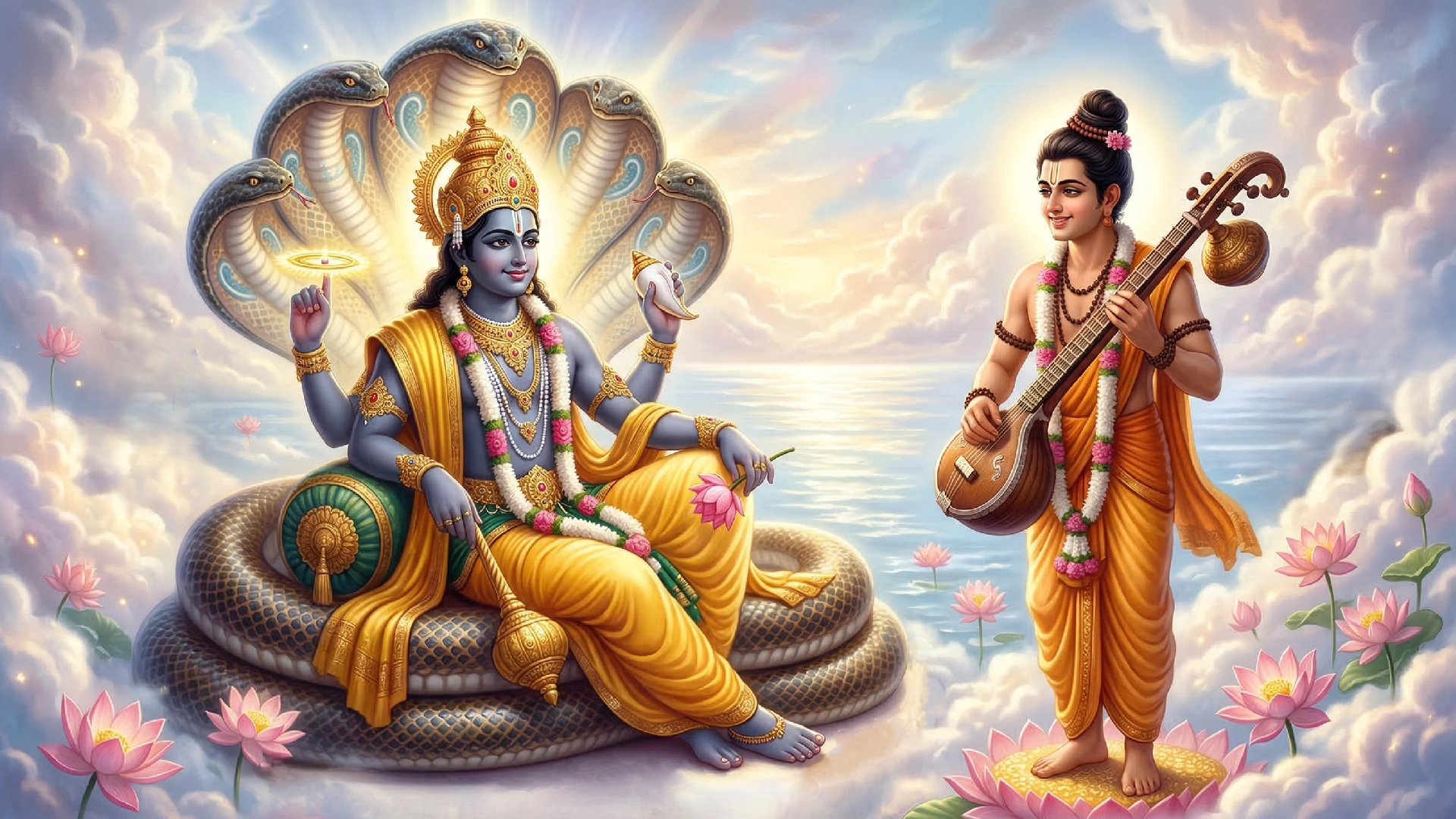
नारद का अभिमान और माया का प्रभाव – Narad’s ego and Lord’s Maya
दोहा :
* संभु दीन्ह उपदेस हित नहिं नारदहि सोहान॥
भरद्वाज कौतुक सुनहु हरि इच्छा बलवान॥127॥
भावार्थ:-यद्यपि शिवजी ने यह हित की शिक्षा दी, पर नारदजी को वह अच्छी न लगी। हे भरद्वाज! अब कौतुक (तमाशा) सुनो। हरि की इच्छा बड़ी बलवान है॥127॥
Yagyavalkya ji says, “Lord Shambhu offered advice for Narad’s well-being, but Narad did not find it agreeable. O’ Bhardwaj, now listen to this divine play. The will of Lord Hari is immensely powerful.”
चौपाई :
* राम कीन्ह चाहहिं सोइ होई। करै अन्यथा अस नहिं कोई॥
संभु बचन मुनि मन नहिं भाए। तब बिरंचि के लोक सिधाए॥1॥
भावार्थ:-श्री रामचन्द्रजी जो करना चाहते हैं, वही होता है, ऐसा कोई नहीं जो उसके विरुद्ध कर सके। श्री शिवजी के वचन नारदजी के मन को अच्छे नहीं लगे, तब वे वहाँ से ब्रह्मलोक को चल दिए॥1॥
Whatever Shri Ram desires alone comes to pass; no one can change it. Unpleased with Lord Shambhu’s words, Sage Narad then went to the abode of Brahma ji.
* एक बार करतल बर बीना। गावत हरि गुन गान प्रबीना॥
छीरसिंधु गवने मुनिनाथा। जहँ बस श्रीनिवास श्रुतिमाथा॥2॥
भावार्थ:-एक बार गानविद्या में निपुण मुनिनाथ नारदजी हाथ में सुंदर वीणा लिए, हरिगुण गाते हुए क्षीरसागर को गए, जहाँ वेदों के मस्तकस्वरूप (मूर्तिमान वेदांतत्व) लक्ष्मी निवास भगवान नारायण रहते हैं॥2॥
Once, Sage Narad, the foremost among sages and a master of divine music, traveled to the Milky Ocean, the celestial abode of Shri Lakshmi and Lord Narayan, while singing the glories of Lord Hari and playing his exquisite veena. Lord Narayan is the embodiment of supreme knowledge, personified as the head of the Vedas.
* हरषि मिले उठि रमानिकेता। बैठे आसन रिषिहि समेता॥
बोले बिहसि चराचर राया। बहुते दिनन कीन्हि मुनि दाया॥3॥
भावार्थ:-रमानिवास भगवान उठकर बड़े आनंद से उनसे मिले और ऋषि (नारदजी) के साथ आसन पर बैठ गए। चराचर के स्वामी भगवान हँसकर बोले- हे मुनि! आज आपने बहुत दिनों पर दया की॥3॥
Lord Narayan, the divine abode of Goddess Lakshmi, gladly rose to welcome Narad ji and offered him a seat beside Him. Laughing heartily, the supreme master of all movable and immovable beings said, “O’ Sage, it is only out of your great mercy that you have graced me with your presence after such a long time.”
* काम चरित नारद सब भाषे। जद्यपि प्रथम बरजि सिवँ राखे॥
अति प्रचंड रघुपति कै माया। जेहि न मोह अस को जग जाया॥4॥
भावार्थ:-यद्यपि श्री शिवजी ने उन्हें पहले से ही बरज रखा था, तो भी नारदजी ने कामदेव का सारा चरित्र भगवान को कह सुनाया। श्री रघुनाथजी की माया बड़ी ही प्रबल है। जगत में ऐसा कौन जन्मा है, जिसे वे मोहित न कर दें॥4॥
Narad ji recounted to Lord Hari the entire episode of Kaamdev, despite Lord Shiv having strictly forbidden him from speaking on the matter from the very beginning. Such is the unfathomable power of Raghupati’s illusory energy (Maya). After all, who in this world has ever been beyond its delusion?
दोहा :
*रूख बदन करि बचन मृदु बोले श्रीभगवान।
तुम्हरे सुमिरन तें मिटहिं मोह मार मद मान॥128॥
भावार्थ:-भगवान रूखा मुँह करके कोमल वचन बोले- हे मुनिराज! आपका स्मरण करने से दूसरों के मोह, काम, मद और अभिमान मिट जाते हैं (फिर आपके लिए तो कहना ही क्या है!)॥128॥
With an indifferent expression on His face, the Lord of Lakshmi spoke in sweet words, “O’ Narad, merely by your thought, all attachments, desires, false pride, and ego are dispelled…
चौपाई :
* सुनु मुनि मोह होइ मन ताकें। ग्यान बिराग हृदय नहिं जाकें॥
ब्रह्मचरज ब्रत रत मतिधीरा। तुम्हहि कि करइ मनोभव पीरा॥1॥
भावार्थ:-हे मुनि! सुनिए, मोह तो उसके मन में होता है, जिसके हृदय में ज्ञान-वैराग्य नहीं है। आप तो ब्रह्मचर्यव्रत में तत्पर और बड़े धीर बुद्धि हैं। भला, कहीं आपको भी कामदेव सता सकता है?॥1॥
…Listen, O Muni, ignorance clouds the minds of those who lack wisdom and detachment in their hearts. But you have taken a vow of celibacy and possess a calm, unwavering mind. How, then, can Kaamdev cause you any distress?”
* नारद कहेउ सहित अभिमाना। कृपा तुम्हारि सकल भगवाना॥
करुनानिधि मन दीख बिचारी। उर अंकुरेउ गरब तरु भारी॥2॥
भावार्थ:-नारदजी ने अभिमान के साथ कहा- भगवन! यह सब आपकी कृपा है। करुणानिधान भगवान ने मन में विचारकर देखा कि इनके मन में गर्व के भारी वृक्ष का अंकुर पैदा हो गया है॥2॥
Narad ji, with a sense of pride, replied, “O’ Lord, it is all due to Your grace.” Seeing this, the ever-merciful Lord Hari thought to Himself, “The seed of a great tree of pride had begun to sprout in Narad’s heart…
* बेगि सो मैं डारिहउँ उखारी। पन हमार सेवक हितकारी॥
मुनि कर हित मम कौतुक होई। अवसि उपाय करबि मैं सोई॥3॥
भावार्थ:-मैं उसे तुरंत ही उखाड़ फेंकूँगा, क्योंकि सेवकों का हित करना हमारा प्रण है। मैं अवश्य ही वह उपाय करूँगा, जिससे मुनि का कल्याण और मेरा खेल हो॥3॥
…I shall quickly uproot this tree, for it is my vow to be compassionate toward my devotees. I will certainly devise a plan for the well-being of the Muni, one that will also serve as a delightful play of my divine leela (divine exploits).”
* तब नारद हरि पद सिर नाई। चले हृदयँ अहमिति अधिकाई॥
श्रीपति निज माया तब प्रेरी। सुनहु कठिन करनी तेहि केरी॥4॥
भावार्थ:-तब नारदजी भगवान के चरणों में सिर नवाकर चले। उनके हृदय में अभिमान और भी बढ़ गया। तब लक्ष्मीपति भगवान ने अपनी माया को प्रेरित किया। अब उसकी कठिन करनी सुनो॥4॥
Bowing his head at the feet of Lord Hari, Narad ji departed, his heart filled with pride. Seeing this, the Lord of Lakshmi invoked His divine illusory energy (Maya). Now, listen to the relentless play of this illusion.
दोहा :
* बिरचेउ मग महुँ नगर तेहिं सत जोजन बिस्तार।
श्रीनिवासपुर तें अधिक रचना बिबिध प्रकार॥129॥
भावार्थ:-उस (हरिमाया) ने रास्ते में सौ योजन (चार सौ कोस) का एक नगर रचा। उस नगर की भाँति-भाँति की रचनाएँ लक्ष्मीनिवास भगवान विष्णु के नगर (वैकुण्ठ) से भी अधिक सुंदर थीं॥129॥
The Lord’s illusory energy (Maya) manifested a grand city spanning 1,200 square kilometers along Narad ji’s path. This magnificent city was adorned with countless splendid structures, surpassing even those in Vaikunth, the divine abode of Lord Vishnu.
चौपाई :
* बसहिं नगर सुंदर नर नारी। जनु बहु मनसिज रति तनुधारी॥
तेहिं पुर बसइ सीलनिधि राजा। अगनित हय गय सेन समाजा॥1॥
भावार्थ:-उस नगर में ऐसे सुंदर नर-नारी बसते थे, मानो बहुत से कामदेव और (उसकी स्त्री) रति ही मनुष्य शरीर धारण किए हुए हों। उस नगर में शीलनिधि नाम का राजा रहता था, जिसके यहाँ असंख्य घोड़े, हाथी और सेना के समूह (टुकड़ियाँ) थे॥1॥
The city was inhabited by countless graceful men and women, their beauty resembling that of Kaamdev and his wife Rati in human form. A noble king named Sheelnidhi ruled over this splendid city, possessing an abundance of horses, elephants, and vast armies of soldiers.
* सत सुरेस सम बिभव बिलासा। रूप तेज बल नीति निवासा॥
बिस्वमोहनी तासु कुमारी। श्री बिमोह जिसु रूपु निहारी॥2॥
भावार्थ:-उसका वैभव और विलास सौ इन्द्रों के समान था। वह रूप, तेज, बल और नीति का घर था। उसके विश्वमोहिनी नाम की एक (ऐसी रूपवती) कन्या थी, जिसके रूप को देखकर लक्ष्मीजी भी मोहित हो जाएँ॥ 2॥
His grandeur and luxuries surpassed those of a hundred Indras, the King of the Demigods. He was the very embodiment of beauty, splendour, power, and righteousness. His daughter, Vishwamohini, possessed such unparalleled beauty that even Goddess Lakshmi Herself could be captivated upon beholding her.
*सोइ हरिमाया सब गुन खानी। सोभा तासु कि जाइ बखानी॥
करइ स्वयंबर सो नृपबाला। आए तहँ अगनित महिपाला॥3॥
भावार्थ:-वह सब गुणों की खान भगवान की माया ही थी। उसकी शोभा का वर्णन कैसे किया जा सकता है। वह राजकुमारी स्वयंवर करना चाहती थी, इससे वहाँ अगणित राजा आए हुए थे॥3॥
Vishwamohini was, in truth, the divine illusory energy of Lord Hari, the abode of all virtues. Her beauty was beyond description. The princess wished to choose her own groom (through a swayamvar), and an infinite number of kings and noble suitors had gathered in the grand city for this purpose.
*मुनि कौतुकी नगर तेहि गयऊ। पुरबासिन्ह सब पूछत भयऊ॥
सुनि सब चरित भूपगृहँ आए। करि पूजा नृप मुनि बैठाए॥4॥