
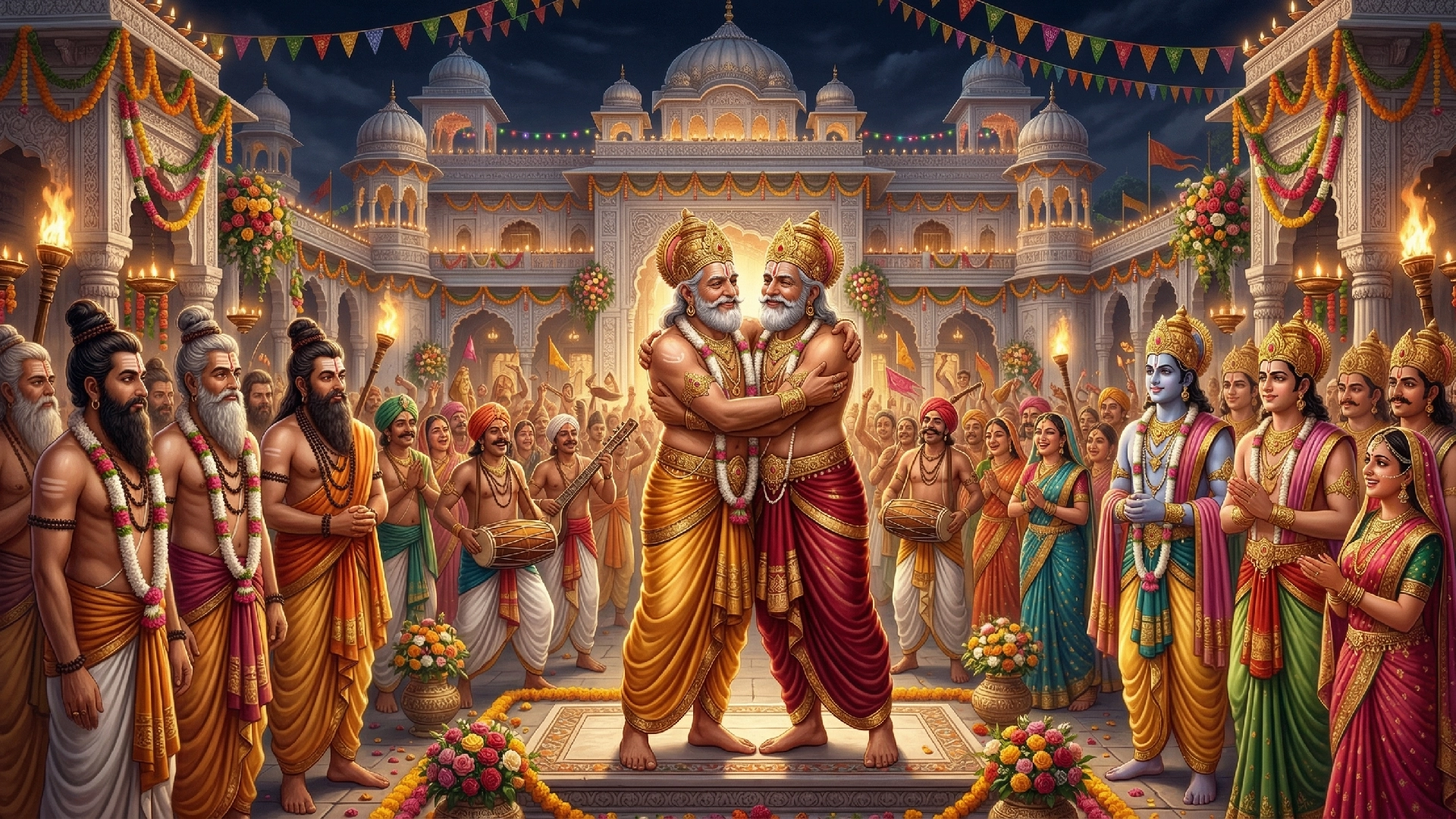
बारात का जनकपुर में आना और स्वागतादि – Arrival of the marriage procession and its reception at Janakpur
चौपाई :
* कनक कलस भरि कोपर थारा। भाजन ललित अनेक प्रकारा॥
भरे सुधा सम सब पकवाने। नाना भाँति न जाहिं बखाने॥1॥
भावार्थ:-(दूध, शर्बत, ठंडाई, जल आदि से) भरकर सोने के कलश तथा जिनका वर्णन नहीं हो सकता ऐसे अमृत के समान भाँति-भाँति के सब पकवानों से भरे हुए परात, थाल आदि अनेक प्रकार के सुंदर बर्तन,॥1॥
Jars of gold, ornate trays, lavish platters, and a variety of exquisite urns were brimming with nectar-like delicacies (milk, sherbet, juices, chilled drinks, desserts, sweets, and countless other delights) so exquisite that words could not do them justice.
* फल अनेक बर बस्तु सुहाईं। हरषि भेंट हित भूप पठाईं॥
भूषन बसन महामनि नाना। खग मृग हय गय बहुबिधि जाना॥2॥
भावार्थ:-उत्तम फल तथा और भी अनेकों सुंदर वस्तुएँ राजा ने हर्षित होकर भेंट के लिए भेजीं। गहने, कपड़े, नाना प्रकार की मूल्यवान मणियाँ (रत्न), पक्षी, पशु, घोड़े, हाथी और बहुत तरह की सवारियाँ,॥2॥
Luscious fruits and countless other splendid items, ornaments, fine garments, a dazzling array of precious gems, birds, animals, horses, elephants, cows, and all kinds of vehicles, were joyfully sent by King Janak as part of his grand offerings.
* मंगल सगुन सुगंध सुहाए। बहुत भाँति महिपाल पठाए॥
दधि चिउरा उपहार अपारा। भरि भरि काँवरि चले कहारा॥3॥
भावार्थ:-तथा बहुत प्रकार के सुगंधित एवं सुहावने मंगल द्रव्य और शगुन के पदार्थ राजा ने भेजे। दही, चिउड़ा और अगणित उपहार की चीजें काँवरों में भर-भरकर कहार चले॥3॥
The King also sent a variety of auspicious and fragrant items, each more charming than the last. Porters followed, carrying loads of curds, parched rice, and countless other gifts, all slung across their shoulders.
* अगवानन्ह जब दीखि बराता। उर आनंदु पुलक भर गाता॥
देखि बनाव सहित अगवाना। मुदित बरातिन्ह हने निसाना॥4॥
भावार्थ:-अगवानी करने वालों को जब बारात दिखाई दी, तब उनके हृदय में आनंद छा गया और शरीर रोमांच से भर गया। अगवानों को सज-धज के साथ देखकर बारातियों ने प्रसन्न होकर नगाड़े बजाए॥4॥
When the welcoming party caught sight of the Groom’s grand procession, their hearts overflowed with joy and a thrill ran through their bodies. In turn, the Groom’s party, delighted by the grandeur of the reception, burst into celebration with the beating of drums.
दोहा :
* हरषि परसपर मिलन हित कछुक चले बगमेल।
जनु आनंद समुद्र दुइ मिलत बिहाइ सुबेल॥305॥
भावार्थ:-(बाराती तथा अगवानों में से) कुछ लोग परस्पर मिलने के लिए हर्ष के मारे बाग छोड़कर (सरपट) दौड़ चले और ऐसे मिले मानो आनंद के दो समुद्र मर्यादा छोड़कर मिलते हों॥305॥
People from both the Bride and Groom’s side rushed forward with excitement to embrace one another, as if two boundless oceans of joy were merging, overflowing with delight.
चौपाई :
* बरषि सुमन सुर सुंदरि गावहिं। मुदित देव दुंदुभीं बजावहिं॥
बस्तु सकल राखीं नृप आगें। बिनय कीन्हि तिन्ह अति अनुरागें॥1॥
भावार्थ:-देवसुंदरियाँ फूल बरसाकर गीत गा रही हैं और देवता आनंदित होकर नगाड़े बजा रहे हैं। (अगवानी में आए हुए) उन लोगों ने सब चीजें दशरथजी के आगे रख दीं और अत्यन्त प्रेम से विनती की॥1॥
Celestial damsels showered flowers from the skies and sang melodious hymns, while the Demigods joyfully played kettledrums in celebration. The reception party respectfully placed all the offerings before Dashrath ji and humbly requested him to accept them.
* प्रेम समेत रायँ सबु लीन्हा। भै बकसीस जाचकन्हि दीन्हा॥
करि पूजा मान्यता बड़ाई। जनवासे कहुँ चले लवाई॥2॥
भावार्थ:-राजा दशरथजी ने प्रेम सहित सब वस्तुएँ ले लीं, फिर उनकी बख्शीशें होने लगीं और वे याचकों को दे दी गईं। तदनन्तर पूजा, आदर-सत्कार और बड़ाई करके अगवान लोग उनको जनवासे की ओर लिवा ले चले॥2॥
The King lovingly accepted all the offerings and generously distributed them, some as gifts to his own people, and others as alms to the needy. After offering heartfelt homage, respect, and words of praise to the Groom’s party, the Bride’s side graciously escorted them to their beautifully prepared guest houses.
* बसन बिचित्र पाँवड़े परहीं। देखि धनदु धन मदु परिहरहीं॥
अति सुंदर दीन्हेउ जनवासा। जहँ सब कहुँ सब भाँति सुपासा॥3॥
भावार्थ:-विलक्षण वस्त्रों के पाँवड़े पड़ रहे हैं, जिन्हें देखकर कुबेर भी अपने धन का अभिमान छोड़ देते हैं। बड़ा सुंदर जनवासा दिया गया, जहाँ सबको सब प्रकार का सुभीता था॥3॥
Floor mats and carpets woven from rare and exquisite fabrics were spread out for the guests, so splendid that even Kuber, the Demigod of Wealth, would set aside the pride of his riches upon seeing them. The guest houses were exceptionally grand, offering every imaginable comfort, thoughtfully arranged for each and every guest.
* जानी सियँ बरात पुर आई। कछु निज महिमा प्रगटि जनाई॥
हृदयँ सुमिरि सब सिद्धि बोलाईं। भूप पहुनई करन पठाईं॥4॥
भावार्थ:-सीताजी ने बारात जनकपुर में आई जानकर अपनी कुछ महिमा प्रकट करके दिखलाई। हृदय में स्मरणकर सब सिद्धियों को बुलाया और उन्हें राजा दशरथजी की मेहमानी करने के लिए भेजा॥4॥
When Sita ji learned that the Bridegroom’s party had entered the city, She gently revealed a glimpse of Her divine splendour. With a mere thought, She summoned all the Siddhis (miraculous powers in their personified forms) and sent them forth to extend gracious hospitality to King Dashrath and his entire entourage.
दोहा :
* सिधि सब सिय आयसु अकनि गईं जहाँ जनवास।
लिएँ संपदा सकल सुख सुरपुर भोग बिलास॥306॥
भावार्थ:-सीताजी की आज्ञा सुनकर सब सिद्धियाँ जहाँ जनवासा था, वहाँ सारी सम्पदा, सुख और इंद्रपुरी के भोग-विलास को लिए हुए गईं॥306॥
Obeying Sita ji’s divine command, all the Siddhis proceeded to the guest houses where the Bridegroom’s party was staying. They brought along with them every luxury, comfort, delight, and splendour imaginable, equal to those found in the celestial city (Amravati) of the Demigods.
चौपाई :
* निज निज बास बिलोकि बराती। सुर सुख सकल सुलभ सब भाँती॥
बिभव भेद कछु कोउ न जाना। सकल जनक कर करहिं बखाना॥1॥
भावार्थ:-बारातियों ने अपने-अपने ठहरने के स्थान देखे तो वहाँ देवताओं के सब सुखों को सब प्रकार से सुलभ पाया। इस ऐश्वर्य का कुछ भी भेद कोई जान न सका। सब जनकजी की बड़ाई कर रहे हैं॥1॥
When the Groom’s party entered their respective suites, they found them adorned with comforts and luxuries akin to those enjoyed by the Demigods. The source of such unmatched splendour remained a mystery to all, but everyone marvelled at the arrangements and praised King Janak for his boundless generosity and grandeur.
* सिय महिमा रघुनायक जानी। हरषे हृदयँ हेतु पहिचानी॥
पितु आगमनु सुनत दोउ भाई। हृदयँ न अति आनंदु अमाई॥2॥
भावार्थ:-श्री रघुनाथजी यह सब सीताजी की महिमा जानकर और उनका प्रेम पहचानकर हृदय में हर्षित हुए। पिता दशरथजी के आने का समाचार सुनकर दोनों भाइयों के हृदय में महान आनंद समाता न था॥2॥
But Shri Ram, aware of Sita ji’s divine glory, understood the true source behind the splendour. Realizing Her loving gesture, He rejoiced silently in His heart. Upon hearing the news of their father Dashrath ji’s arrival, both Shri Ram and Shri Lakshman were filled with joy, their hearts overflowing with happiness.
* सकुचन्ह कहि न सकत गुरु पाहीं। पितु दरसन लालचु मन माहीं॥
बिस्वामित्र बिनय बड़ि देखी। उपजा उर संतोषु बिसेषी॥3॥
भावार्थ:-संकोचवश वे गुरु विश्वामित्रजी से कह नहीं सकते थे, परन्तु मन में पिताजी के दर्शनों की लालसा थी। विश्वामित्रजी ने उनकी बड़ी नम्रता देखी, तो उनके हृदय में बहुत संतोष उत्पन्न हुआ॥3॥
Out of deep modesty, they did not express their desire to Guru Vishwamitra, though their hearts yearned to see their father. Witnessing this profound humility, Sage Vishwamitra’s heart overflowed with affection and joy.
* हरषि बंधु दोउ हृदयँ लगाए। पुलक अंग अंबक जल छाए॥
चले जहाँ दसरथु जनवासे। मनहुँ सरोबर तकेउ पिआसे॥4॥
भावार्थ:-प्रसन्न होकर उन्होंने दोनों भाइयों को हृदय से लगा लिया। उनका शरीर पुलकित हो गया और नेत्रों में (प्रेमाश्रुओं का) जल भर आया। वे उस जनवासे को चले, जहाँ दशरथजी थे। मानो सरोवर प्यासे की ओर लक्ष्य करके चला हो॥4॥
Pleased beyond words, he embraced both Brothers warmly, holding them close to his heart. A wave of joy surged through his body, and tears of happiness welled up in his eyes. Then, together, they made their way to where King Dashrath was staying, like the sacred lake itself (Shri Ram) moving to quench the deep thirst of the thirsty (King Dashrath).
दोहा :
* भूप बिलोके जबहिं मुनि आवत सुतन्ह समेत।
उठे हरषि सुखसिंधु महुँ चले थाह सी लेत॥307॥
भावार्थ:-जब राजा दशरथजी ने पुत्रों सहित मुनि को आते देखा, तब वे हर्षित होकर उठे और सुख के समुद्र में थाह सी लेते हुए चले॥307॥
When the King saw the Sage approaching with his two Sons, he rose with joy and stepped forward to welcome them, like a man adrift in an ocean of bliss, who at last finds firm footing in shallow waters.
चौपाई :
* मुनिहि दंडवत कीन्ह महीसा। बार बार पद रज धरि सीसा॥
कौसिक राउ लिए उर लाई। कहि असीस पूछी कुसलाई॥1॥
भावार्थ:-पृथ्वीपति दशरथजी ने मुनि की चरणधूलि को बारंबार सिर पर चढ़ाकर उनको दण्डवत् प्रणाम किया। विश्वामित्रजी ने राजा को उठाकर हृदय से लगा लिया और आशीर्वाद देकर कुशल पूछी॥1॥
The King bowed low before Sage Vishwamitra and reverently placed the dust of the Sage’s feet on his head, again and again. Moved by his humility, Sage Kaushik (Vishwamitra ji) lifted him up, embraced him warmly, offered his blessings, and kindly asked after his well-being.
* पुनि दंडवत करत दोउ भाई। देखि नृपति उर सुखु न समाई॥
सुत हियँ लाइ दुसह दुख मेटे। मृतक सरीर प्रान जनु भेंटे॥2॥
भावार्थ:-फिर दोनों भाइयों को दण्डवत् प्रणाम करते देखकर राजा के हृदय में सुख समाया नहीं। पुत्रों को (उठाकर) हृदय से लगाकर उन्होंने अपने (वियोगजनित) दुःसह दुःख को मिटाया। मानो मृतक शरीर को प्राण मिल गए हों॥2॥
Then, as the King saw the two Brothers bowing before him, his heart overflowed with joy. He drew them close to his chest, and in that loving embrace, the unbearable pain of their separation vanished, like a lifeless body suddenly restored to life.
* पुनि बसिष्ठ पद सिर तिन्ह नाए। प्रेम मुदित मुनिबर उर लाए॥
बिप्र बृंद बंदे दुहुँ भाईं। मनभावती असीसें पाईं॥3॥
भावार्थ:-फिर उन्होंने वशिष्ठजी के चरणों में सिर नवाया। मुनि श्रेष्ठ ने प्रेम के आनंद में उन्हें हृदय से लगा लिया। दोनों भाइयों ने सब ब्राह्मणों की वंदना की और मनभाए आशीर्वाद पाए॥3॥
After that, the two Brothers bowed their heads at the feet of Sage Vashishth. The Sage embraced them with great joy. They then offered their respects to the group of Brahmins who had accompanied the Sage, and in return, the Brahmins showered the Brothers with heartfelt blessings.
* भरत सहानुज कीन्ह प्रनामा। लिए उठाइ लाइ उर रामा॥
हरषे लखन देखि दोउ भ्राता। मिले प्रेम परिपूरित गाता॥4॥
भावार्थ:-भरतजी ने छोटे भाई शत्रुघ्न सहित श्री रामचन्द्रजी को प्रणाम किया। श्री रामजी ने उन्हें उठाकर हृदय से लगा लिया। लक्ष्मणजी दोनों भाइयों को देखकर हर्षित हुए और प्रेम से परिपूर्ण हुए शरीर से उनसे मिले॥4॥
Then Bharat ji, along with his younger Brother Shatrughan ji, bowed at Shri Ram’s feet. Shri Ram lifted them up and embraced them with deep affection. Shri Lakshman, overjoyed to see his Brothers, greeted them warmly, his entire being brimming with love and delight.
दोहा :
* पुरजन परिजन जातिजन जाचक मंत्री मीत।
मिले जथाबिधि सबहि प्रभु परम कृपाल बिनीत॥308॥
भावार्थ:-तदन्तर परम कृपालु और विनयी श्री रामचन्द्रजी अयोध्यावासियों, कुटुम्बियों, जाति के लोगों, याचकों, मंत्रियों और मित्रों सभी से यथा योग्य मिले॥308॥
Then the most gracious and humble Shri Ram met everyone, citizens, near and distant relatives, ministers, friends, and even those who came seeking alms, each according to their place and affection.
* रामहि देखि बरात जुड़ानी। प्रीति कि रीति न जाति बखानी॥
नृप समीप सोहहिं सुत चारी। जनु धन धरमादिक तनुधारी॥1॥
भावार्थ:- श्री रामचन्द्रजी को देखकर बारात शीतल हुई (राम के वियोग में सबके हृदय में जो आग जल रही थी, वह शांत हो गई)। प्रीति की रीति का बखान नहीं हो सकता। राजा के पास चारों पुत्र ऐसी शोभा पा रहे हैं, मानो अर्थ, धर्म, काम और मोक्ष शरीर धारण किए हुए हों॥1॥
Upon seeing Shri Ram, the entire procession felt relieved from the agony of separation, the depth of their love was beyond words. The four Sons stood radiantly beside King Dashrath, appearing like the divine embodiments of the four goals of human life: Righteousness (Dharma), Wealth (Artha), Desire (Kaam), and Liberation (Moksha).
चौपाई :
* सुतन्ह समेत दसरथहि देखी। मुदित नगर नर नारि बिसेषी॥
सुमन बरिसि सुर हनहिं निसाना। नाकनटीं नाचहिं करि गाना॥2॥
भावार्थ:-पुत्रों सहित दशरथजी को देखकर नगर के स्त्री-पुरुष बहुत ही प्रसन्न हो रहे हैं। (आकाश में) देवता फूलों की वर्षा करके नगाड़े बजा रहे हैं और अप्सराएँ गा-गाकर नाच रही हैं॥2॥
Seeing King Dashrath together with his Sons, the men and women of the city were filled with immense joy. The Demigods showered flowers from the Heavens, kettledrums resounded across the skies, and celestial damsels danced and sang in divine celebration.
* सतानंद अरु बिप्र सचिव गन। मागध सूत बिदुष बंदीजन॥
सहित बरात राउ सनमाना। आयसु मागि फिरे अगवाना॥3॥
भावार्थ:-अगवानी में आए हुए शतानंदजी, अन्य ब्राह्मण, मंत्रीगण, मागध, सूत, विद्वान और भाटों ने बारात सहित राजा दशरथजी का आदर-सत्कार किया। फिर आज्ञा लेकर वे वापस लौटे॥3॥
Sage Shatanand, accompanied by other Brahmins, ministers, bards, jesters, lineage storytellers, and learned scholars, offered due honour to the King and the Bridegroom’s party. With respectful farewells, they then humbly took their leave and returned.
* प्रथम बरात लगन तें आई। तातें पुर प्रमोदु अधिकाई॥
ब्रह्मानंदु लोग सब लहहीं। बढ़हुँ दिवस निसि बिधि सन कहहीं॥4॥
भावार्थ:-बारात लग्न के दिन से पहले आ गई है, इससे जनकपुर में अधिक आनंद छा रहा है। सब लोग ब्रह्मानंद प्राप्त कर रहे हैं और विधाता से मनाकर कहते हैं कि दिन-रात बढ़ जाएँ (बड़े हो जाएँ)॥4॥
The procession had arrived a few days early, which only added to the joy in the city. Everyone was immersed in a state of transcendental bliss, wishing that the days and nights would stretch longer, so they could savour each moment even more.
* रामु सीय सोभा अवधि सुकृत अवधि दोउ राज।
जहँ तहँ पुरजन कहहिं अस मिलि नर नारि समाज॥309॥
भावार्थ:- श्री रामचन्द्रजी और सीताजी सुंदरता की सीमा हैं और दोनों राजा पुण्य की सीमा हैं, जहाँ-तहाँ जनकपुरवासी स्त्री-पुरुषों के समूह इकट्ठे हो-होकर यही कह रहे हैं॥309॥
Wherever groups of men and women gathered in Janakpur, they would joyfully exclaim, “Shri Ram and Sita ji are the very pinnacle of beauty, and both the Kings embody the highest ideals of righteousness and virtue…
चौपाई :
* जनक सुकृत मूरति बैदेही। दसरथ सुकृत रामु धरें देही॥
इन्ह सम काहुँ न सिव अवराधे। काहुँ न इन्ह समान फल लाधे॥1॥
भावार्थ:-जनकजी के सुकृत (पुण्य) की मूर्ति जानकीजी हैं और दशरथजी के सुकृत देह धारण किए हुए श्री रामजी हैं। इन (दोनों राजाओं) के समान किसी ने शिवजी की आराधना नहीं की और न इनके समान किसी ने फल ही पाए॥1॥
…Videhi (Sita ji) is the embodiment of Janak ji’s pious deeds, and Shri Ram is the living image of King Dashrath’s righteousness. No one in the world has ever worshipped Lord Shiv with such unwavering devotion as these two Kings, nor has anyone ever been rewarded with such divine fruits of devotion as they have…
* इन्ह सम कोउ न भयउ जग माहीं। है नहिं कतहूँ होनेउ नाहीं॥
हम सब सकल सुकृत कै रासी। भए जग जनमि जनकपुर बासी॥2॥
भावार्थ:-इनके समान जगत में न कोई हुआ, न कहीं है, न होने का ही है। हम सब भी सम्पूर्ण पुण्यों की राशि हैं, जो जगत में जन्म लेकर जनकपुर के निवासी हुए,॥2॥
…There has been no one like them in this world, neither is there anyone like them now, nor shall there ever be. Truly, we must be the fortunate fruit of countless good deeds to have been born as residents of Janakpur in this age…
* जिन्ह जानकी राम छबि देखी। को सुकृती हम सरिस बिसेषी॥
पुनि देखब रघुबीर बिआहू। लेब भली बिधि लोचन लाहू॥3॥
भावार्थ:-और जिन्होंने जानकीजी और श्री रामचन्द्रजी की छबि देखी है। हमारे सरीखा विशेष पुण्यात्मा कौन होगा! और अब हम श्री रघुनाथजी का विवाह देखेंगे और भलीभाँति नेत्रों का लाभ लेंगे॥3॥
…Who could be more fortunate than us, to have been blessed with the sight of Janaki ji’s and Shri Ram’s divine beauty? And now, we shall witness their sacred wedding and feast our eyes upon this heavenly celebration.”
* कहहिं परसपर कोकिलबयनीं। एहि बिआहँ बड़ लाभु सुनयनीं॥
बड़ें भाग बिधि बात बनाई। नयन अतिथि होइहहिं दोउ भाई॥4॥
भावार्थ:-कोयल के समान मधुर बोलने वाली स्त्रियाँ आपस में कहती हैं कि हे सुंदर नेत्रों वाली! इस विवाह में बड़ा लाभ है। बड़े भाग्य से विधाता ने सब बात बना दी है, ये दोनों भाई हमारे नेत्रों के अतिथि हुआ करेंगे॥4॥
Women, speaking in sweet, cuckoo-like voices, whispered among themselves, “O’ Beautiful-eyed friend, this marriage has brought us a great blessing. With immense fortune, the Creator has arranged this divine union. Now these two Brothers will become the delight of our eyes (for they will visit Janakpur often after Shri Ram and Sita ji’s wedding)…
दोहा :
* बारहिं बार सनेह बस जनक बोलाउब सीय।
लेन आइहहिं बंधु दोउ कोटि काम कमनीय॥310॥
भावार्थ:-जनकजी स्नेहवश बार-बार सीताजी को बुलावेंगे और करोड़ों कामदेवों के समान सुंदर दोनों भाई सीताजी को लेने (विदा कराने) आया करेंगे॥310॥
…Janak ji, out of deep affection, will keep inviting Sita ji back from Her in-laws’ home in Ayodhya, and each time, those two Brothers, each more charming than a million Cupids, will joyfully arrive to escort Her home…
चौपाई :
* बिबिध भाँति होइहि पहुनाई। प्रिय न काहि अस सासुर माई॥
तब तब राम लखनहि निहारी। होइहहिं सब पुर लोग सुखारी॥1॥
भावार्थ:-तब उनकी अनेकों प्रकार से पहुनाई होगी। सखी! ऐसी ससुराल किसे प्यारी न होगी! तब-तब हम सब नगर निवासी श्री राम-लक्ष्मण को देख-देखकर सुखी होंगे॥1॥
…There will be gracious hospitality in every possible way. O’ Dear, who wouldn’t cherish such a welcoming home of in-laws? And when Shri Ram and Shri Lakshman arrive, the entire city of Janakpur will burst into joy…
* सखि जस राम लखन कर जोटा। तैसेइ भूप संग हुइ ढोटा॥
स्याम गौर सब अंग सुहाए। ते सब कहहिं देखि जे आए॥2॥
भावार्थ:-हे सखी! जैसा श्री राम-लक्ष्मण का जोड़ा है, वैसे ही दो कुमार राजा के साथ और भी हैं। वे भी एक श्याम और दूसरे गौर वर्ण के हैं, उनके भी सब अंग बहुत सुंदर हैं। जो लोग उन्हें देख आए हैं, वे सब यही कहते हैं॥2॥
…O’ Friend, along with the divine pair of Shri Ram and Shri Lakshman, there is yet another pair of handsome young men accompanying King Dashrath. Everyone who has seen them says, one is dark-hued, the other fair, and every part of their form is exceptionally graceful and captivating.”
* कहा एक मैं आजु निहारे। जनु बिरंचि निज हाथ सँवारे॥
भरतु राम ही की अनुहारी। सहसा लखि न सकहिं नर नारी॥3॥
भावार्थ:-एक ने कहा- मैंने आज ही उन्हें देखा है, इतने सुंदर हैं, मानो ब्रह्माजी ने उन्हें अपने हाथों सँवारा है। भरत तो श्री रामचन्द्रजी की ही शकल-सूरत के हैं। स्त्री-पुरुष उन्हें सहसा पहचान नहीं सकते॥3॥
One of the friends said, “I saw them today, it truly felt as if Lord Brahma himself had personally adorned them. Bharat ji bears such a striking resemblance to Shri Ram that no man or woman could easily tell them apart at first glance…
* लखनु सत्रुसूदनु एकरूपा। नख सिख ते सब अंग अनूपा॥
मन भावहिं मुख बरनि न जाहीं। उपमा कहुँ त्रिभुवन कोउ नाहीं॥4॥
भावार्थ:-लक्ष्मण और शत्रुघ्न दोनों का एक रूप है। दोनों के नख से शिखा तक सभी अंग अनुपम हैं। मन को बड़े अच्छे लगते हैं, पर मुख से उनका वर्णन नहीं हो सकता। उनकी उपमा के योग्य तीनों लोकों में कोई नहीं है॥4॥
…Shri Lakshman and Shri Shatrughan also look alike, with every limb from head to toe radiating a rare and distinct beauty. The heart is filled with admiration for all of them, yet words fall short in describing their charm. Truly, there is no one in all three worlds who can be compared to them.”
छन्द :
* उपमा न कोउ कह दास तुलसी कतहुँ कबि कोबिद कहैं।
बल बिनय बिद्या सील सोभा सिंधु इन्ह से एइ अहैं॥
पुर नारि सकल पसारि अंचल बिधिहि बचन सुनावहीं॥
ब्याहिअहुँ चारिउ भाइ एहिं पुर हम सुमंगल गावहीं॥
भावार्थ:-दास तुलसी कहता है कवि और कोविद (विद्वान) कहते हैं, इनकी उपमा कहीं कोई नहीं है। बल, विनय, विद्या, शील और शोभा के समुद्र इनके समान ये ही हैं। जनकपुर की सब स्त्रियाँ आँचल फैलाकर विधाता को यह वचन (विनती) सुनाती हैं कि चारों भाइयों का विवाह इसी नगर में हो और हम सब सुंदर मंगल गावें।
Tulsidas ji says, “There is no match for them anywhere, so proclaim the poets and the wise. Valour, humility, wisdom, modesty, and unmatched beauty, only they can be compared to themselves.” Seeing them, all the women of Janakpur lifted the corners of their sarees like beggars asking for alms and prayed to the Creator, “May all four Brothers be married in our city, so we may sing joyous wedding songs in their honour.”
सोरठा :
* कहहिं परस्पर नारि बारि बिलोचन पुलक तन।
सखि सबु करब पुरारि पुन्य पयोनिधि भूप दोउ॥311॥
भावार्थ:-नेत्रों में (प्रेमाश्रुओं का) जल भरकर पुलकित शरीर से स्त्रियाँ आपस में कह रही हैं कि हे सखी! दोनों राजा पुण्य के समुद्र हैं, त्रिपुरारी शिवजी सब मनोरथ पूर्ण करेंगे॥311॥
With eyes brimming with tears of love and bodies tingling with joy, the women said to one another, “O’ Friend, both Kings, Dashrath ji and Janak ji, are oceans of virtue. Surely, Lord Tripurari (Shiv ji) will fulfil all our heartfelt wishes.”
चौपाई :
* एहि बिधि सकल मनोरथ करहीं। आनँद उमगि उमगि उर भरहीं॥
जे नृप सीय स्वयंबर आए। देखि बंधु सब तिन्ह सुख पाए॥1॥
भावार्थ:-इस प्रकार सब मनोरथ कर रही हैं और हृदय को उमंग-उमंगकर (उत्साहपूर्वक) आनंद से भर रही हैं। सीताजी के स्वयंवर में जो राजा आए थे, उन्होंने भी चारों भाइयों को देखकर सुख पाया॥1॥
In this way, they all prayed fervently, their hearts brimming with joy and excitement. The visiting Kings who had come to witness Sita ji’s wedding were filled with delight upon seeing the four Brothers.
* कहत राम जसु बिसद बिसाला। निज निज भवन गए महिपाला॥
गए बीति कछु दिन एहि भाँती। प्रमुदित पुरजन सकल बराती॥2॥
भावार्थ:-श्री रामचन्द्रजी का निर्मल और महान यश कहते हुए राजा लोग अपने-अपने घर गए। इस प्रकार कुछ दिन बीत गए। जनकपुर निवासी और बाराती सभी बड़े आनंदित हैं॥2॥
Praising the mighty and immaculate glory of Shri Ram, the Kings returned to their respective Kingdoms. In this manner, a few days passed. The people of Janakpur and the entire Bridegroom’s party remained immersed in joy and celebration.
* मंगल मूल लगन दिनु आवा। हिम रितु अगहनु मासु सुहावा॥
ग्रह तिथि नखतु जोगु बर बारू। लगन सोधि बिधि कीन्ह बिचारू॥3॥
भावार्थ:-मंगलों का मूल लग्न का दिन आ गया। हेमंत ऋतु और सुहावना अगहन का महीना था। ग्रह, तिथि, नक्षत्र, योग और वार श्रेष्ठ थे। लग्न (मुहूर्त) शोधकर ब्रह्माजी ने उस पर विचार किया,॥3॥
Then dawned the auspicious day of the grand wedding. It was the delightful pre-winter season, in the charming month of November. The alignment of planets, the lunar date, the star conjunctions, the weekday, and the exact hour, everything had been perfectly ordained by Lord Brahma Himself.
* पठै दीन्हि नारद सन सोई। गनी जनक के गनकन्ह जोई॥
सुनी सकल लोगन्ह यह बाता। कहहिं जोतिषी आहिं बिधाता॥4॥
भावार्थ:-और उस (लग्न पत्रिका) को नारदजी के हाथ (जनकजी के यहाँ) भेज दिया। जनकजी के ज्योतिषियों ने भी वही गणना कर रखी थी। जब सब लोगों ने यह बात सुनी तब वे कहने लगे- यहाँ के ज्योतिषी भी ब्रह्मा ही हैं॥4॥
Brahma ji then sent the divine wedding schedule (date, time, and hour) through Sage Narad. Remarkably, the very same auspicious timing had already been determined by King Janak’s astrologers. When the people heard this, they exclaimed in wonder, “The astrologers of Janakpur must be none other than Brahma ji Himself.”
दोहा :
* धेनुधूरि बेला बिमल सकल सुमंगल मूल।
बिप्रन्ह कहेउ बिदेह सन जानि सगुन अनुकूल॥312॥
भावार्थ:-निर्मल और सभी सुंदर मंगलों की मूल गोधूलि की पवित्र बेला आ गई और अनुकूल शकुन होने लगे, यह जानकर ब्राह्मणों ने जनकजी से कहा॥312॥
Observing the most sacred and auspicious hour, just before sunset, when cows typically return home from pasture and the air is filled with gentle clouds of dust stirred by their hooves, the Brahmins joyfully informed King Videh (Janak ji), “The blessed moment has arrived!”
चौपाई :
* उपरोहितहि कहेउ नरनाहा। अब बिलंब कर कारनु काहा॥
सतानंद तब सचिव बोलाए। मंगल सकल साजि सब ल्याए॥1॥
भावार्थ:-तब राजा जनक ने पुरोहित शतानंदजी से कहा कि अब देरी का क्या कारण है। तब शतानंदजी ने मंत्रियों को बुलाया। वे सब मंगल का सामान सजाकर ले आए॥1॥
The King turned to his family priest, Guru Shatanand, and asked, “What is the reason for the delay now?” At this, the Guru summoned the ministers, who promptly arrived, carrying all the necessary auspicious items.
* संख निसान पनव बहु बाजे। मंगल कलस सगुन सुभ साजे॥
सुभग सुआसिनि गावहिं गीता। करहिं बेद धुनि बिप्र पुनीता॥2॥
भावार्थ:-शंख, नगाड़े, ढोल और बहुत से बाजे बजने लगे तथा मंगल कलश और शुभ शकुन की वस्तुएँ (दधि, दूर्वा आदि) सजाई गईं। सुंदर सुहागिन स्त्रियाँ गीत गा रही हैं और पवित्र ब्राह्मण वेद की ध्वनि कर रहे हैं॥2॥
A symphony of conches, drums, and tabors echoed through the air. Festal vases and auspicious items (curds, turmeric, and blades of sacred Durva grass) were reverently displayed. Graceful married women sang melodious wedding songs, while holy Brahmins chanted Vedic hymns, filling the atmosphere with divine energy.
* लेन चले सादर एहि भाँती। गए जहाँ जनवास बराती॥
कोसलपति कर देखि समाजू। अति लघु लाग तिन्हहि सुरराजू॥3॥
भावार्थ:-सब लोग इस प्रकार आदरपूर्वक बारात को लेने चले और जहाँ बारातियों का जनवासा था, वहाँ गए। अवधपति दशरथजी का समाज (वैभव) देखकर उनको देवराज इन्द्र भी बहुत ही तुच्छ लगने लगे॥3॥
In this manner, the Bride’s side proceeded with utmost respect to bring the Bridegroom’s party from their guest residences. Upon witnessing the splendour of the Lord of the Koshal Kingdom, even the grandeur of Lord Indra (the King of the Demigods), seemed insignificant in the eyes of the Bride’s entourage.
* भयउ समउ अब धारिअ पाऊ। यह सुनि परा निसानहिं घाऊ ॥
गुरहि पूछि करि कुल बिधि राजा। चले संग मुनि साधु समाजा॥4॥
भावार्थ:-(उन्होंने जाकर विनती की-) समय हो गया, अब पधारिए। यह सुनते ही नगाड़ों पर चोट पड़ी। गुरु वशिष्ठजी से पूछकर और कुल की सब रीतियों को करके राजा दशरथजी मुनियों और साधुओं के समाज को साथ लेकर चले॥4॥
The Bride’s side humbly said, “The auspicious moment has arrived, please come now.” At their words, the kettledrums began to resound thunderously. With the permission of Guru Vashishth and after performing the sacred family rites, King Dashrath, accompanied by his Guru, along with groups of Sages and holy men, set forth in procession.
दोहा :
* भाग्य बिभव अवधेस कर देखि देव ब्रह्मादि।
लगे सराहन सहस मुख जानि जनम निज बादि॥313॥
भावार्थ:-अवध नरेश दशरथजी का भाग्य और वैभव देखकर और अपना जन्म व्यर्थ समझकर, ब्रह्माजी आदि देवता हजारों मुखों से उसकी सराहना करने लगे॥313॥
Witnessing the immense fortune and splendour of Ayodhya’s King Dashrath, Brahma ji and the other Demigods felt their own births to be in vain. In awe, they began praising Dashrath ji with thousands of mouths.
चौपाई :
* सुरन्ह सुमंगल अवसरु जाना। बरषहिं सुमन बजाइ निसाना॥
सिव ब्रह्मादिक बिबुध बरुथा। चढ़े बिमानन्हि नाना जूथा॥1॥
भावार्थ:-देवगण सुंदर मंगल का अवसर जानकर, नगाड़े बजा-बजाकर फूल बरसाते हैं। शिवजी, ब्रह्माजी आदि देववृन्द यूथ (टोलियाँ) बना-बनाकर विमानों पर जा चढ़े॥1॥
Recognizing the moment as auspicious, the Demigods showered flowers from the Heavens and sounded divine kettledrums. Lord Shiv, Lord Brahma, and many other celestial beings ascended their aerial chariots, gathering joyfully in countless groups.
* प्रेम पुलक तन हृदयँ उछाहू। चले बिलोकन राम बिआहू॥
देखि जनकपुरु सुर अनुरागे। निज निज लोक सबहिं लघु लागे॥2॥
भावार्थ:-और प्रेम से पुलकित शरीर हो तथा हृदय में उत्साह भरकर श्री रामचन्द्रजी का विवाह देखने चले। जनकपुर को देखकर देवता इतने अनुरक्त हो गए कि उन सबको अपने-अपने लोक बहुत तुच्छ लगने लगे॥2॥
Their bodies thrilled with emotion and their hearts overflowed with joy they set out to witness Shri Ram’s wedding. Beholding the grandeur of Janakpur, the Demigods were filled with wonder, feeling that their own celestial abodes paled in comparison.
* चितवहिं चकित बिचित्र बिताना। रचना सकल अलौकिक नाना।
नगर नारि नर रूप निधाना। सुघर सुधरम सुसील सुजाना॥3॥
भावार्थ:-विचित्र मंडप को तथा नाना प्रकार की सब अलौकिक रचनाओं को वे चकित होकर देख रहे हैं। नगर के स्त्री-पुरुष रूप के भंडार, सुघड़, श्रेष्ठ धर्मात्मा, सुशील और सुजान हैं॥3॥
They marvelled at the exquisite pavilions and the divine arrangements throughout Janakpur. The city’s men and women were embodiments of beauty – gracefully built, righteous in conduct, and adorned with both humility and wisdom.
* तिन्हहि देखि सब सुर सुरनारीं। भए नखत जनु बिधु उजिआरीं॥
बिधिहि भयउ आचरजु बिसेषी। निज करनी कछु कतहुँ न देखी॥4॥
भावार्थ:-उन्हें देखकर सब देवता और देवांगनाएँ ऐसे प्रभाहीन हो गए जैसे चन्द्रमा के उजियाले में तारागण फीके पड़ जाते हैं। ब्रह्माजी को विशेष आश्चर्य हुआ, क्योंकि वहाँ उन्होंने अपनी कोई करनी (रचना) तो कहीं देखी ही नहीं॥4॥
Upon seeing them, all the Demigods and their celestial consorts appeared dim, like stars fading before the rising Moon. Lord Brahma was especially astonished, for he could not find a single creation in Janakpur that seemed to have originated from his own hands.
दोहा :
* सिवँ समुझाए देव सब जनि आचरज भुलाहु।
हृदयँ बिचारहु धीर धरि सिय रघुबीर बिआहु॥314॥
भावार्थ:-तब शिवजी ने सब देवताओं को समझाया कि तुम लोग आश्चर्य में मत भूलो। हृदय में धीरज धरकर विचार तो करो कि यह (भगवान की महामहिमामयी निजशक्ति) श्री सीताजी का और (अखिल ब्रह्माण्डों के परम ईश्वर साक्षात् भगवान) श्री रामचन्द्रजी का विवाह है॥314॥
Then Lord Shiv addressed the astonished Demigods, saying, “Do not be bewildered or forgetful, reflect calmly in your hearts. This is the divine wedding of Sita ji (the embodiment of Lord Ram’s material energy and the source of all creation) with Shri Ram (the Supreme Almighty Himself).”
चौपाई :
* जिन्ह कर नामु लेत जग माहीं। सकल अमंगल मूल नसाहीं॥
करतल होहिं पदारथ चारी। तेइ सिय रामु कहेउ कामारी॥1॥
भावार्थ:-जिनका नाम लेते ही जगत में सारे अमंगलों की जड़ कट जाती है और चारों पदार्थ (अर्थ, धर्म, काम, मोक्ष) मुट्ठी में आ जाते हैं, ये वही (जगत के माता-पिता) श्री सीतारामजी हैं, काम के शत्रु शिवजी ने ऐसा कहा॥1॥
Lord Shiv, the conqueror of Kaamdev (Cupid), further said, “The very names of Ram and Sita, when spoken, uproot all evil. Through their remembrance alone, the four goals of human life (righteousness, wealth, desire, and liberation) can be effortlessly grasped in one’s palm. They are none other than the divine mother and father of the Universe.”
* एहि बिधि संभु सुरन्ह समुझावा। पुनि आगें बर बसह चलावा॥
देवन्ह देखे दसरथु जाता। महामोद मन पुलकित गाता॥2॥
भावार्थ:-इस प्रकार शिवजी ने देवताओं को समझाया और फिर अपने श्रेष्ठ बैल नंदीश्वर को आगे बढ़ाया। देवताओं ने देखा कि दशरथजी मन में बड़े ही प्रसन्न और शरीर से पुलकित हुए चले जा रहे हैं॥2॥
In this way, Lord Shiv enlightened the Demigods and then gently urged His graceful bull (Nandi ji) to move ahead. The Demigods then beheld King Dashrath approaching Janak ji’s palace, his heart brimming with immense joy and his body quivering with ecstatic delight.
* साधु समाज संग महिदेवा। जनु तनु धरें करहिं सुख सेवा॥
सोहत साथ सुभग सुत चारी। जनु अपबरग सकल तनुधारी॥3॥
भावार्थ:-उनके साथ (परम हर्षयुक्त) साधुओं और ब्राह्मणों की मंडली ऐसी शोभा दे रही है, मानो समस्त सुख शरीर धारण करके उनकी सेवा कर रहे हों। चारों सुंदर पुत्र साथ में ऐसे सुशोभित हैं, मानो सम्पूर्ण मोक्ष (सालोक्य, सामीप्य, सारूप्य, सायुज्य) शरीर धारण किए हुए हों॥3॥
King Dashrath was surrounded by groups of jubilant Sages and Brahmins, it seemed as though joy itself had taken form to accompany and serve him. He was resplendent, glorified by his four divine sons, who appeared as the very embodiments of the four forms of liberation: (Salokya- dwelling in Vaikunth with the Supreme, Sarupya – assuming a form like the Supreme, Samipya- living in close proximity to the Supreme, and Sayujya – complete absorption into the Supreme Being).
* मरकत कनक बरन बर जोरी। देखि सुरन्ह भै प्रीति न थोरी॥
पुनि रामहि बिलोकि हियँ हरषे। नृपहि सराहि सुमन तिन्ह बरषे॥4॥
भावार्थ:-मरकतमणि और सुवर्ण के रंग की सुंदर जोड़ियों को देखकर देवताओं को कम प्रीति नहीं हुई (अर्थात् बहुत ही प्रीति हुई)। फिर रामचन्द्रजी को देखकर वे हृदय में (अत्यन्त) हर्षित हुए और राजा की सराहना करके उन्होंने फूल बरसाए॥4॥
Seeing the two radiant pairs, Shri Ram and Shri Bharat with their emerald-hued complexions, and Shri Lakshman and Shri Shatrughan with their golden-hued glow, the Demigods were filled with delight. Their eyes were drawn once more to Shri Ram, and their hearts brimmed with joy. They praised King Dashrath and showered flowers from the Heavens in reverence.
दोहा :
* राम रूपु नख सिख सुभग बारहिं बार निहारि।
पुलक गात लोचन सजल उमा समेत पुरारि॥315॥
भावार्थ:-नख से शिखा तक श्री रामचन्द्रजी के सुंदर रूप को बार-बार देखते हुए पार्वतीजी सहित श्री शिवजी का शरीर पुलकित हो गया और उनके नेत्र (प्रेमाश्रुओं के) जल से भर गए॥315॥
Beholding the divine beauty of Shri Ram from head to toe, again and again, Lord Shiv and Goddess Uma were overcome with bliss. Their eyes welled up with tears of joy, and their bodies quivered with ecstatic delight.
चौपाई :
* केकि कंठ दुति स्यामल अंगा। तड़ित बिनिंदक बसन सुरंगा॥
ब्याह बिभूषन बिबिध बनाए। मंगल सब सब भाँति सुहाए॥1॥
भावार्थ:-रामजी का मोर के कंठ की सी कांतिवाला (हरिताभ) श्याम शरीर है। बिजली का अत्यन्त निरादर करने वाले प्रकाशमय सुंदर (पीत) रंग के वस्त्र हैं। सब मंगल रूप और सब प्रकार के सुंदर भाँति-भाँति के विवाह के आभूषण शरीर पर सजाए हुए हैं॥1॥
The aura of Shri Ram’s body gleamed with the deep, radiant hue of a peacock’s neck, while his bright yellow garments outshone the brilliance of lightning. Adorned with numerous ceremonial ornaments for the wedding, each piece was auspicious and exuded unmatched grace and splendour.
* सरद बिमल बिधु बदनु सुहावन। नयन नवल राजीव लजावन॥
सकल अलौकिक सुंदरताई। कहि न जाई मनहीं मन भाई॥2॥
भावार्थ:-उनका सुंदर मुख शरत्पूर्णिमा के निर्मल चन्द्रमा के समान और (मनोहर) नेत्र नवीन कमल को लजाने वाले हैं। सारी सुंदरता अलौकिक है। (माया की बनी नहीं है, दिव्य सच्चिदानन्दमयी है) वह कहीं नहीं जा सकती, मन ही मन बहुत प्रिय लगती है॥2॥
Shri Ram’s enchanting face shone like the clear full Moon of an autumn night, serene and radiant. His captivating eyes were so exquisite, even freshly bloomed lotuses would bow in shyness. His divine beauty defies description, it can only be truly felt and cherished within the heart.
* बंधु मनोहर सोहहिं संगा। जात नचावत चपल तुरंगा।
राजकुअँर बर बाजि देखावहिं। बंस प्रसंसक बिरिद सुनावहिं॥3॥
भावार्थ:-साथ में मनोहर भाई शोभित हैं, जो चंचल घोड़ों को नचाते हुए चले जा रहे हैं। राजकुमार श्रेष्ठ घोड़ों को (उनकी चाल को) दिखला रहे हैं और वंश की प्रशंसा करने वाले (मागध भाट) विरुदावली सुना रहे हैं॥3॥
Shri Ram was glorified by His handsome brothers, who rode alongside Him, playfully guiding their spirited horses in elegant movements. The other Princes too showcased the graceful gaits of their noble steeds, while bards joyfully sang the praises of the illustrious Solar dynasty.
* जेहि तुरंग पर रामु बिराजे। गति बिलोकि खगनायकु लाजे॥
कहि न जाइ सब भाँति सुहावा। बाजि बेषु जनु काम बनावा॥4॥
भावार्थ:-जिस घोड़े पर श्री रामजी विराजमान हैं, उसकी (तेज) चाल देखकर गरुड़ भी लजा जाते हैं, उसका वर्णन नहीं हो सकता, वह सब प्रकार से सुंदर है। मानो कामदेव ने ही घोड़े का वेष धारण कर लिया हो॥4॥
The horse that Shri Ram rode moved with such swiftness that even Garud ji, the King of Birds, would shy away in awe. Its beauty was beyond words, as if Kaamdev (Cupid) himself had assumed the form of Shri Ram’s steed.
छन्द :
* जनु बाजि बेषु बनाइ मनसिजु राम हित अति सोहई।
आपनें बय बल रूप गुन गति सकल भुवन बिमोहई॥
जगमगत जीनु जराव जोति सुमोति मनि मानिक लगे।
किंकिनि ललाम लगामु ललित बिलोकि सुर नर मुनि ठगे॥
भावार्थ:-मानो श्री रामचन्द्रजी के लिए कामदेव घोड़े का वेश बनाकर अत्यन्त शोभित हो रहा है। वह अपनी अवस्था, बल, रूप, गुण और चाल से समस्त लोकों को मोहित कर रहा है। सुंदर मोती, मणि और माणिक्य लगी हुई जड़ाऊ जीन ज्योति से जगमगा रहा है। उसकी सुंदर घुँघरु लगी ललित लगाम को देखकर देवता, मनुष्य और मुनि सभी ठगे जाते हैं।
It seemed as if Kaamdev (Cupid) had taken the form of an extremely beautiful looking horse for Shri Ram to ride. With its youth, vigour, looks, virtues and speed, it was captivating all the three worlds (Earth, Heaven and the Subterranean region). It’s saddle was sparkling with studded beautiful pearls, gems and rubies. Seeing the exquisite band with small tinkling bells and the lovely bridle, all the Demigods, men and sages felt mesmerized.
दोहा :
* प्रभु मनसहिं लयलीन मनु चलत बाजि छबि पाव।
भूषित उड़गन तड़ित घनु जनु बर बरहि नचाव॥316॥
भावार्थ:-प्रभु की इच्छा में अपने मन को लीन किए चलता हुआ वह घोड़ा बड़ी शोभा पा रहा है। मानो तारागण तथा बिजली से अलंकृत मेघ सुंदर मोर को नचा रहा हो॥316॥
With his mind immersed in the will of the Lord, the horse was marching gracefully. As if a rain cloud adorned with stars and lightning was making a beautiful peacock dance.
चौपाई :
* जेहिं बर बाजि रामु असवारा। तेहि सारदउ न बरनै पारा॥
संकरु राम रूप अनुरागे। नयन पंचदस अति प्रिय लागे॥1॥
भावार्थ:-जिस श्रेष्ठ घोड़े पर श्री रामचन्द्रजी सवार हैं, उसका वर्णन सरस्वतीजी भी नहीं कर सकतीं। शंकरजी श्री रामचन्द्रजी के रूप में ऐसे अनुरक्त हुए कि उन्हें अपने पंद्रह नेत्र इस समय बहुत ही प्यारे लगने लगे॥1॥
The fine horse that Shri Ram had mounted, even Goddess Saraswati could not express its beauty. Lord Shankar (who has five faces, with three eyes each) was completely enamoured by this form of Shri Ram (mounted on the beautiful horse) and felt extremely delighted to possess fifteen eyes.
* हरि हित सहित रामु जब जोहे। रमा समेत रमापति मोहे॥
निरखि राम छबि बिधि हरषाने। आठइ नयन जानि पछिताने॥2॥
भावार्थ:-भगवान विष्णु ने जब प्रेम सहित श्री राम को देखा, तब वे (रमणीयता की मूर्ति) श्री लक्ष्मीजी के पति श्री लक्ष्मीजी सहित मोहित हो गए। श्री रामचन्द्रजी की शोभा देखकर ब्रह्माजी बड़े प्रसन्न हुए, पर अपने आठ ही नेत्र जानकर पछताने लगे॥2॥
When Lord Vishnu saw Shri Ram affectionately, He along with His consort Rama (Goddess Lakshmi) were fascinated. Seeing Shri Ram’s beauty, Lord Brahma felt delighted, but felt sorry to possess only eight eyes (Lord Brahma has four faces, with two eyes each).
* सुर सेनप उर बहुत उछाहू। बिधि ते डेवढ़ लोचन लाहू॥
रामहि चितव सुरेस सुजाना। गौतम श्रापु परम हित माना॥3॥
भावार्थ:-देवताओं के सेनापति स्वामि कार्तिक के हृदय में बड़ा उत्साह है, क्योंकि वे ब्रह्माजी से ड्योढ़े अर्थात बारह नेत्रों से रामदर्शन का सुंदर लाभ उठा रहे हैं। सुजान इन्द्र (अपने हजार नेत्रों से) श्री रामचन्द्रजी को देख रहे हैं और गौतमजी के शाप को अपने लिए परम हितकर मान रहे हैं॥3॥
The commander-in-chief of the Demigods’ army, Kartikey ji, was extremely excited that he possessed one and half times more number of eyes (total twelve eyes) than Lord Brahma (Kartikey ji has six faces, with two eyes each). The all-wise Indra (with his thousand eyes) is looking at Shri Ram and is considering Sage Gautam’s curse (because of the sage’s curse he had got a 1000 eyes) to have been the most beneficial for him.
* देव सकल सुरपतिहि सिहाहीं। आजु पुरंदर सम कोउ नाहीं॥
मुदित देवगन रामहि देखी। नृपसमाज दुहुँ हरषु बिसेषी॥4॥
भावार्थ:-सभी देवता देवराज इन्द्र से ईर्षा कर रहे हैं (और कह रहे हैं) कि आज इन्द्र के समान भाग्यवान दूसरा कोई नहीं है। श्री रामचन्द्रजी को देखकर देवगण प्रसन्न हैं और दोनों राजाओं के समाज में विशेष हर्ष छा रहा है॥4॥
All the other Demigods are feeling envious of Lord Indra and are saying, “There is no one as lucky as Lord Indra today”. All the Demigods are feeling happy to see Shri Ram and there is a special joy in the communities of both the Kings.
छन्द :
* अति हरषु राजसमाज दुहु दिसि दुंदुभीं बाजहिं घनी।
बरषहिं सुमन सुर हरषि कहि जय जयति जय रघुकुलमनी॥
एहि भाँति जानि बरात आवत बाजने बहु बाजहीं।
रानी सुआसिनि बोलि परिछनि हेतु मंगल साजहीं॥
भावार्थ:-दोनों ओर से राजसमाज में अत्यन्त हर्ष है और बड़े जोर से नगाड़े बज रहे हैं। देवता प्रसन्न होकर और ‘रघुकुलमणि श्री राम की जय हो, जय हो, जय हो’ कहकर फूल बरसा रहे हैं। इस प्रकार बारात को आती हुई जानकर बहुत प्रकार के बाजे बजने लगे और रानी सुहागिन स्त्रियों को बुलाकर परछन के लिए मंगल द्रव्य सजाने लगीं॥
There was great joy on both sides of the Royal gatherings and kettledrums played loudly. Demigods felt delighted and showered down flowers and shouted, “Hail to the crown jewel of Raghu’s race Shri Ram”. In this manner, seeing the arrival of the marriage procession, many types of musical instruments started playing. The Queen (Sunaina ji) called upon married women and started decorating auspicious items for the purpose of performing aarti (the ceremony of waving auspicious lights around the groom).
दोहा :
* सजि आरती अनेक बिधि मंगल सकल सँवारि।
चलीं मुदित परिछनि करन गजगामिनि बर नारि॥317॥
भावार्थ:-अनेक प्रकार से आरती सजकर और समस्त मंगल द्रव्यों को यथायोग्य सजाकर गजगामिनी (हाथी की सी चाल वाली) उत्तम स्त्रियाँ आनंदपूर्वक परछन के लिए चलीं॥317॥
After decorating the arti trays in many ways and adorning them with articles of good omen (a ghee lamp, a mix of turmeric and saffron powder called kumkum, blades of Durva grass, vermilion (sindoor), unbroken rice, holy water, sweets, fruits, fresh flowers, incense sticks, camphor, coconut, betel leaves etc), beautiful women who possessed the charming gait of elephants, proceeded joyfully to perform the ceremony of waving arti around the bridegroom.
चौपाई :
* बिधुबदनीं सब सब मृगलोचनि। सब निज तन छबि रति मदु मोचनि॥
पहिरें बरन बरन बर चीरा। सकल बिभूषन सजें सरीरा॥1॥
भावार्थ:-सभी स्त्रियाँ चन्द्रमुखी (चन्द्रमा के समान मुख वाली) और सभी मृगलोचनी (हरिण की सी आँखों वाली) हैं और सभी अपने शरीर की शोभा से रति के गर्व को छुड़ाने वाली हैं। रंग-रंग की सुंदर साड़ियाँ पहने हैं और शरीर पर सब आभूषण सजे हुए हैं॥1॥
All these deer-eyed women had moon-like faces. All had bodies that could rob Rati’s (the consort of Kaamdev) pride of beauty. They wore garments of various colours and their bodies were adorned with various kinds of ornaments.
* सकल सुमंगल अंग बनाएँ। करहिं गान कलकंठि लजाएँ॥
कंकन किंकिनि नूपुर बाजहिं। चालि बिलोकि काम गज लाजहिं॥2॥
भावार्थ:-समस्त अंगों को सुंदर मंगल पदार्थों से सजाए हुए वे कोयल को भी लजाती हुई (मधुर स्वर से) गान कर रही हैं। कंगन, करधनी और नूपुर बज रहे हैं। स्त्रियों की चाल देखकर कामदेव के हाथी भी लजा जाते हैं॥2॥
All had beautiful, auspicious make-up (designs of henna, kumkum etc.) on their limbs and they sang sweet melodies that would put to shame female cuckoo birds. Their bracelets, waist belts and anklets made tinkling sounds when they moved and even Kaamdev’s elephants blushed in shame to see their lovely gait.
* बाजहिं बाजने बिबिध प्रकारा। नभ अरु नगर सुमंगलचारा॥
सची सारदा रमा भवानी। जे सुरतिय सुचि सजह सयानी॥3॥
भावार्थ:-अनेक प्रकार के बाजे बज रहे हैं, आकाश और नगर दोनों स्थानों में सुंदर मंगलाचार हो रहे हैं। शची (इन्द्राणी), सरस्वती, लक्ष्मी, पार्वती और जो स्वभाव से ही पवित्र और सयानी देवांगनाएँ थीं,॥3॥
Many types of musical instruments were playing. Auspicious invocations were taking place both in the sky and in the city. Sacchi ji (consort of Demigod Indra), Saraswati ji (consort of Lord Brahma), Rama ji (consort of Lord Vishnu), Bhawani ji (consort of Lord Shiv) and all the wives of Demigods, who are by nature pure and wise…
* कपट नारि बर बेष बनाई। मिली सकल रनिवासहिं जाई॥
करहिं गान कल मंगल बानीं। हरष बिबस सब काहुँ न जानीं॥4॥
भावार्थ:-वे सब कपट से सुंदर स्त्री का वेश बनाकर रनिवास में जा मिलीं और मनोहर वाणी से मंगलगान करने लगीं। सब कोई हर्ष के विशेष वश थे, अतः किसी ने उन्हें पहचाना नहीं॥4॥
…disguised as beautiful earthly women. They all went to the queen’s palace and mixed themselves in the crowd. They sang festal songs in melodious voices. No one could find out their true identities because of all the excitement.
छन्द :
* को जान केहि आनंद बस सब ब्रह्मु बर परिछन चली।
कल गान मधुर निसान बरषहिं सुमन सुर सोभा भली॥
आनंदकंदु बिलोकि दूलहु सकलहियँ हरषित भई।
अंभोज अंबक अंबु उमगि सुअंग पुलकावलि छई॥
भावार्थ:-कौन किसे जाने-पहिचाने! आनंद के वश हुई सब दूलह बने हुए ब्रह्म का परछन करने चलीं। मनोहर गान हो रहा है। मधुर-मधुर नगाड़े बज रहे हैं, देवता फूल बरसा रहे हैं, बड़ी अच्छी शोभा है। आनंदकन्द दूलह को देखकर सब स्त्रियाँ हृदय में हर्षित हुईं। उनके कमल सरीखे नेत्रों में प्रेमाश्रुओं का जल उमड़ आया और सुंदर अंगों में पुलकावली छा गई॥
(After all) who would even (try to) recognize anyone, when all were immersed in the ecstatic joy of performing aarti of the Almighty Brahm, Shri Ram. Melodious songs were being sung and kettledrums gently sounded, the Gods rained down flowers and everything looked extremely charming. Glancing at the mine of bliss; the bridegroom Shri Ram, everyone rejoiced. Their lotus-like eyes filled with tears of love and their beautiful limbs got covered with goosebumps.
दोहा :
* जो सुखु भा सिय मातु मन देखि राम बर बेषु।
सो न सकहिं कहि कलप सत सहस सारदा सेषु॥318॥
श्री रामचन्द्रजी का वर वेश देखकर सीताजी की माता सुनयनाजी के मन में जो सुख हुआ, उसे हजारों सरस्वती और शेषजी सौ कल्पों में भी नहीं कह सकते (अथवा लाखों सरस्वती और शेष लाखों कल्पों में भी नहीं कह सकते)॥318॥
The joy which was felt in the heart of Sita ji’s mother, Queen Sunaina upon seeing the handsome appearance of Shri Ram dressed as a bridegroom, cannot be expressed by thousands of Goddess Saraswatis and Sheshnags even in a hundred kalpas or lifespans of the universe.
चौपाई :
* नयन नीरु हटि मंगल जानी। परिछनि करहिं मुदित मन रानी॥
बेद बिहित अरु कुल आचारू। कीन्ह भली बिधि सब ब्यवहारू॥1॥
भावार्थ:-मंगल अवसर जानकर नेत्रों के जल को रोके हुए रानी प्रसन्न मन से परछन कर रही हैं। वेदों में कहे हुए तथा कुलाचार के अनुसार सभी व्यवहार रानी ने भलीभाँति किए॥1॥
Realizing it was an auspicious moment, she held back her joyful tears. With a heart full of happiness, she reverently performed the aarti of Shri Ram. She carried out all the rituals with devotion, in accordance with both the Vedic Scriptures and her family traditions.
* पंच सबद धुनि मंगल गाना। पट पाँवड़े परहिं बिधि नाना॥
करि आरती अरघु तिन्ह दीन्हा। राम गमनु मंडप तब कीन्हा॥2॥
भावार्थ:-पंचशब्द (तंत्री, ताल, झाँझ, नगारा और तुरही- इन पाँच प्रकार के बाजों के शब्द), पंचध्वनि (वेदध्वनि, वन्दिध्वनि, जयध्वनि, शंखध्वनि और हुलूध्वनि) और मंगलगान हो रहे हैं। नाना प्रकार के वस्त्रों के पाँवड़े पड़ रहे हैं। उन्होंने (रानी ने) आरती करके अर्घ्य दिया, तब श्री रामजी ने मंडप में गमन किया॥2॥
Five kinds of music filled the air (such as the veena, clapping of hands, cymbals, kettledrums, and trumpets). These were accompanied by five varieties of festive sounds (Vedic chants, praises by family bards, joyous victory cries, the blast of conches, and rhythmic drumbeats). The path ahead was adorned with carpets of rich and varied fabrics. After completing the aarti, the Queen offered water to Lord Ram for washing His hands. Thereafter, Shri Ram gracefully proceeded toward the wedding pavilion.
* दसरथु सहित समाज बिराजे। बिभव बिलोकि लोकपति लाजे॥
समयँ समयँ सुर बरषहिं फूला। सांति पढ़हिं महिसुर अनुकूला॥3॥
भावार्थ:-दशरथजी अपनी मंडली सहित विराजमान हुए। उनके वैभव को देखकर लोकपाल भी लजा गए। समय-समय पर देवता फूल बरसाते हैं और भूदेव ब्राह्मण समयानुकूल शांति पाठ करते हैं॥3॥
Then Dashrath ji took his seat along with his royal entourage. His majestic presence was so radiant that even the Guardians of the different Realms withdrew in awe. From time to time, the Demigods showered flowers from the Heavens, while the Earthly Gods (the Brahmins) chanted Vedic hymns befitting the sacred occasion.
* नभ अरु नगर कोलाहल होई। आपनि पर कछु सुनइ न कोई॥
एहि बिधि रामु मंडपहिं आए। अरघु देइ आसन बैठाए॥4॥
भावार्थ:-आकाश और नगर में शोर मच रहा है। अपनी-पराई कोई कुछ भी नहीं सुनता। इस प्रकार श्री रामचन्द्रजी मंडप में आए और अर्घ्य देकर आसन पर बैठाए गए॥4॥
The Heavens and the city echoed with such a tremendous uproar that no one could hear their own words, let alone those of others. Amidst this joyous commotion, Shri Ram entered the marriage pavilion. After being offered water to wash His hands, He was respectfully seated on the ceremonial seat.
छन्द :
* बैठारि आसन आरती करि निरखि बरु सुखु पावहीं।
मनि बसन भूषन भूरि वारहिं नारि मंगल गावहीं॥
ब्रह्मादि सुरबर बिप्र बेष बनाइ कौतुक देखहीं।
अवलोकि रघुकुल कमल रबि छबि सुफल जीवन लेखहीं॥
भावार्थ:-आसन पर बैठाकर, आरती करके दूलह को देखकर स्त्रियाँ सुख पा रही हैं। वे ढेर के ढेर मणि, वस्त्र और गहने निछावर करके मंगल गा रही हैं। ब्रह्मा आदि श्रेष्ठ देवता ब्राह्मण का वेश बनाकर कौतुक देख रहे हैं। वे रघुकुल रूपी कमल को प्रफुल्लित करने वाले सूर्य श्री रामचन्द्रजी की छबि देखकर अपना जीवन सफल जान रहे हैं।
After Shri Ram was seated and the aarti was performed, the women rejoiced at the sight of the divine Bridegroom. Filled with devotion and joy, they offered generous gifts of jewels, garments, and ornaments, all while singing auspicious festive songs. Brahma ji, Shiv ji, Vishnu ji, Indra, and other exalted Demigods arrived in the guise of Brahmins to witness the sacred moment. As they beheld the radiant beauty of Shri Ram, the Sun of the lotus-like Raghu lineage, they felt their lives had found their ultimate fulfilment.
दोहा :
*नाऊ बारी भाट नट राम निछावरि पाइ।
मुदित असीसहिं नाइ सिर हरषु न हृदयँ समाइ॥319॥
भावार्थ:-नाई, बारी, भाट और नट श्री रामचन्द्रजी की निछावर पाकर आनंदित हो सिर नवाकर आशीष देते हैं, उनके हृदय में हर्ष समाता नहीं है॥319॥
Upon receiving the gifts that had been ceremonially waved around Shri Ram, the barbers, labourers, bards, and dancers humbly bowed their heads and joyfully offered their blessings. Their hearts overflowed with happiness as they invoked divine grace upon Shri Ram.
चौपाई :
* मिले जनकु दसरथु अति प्रीतीं। करि बैदिक लौकिक सब रीतीं॥
मिलत महा दोउ राज बिराजे। उपमा खोजि खोजि कबि लाजे॥1॥
भावार्थ:-वैदिक और लौकिक सब रीतियाँ करके जनकजी और दशरथजी बड़े प्रेम से मिले। दोनों महाराज मिलते हुए बड़े ही शोभित हुए, कवि उनके लिए उपमा खोज-खोजकर लजा गए॥1॥
After fulfilling all the Vedic rites and family traditions, Dashrath ji and Janak ji met each other with deep affection. The way these two noble Kings embraced, so full of grace and grandeur, left even the most gifted poets at a loss for words. Despite many attempts, they (or the poets) could not find a fitting comparison, and humbled by their own inadequacy, they felt ashamed.
* लही न कतहुँ हारि हियँ मानी। इन्ह सम एइ उपमा उर आनी॥
सामध देखि देव अनुरागे। सुमन बरषि जसु गावन लागे॥2॥
भावार्थ:-जब कहीं भी उपमा नहीं मिली, तब हृदय में हार मानकर उन्होंने मन में यही उपमा निश्चित की कि इनके समान ये ही हैं। समधियों का मिलाप या परस्पर संबंध देखकर देवता अनुरक्त हो गए और फूल बरसाकर उनका यश गाने लगे॥2॥
Finding no worthy comparison anywhere, the poets quietly accepted defeat in their hearts, concluding that such a pair could only be compared to themselves. The Demigods rejoiced at the sight of this heartfelt union between the two royal in-laws. Overwhelmed with delight, they showered flowers from the Heavens and sang praises of both Kings, glorifying their love and greatness.
* जगु बिरंचि उपजावा जब तें। देखे सुने ब्याह बहु तब तें॥
सकल भाँति सम साजु समाजू। सम समधी देखे हम आजू॥3॥
भावार्थ:-(वे कहने लगे-) जबसे ब्रह्माजी ने जगत को उत्पन्न किया, तब से हमने बहुत विवाह देखे- सुने, परन्तु सब प्रकार से समान साज-समाज और बराबरी के (पूर्ण समतायुक्त) समधी तो आज ही देखे॥3॥
The Demigods exclaimed, “Since the very beginning of creation by Brahma, we have seen and heard of countless weddings. But never before have we witnessed a union so perfectly balanced in every way, be it the splendour and grandeur, the families of the Bride and Groom, or the harmony between both sets of in-laws. Today, we have truly seen a marriage between equals.”
* देव गिरा सुनि सुंदर साँची। प्रीति अलौकिक दुहु दिसि माची॥
देत पाँवड़े अरघु सुहाए। सादर जनकु मंडपहिं ल्याए॥4॥
भावार्थ:-देवताओं की सुंदर सत्यवाणी सुनकर दोनों ओर अलौकिक प्रीति छा गई। सुंदर पाँवड़े और अर्घ्य देते हुए जनकजी दशरथजी को आदरपूर्वक मंडप में ले आए॥4॥
Hearing the sweet and truthful words of the Demigods, a wave of divine love swept through both sides. Beautiful carpets were laid out, and water was offered for washing hands. With great respect and affection, Janak ji personally escorted Dashrath ji to the ceremonial pavilion.
छन्द :
* मंडपु बिलोकि बिचित्र रचनाँ रुचिरताँ मुनि मन हरे।
निज पानि जनक सुजान सब कहुँ आनि सिंघासन धरे॥
कुल इष्ट सरिस बसिष्ट पूजे बिनय करि आसिष लही।
कौसिकहि पूजन परम प्रीति कि रीति तौ न परै कही॥
भावार्थ:-मंडप को देखकर उसकी विचित्र रचना और सुंदरता से मुनियों के मन भी हरे गए (मोहित हो गए)। सुजान जनकजी ने अपने हाथों से ला-लाकर सबके लिए सिंहासन रखे। उन्होंने अपने कुल के इष्टदेवता के समान वशिष्ठजी की पूजा की और विनय करके आशीर्वाद प्राप्त किया। विश्वामित्रजी की पूजा करते समय की परम प्रीति की रीति तो कहते ही नहीं बनती॥
Upon seeing the exquisite and unique architecture of the pavilion, even the minds of the Sages were captivated. The ever-wise Janak ji personally brought and arranged seats for each honoured guest, including the revered Sages and King Dashrath. He offered his respects to Sage Vashishth as one would to the presiding deity of their own lineage and humbly received his blessings. When he worshipped Sage Vishwamitra with the deepest devotion, the tenderness and affection Janak ji displayed were beyond the grasp of words.
दोहा :
* बामदेव आदिक रिषय पूजे मुदित महीस॥
दिए दिब्य आसन सबहि सब सन लही असीस॥320॥
भावार्थ:-राजा ने वामदेव आदि ऋषियों की प्रसन्न मन से पूजा की। सभी को दिव्य आसन दिए और सबसे आशीर्वाद प्राप्त किया॥320॥
With a joyful heart, the King offered his worship to Sage Vaamdev and other revered Rishis such as Shatanand ji, Vashishth ji, Vishwamitra ji, and many others. He honoured them with divine seats and, in return, received their heartfelt blessings.
चौपाई :
* बहुरि कीन्हि कोसलपति पूजा। जानि ईस सम भाउ न दूजा॥
कीन्हि जोरि कर बिनय बड़ाई। कहि निज भाग्य बिभव बहुताई॥1॥
भावार्थ:-फिर उन्होंने कोसलाधीश राजा दशरथजी की पूजा उन्हें ईश (महादेवजी) के समान जानकर की, कोई दूसरा भाव न था। तदन्तर (उनके संबंध से) अपने भाग्य और वैभव के विस्तार की सराहना करके हाथ जोड़कर विनती और बड़ाई की॥1॥
Thereafter, King Janak offered his respects to Dashrath ji, the King of the Kaushal Kingdom, with the same deep reverence he reserved for his spiritual preceptor, Lord Shiv. With folded hands, he humbly praised and honoured Dashrath ji, expressing that this sacred bond had greatly enhanced his own fortune and glory.
* पूजे भूपति सकल बराती। समधी सम सादर सब भाँती॥
आसन उचित दिए सब काहू। कहौं काह मुख एक उछाहू॥2॥
भावार्थ:-राजा जनकजी ने सब बारातियों का समधी दशरथजी के समान ही सब प्रकार से आदरपूर्वक पूजन किया और सब किसी को उचित आसन दिए। मैं एक मुख से उस उत्साह का क्या वर्णन करूँ॥2॥
Then King Janak extended the same heartfelt respect and honour to all the members of the Groom’s party, just as he had for his esteemed in-law, King Dashrath. He graciously offered each of them suitable seats. As Tulsidas ji reflects, “I have but one mouth, how can I possibly express the depth of all that joy and excitement?”
* सकल बरात जनक सनमानी। दान मान बिनती बर बानी॥
बिधि हरि हरु दिसिपति दिनराऊ। जे जानहिं रघुबीर प्रभाऊ॥3॥
भावार्थ:-राजा जनक ने दान, मान-सम्मान, विनय और उत्तम वाणी से सारी बारात का सम्मान किया। ब्रह्मा, विष्णु, शिव, दिक्पाल और सूर्य जो श्री रघुनाथजी का प्रभाव जानते हैं,॥3॥
King Janak honoured the entire wedding party with generous gifts, courteous gestures, humble prayers, and sweet, welcoming words. Lord Brahma, Lord Vishnu, Lord Shiv, the Guardians of the Ten Directions, and the Sun God, each fully aware of Shri Ram’s divine glory….
* कपट बिप्र बर बेष बनाएँ। कौतुक देखहिं अति सचु पाएँ॥
पूजे जनक देव सम जानें। दिए सुआसन बिनु पहिचानें॥4॥