
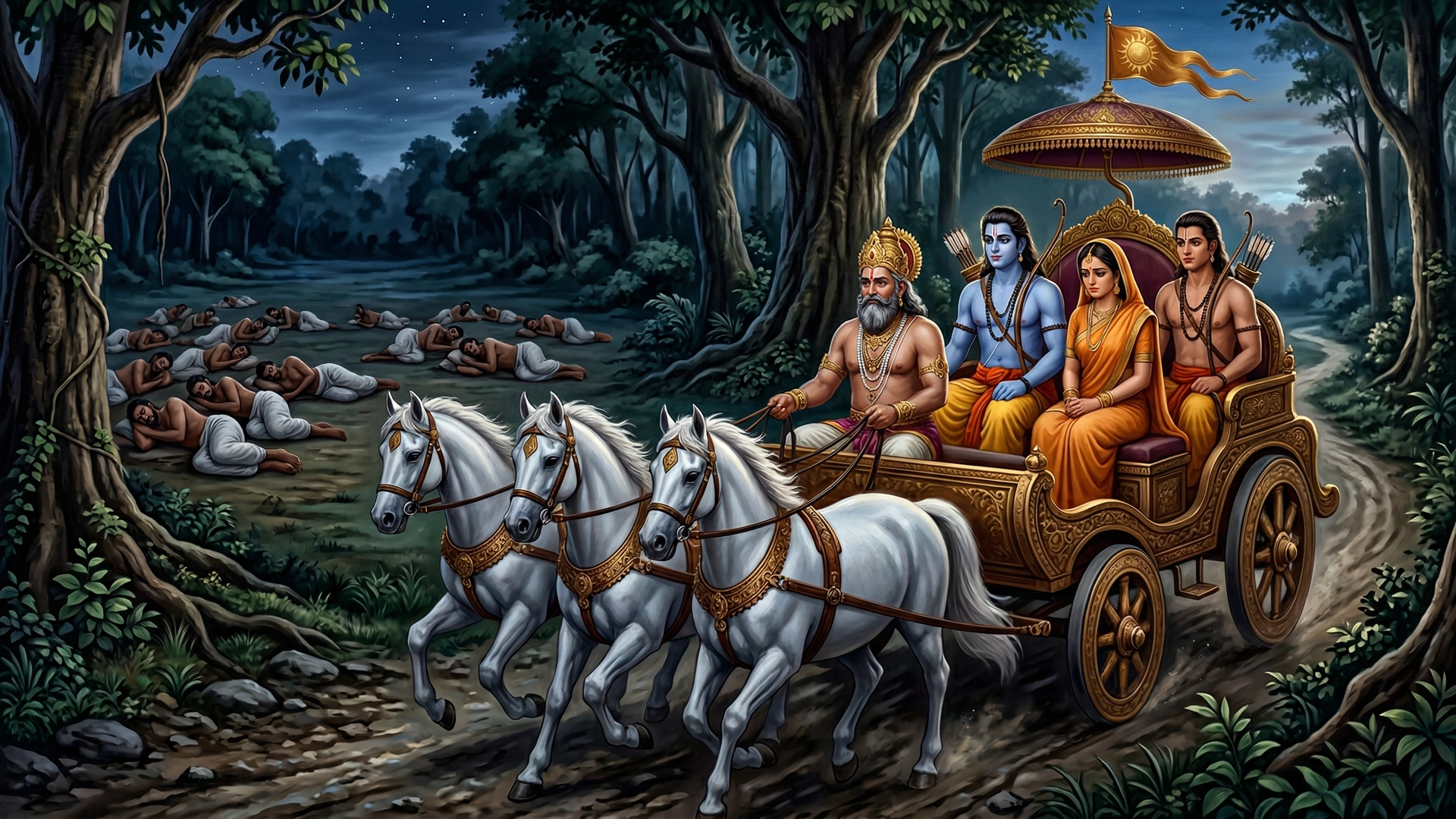
वन गमन और नगर निवासियों को सोए छोड़कर आगे बढ़ना – Proceeding to the forest and leaving the sleeping citizens behind
दोहा :
* सुठि सुकुमार कुमार दोउ जनकसुता सुकुमारि।
रथ चढ़ाइ देखराइ बनु फिरेहु गएँ दिन चारि॥81॥
भावार्थ:-अत्यन्त सुकुमार दोनों कुमारों को और सुकुमारी जानकी को रथ में चढ़ाकर, वन दिखलाकर चार दिन के बाद लौट आना॥81॥
…Take with you the two extremely delicate Princes and the gentle Princess Sita, daughter of King Janak, on your chariot. Show them around the forest and then bring them back after three or four days…
चौपाई :
* जौं नहिं फिरहिं धीर दोउ भाई। सत्यसंध दृढ़ब्रत रघुराई॥
तौ तुम्ह बिनय करेहु कर जोरी। फेरिअ प्रभु मिथिलेसकिसोरी॥1॥
भावार्थ:-यदि धैर्यवान दोनों भाई न लौटें- क्योंकि श्री रघुनाथजी प्रण के सच्चे और दृढ़ता से नियम का पालन करने वाले हैं- तो तुम हाथ जोड़कर विनती करना कि हे प्रभो! जनककुमारी सीताजी को तो लौटा दीजिए॥1॥
…If the two steadfast Brothers refuse to return, as Raghuveer is unwavering in His word and firm in His vow, then plead with Ram, with folded hands, and request Him to at least send back the Princess of Mithila, Sita…
* जब सिय कानन देखि डेराई। कहेहु मोरि सिख अवसरु पाई॥
सासु ससुर अस कहेउ सँदेसू। पुत्रि फिरिअ बन बहुत कलेसू॥2॥
भावार्थ:-जब सीता वन को देखकर डरें, तब मौका पाकर मेरी यह सीख उनसे कहना कि तुम्हारे सास और ससुर ने ऐसा संदेश कहा है कि हे पुत्री! तुम लौट चलो, वन में बहुत क्लेश हैं॥2॥
…When Sita becomes frightened at the sight of the forest, then at the right moment, gently convey my message to Her: “Your mother-in-law and father-in-law have sent you this word, O’ Daughter, return home, for the forest is full of hardships…
* पितुगृह कबहुँ कबहुँ ससुरारी। रहेहु जहाँ रुचि होइ तुम्हारी॥
एहि बिधि करेहु उपाय कदंबा। फिरइ त होइ प्रान अवलंबा॥3॥
भावार्थ:-कभी पिता के घर, कभी ससुराल, जहाँ तुम्हारी इच्छा हो, वहीं रहना। इस प्रकार तुम बहुत से उपाय करना। यदि सीताजी लौट आईं तो मेरे प्राणों को सहारा हो जाएगा॥3॥
…At times, You may stay at Your father’s home, and at other times at Your in-laws’ place, whichever brings You comfort. In this way, try every possible means, and if She agrees to return, it will be a great support for my ailing life force…
* नाहिं त मोर मरनु परिनामा। कछु न बसाइ भएँ बिधि बामा॥
अस कहि मुरुछि परा महि राऊ। रामु लखनु सिय आनि देखाऊ॥4॥
भावार्थ:-(नहीं तो अंत में मेरा मरण ही होगा। विधाता के विपरीत होने पर कुछ वश नहीं चलता। हा! राम, लक्ष्मण और सीता को लाकर दिखाओ। ऐसा कहकर राजा मूर्छित होकर पृथ्वी पर गिर पड़े॥4॥
…Otherwise, all of this will end with my death. When fate turns against us, nothing is within our power.” Saying these words, King Dashrath cried out, “Bring Ram, Lakshman, and Sita, let me see them once more!” and then collapsed to the ground, unconscious.
दोहा :
* पाइ रजायसु नाइ सिरु रथु अति बेग बनाइ।
गयउ जहाँ बाहेर नगर सीय सहित दोउ भाइ॥82॥
भावार्थ:-सुमंत्रजी राजा की आज्ञा पाकर, सिर नवाकर और बहुत जल्दी रथ जुड़वाकर वहाँ गए, जहाँ नगर के बाहर सीताजी सहित दोनों भाई थे॥82॥
After receiving the King’s command, Minister Sumantra bowed his head in reverence, quickly readied the chariot, and set out toward the outskirts of the city, where the two Brothers, along with Sita ji, were present.
चौपाई :
* तब सुमंत्र नृप बचन सुनाए। करि बिनती रथ रामु चढ़ाए॥
चढ़ि रथ सीय सहित दोउ भाई। चले हृदयँ अवधहि सिरु नाई॥1॥
भावार्थ:-तब (वहाँ पहुँचकर) सुमंत्र ने राजा के वचन श्री रामचन्द्रजी को सुनाए और विनती करके उनको रथ पर चढ़ाया। सीताजी सहित दोनों भाई रथ पर चढ़कर हृदय में अयोध्या को सिर नवाकर चले॥1॥
Then Minister Sumantra conveyed the King’s message and, with humble submission, persuaded Shri Ram to mount the chariot. Once aboard, the two Brothers, along with Sita ji, bowed inwardly to Ayodhya with reverence in their hearts, and set out on their sacred journey.
* चलत रामु लखि अवध अनाथा। बिकल लोग सब लागे साथा॥
कृपासिंधु बहुबिधि समुझावहिं। फिरहिं प्रेम बस पुनि फिरि आवहिं॥2॥
भावार्थ:-श्री रामचन्द्रजी को जाते हुए और अयोध्या को अनाथ (होते हुए) देखकर सब लोग व्याकुल होकर उनके साथ हो लिए। कृपा के समुद्र श्री रामजी उन्हें बहुत तरह से समझाते हैं, तो वे (अयोध्या की ओर) लौट जाते हैं, परन्तु प्रेमवश फिर लौट आते हैं॥2॥
Finding Ayodhya masterless after Shri Ram’s departure, the people were overcome with grief and began following the chariot on foot. The ocean of mercy, Ram ji, spoke to them gently in many ways, urging them to return to Ayodhya. Though they went back for a while, their love for Ram ji was so deep that they soon returned and continued to follow the chariot once again.
* लागति अवध भयावनि भारी। मानहुँ कालराति अँधिआरी॥
घोर जंतु सम पुर नर नारी। डरपहिं एकहि एक निहारी॥3॥
भावार्थ:-अयोध्यापुरी बड़ी डरावनी लग रही है, मानो अंधकारमयी कालरात्रि ही हो। नगर के नर-नारी भयानक जन्तुओं के समान एक-दूसरे को देखकर डर रहे हैं॥3॥
Ayodhya appeared terrifying and grim, like a dreadful apocalyptic night. The men and women of the city looked like shadowy, grief-stricken figures, and were startled even by the sight of one another, as if the very soul of the city had been torn away.
* घर मसान परिजन जनु भूता। सुत हित मीत मनहुँ जमदूता॥
बागन्ह बिटप बेलि कुम्हिलाहीं। सरित सरोवर देखि न जाहीं॥4॥
भावार्थ:-घर श्मशान, कुटुम्बी भूत-प्रेत और पुत्र, हितैषी और मित्र मानो यमराज के दूत हैं। बगीचों में वृक्ष और बेलें कुम्हला रही हैं। नदी और तालाब ऐसे भयानक लगते हैं कि उनकी ओर देखा भी नहीं जाता॥4॥
Their homes seemed like cremation grounds, and their own family members appeared like wandering spirits. Children, well-wishers, and friends looked no different from messengers of death. The trees and creepers in the gardens had withered away, and the rivers and lakes had become so desolate, they were painful to behold.
दोहा :
* हय गय कोटिन्ह केलिमृग पुरपसु चातक मोर।
पिक रथांग सुक सारिका सारस हंस चकोर॥83॥
भावार्थ:-करोड़ों घोड़े, हाथी, खेलने के लिए पाले हुए हिरन, नगर के (गाय, बैल, बकरी आदि) पशु, पपीहे, मोर, कोयल, चकवे, तोते, मैना, सारस, हंस और चकोर-॥83॥
Numerous horses, elephants, pet animals, and livestock of the city, along with birds like chataks, peacocks, koels, chakvas, parrots, mynahs, swans, and partridges,…
चौपाई :
* राम बियोग बिकल सब ठाढ़े। जहँ तहँ मनहुँ चित्र लिखि काढ़े॥
नगरु सफल बनु गहबर भारी। खग मृग बिपुल सकल नर नारी॥1॥
भावार्थ:-श्री रामजी के वियोग में सभी व्याकुल हुए जहाँ-तहाँ (ऐसे चुपचाप स्थिर होकर) खड़े हैं, मानो तसवीरों में लिखकर बनाए हुए हैं। नगर मानो फलों से परिपूर्ण बड़ा भारी सघन वन था। नगर निवासी सब स्त्री-पुरुष बहुत से पशु-पक्षी थे। (अर्थात अवधपुरी अर्थ, धर्म, काम, मोक्ष चारों फलों को देने वाली नगरी थी और सब स्त्री-पुरुष सुख से उन फलों को प्राप्त करते थे।)॥1॥
…all stood still in silent sorrow, grieving the separation from Shri Ram. Motionless and scattered throughout the city, they appeared as if painted into place, frozen in time. Ayodhya looked like a vast and dense forest laden with fruits, where all the men and women resembled the many animals and birds, wandering in stunned silence and sorrow.
* बिधि कैकई किरातिनि कीन्ही। जेहिं दव दुसह दसहुँ दिसि दीन्ही॥
सहि न सके रघुबर बिरहागी। चले लोग सब ब्याकुल भागी॥2॥
भावार्थ:-विधाता ने कैकेयी को भीलनी बनाया, जिसने दसों दिशाओं में दुःसह दावाग्नि (भयानक आग) लगा दी। श्री रामचन्द्रजी के विरह की इस अग्नि को लोग सह न सके। सब लोग व्याकुल होकर भाग चले॥2॥
Lord Brahma seemed to have created Queen Kaikeyi as a huntress who had unleashed a fierce blaze upon all the ten directions. Unable to endure the searing pain of separation from Shri Raghuveer, the people of Ayodhya scattered in anguish, fleeing in every direction, their hearts consumed by sorrow.
* सबहिं बिचारु कीन्ह मन माहीं। राम लखन सिय बिनु सुखु नाहीं॥
जहाँ रामु तहँ सबुइ समाजू। बिनु रघुबीर अवध नहिं काजू॥3॥
भावार्थ:-सबने मन में विचार कर लिया कि श्री रामजी, लक्ष्मणजी और सीताजी के बिना सुख नहीं है। जहाँ श्री रामजी रहेंगे, वहीं सारा समाज रहेगा। श्री रामचन्द्रजी के बिना अयोध्या में हम लोगों का कुछ काम नहीं है॥3॥
They all came to the same heartfelt conclusion, that without Shri Ram, Lakshman ji, and Sita ji, there could be no joy or peace. They said, “Wherever Shri Ram resides, there the entire community shall live. Without Raghuveer, we have no purpose left in Ayodhya.”
* चले साथ अस मंत्रु दृढ़ाई। सुर दुर्लभ सुख सदन बिहाई॥
राम चरन पंकज प्रिय जिन्हही। बिषय भोग बस करहिं कि तिन्हही॥4॥
भावार्थ:-ऐसा विचार दृढ़ करके देवताओं को भी दुर्लभ सुखों से पूर्ण घरों को छोड़कर सब श्री रामचन्द्रजी के साथ चले पड़े। जिनको श्री रामजी के चरणकमल प्यारे हैं, उन्हें क्या कभी विषय भोग वश में कर सकते हैं॥4॥
With this unwavering resolve in their hearts, they gave up their luxurious homes, abodes so splendid that even the Demigods would envy them, and followed Shri Ram. For those who hold the lotus feet of Shri Ram dear, how could they ever be enslaved by worldly pleasures?
दोहा :
* बालक बृद्ध बिहाइ गृहँ लगे लोग सब साथ।
तमसा तीर निवासु किय प्रथम दिवस रघुनाथ॥84॥
भावार्थ:-सब लोग, यहाँ तक कि बालक और वृद्ध भी, अपने घरों को खुला और सूना छोड़कर प्रभु श्रीराम के साथ चल दिए। पहले दिन श्री रघुनाथजी ने तमसा नदी के तीर पर निवास किया॥84॥
All the people, including children and the elderly, left their homes open and set out to follow Shri Ram. That evening, Shri Raghunath paused His journey and rested along the banks of the Tamsa River.
चौपाई :
* रघुपति प्रजा प्रेमबस देखी। सदय हृदयँ दुखु भयउ बिसेषी॥
करुनामय रघुनाथ गोसाँई। बेगि पाइअहिं पीर पराई॥1॥
भावार्थ:-प्रजा को प्रेमवश देखकर श्री रघुनाथजी के दयालु हृदय में बड़ा दुःख हुआ। प्रभु श्री रघुनाथजी करुणामय हैं। पराई पीड़ा को वे तुरंत पा जाते हैं (अर्थात दूसरे का दुःख देखकर वे तुरंत स्वयं दुःखित हो जाते हैं)॥1॥
When Shri Raghunath saw the people of Ayodhya overwhelmed with emotion, His compassionate heart was deeply pained. The Lord of the senses, ever merciful, is moved at once by the sorrow of others.
* कहि सप्रेम मृदु बचन सुहाए। बहुबिधि राम लोग समुझाए॥
किए धरम उपदेस घनेरे। लोग प्रेम बस फिरहिं न फेरे॥2॥
भावार्थ:-प्रेमयुक्त कोमल और सुंदर वचन कहकर श्री रामजी ने बहुत प्रकार से लोगों को समझाया और बहुतेरे धर्म संबंधी उपदेश दिए, परन्तु प्रेमवश लोग लौटाए लौटते नहीं॥2॥
Shri Ram spoke in gentle, loving words and comforted the people in many ways. He shared teachings from the Scriptures, offering lessons on righteousness and urging them to return to Ayodhya. But their deep love for Him held them back, they could not bear to leave.
* सीलु सनेहु छाड़ि नहिं जाई। असमंजस बस भे रघुराई॥
लोग सोग श्रम बस गए सोई। कछुक देवमायाँ मति मोई॥3॥
भावार्थ:-शील और स्नेह छोड़ा नहीं जाता। श्री रघुनाथजी असमंजस के अधीन हो गए (दुविधा में पड़ गए)। शोक और परिश्रम (थकावट) के मारे लोग सो गए और कुछ देवताओं की माया से भी उनकी बुद्धि मोहित हो गई॥3॥
The noblest of the Raghus, Shri Ram, could not forsake His innate kindness and affection, leaving Him in a deep dilemma. Weary and troubled, the people eventually drifted into a deep slumber, further entranced by the illusionary power of the Demigods, who had cast a spell over their minds.
* जबहिं जाम जुग जामिनि बीती। राम सचिव सन कहेउ सप्रीती॥
खोज मारि रथु हाँकहु ताता। आन उपायँ बनिहि नहिं बाता॥4॥
भावार्थ:-जब दो पहर बीत गई, तब श्री रामचन्द्रजी ने प्रेमपूर्वक मंत्री सुमंत्र से कहा- हे तात! रथ के खोज मारकर (अर्थात पहियों के चिह्नों से दिशा का पता न चले इस प्रकार) रथ को हाँकिए। और किसी उपाय से बात नहीं बनेगी॥4॥
When six hours of the night had passed, Shri Ram gently said to the Minister Sumantra, “Dear Sir, guide your chariot in a manner that leaves no tracks behind, so the citizens cannot follow us. There is no other way to resolve this situation.”
दोहा :
* राम लखन सिय जान चढ़ि संभु चरन सिरु नाइ।
सचिवँ चलायउ तुरत रथु इत उत खोज दुराइ॥85॥
भावार्थ:-शंकरजी के चरणों में सिर नवाकर श्री रामजी, लक्ष्मणजी और सीताजी रथ पर सवार हुए। मंत्री ने तुरंत ही रथ को इधर-उधर खोज छिपाकर चला दिया॥85॥
Mentally bowing at the feet of Lord Shankar, Shri Ram, Lakshman ji, and Sita ji boarded the chariot. The Minister then swiftly drove it in a zigzag manner, leaving behind a trail so unclear that no one could discern the direction it had taken.
चौपाई :
* जागे सकल लोग भएँ भोरू। गे रघुनाथ भयउ अति सोरू॥
रथ कर खोज कतहुँ नहिं पावहिं। राम राम कहि चहुँ दिसि धावहिं॥1॥
भावार्थ:-सबेरा होते ही सब लोग जागे, तो बड़ा शोर मचा कि रघुनाथजी चले गए। कहीं रथ का खोज नहीं पाते, सब ‘हा राम! हा राम!’ पुकारते हुए चारों ओर दौड़ रहे हैं॥1॥
At daybreak, everyone awoke and, not seeing Shri Ram, cried out in anguish, “Raghunath has departed!” The chariot was nowhere in sight. Filled with sorrow, they ran in all directions, calling out, “O’ Ram, O’ Ram!”
* मनहुँ बारिनिधि बूड़ जहाजू। भयउ बिकल बड़ बनिक समाजू॥
एकहि एक देहिं उपदेसू। तजे राम हम जानि कलेसू॥2॥
भावार्थ:-मानो समुद्र में जहाज डूब गया हो, जिससे व्यापारियों का समुदाय बहुत ही व्याकुल हो उठा हो। वे एक-दूसरे को उपदेश देते हैं कि श्री रामचन्द्रजी ने, हम लोगों को क्लेश होगा, यह जानकर छोड़ दिया है॥2॥
It felt as though a ship had sunk in the ocean, throwing the community of tradesmen into deep distress. They lamented to one another that Shri Ram had left them behind, perhaps out of concern for the hardships they would face in the forest.
* निंदहिं आपु सराहहिं मीना। धिग जीवनु रघुबीर बिहीना॥
जौं पै प्रिय बियोगु बिधि कीन्हा। तौ कस मरनु न मागें दीन्हा॥3॥
भावार्थ:-वे लोग अपनी निंदा करते हैं और मछलियों की सराहना करते हैं। (कहते हैं-) श्री रामचन्द्रजी के बिना हमारे जीने को धिक्कार है। विधाता ने यदि प्यारे का वियोग ही रचा, तो फिर उसने माँगने पर मृत्यु क्यों नहीं दी!॥3॥
They blamed themselves and praised the fish, saying, “At least it dies the moment it’s taken out of water.” With heavy hearts they cried, “Our very birth is a curse without Raghuveer. If the Divine truly intended to part us from our beloved, then why did He not grant us death when we pleaded for it?”
* एहि बिधि करत प्रलाप कलापा। आए अवध भरे परितापा॥
बिषम बियोगु न जाइ बखाना। अवधि आस सब राखहिं प्राना॥4॥
भावार्थ:-इस प्रकार बहुत से प्रलाप करते हुए वे संताप से भरे हुए अयोध्याजी में आए। उन लोगों के विषम वियोग की दशा का वर्णन नहीं किया जा सकता। (चौदह साल की) अवधि की आशा से ही वे प्राणों को रख रहे हैं॥4॥
Wailing and weeping, they returned to Ayodhya, hearts heavy with remorse. The agony of separation from Shri Ram was beyond words. They endured only by clinging to the hope of beholding Him again at the end of His exile.
दोहा :
* राम दरस हित नेम ब्रत लगे करन नर नारि।
मनहुँ कोक कोकी कमल दीन बिहीन तमारि॥86॥
भावार्थ:-(सब) स्त्री-पुरुष श्री रामचन्द्रजी के दर्शन के लिए नियम और व्रत करने लगे और ऐसे दुःखी हो गए जैसे चकवा, चकवी और कमल सूर्य के बिना दीन हो जाते हैं॥86॥
Longing to see Shri Ram again and to ensure His safe return after the fourteen years of exile, men and women began observing fasts and performing penance. Their bodies withered like the chakwi bird separated from its mate, or like a lotus bereft of the Sun.
चौपाई :
* सीता सचिव सहित दोउ भाई। सृंगबेरपुर पहुँचे जाई॥
उतरे राम देवसरि देखी। कीन्ह दंडवत हरषु बिसेषी॥1॥
भावार्थ:-सीताजी और मंत्री सहित दोनों भाई श्रृंगवेरपुर जा पहुँचे। वहाँ गंगाजी को देखकर श्री रामजी रथ से उतर पड़े और बड़े हर्ष के साथ उन्होंने दण्डवत की॥1॥
Meanwhile, Sita ji, Minister Sumantra, and the two Brothers arrived at the outskirts of Shringverpur. Upon seeing the sacred river Ganga, Shri Ram descended from the chariot and, overwhelmed with joy, bowed down in reverence, prostrating Himself on the ground.
* लखन सचिवँ सियँ किए प्रनामा। सबहि सहित सुखु पायउ रामा॥
गंग सकल मुद मंगल मूला। सब सुख करनि हरनि सब सूला॥2॥
भावार्थ:-लक्ष्मणजी, सुमंत्र और सीताजी ने भी प्रणाम किया। सबके साथ श्री रामचन्द्रजी ने सुख पाया। गंगाजी समस्त आनंद-मंगलों की मूल हैं। वे सब सुखों को करने वाली और सब पीड़ाओं को हरने वाली हैं॥2॥
Shri Lakshman, Minister Sumantra, and Sita ji also offered their obeisance to Ganga ji. Shri Ram and all present were filled with immense joy. Ganga ji is the source of all happiness and auspiciousness, the bestower of every blessing and the remover of all sorrow.
* कहि कहि कोटिक कथा प्रसंगा। रामु बिलोकहिं गंग तरंगा॥
सचिवहि अनुजहि प्रियहि सुनाई। बिबुध नदी महिमा अधिकाई॥3॥
भावार्थ:-अनेक कथा प्रसंग कहते हुए श्री रामजी गंगाजी की तरंगों को देख रहे हैं। उन्होंने मंत्री को, छोटे भाई लक्ष्मणजी को और प्रिया सीताजी को देवनदी गंगाजी की बड़ी महिमा सुनाई॥3॥
As Shri Ram gazed upon the flowing waves of Ganga ji, He began recounting numerous sacred tales associated with the celestial river. He shared with the Minister, His younger Brother, and His beloved Sita ji the many wondrous and divine glories of Ganga ji.
* मज्जनु कीन्ह पंथ श्रम गयऊ। सुचि जलु पिअत मुदित मन भयऊ॥
सुमिरत जाहि मिटइ श्रम भारू। तेहि श्रम यह लौकिक ब्यवहारू॥4॥