
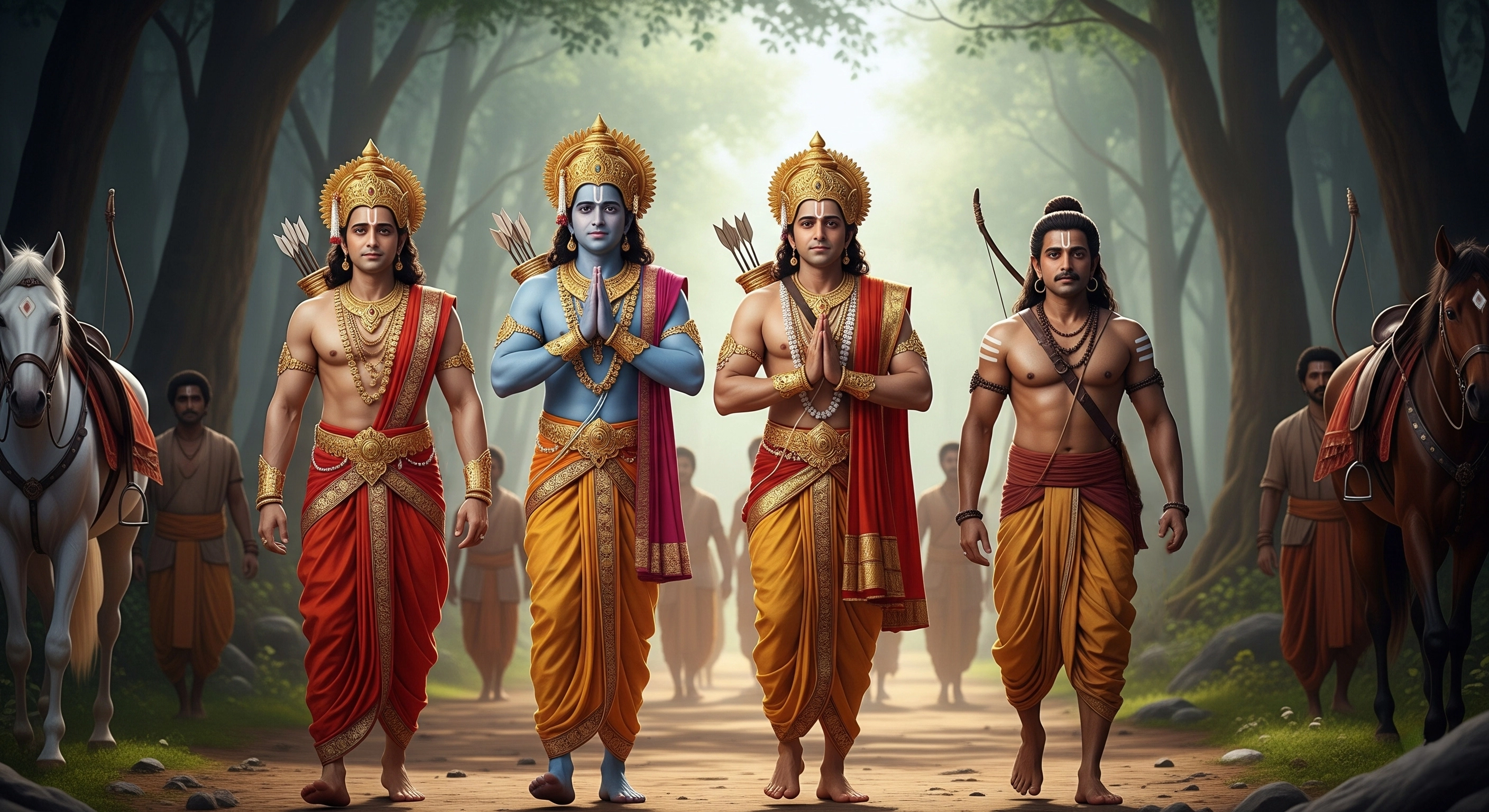
भरतजी चित्रकूट के मार्ग में – Bharat ji on his way to Chitrakoot
दोहा :
* राम भगत परहित निरत पर दुख दुखी दयाल।
भगत सिरोमनि भरत तें जनि डरपहु सुरपाल॥219॥
भावार्थ:-हे देवराज इंद्र! श्री रामचंद्रजी के भक्त सदा दूसरों के हित में लगे रहते हैं, वे दूसरों के दुःख से दुःखी और दयालु होते हैं। फिर भरतजी तो भक्तों के शिरोमणि हैं, उनसे बिलकुल न डरो॥219॥
…O’ Lord of the Heavens, Indra! The devotees of Shri Ram are always engaged in the welfare of others. They are compassionate by nature and feel sad to see others in grief. And then Bharat is the very crown jewel among the devotees of the Lord, so have no fear of him at all…
चौपाई :
* सत्यसंध प्रभु सुर हितकारी। भरत राम आयस अनुसारी॥
स्वारथ बिबस बिकल तुम्ह होहू। भरत दोसु नहिं राउर मोहू॥1॥
भावार्थ:-प्रभु श्री रामचंद्रजी सत्यप्रतिज्ञ और देवताओं का हित करने वाले हैं और भरतजी श्री रामजी की आज्ञा के अनुसार चलने वाले हैं। तुम व्यर्थ ही स्वार्थ के विशेष वश होकर व्याकुल हो रहे हो। इसमें भरतजी का कोई दोष नहीं, तुम्हारा ही मोह है॥1॥
…Lord Ram is all-powerful and ever true to His word. He walks the path of truth and works for the welfare of the Demigods (so as per His vow, He will indeed spend fourteen years in the forest, kill the demons and relieve the agony of the Demigods, Earth, Brahmins, Humans and Cows, once and for all). And Bharat follows only the command of Shri Ram (so he will listen to Shri Ram and return back to Ayodhya until Shri Ram accomplishes His task). You are becoming anxious out of selfish attachment, and without reason. There is no fault in Bharat, this confusion is born out of your own delusion (which is to be blamed).”
* सुनि सुरबर सुरगुर बर बानी। भा प्रमोदु मन मिटी गलानी॥
बरषि प्रसून हरषि सुरराऊ। लगे सराहन भरत सुभाऊ॥2॥
भावार्थ:-देवगुरु बृहस्पतिजी की श्रेष्ठ वाणी सुनकर इंद्र के मन में बड़ा आनंद हुआ और उनकी चिंता मिट गई। तब हर्षित होकर देवराज फूल बरसाकर भरतजी के स्वभाव की सराहना करने लगे॥2॥
When the Chief of the Demigods, Indra, heard the wise and noble words of Guru Brihaspati, his heart filled with joy and all his worries vanished. Pleased and reassured, the King of the Heavens began showering flowers and praising Bharat ji’s noble character.
* एहि बिधि भरत चले मग जाहीं। दसा देखि मुनि सिद्ध सिहाहीं॥
जबहि रामु कहि लेहिं उसासा। उमगत प्रेमु मनहुँ चहु पासा॥3॥
भावार्थ:-इस प्रकार भरतजी मार्ग में चले जा रहे हैं। उनकी (प्रेममयी) दशा देखकर मुनि और सिद्ध लोग भी सिहाते हैं। भरतजी जब भी ‘राम’ कहकर लंबी साँस लेते हैं, तभी मानो चारों ओर प्रेम उमड़ पड़ता है॥3॥
In this way, Shri Bharat continued on his journey. Seeing his condition (lovingly immersed in the thoughts of Shri Ram), the Sages and hermits praised him and felt envious (they wished for the same limitless love for Shri Ram like Bharat ji had). Whenever Bharat ji would take a deep breath and utter Shri Ram’s name, it would appear as if love was overflowing in all the four directions.
* द्रवहिं बचन सुनि कुलिस पषाना। पुरजन पेमु न जाइ बखाना॥
बीच बास करि जमुनहिं आए। निरखि नीरु लोचन जल छाए॥4॥
भावार्थ:-उनके (प्रेम और दीनता से पूर्ण) वचनों को सुनकर वज्र और पत्थर भी पिघल जाते हैं। अयोध्यावासियों का प्रेम कहते नहीं बनता। बीच में निवास (मुकाम) करके भरतजी यमुनाजी के तट पर आए। यमुनाजी का जल देखकर उनके नेत्रों में जल भर आया॥4॥
Even thunderbolts (a metaphor for Demigod Indra who carries a thunderbolt) and stones (a metaphor for the tribals who are tough-hearted) melted at the sound of Shri Bharat’s voice. The love and devotion of the people cannot be described in words. After taking a brief rest halfway, Bharat ji reached the banks of the Yamuna River. Seeing its waters (dark-hued like Shri Ram’s swarthy form), Bharat ji’s eyes filled with tears.
दोहा :
* रघुबर बरन बिलोकि बर बारि समेत समाज।
होत मगन बारिधि बिरह चढ़े बिबेक जहाज॥220॥
भावार्थ:-श्री रघुनाथजी के (श्याम) रंग का सुंदर जल देखकर सारे समाज सहित भरतजी (प्रेम विह्वल होकर) श्री रामजी के विरह रूपी समुद्र में डूबते-डूबते विवेक रूपी जहाज पर चढ़ गए (अर्थात् यमुनाजी का श्यामवर्ण जल देखकर सब लोग श्यामवर्ण भगवान के प्रेम में विह्वल हो गए और उन्हें न पाकर विरह व्यथा से पीड़ित हो गए, तब भरतजी को यह ध्यान आया कि जल्दी चलकर उनके साक्षात् दर्शन करेंगे, इस विवेक से वे फिर उत्साहित हो गए)॥220॥
Seeing the beautiful, dark-coloured water of the Yamuna river that resembled Shri Ram’s swarthy form, Bharat ji, along with the entire party, became overwhelmed with love and almost drowned in the ocean of grief from separation. But then Bharat ji himself helped everyone board the ship of wisdom (as he remembered that very soon they would meet Shri Ram in person, and with this thought, he regained his strength and lifted the spirits of everyone).
चौपाई :
* जमुन तीर तेहि दिन करि बासू। भयउ समय सम सबहि सुपासू॥
रातिहिं घाट घाट की तरनी। आईं अगनित जाहिं न बरनी॥1॥
भावार्थ:-उस दिन यमुनाजी के किनारे निवास किया। समयानुसार सबके लिए (खान-पान आदि की) सुंदर व्यवस्था हुई (निषादराज का संकेत पाकर) रात ही रात में घाट-घाट की अगणित नावें वहाँ आ गईं, जिनका वर्णन नहीं किया जा सकता॥1॥
That day, they stayed by the banks of the Yamuna river. At the right time, everything (food and shelter) was beautifully arranged for everyone. (At the signal of the Chief of the Nishads), countless boats arrived during the night from various piers, so many that they were beyond description.
* प्रात पार भए एकहि खेवाँ। तोषे रामसखा की सेवाँ॥
चले नहाइ नदिहि सिर नाई। साथ निषादनाथ दोउ भाई॥2॥
भावार्थ:-सबेरे एक ही खेवे में सब लोग पार हो गए और श्री रामचंद्रजी के सखा निषादराज की इस सेवा से संतुष्ट हुए। फिर स्नान करके और नदी को सिर नवाकर निषादराज के साथ दोनों भाई चले॥2॥
At daybreak, everyone crossed the river together in a single crossing (as countless boats had been arranged). All were pleased with the devoted service of Shri Ram’s friend, Guh. After bathing in the Yamuna and respectfully bowing to the river, the two Brothers continued their journey along with the Chief of the Nishads.
* आगें मुनिबर बाहन आछें। राजसमाज जाइ सबु पाछें॥
तेहि पाछें दोउ बंधु पयादें। भूषन बसन बेष सुठि सादें॥3॥
भावार्थ:-आगे अच्छी-अच्छी सवारियों पर श्रेष्ठ मुनि हैं, उनके पीछे सारा राजसमाज जा रहा है। उसके पीछे दोनों भाई बहुत सादे भूषण-वस्त्र और वेष से पैदल चल रहे हैं॥3॥
The noble Sages led the way, riding in fine chariots. Behind them followed the entire royal assembly. At the very end, the two Brothers (Bharat ji and Shatrughan ji) walked barefoot, dressed in simple clothes and modest ornaments.
* सेवक सुहृद सचिवसुत साथा। सुमिरत लखनु सीय रघुनाथा॥
जहँ जहँ राम बास बिश्रामा। तहँ तहँ करहिं सप्रेम प्रनामा॥4॥
भावार्थ:-सेवक, मित्र और मंत्री के पुत्र उनके साथ हैं। लक्ष्मण, सीताजी और श्री रघुनाथजी का स्मरण करते जा रहे हैं। जहाँ-जहाँ श्री रामजी ने निवास और विश्राम किया था, वहाँ-वहाँ वे प्रेमसहित प्रणाम करते हैं॥4॥
They were accompanied by devoted servants, close friends (like Guh), and the son of Minister Sumantra. Their hearts were filled with the remembrance of Shri Ram, Lakshman ji, and Sita ji. Wherever Shri Ram had stayed or rested during His journey to Chitrakoot, they paused and lovingly bowed down at each of those sacred spots.
दोहा :
* मगबासी नर नारि सुनि धाम काम तजि धाइ।
देखि सरूप सनेह सब मुदित जनम फलु पाइ॥221॥
भावार्थ:-मार्ग में रहने वाले स्त्री-पुरुष यह सुनकर घर और काम-काज छोड़कर दौड़ पड़ते हैं और उनके रूप (सौंदर्य) और प्रेम को देखकर वे सब जन्म लेने का फल पाकर आनंदित होते हैं॥221॥
When the men and women living along the path heard the news of the royal travellers, they left behind their homes and daily chores and came running to see them. Upon witnessing their graceful appearance and deep love (especially that of Bharat ji), the people were filled with joy, feeling as if the purpose of their life had been fulfilled.
चौपाई :
* कहहिं सप्रेम एक एक पाहीं। रामु लखनु सखि होहिं कि नाहीं॥
बय बपु बरन रूपु सोइ आली। सीलु सनेहु सरिस सम चाली॥1॥
भावार्थ:-गाँवों की स्त्रियाँ एक-दूसरे से प्रेमपूर्वक कहती हैं- सखी! ये राम-लक्ष्मण हैं कि नहीं? हे सखी! इनकी अवस्था, शरीर और रंग-रूप तो वही है। शील, स्नेह उन्हीं के सदृश है और चाल भी उन्हीं के समान है॥1॥
One village woman lovingly said to another, “O’ Dear friend, could they be Shri Ram and Shri Lakshman or not? Their age, build, and complexion (dark and fair) are just the same. Their gentle nature, affection, and even the way they walk all appear similar to theirs!…
* बेषु न सो सखि सीय न संगा। आगें अनी चली चतुरंगा॥
नहिं प्रसन्न मुख मानस खेदा। सखि संदेहु होइ एहिं भेदा॥2॥
भावार्थ:-परन्तु सखी! इनका न तो वह वेष (वल्कल वस्त्रधारी मुनिवेष) है, न सीताजी ही संग हैं और इनके आगे चतुरंगिणी सेना चली जा रही है। फिर इनके मुख प्रसन्न नहीं हैं, इनके मन में खेद है। हे सखी! इसी भेद के कारण संदेह होता है॥2॥
…But O’ Friend, their attire is not the same as Ram ji and Lakshman ji (Shri Ram and Shri Lakshman wore hermits’ clothing, while these two wear royal garments), and Sita ji is not with them. Also, a full army of horses, elephants, chariots, and soldiers is marching ahead of them. Their faces don’t look cheerful (unlike Ram ji and Lakshman ji who had radiant, joyful expressions), and there’s a sense of sorrow in their eyes. That’s why, dear friend, I’m unsure, it’s these differences that make me doubtful.”
* तासु तरक तियगन मन मानी। कहहिं सकल तेहि सम न सयानी॥
तेहि सराहि बानी फुरि पूजी। बोली मधुर बचन तिय दूजी॥3॥
भावार्थ:-उसका तर्क (युक्ति) अन्य स्त्रियों के मन भाया। सब कहती हैं कि इसके समान सयानी (चतुर) कोई नहीं है। उसकी सराहना करके और ‘तेरी वाणी सत्य है’ इस प्रकार उसका सम्मान करके दूसरी स्त्री मीठे वचन बोली॥3॥
The other women were impressed by her reasoning and felt in their hearts that no one was as wise as her. They praised her, saying, “There’s no one as clever as you, your words are true.” Then, another woman spoke with sweet and gentle words.
* कहि सप्रेम बस कथाप्रसंगू। जेहि बिधि राम राज रस भंगू॥
भरतहि बहुरि सराहन लागी। सील सनेह सुभाय सुभागी॥4॥
भावार्थ:-श्री रामजी के राजतिलक का आनंद जिस प्रकार से भंग हुआ था, वह सब कथाप्रसंग प्रेमपूर्वक कहकर फिर वह भाग्यवती स्त्री श्री भरतजी के शील, स्नेह और स्वभाव की सराहना करने लगी॥4॥
She lovingly narrated the entire story of how the joyous occasion of Shri Ram’s coronation was disrupted and how He was sent into exile. Then, that fortunate woman began praising Bharat ji, his noble character, deep affection, and gentle nature, as he now set out to bring Shri Ram back to Ayodhya.
दोहा :
* चलत पयादें खात फल पिता दीन्ह तजि राजु।
जात मनावन रघुबरहि भरत सरिस को आजु॥222॥
भावार्थ:-(वह बोली-) देखो, ये भरतजी पिता के दिए हुए राज्य को त्यागकर पैदल चलते और फलाहार करते हुए श्री रामजी को मनाने के लिए जा रहे हैं। इनके समान आज कौन है?॥222॥
A village woman said, “After giving up the Kingdom gifted by his Father, Shri Bharat now walks barefoot, living on fruits, on a mission to persuade Shri Raghuveer to return to Ayodhya. Who today can match Bharat in devotion, love, and renunciation?…
चौपाई :
* भायप भगति भरत आचरनू। कहत सुनत दुख दूषन हरनू॥
जो किछु कहब थोर सखि सोई। राम बंधु अस काहे न होई॥1॥
भावार्थ:-भरतजी का भाईपना, भक्ति और इनके आचरण कहने और सुनने से दुःख और दोषों के हरने वाले हैं। हे सखी! उनके संबंध में जो कुछ भी कहा जाए, वह थोड़ा है। श्री रामचंद्रजी के भाई ऐसे क्यों न हों॥1॥
…Bharat ji’s brotherly love, devotion, and conduct are such that simply speaking or hearing about them takes away sorrow and faults. O’ Dear friend! No matter how much is said about him, it always feels too little. After all, why wouldn’t he be like this, he is the brother of Shri Ram…
* हम सब सानुज भरतहि देखें। भइन्ह धन्य जुबती जन लेखें॥
सुनि गुन देखि दसा पछिताहीं। कैकइ जननि जोगु सुतु नाहीं॥2॥
भावार्थ:-छोटे भाई शत्रुघ्न सहित भरतजी को देखकर हम सब भी आज धन्य (बड़भागिनी) स्त्रियों की गिनती में आ गईं। इस प्रकार भरतजी के गुण सुनकर और उनकी दशा देखकर स्त्रियाँ पछताती हैं और कहती हैं- यह पुत्र कैकयी जैसी माता के योग्य नहीं है॥2॥
…After seeing Shri Bharat and his younger Brother Shri Shatrughan today, we women feel truly blessed and among the most fortunate.” Moved by Bharat ji’s virtues and his humble state, the women lamented, saying, “Queen Kaikeyi is not worthy of having such a noble son.”
* कोउ कह दूषनु रानिहि नाहिन। बिधि सबु कीन्ह हमहि जो दाहिन॥
कहँ हम लोक बेद बिधि हीनी। लघु तिय कुल करतूति मलीनी॥3॥
भावार्थ:-कोई कहती है- इसमें रानी का भी दोष नहीं है। यह सब विधाता ने ही किया है, जो हमारे अनुकूल है। कहाँ तो हम लोक और वेद दोनों की विधि (मर्यादा) से हीन, कुल और करतूत दोनों से मलिन तुच्छ स्त्रियाँ,॥3॥
One of the women said, “It’s not the Queen’s fault, this is all the doing of the Almighty, who is in fact showing us His grace. After all, we have no knowledge of the Vedas or the rules laid out in the Scriptures. We are lowly women, and both our lineage and deeds are sinful…
* बसहिं कुदेस कुगाँव कुबामा। कहँ यह दरसु पुन्य परिनामा॥
अस अनंदु अचिरिजु प्रति ग्रामा। जनु मरुभूमि कलपतरु जामा॥4॥
भावार्थ:-जो बुरे देश (जंगली प्रान्त) और बुरे गाँव में बसती हैं और (स्त्रियों में भी) नीच स्त्रियाँ हैं! और कहाँ यह महान् पुण्यों का परिणामस्वरूप इनका दर्शन! ऐसा ही आनंद और आश्चर्य गाँव-गाँव में हो रहा है। मानो मरुभूमि में कल्पवृक्ष उग गया हो॥4॥
…We are low-born women living in a humble, unpleasant village. A glimpse of Bharat ji must be the result of some past good deeds. But seeing the state of our present and past lives, it’s clear we possess no such merit, so this blessing can only be by the grace of the Lord. First, we had the fortune of beholding Shri Ram, Lakshman ji, and Sita ji with our own eyes, and now Bharat ji and Shatrughan ji.” This sense of bliss and wonder, that such a divine vision was possible, pervaded every village Bharat ji passed through. It felt as though the celestial Kalpavriksh tree had appeared in a barren desert land.
दोहा :
* भरत दरसु देखत खुलेउ मग लोगन्ह कर भागु।
जनु सिंघलबासिन्ह भयउ बिधि बस सुलभ प्रयागु॥223॥
भावार्थ:-भरतजी का स्वरूप देखते ही रास्ते में रहने वाले लोगों के भाग्य खुल गए! मानो दैवयोग से सिंहलद्वीप के बसने वालों को तीर्थराज प्रयाग सुलभ हो गया हो!॥223॥
With just a glimpse of Bharat ji, the doors to good fortune opened for the humble villagers along the roadside. It felt as if, by the will of the Almighty, the sacred city of Prayagraj (the King of holy pilgrimages), had become easily accessible to the distant island dwellers of Ceylon.
चौपाई :
* निज गुन सहित राम गुन गाथा। सुनत जाहिं सुमिरत रघुनाथा॥
तीरथ मुनि आश्रम सुरधामा। निरखि निमज्जहिं करहिं प्रनामा॥1॥
भावार्थ:-(इस प्रकार) अपने गुणों सहित श्री रामचंद्रजी के गुणों की कथा सुनते और श्री रघुनाथजी को स्मरण करते हुए भरतजी चले जा रहे हैं। वे तीर्थ देखकर स्नान और मुनियों के आश्रम तथा देवताओं के मंदिर देखकर प्रणाम करते हैं॥1॥
In this way, as Bharat ji continued his journey, his heart absorbed in thoughts of Shri Ram and his lips softly chanting Lord Ram’s name, he heard along the way not only his own praises but also the countless virtues of Shri Ram being sung by the village folk. He passed many sacred pilgrimage sites, hermitages of Sages, and temples of Demigods. At each of these, Bharat ji offered his obeisance and took a dip in the holy waters with deep reverence.
* मनहीं मन मागहिं बरु एहू। सीय राम पद पदुम सनेहू॥
मिलहिं किरात कोल बनबासी। बैखानस बटु जती उदासी॥2॥
भावार्थ:-और मन ही मन यह वरदान माँगते हैं कि श्री सीता-रामजी के चरण कमलों में प्रेम हो। मार्ग में भील, कोल आदि वनवासी तथा वानप्रस्थ, ब्रह्मचारी, संन्यासी और विरक्त मिलते हैं॥2॥
In his heart, Bharat ji longed for just one boon, unwavering and pure devotion to the lotus feet of Sita ji and Ram ji. Wherever he met hunters, tribals, forest dwellers, Sages, religious students, hermits, or ascetics,…
* करि प्रनामु पूँछहिं जेहि तेही। केहि बन लखनु रामु बैदेही॥
ते प्रभु समाचार सब कहहीं। भरतहि देखि जनम फलु लहहीं॥3॥
भावार्थ:-उनमें से जिस-तिस से प्रणाम करके पूछते हैं कि लक्ष्मणजी, श्री रामजी और जानकीजी किस वन में हैं? वे प्रभु के सब समाचार कहते हैं और भरतजी को देखकर जन्म का फल पाते हैं॥3॥
…he greeted them with deep respect and humbly asked which forest might lead him to Lakshman ji, Sita ji, and Ram ji. They shared all they knew about Shri Ram’s path and felt their lives truly fulfilled, having been graced by the divine presence of Bharat ji.
* जे जन कहहिं कुसल हम देखे। ते प्रिय राम लखन सम लेखे॥
एहि बिधि बूझत सबहि सुबानी। सुनत राम बनबास कहानी॥4॥
भावार्थ:-जो लोग कहते हैं कि हमने उनको कुशलपूर्वक देखा है, उनको ये श्री राम-लक्ष्मण के समान ही प्यारे मानते हैं। इस प्रकार सबसे सुंदर वाणी से पूछते और श्री रामजी के वनवास की कहानी सुनते जाते हैं॥4॥
Those who told Bharat ji that they had seen Shri Ram in good health became as dear to him as Shri Ram and Lakshman ji themselves. In this way, Bharat ji continued his journey, gently enquiring along the way and listening with devotion to the tales of Shri Ram’s life in the forest.
दोहा :
* तेहि बासर बसि प्रातहीं चले सुमिरि रघुनाथ।
राम दरस की लालसा भरत सरिस सब साथ॥224॥
भावार्थ:-उस दिन वहीं ठहरकर दूसरे दिन प्रातःकाल ही श्री रघुनाथजी का स्मरण करके चले। साथ के सब लोगों को भी भरतजी के समान ही श्री रामजी के दर्शन की लालसा (लगी हुई) है॥224॥
Halting that day at a suitable place, Bharat ji resumed his journey early the next morning after offering prayers to Shri Raghunath. Both he and the entire party were filled with longing to behold the divine sight of Shri Ram.
चौपाई :
* मंगल सगुन होहिं सब काहू। फरकहिं सुखद बिलोचन बाहू॥
भरतहि सहित समाज उछाहू। मिलिहहिं रामु मिटिहि दुख दाहू॥1॥
भावार्थ:-सबको मंगलसूचक शकुन हो रहे हैं। सुख देने वाले (पुरुषों के दाहिने और स्त्रियों के बाएँ) नेत्र और भुजाएँ फड़क रही हैं। समाज सहित भरतजी को उत्साह हो रहा है कि श्री रामचंद्रजी मिलेंगे और दुःख का दाह मिट जाएगा॥1॥
Everyone began to witness auspicious omens, the right limbs and eyes of men, and the left limbs and eyes of women, began to throb favourably. Filled with hope and excitement, Bharat ji and the entire party felt certain that all their sorrow would vanish the moment they laid eyes on Shri Ram.
* करत मनोरथ जस जियँ जाके। जाहिं सनेह सुराँ सब छाके।
सिथिल अंग पग मग डगि डोलहिं। बिहबल बचन प्रेम बस बोलहिं॥2॥
भावार्थ:-जिसके जी में जैसा है, वह वैसा ही मनोरथ करता है। सब स्नेही रूपी मदिरा से छके (प्रेम में मतवाले हुए) चले जा रहे हैं। अंग शिथिल हैं, रास्ते में पैर डगमगा रहे हैं और प्रेमवश विह्वल वचन बोल रहे हैं॥2॥
Each person was immersed in deep emotions of love, lost in their own heartfelt devotion. It felt as though they were intoxicated with divine love, their limbs grew numb, and their steps trembled as they walked along the path. Overwhelmed with emotion, words failed them; when they tried to speak, their voices stammered with love.
* रामसखाँ तेहि समय देखावा। सैल सिरोमनि सहज सुहावा॥
जासु समीप सरित पय तीरा। सीय समेत बसहिं दोउ बीरा॥3॥
भावार्थ:-रामसखा निषादराज ने उसी समय स्वाभाविक ही सुहावना पर्वतशिरोमणि कामदगिरि दिखलाया, जिसके निकट ही पयस्विनी नदी के तट पर सीताजी समेत दोनों भाई निवास करते हैं॥3॥
At that moment, Shri Ram’s dear friend Guh pointed out to Bharat ji the crest-jewel of mountains, the naturally beautiful Kamadgiri. Near this sacred mountain, on the serene banks of the milky Mandakini River, reside the two Brothers, Shri Ram and Lakshman ji, along with Sita ji.
* देखि करहिं सब दंड प्रनामा। कहि जय जानकि जीवन रामा॥
प्रेम मगन अस राज समाजू। जनु फिरि अवध चले रघुराजू॥4॥