
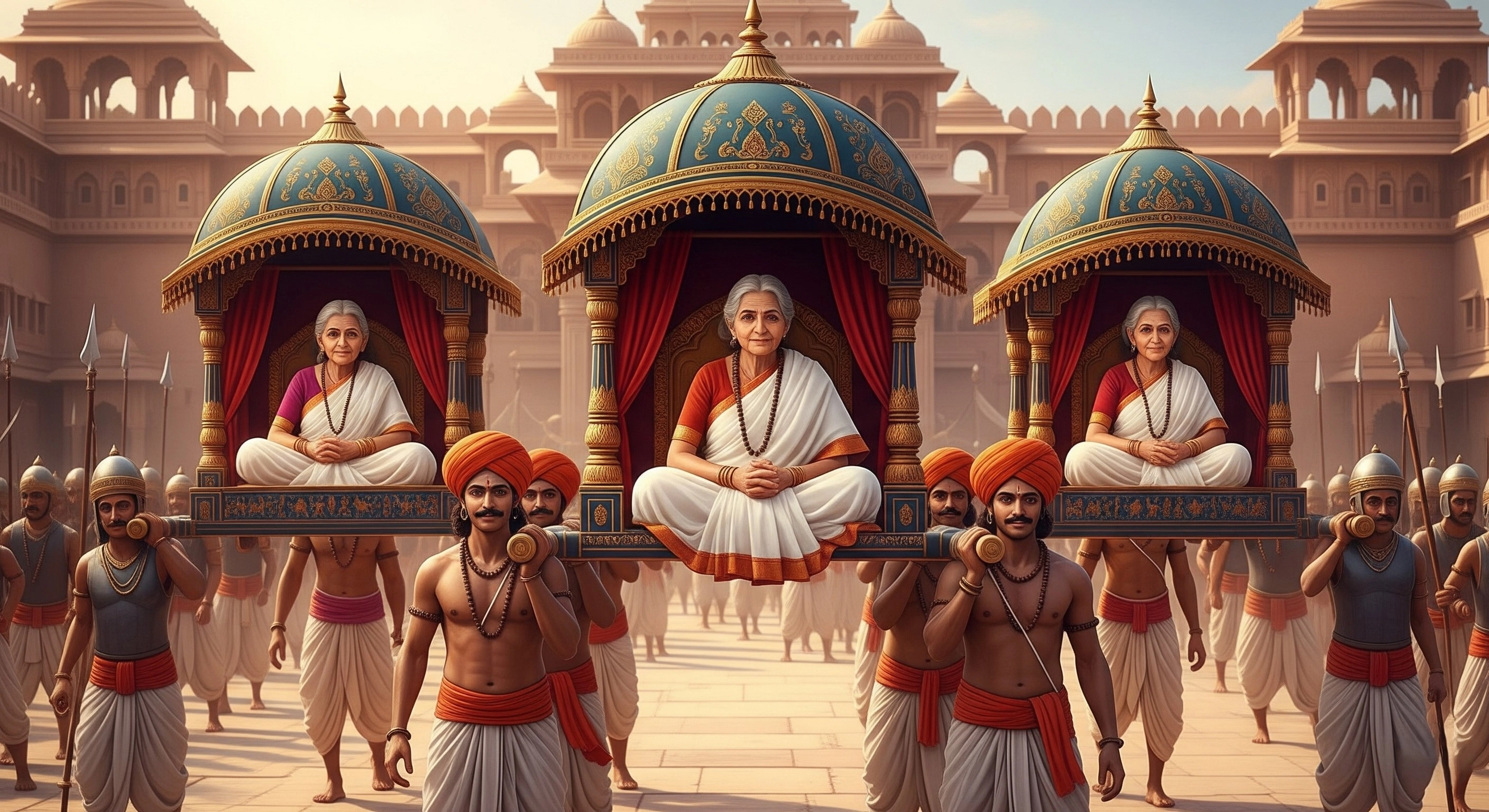
अयोध्यावासियों सहित श्री भरत-शत्रुघ्न आदि का वनगमन – Departure of Shri Bharat and Shatrughan with the citizens of Ayodhya to the forest
दोहा :
* जद्यपि जनमु कुमातु तें मैं सठु सदा सदोस।
आपन जानि न त्यागिहहिं मोहि रघुबीर भरोस॥183॥
भावार्थ:-यद्यपि मेरा जन्म कुमाता से हुआ है और मैं दुष्ट तथा सदा दोषयुक्त भी हूँ, तो भी मुझे श्री रामजी का भरोसा है कि वे मुझे अपना जानकर त्यागेंगे नहीं॥183॥
…Though I was born of a sinful mother, am flawed and filled with shortcomings, still I have faith that Shri Raghuveer, recognising me as His own, will never abandon me.”
चौपाई :
* भरत बचन सब कहँ प्रिय लागे। राम सनेह सुधाँ जनु पागे॥
लोग बियोग बिषम बिष दागे। मंत्र सबीज सुनत जनु जागे॥1॥
भावार्थ:-भरतजी के वचन सबको प्यारे लगे। मानो वे श्री रामजी के प्रेमरूपी अमृत में पगे हुए थे। श्री रामवियोग रूपी भीषण विष से सब लोग जले हुए थे। वे मानो बीज सहित मंत्र को सुनते ही जाग उठे॥1॥
Everyone was deeply moved by Bharat ji’s words, as though they were infused with the sweet nectar of Shri Ram’s love. His words worked like a powerful mantra (Vedic hymn), with a divine seed-syllable at their core. Hearing them, all those who had been scorched by the dreadful poison of Shri Ram’s separation felt their hearts calm, as if they had returned to life.
* मातु सचिव गुर पुर नर नारी। सकल सनेहँ बिकल भए भारी॥
भरतहि कहहिं सराहि सराही। राम प्रेम मूरति तनु आही॥2॥
भावार्थ:-माता, मंत्री, गुरु, नगर के स्त्री-पुरुष सभी स्नेह के कारण बहुत ही व्याकुल हो गए। सब भरतजी को सराह-सराहकर कहते हैं कि आपका शरीर श्री रामप्रेम की साक्षात मूर्ति ही है॥2॥
Mother Kaushalya, Guru Vashishth, and the men and women of the city were all overcome with emotion. They praised Bharat ji again and again, saying, “Bharat, your very being is the embodiment of pure love and devotion for Shri Ram…
* तात भरत अस काहे न कहहू। प्रान समान राम प्रिय अहहू॥
जो पावँरु अपनी जड़ताईं। तुम्हहि सुगाइ मातु कुटिलाईं॥3॥
भावार्थ:-हे तात भरत! आप ऐसा क्यों न कहें। श्री रामजी को आप प्राणों के समान प्यारे हैं। जो नीच अपनी मूर्खता से आपकी माता कैकेयी की कुटिलता को लेकर आप पर सन्देह करेगा,॥3॥
…Dear Bharat, it is no surprise to hear such words from you, for you are as dear to Shri Ram as His very life. Any sinful person who, out of ignorance, doubts your sincerity because of your mother’s deceitful act…
* सो सठु कोटिक पुरुष समेता। बसिहि कलप सत नरक निकेता॥
अहि अघ अवगुन नहिं मनि गहई। हरइ गरल दुख दारिद दहई॥4॥
भावार्थ:-वह दुष्ट करोड़ों पुरखों सहित सौ कल्पों तक नरक के घर में निवास करेगा। साँप के पाप और अवगुण को मणि नहीं ग्रहण करती, बल्कि वह विष को हर लेती है और दुःख तथा दरिद्रता को भस्म कर देती है॥4॥
…such wretched souls, along with millions of their ancestors, will dwell in hell for hundreds of cosmic life cycles. Just as a gem on the head of a serpent remains untouched by the serpent’s venom and instead dispels poison, sorrow, and dire poverty, (so too, your purity remains spotless despite your mother’s actions, and brings light and healing wherever it shines)…
दोहा :
* अवसि चलिअ बन रामु जहँ भरत मंत्रु भल कीन्ह।
सोक सिंधु बूड़त सबहि तुम्ह अवलंबनु दीन्ह॥184॥
भावार्थ:-हे भरतजी! वन को अवश्य चलिए, जहाँ श्री रामजी हैं, आपने बहुत अच्छी सलाह विचारी। शोक समुद्र में डूबते हुए सब लोगों को आपने (बड़ा) सहारा दे दिया॥184॥
…O’ Bharat, you have conceived a noble and righteous plan, we must all go to the forest where Shri Ram resides. In our hour of despair, you have extended a saving hand, lifting us from the ocean of sorrow.”
चौपाई :
* भा सब कें मन मोदु न थोरा। जनु घन धुनि सुनि चातक मोरा॥
चलत प्रात लखि निरनउ नीके। भरतु प्रानप्रिय भे सबही के॥1॥
भावार्थ:-सबके मन में कम आनंद नहीं हुआ (अर्थात बहुत ही आनंद हुआ)! मानो मेघों की गर्जना सुनकर चातक और मोर आनंदित हो रहे हों। (दूसरे दिन) प्रातःकाल चलने का सुंदर निर्णय देखकर भरतजी सभी को प्राणप्रिय हो गए॥1॥
Everyone’s heart overflowed with joy, like chataks and peacocks rejoicing at the sound of thunder. Witnessing the beautiful decision to depart early the next morning, Bharat ji became as dear to all as life itself.
* मुनिहि बंदि भरतहि सिरु नाई। चले सकल घर बिदा कराई॥
धन्य भरत जीवनु जग माहीं। सीलु सनेहु सराहत जाहीं॥2॥
भावार्थ:-मुनि वशिष्ठजी की वंदना करके और भरतजी को सिर नवाकर, सब लोग विदा लेकर अपने-अपने घर को चले। जगत में भरतजी का जीवन धन्य है, इस प्रकार कहते हुए वे उनके शील और स्नेह की सराहना करते जाते हैं॥2॥
After offering their respects to Guru Vashishth and bowing before Bharat ji, everyone departed for their respective homes. Along the way, they praised Bharat ji’s warmth and devotion, saying, “Bharat’s life is truly blessed in this world.”
* कहहिं परसपर भा बड़ काजू। सकल चलै कर साजहिं साजू॥
जेहि राखहिं रहु घर रखवारी। सो जानइ जनु गरदनि मारी॥3॥
भावार्थ:-आपस में कहते हैं, बड़ा काम हुआ। सभी चलने की तैयारी करने लगे। जिसको भी घर की रखवाली के लिए रहो, ऐसा कहकर रखते हैं, वही समझता है मानो मेरी गर्दन मारी गई॥3॥
They said to one another, “A great task has been set in motion.” Everyone began preparing and packing the essentials for the journey. Those who were asked to stay behind to guard the homes felt as though they had been struck on the neck, so deep was their longing to go.
* कोउ कह रहन कहिअ नहिं काहू। को न चहइ जग जीवन लाहू॥4॥
भावार्थ:-कोई-कोई कहते हैं- रहने के लिए किसी को भी मत कहो, जगत में जीवन का लाभ कौन नहीं चाहता?॥4॥
Some people exclaimed, “Don’t ask anyone to stay behind, who wouldn’t want to receive the greatest reward of their life in this very world?…
दोहा :
* जरउ सो संपति सदन सुखु सुहृद मातु पितु भाइ।
सनमुख होत जो राम पद करै न सहस सहाइ॥185॥
भावार्थ:-वह सम्पत्ति, घर, सुख, मित्र, माता, पिता, भाई जल जाए जो श्री रामजी के चरणों के सम्मुख होने में हँसते हुए (प्रसन्नतापूर्वक) सहायता न करे॥185॥
…Let that wealth, happiness, property, loved ones, mother, father, and brothers, all be reduced to ashes, if they do not joyfully support one’s devotion to the sacred feet of Shri Ram.”
चौपाई :
* घर घर साजहिं बाहन नाना। हरषु हृदयँ परभात पयाना॥
भरत जाइ घर कीन्ह बिचारू। नगरु बाजि गज भवन भँडारू॥1॥
भावार्थ:-घर-घर लोग अनेकों प्रकार की सवारियाँ सजा रहे हैं। हृदय में (बड़ा) हर्ष है कि सबेरे चलना है। भरतजी ने घर जाकर विचार किया कि नगर घोड़े, हाथी, महल-खजाना आदि-॥1॥
In every home, people began decorating various vehicles, their hearts brimming with joy at the thought of departing early the next morning. Bharat ji returned to his palace and reflected, “The city’s horses, elephants, palaces, and treasury…
* संपति सब रघुपति कै आही। जौं बिनु जतन चलौं तजि ताही॥
तौ परिनाम न मोरि भलाई। पाप सिरोमनि साइँ दोहाई॥2॥
भावार्थ:-सारी सम्पत्ति श्री रघुनाथजी की है। यदि उसकी (रक्षा की) व्यवस्था किए बिना उसे ऐसे ही छोड़कर चल दूँ, तो परिणाम में मेरी भलाई नहीं है, क्योंकि स्वामी का द्रोह सब पापों में शिरोमणि (श्रेष्ठ) है॥2॥
…and all this wealth rightfully belongs to Shri Raghupati. If I leave it behind without making proper arrangements for its care and protection, it would not be right. I swear by my Lord, it would be the gravest sin on my part…
* करइ स्वामि हित सेवकु सोई। दूषन कोटि देइ किन कोई॥
अस बिचारि सुचि सेवक बोले। जे सपनेहुँ निज धरम न डोले॥3॥
भावार्थ:-सेवक वही है, जो स्वामी का हित करे, चाहे कोई करोड़ों दोष क्यों न दे। भरतजी ने ऐसा विचारकर ऐसे विश्वासपात्र सेवकों को बुलाया, जो कभी स्वप्न में भी अपने धर्म से नहीं डिगे थे॥3॥
…A true servant is one who acts in the best interest of his master, even if the world blames him a million times.” With this thought, he summoned his most trusted attendants, men who had never faltered in their duty, not even in their dreams.
* कहि सबु मरमु धरमु भल भाषा। जो जेहि लायक सो तेहिं राखा॥
करि सबु जतनु राखि रखवारे। राम मातु पहिं भरतु सिधारे॥4॥|