
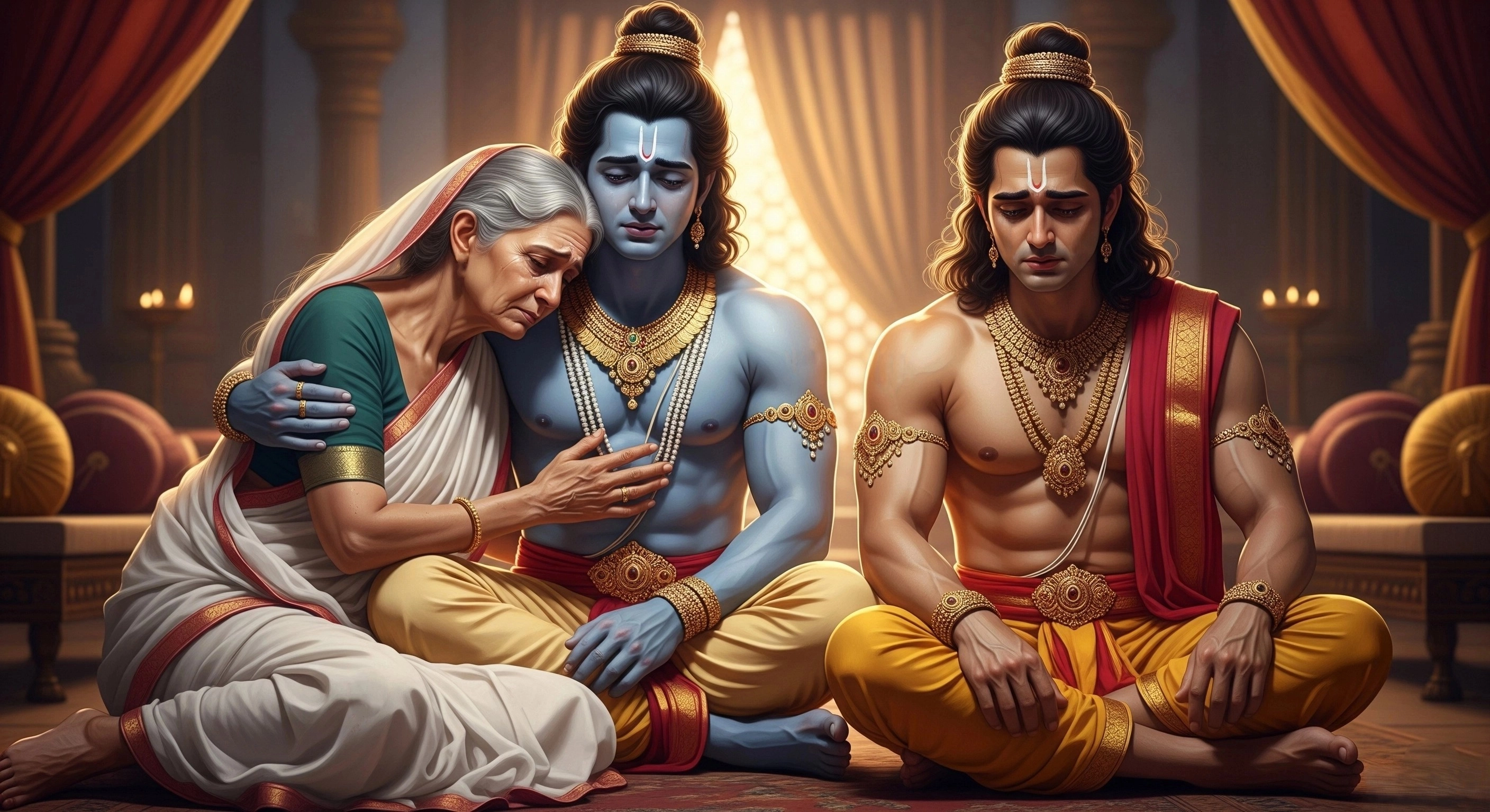
श्री भरत-कौसल्या संवाद एवं महाराज दशरथ जी का अंतिम संस्कार – Dialogue Between Bharat ji and Mother Kaushalya, and the Final Rites of King Dashrath
दोहा :
* राम बिरोधी हृदय तें प्रगट कीन्ह बिधि मोहि।
मो समान को पातकी बादि कहउँ कछु तोहि॥162॥
भावार्थ:-विधाता ने मुझे श्री रामजी से विरोध करने वाले (तेरे) हृदय से उत्पन्न किया (अथवा विधाता ने मुझे हृदय से राम का विरोधी जाहिर कर दिया।) मेरे बराबर पापी दूसरा कौन है? मैं व्यर्थ ही तुझे कुछ कहता हूँ॥162॥
…(Shri Bharat further said to Kaikeyi ji), “God has created me from you, someone whose heart bears hostility toward Shri Ram. Could there be anyone more sinful than me? Speaking to you any further is meaningless!”
चौपाई :
* सुनि सत्रुघुन मातु कुटिलाई। जरहिं गात रिस कछु न बसाई॥
तेहि अवसर कुबरी तहँ आई। बसन बिभूषन बिबिध बनाई॥1॥
भावार्थ:-माता की कुटिलता सुनकर शत्रुघ्नजी के सब अंग क्रोध से जल रहे हैं, पर कुछ वश नहीं चलता। उसी समय भाँति-भाँति के कपड़ों और गहनों से सजकर कुबरी (मंथरा) वहाँ आई॥1॥
Hearing of Mother Kaikeyi’s deceitful deeds, Shatrughan ji’s body burned with fury, though he restrained himself from acting. Just then, the hunchbacked woman Manthra appeared, adorned in fine clothes and various ornaments.
* लखि रिस भरेउ लखन लघु भाई। बरत अनल घृत आहुति पाई॥
हुमगि लात तकि कूबर मारा। परि मुँह भर महि करत पुकारा॥2॥
भावार्थ:-उसे (सजी) देखकर लक्ष्मण के छोटे भाई शत्रुघ्नजी क्रोध में भर गए। मानो जलती हुई आग को घी की आहुति मिल गई हो। उन्होंने जोर से तककर कूबड़ पर एक लात जमा दी। वह चिल्लाती हुई मुँह के बल जमीन पर गिर पड़ी॥2॥
The very sight of Manthra ignited Lakshman ji’s younger brother, Shatrughan ji, with rage, like pouring clarified butter into a blazing fire. In a sudden outburst, he kicked her hump with such force that she fell flat on her face, letting out a loud cry of pain.
* कूबर टूटेउ फूट कपारू। दलित दसन मुख रुधिर प्रचारू॥
आह दइअ मैं काह नसावा। करत नीक फलु अनइस पावा॥3॥
भावार्थ:-उसका कूबड़ टूट गया, कपाल फूट गया, दाँत टूट गए और मुँह से खून बहने लगा। (वह कराहती हुई बोली-) हाय दैव! मैंने क्या बिगाड़ा? जो भला करते बुरा फल पाया॥3॥
Her hump was broken, her head struck hard, her teeth shattered, and blood began to flow from her mouth. Crying out in pain, she said, “O’ Lord, what wrong have I done? I’ve been punished so cruelly for what I believed was a good deed.”
* सुनि रिपुहन लखि नख सिख खोटी। लगे घसीटन धरि धरि झोंटी॥
भरत दयानिधि दीन्हि छुड़ाई। कौसल्या पहिं गे दोउ भाई॥4॥
भावार्थ:-उसकी यह बात सुनकर और उसे नख से शिखा तक दुष्ट जानकर शत्रुघ्नजी झोंटा पकड़-पकड़कर उसे घसीटने लगे। तब दयानिधि भरतजी ने उसको छुड़ा दिया और दोनों भाई (तुरंत) कौसल्याजी के पास गए॥4॥
Hearing her words and recognizing her as corrupt from head to toe, Ripusudan ji (Shatrughan ji) seized her by the hair and began dragging her in fury. Only when the compassionate Bharat ji stepped in and released her did he relent. Thereafter, the two brothers made their way to Kaushalya ji.
दोहा :
* मलिन बसन बिबरन बिकल कृस शरीर दुख भार।
कनक कलप बर बेलि बन मानहुँ हनी तुसार॥163॥
भावार्थ:-कौसल्याजी मैले वस्त्र पहने हैं, चेहरे का रंग बदला हुआ है, व्याकुल हो रही हैं, दुःख के बोझ से शरीर सूख गया है। ऐसी दिख रही हैं मानो सोने की सुंदर कल्पलता को वन में पाला मार गया हो॥163॥
Kaushalya ji sat in soiled clothes, her face pale, her body withered from overwhelming sorrow. She appeared like a golden creeper of the wish-fulfilling tree, once radiant, now dried and lifeless in the forest, struck down by frost.
चौपाई :
* भरतहि देखि मातु उठि धाई। मुरुचित अवनि परी झइँ आई॥
देखत भरतु बिकल भए भारी। परे चरन तन दसा बिसारी॥1॥
भावार्थ:-भरत को देखते ही माता कौसल्याजी उठ दौड़ीं। पर चक्कर आ जाने से मूर्च्छित होकर पृथ्वी पर गिर पड़ीं। यह देखते ही भरतजी बड़े व्याकुल हो गए और शरीर की सुध भुलाकर चरणों में गिर पड़े॥1॥
Seeing Bharat ji, Mother Kaushalya rose and rushed toward him, but overcome with grief, she grew faint and collapsed to the ground unconscious. Witnessing her condition, Bharat ji was deeply shaken, overwhelmed with emotion, he fell at her feet, losing all awareness of his own self.
* मातु तात कहँ देहि देखाई। कहँ सिय रामु लखनु दोउ भाई॥
कैकइ कत जनमी जग माझा। जौं जनमि त भइ काहे न बाँझा॥2॥
भावार्थ:-(फिर बोले-) माता! पिताजी कहाँ हैं? उन्हें दिखा दें। सीताजी तथा मेरे दोनों भाई श्री राम-लक्ष्मण कहाँ हैं? (उन्हें दिखा दें।) कैकेयी जगत में क्यों जनमी! और यदि जनमी ही तो फिर बाँझ क्यों न हुई?-॥2॥
He cried, “Mother, where is Father? Please show him to me. And where are Sita ji and my two Brothers, Shri Ram and Lakshman? Why was Kaikeyi ever born into this world? And if she was, why did she not remain barren?…
* कुल कलंकु जेहिं जनमेउ मोही। अपजस भाजन प्रियजन द्रोही॥
को तिभुवन मोहि सरिस अभागी। गति असि तोरि मातुजेहि लागी॥3॥
भावार्थ:-जिसने कुल के कलंक, अपयश के भाँडे और प्रियजनों के द्रोही मुझ जैसे पुत्र को उत्पन्न किया। तीनों लोकों में मेरे समान अभागा कौन है? जिसके कारण हे माता! तेरी यह दशा हुई!॥3॥
…She gave birth to me, the stain on our lineage, a vessel of disgrace, and an enemy to my own kin. Is there anyone in all the three worlds as unfortunate as I am? O’ Mother, you are in this state, all because of me!…
* पितु सुरपुर बन रघुबर केतू। मैं केवल सब अनरथ हेतू॥
धिग मोहि भयउँ बेनु बन आगी। दुसह दाह दुख दूषन भागी॥4॥
भावार्थ:-पिताजी स्वर्ग में हैं और श्री रामजी वन में हैं। केतु के समान केवल मैं ही इन सब अनर्थों का कारण हूँ। मुझे धिक्कार है! मैं बाँस के वन में आग उत्पन्न हुआ और कठिन दाह, दुःख और दोषों का भागी बना॥4॥
…My father has departed to heaven, and Raghuveer wanders in the forest, all because of me. I alone am the cause of this disaster, like the inauspicious planet Ketu bringing misfortune. Shame on me! I have become a wildfire to the forest of bamboo, and now bear the weight of unbearable sorrow, disgrace, and torment.”
दोहा :
* मातु भरत के बचन मृदु सुनि पुनि उठी सँभारि।
लिए उठाइ लगाइ उर लोचन मोचति बारि॥164॥
भावार्थ:-भरतजी के कोमल वचन सुनकर माता कौसल्याजी फिर सँभलकर उठीं। उन्होंने भरत को उठाकर छाती से लगा लिया और नेत्रों से आँसू बहाने लगीं॥164॥
Hearing Bharat ji’s gentle words, Mother Kaushalya slowly rose once more and embraced him tightly, as tears flowed freely from her eyes.
चौपाई :
* सरल सुभाय मायँ हियँ लाए। अति हित मनहुँ राम फिरि आए॥
भेंटेउ बहुरि लखन लघु भाई। सोकु सनेहु न हृदयँ समाई॥1॥
भावार्थ:-सरल स्वभाव वाली माता ने बड़े प्रेम से भरतजी को छाती से लगा लिया, मानो श्री रामजी ही लौटकर आ गए हों। फिर लक्ष्मणजी के छोटे भाई शत्रुघ्न को हृदय से लगाया। शोक और स्नेह हृदय में समाता नहीं है॥1॥
Guileless by nature, Kaushalya ji embraced Bharat ji with deep affection, as though Shri Ram Himself had returned. She then lovingly embraced Shatrughan ji, Lakshman ji’s younger brother. Her heart was overwhelmed with both sorrow and love.
* देखि सुभाउ कहत सबु कोई। राम मातु अस काहे न होई॥
माताँ भरतु गोद बैठारे। आँसु पोछिं मृदु बचन उचारे॥2॥
भावार्थ:-कौसल्याजी का स्वभाव देखकर सब कोई कह रहे हैं- श्री राम की माता का ऐसा स्वभाव क्यों न हो। माता ने भरतजी को गोद में बैठा लिया और उनके आँसू पोंछकर कोमल वचन बोलीं-॥2॥
Seeing her gentle and loving nature, everyone said, “How could her heart be any different, she is, after all, the Mother of Shri Ram.” Kaushalya ji sat Bharat ji on her lap, wiped away his tears, and spoke to him in soft, comforting words…
* अजहुँ बच्छ बलि धीरज धरहू। कुसमउ समुझि सोक परिहरहू॥
जनि मानहु हियँ हानि गलानी। काल करम गति अघटित जानी॥3॥
भावार्थ:-हे वत्स! मैं बलैया लेती हूँ। तुम अब भी धीरज धरो। बुरा समय जानकर शोक त्याग दो। काल और कर्म की गति अमिट जानकर हृदय में हानि और ग्लानि मत मानो॥3॥
…“O’ My beloved child, I bless you with all my heart, gather your strength in this difficult moment. Recognize that this is a time ruled by misfortune, and let go of your sorrow. Time and fate are beyond anyone’s control, so do not burden your heart with grief or guilt…
* काहुहि दोसु देहु जनि ताता। भा मोहि सब बिधि बाम बिधाता॥
जो एतेहुँ दुख मोहि जिआवा। अजहुँ को जानइ का तेहि भावा॥4॥
भावार्थ:-हे तात! किसी को दोष मत दो। विधाता मेरे लिए सब प्रकार से उलटा हो गया है, जो इतने दुःख पर भी मुझे जिला रहा है। अब भी कौन जानता है, उसे क्या भा रहा है?॥4॥
…O’ Dear son, why place blame on anyone? The Creator has turned all fortunes against me, and yet keeps me alive amidst such sorrow. Even now, who knows what strange joy He finds in this suffering…
दोहा :
* पितु आयस भूषन बसन तात तजे रघुबीर।
बिसमउ हरषु न हृदयँ कछु पहिरे बलकल चीर॥165॥
भावार्थ:-हे तात! पिता की आज्ञा से श्री रघुवीर ने भूषण-वस्त्र त्याग दिए और वल्कल वस्त्र पहन लिए। उनके हृदय में न कुछ विषाद था, न हर्ष!॥165॥
…(Mother Kaushalya said), “Dear son, upon receiving His father’s command, Ram neither grieved nor rejoiced. With calm acceptance in His heart, He laid aside His royal garments and ornaments, and clothed Himself in the simple robes of an ascetic…
चौपाई :
* मुख प्रसन्न मन रंग न रोषू। सब कर सब बिधि करि परितोषू॥
चले बिपिन सुनि सिय सँग लागी। रहइ न राम चरन अनुरागी॥1॥
भावार्थ:-उनका मुख प्रसन्न था, मन में न आसक्ति थी, न रोष (द्वेष)। सबका सब तरह से संतोष कराकर वे वन को चले। यह सुनकर सीता भी उनके साथ लग गईं। श्रीराम के चरणों की अनुरागिणी वे किसी तरह न रहीं॥1॥
…His face remained serene, and His heart held neither joy nor resentment. He consoled each of us with gentle words and then set out for the forest. Upon hearing this, even Sita insisted on accompanying Him, She would not remain behind under any circumstance, for Her heart is wholly devoted to Ram’s feet…
* सुनतहिं लखनु चले उठि साथा। रहहिं न जतन किए रघुनाथा॥
तब रघुपति सबही सिरु नाई। चले संग सिय अरु लघु भाई॥2॥
भावार्थ:-सुनते ही लक्ष्मण भी साथ ही उठ चले। श्री रघुनाथ ने उन्हें रोकने के बहुत यत्न किए, पर वे न रहे। तब श्री रघुनाथजी सबको सिर नवाकर सीता और छोटे भाई लक्ष्मण को साथ लेकर चले गए॥2॥
…Upon hearing of Ram’s exile, Lakshman too chose to go with Him. Despite Raghunath’s many efforts to persuade him to stay, he would not be left behind. Then, with deep humility, Raghupati bowed before everyone and departed for the forest with Sita and His younger Brother, Lakshman…
* रामु लखनु सिय बनहि सिधाए। गइउँ न संग न प्रान पठाए॥
यहु सबु भा इन्ह आँखिन्ह आगें। तउ न तजा तनु जीव अभागें॥3॥
भावार्थ:-श्री राम, लक्ष्मण और सीता वन को चले गए। मैं न तो साथ ही गई और न मैंने अपने प्राण ही उनके साथ भेजे। यह सब इन्हीं आँखों के सामने हुआ, तो भी अभागे जीव ने शरीर नहीं छोड़ा॥3॥
…Ram, Lakshman, and Sita went to the forest, yet I neither followed them nor did my soul depart with them. All of this unfolded before my very eyes, still, my wretched life clung to this body, refusing to leave…
* मोहि न लाज निज नेहु निहारी। राम सरिस सुत मैं महतारी॥
जिऐ मरै भल भूपति जाना। मोर हृदय सत कुलिस समाना॥4॥
भावार्थ:-अपने स्नेह की ओर देखकर मुझे लाज नहीं आती; राम सरीखे पुत्र की मैं माता! जीना और मरना तो राजा ने खूब जाना। मेरा हृदय तो सैकड़ों वज्रों के समान कठोर है॥4॥
…I feel no shame in this deep, loving attachment, for I am the Mother of a Son like Ram. The King knew well how to live with honour and how to depart with dignity, but my own heart is hardened, like being struck by a hundred thunderbolts, yet still it does not break.”
दोहा :
* कौसल्या के बचन सुनि भरत सहित रनिवासु।
ब्याकुल बिलपत राजगृह मानहुँ सोक नेवासु ॥166॥
भावार्थ:-कौसल्याजी के वचनों को सुनकर भरत सहित सारा रनिवास व्याकुल होकर विलाप करने लगा। राजमहल मानो शोक का निवास बन गया॥166॥
Hearing Kaushalya ji’s sorrowful words, Bharat ji and everyone present in the Queen’s palace broke into anguished cries. The entire royal palace seemed transformed into the very dwelling place of grief.
चौपाई :
* बिलपहिं बिकल भरत दोउ भाई। कौसल्याँ लिए हृदयँ लगाई॥
भाँति अनेक भरतु समुझाए। कहि बिबेकमय बचन सुनाए॥1॥
भावार्थ:-भरत, शत्रुघ्न दोनों भाई विकल होकर विलाप करने लगे। तब कौसल्याजी ने उनको हृदय से लगा लिया। अनेकों प्रकार से भरतजी को समझाया और बहुत सी विवेकभरी बातें उन्हें कहकर सुनाईं॥1॥
Seeing Bharat ji and Shatrughan ji weeping, Mother Kaushalya drew them close to her heart. She comforted Bharat ji in many tender ways and gently offered him words of wisdom and strength.
* भरतहुँ मातु सकल समुझाईं। कहि पुरान श्रुति कथा सुहाईं॥
छल बिहीन सुचि सरल सुबानी। बोले भरत जोरि जुग पानी॥2॥
भावार्थ:-भरतजी ने भी सब माताओं को पुराण और वेदों की सुंदर कथाएँ कहकर समझाया। दोनों हाथ जोड़कर भरतजी छलरहित, पवित्र और सीधी सुंदर वाणी बोले-॥2॥
Bharat ji consoled Mother Kaushalya and the other Queens by sharing many beautiful stories from the ancient Scriptures and the Vedas. With folded hands, Shri Bharat spoke in a voice that was gentle, pure, and sincere, his words free from any trace of deceit,..
* जे अघ मातु पिता सुत मारें। गाइ गोठ महिसुर पुर जारें॥
जे अघ तिय बालक बध कीन्हें। मीत महीपति माहुर दीन्हें॥3॥
भावार्थ:-जो पाप माता-पिता और पुत्र के मारने से होते हैं और जो गोशाला और ब्राह्मणों के नगर जलाने से होते हैं, जो पाप स्त्री और बालक की हत्या करने से होते हैं और जो मित्र और राजा को जहर देने से होते हैं-॥3॥
…“The sins of killing one’s mother, father, or son, of setting fire to a cowshed or a Brahmin’s village, of slaying a woman or a child, or of poisoning a friend or a King…
* जे पातक उपपातक अहहीं। करम बचन मन भव कबि कहहीं॥
ते पातक मोहि होहुँ बिधाता। जौं यहु होइ मोर मत माता॥4॥
भावार्थ:-कर्म, वचन और मन से होने वाले जितने पातक एवं उपपातक (बड़े-छोटे पाप) हैं, जिनको कवि लोग कहते हैं, हे विधाता! यदि इस काम में मेरा मत हो, तो हे माता! वे सब पाप मुझे लगें॥4॥
…and all other great and small sins committed in thought, word, or deed, as described by the poets, O’ Mother, if I had even the slightest consent in sending Ram ji to the forest, then may all those sins fall upon me alone…
दोहा :
* जे परिहरि हरि हर चरन भजहिं भूतगन घोर।
तेहि कइ गति मोहि देउ बिधि जौं जननी मत मोर॥167॥
भावार्थ:-जो लोग श्री हरि और श्री शंकरजी के चरणों को छोड़कर भयानक भूत-प्रेतों को भजते हैं, हे माता! यदि इसमें मेरा मत हो तो विधाता मुझे उनकी गति दे॥167॥
…O’ Mother, if I had any hand in Shri Ram’s exile, then may I be given the fate of those unfortunate souls who abandon devotion to the sacred feet of Hari (Lord Vishnu) and Har (Lord Shiv), and instead worship fearsome ghosts and spirits…
चौपाई :
* बेचहिं बेदु धरमु दुहि लेहीं। पिसुन पराय पाप कहि देहीं॥
कपटी कुटिल कलहप्रिय क्रोधी। बेद बिदूषक बिस्व बिरोधी॥1॥
भावार्थ:-जो लोग वेदों को बेचते हैं, धर्म को दुह लेते हैं, चुगलखोर हैं, दूसरों के पापों को कह देते हैं, जो कपटी, कुटिल, कलहप्रिय और क्रोधी हैं तथा जो वेदों की निंदा करने वाले और विश्वभर के विरोधी हैं,॥1॥
…Those who sell the Vedas for profit, who deceive others in the name of faith, who slander and speak ill of others’ faults, who are deceitful, cunning, and always quarrelsome, those consumed by anger, who mock the sacred Scriptures, and bear hostility towards the entire world…
* लोभी लंपट लोलुपचारा। जे ताकहिं परधनु परदारा॥
पावौं मैं तिन्ह कै गति घोरा। जौं जननी यहु संमत मोरा॥2॥
भावार्थ:-जो लोभी, लम्पट और लालचियों का आचरण करने वाले हैं, जो पराए धन और पराई स्त्री की ताक में रहते हैं, हे जननी! यदि इस काम में मेरी सम्मति हो तो मैं उनकी भयानक गति को पाऊँ॥2॥
…those who are greedy, lustful, or miserly; who cast covetous eyes upon another’s wife or wealth, the dreadful fate destined for such people, let that be mine, O’ Dear Mother, if I had even the slightest approval in Shri Ram’s exile…
* जे नहिं साधुसंग अनुरागे। परमारथ पथ बिमुख अभागे॥
जे न भजहिं हरि नर तनु पाई। जिन्हहि न हरि हर सुजसु सोहाई॥3॥
भावार्थ:-जिनका सत्संग में प्रेम नहीं है, जो अभागे परमार्थ के मार्ग से विमुख हैं, जो मनुष्य शरीर पाकर श्री हरि का भजन नहीं करते, जिनको हरि-हर (भगवान विष्णु और शंकरजी) का सुयश नहीं सुहाता,॥3॥
…Those who feel no love for the company of saints, those unfortunate ones who turn away from the path of righteousness, those who fail to worship Lord Hari even after being born as human, those who do not cherish the divine glories of Lord Hari and Lord Har…
* तजि श्रुतिपंथु बाम पथ चलहीं। बंचक बिरचि बेष जगु छलहीं॥
तिन्ह कै गति मोहि संकर देऊ। जननी जौं यहु जानौं भेऊ॥4॥
भावार्थ:-जो वेद मार्ग को छोड़कर वाम (वेद प्रतिकूल) मार्ग पर चलते हैं, जो ठग हैं और वेष बनाकर जगत को छलते हैं, हे माता! यदि मैं इस भेद को जानता भी होऊँ तो शंकरजी मुझे उन लोगों की गति दें॥4॥
…Those who abandon the path laid out by the Vedas and follow a false way, who live as fraudsters and imposters, deceiving the world through pretence and disguise, may Lord Shankar grant me the fate of such wretched souls, if I had any knowledge or involvement in this conspiracy, O’ Mother.”
दोहा :
* मातु भरत के बचन सुनि साँचे सरल सुभायँ।
कहति राम प्रिय तात तुम्ह सदा बचन मन कायँ॥168॥
भावार्थ:-माता कौसल्याजी भरतजी के स्वाभाविक ही सच्चे और सरल वचनों को सुनकर कहने लगीं- हे तात! तुम तो मन, वचन और शरीर से सदा ही श्री रामचन्द्र के प्यारे हो॥168॥
Hearing Bharat ji’s guileless, heartfelt, and sincere words, Mother Kaushalya said, “O’ Son, you have always been dear to Ram, in your thoughts, in your words, and in your actions…
चौपाई :
* राम प्रानहु तें प्रान तुम्हारे। तुम्ह रघुपतिहि प्रानहु तें प्यारे॥
बिधु बिष चवै स्रवै हिमु आगी। होइ बारिचर बारि बिरागी॥1॥
भावार्थ:-श्री राम तुम्हारे प्राणों से भी बढ़कर प्राण (प्रिय) हैं और तुम भी श्री रघुनाथ को प्राणों से भी अधिक प्यारे हो। चन्द्रमा चाहे विष चुआने लगे और पाला आग बरसाने लगे, जलचर जीव जल से विरक्त हो जाए,॥1॥
…Ram is dearer to you than your own life, and in the same way, you are dearer to Raghupati than His own breath. It may be possible for the Moon to begin radiating poison, for snow to emit fire, or for aquatic creatures to forsake water…
* भएँ ग्यानु बरु मिटै न मोहू। तुम्ह रामहि प्रतिकूल न होहू॥
मत तुम्हार यहु जो जग कहहीं। सो सपनेहुँ सुख सुगति न लहहीं॥2॥
भावार्थ:-और ज्ञान हो जाने पर भी चाहे मोह न मिटे, पर तुम श्री रामचन्द्र के प्रतिकूल कभी नहीं हो सकते। इसमें तुम्हारी सम्मति है, जगत में जो कोई ऐसा कहते हैं, वे स्वप्न में भी सुख और शुभ गति नहीं पावेंगे॥2॥
…and it may be possible for attachment to persist even after attaining wisdom, but it is impossible for you to ever be hostile towards Ram. If anyone in this world dares to say that you had a hand in sending Ram to the forest, that person will never know peace, joy, or liberation, even in their dreams.”
* अस कहि मातु भरतु हिएँ लाए। थन पय स्रवहिं नयन जल छाए॥
करत बिलाप बहुत एहि भाँती। बैठेहिं बीति गई सब राती॥3॥
भावार्थ:-ऐसा कहकर माता कौसल्या ने भरतजी को हृदय से लगा लिया। उनके स्तनों से दूध बहने लगा और नेत्रों में (प्रेमाश्रुओं का) जल छा गया। इस प्रकार बहुत विलाप करते हुए सारी रात बैठे ही बैठे बीत गई॥3॥
Saying these words, Mother Kaushalya embraced Bharat ji tightly. Overwhelmed with motherly emotion, milk began to flow from her breasts, and her eyes welled up with tears. The entire night passed in sorrow and lamentation.
* बामदेउ बसिष्ठ तब आए। सचिव महाजन सकल बोलाए॥
मुनि बहु भाँति भरत उपदेसे। कहि परमारथ बचन सुदेसे॥4॥
भावार्थ:-तब वामदेवजी और वशिष्ठजी आए। उन्होंने सब मंत्रियों तथा महाजनों को बुलाया। फिर मुनि वशिष्ठजी ने परमार्थ के सुंदर समयानुकूल वचन कहकर बहुत प्रकार से भरतजी को उपदेश दिया॥4॥
At that moment, the revered Sages Vaamdev ji and Vashishth ji arrived. They summoned all the Ministers and the distinguished citizens of the city. Sage Vashishth then offered Bharat ji various forms of counsel, speaking words of wisdom that were fitting for the time and circumstance.
दोहा :
* तात हृदयँ धीरजु धरहु करहु जो अवसर आजु।
उठे भरत गुर बचन सुनि करन कहेउ सबु साजु॥169॥
भावार्थ:-(वशिष्ठजी ने कहा-) हे तात! हृदय में धीरज धरो और आज जिस कार्य के करने का अवसर है, उसे करो। गुरुजी के वचन सुनकर भरतजी उठे और उन्होंने सब तैयारी करने के लिए कहा॥169॥
Guru Vashishth said, “O’ Son, keep patience in your heart and carry out all that must be done today.” Hearing his Guru’s words, Bharat ji rose and immediately gave instructions to begin the final rites and ceremonies for Dashrath ji.
चौपाई :
* नृपतनु बेद बिदित अन्हवावा। परम बिचित्र बिमानु बनावा॥
गाहि पदभरत मातु सब राखी। रहीं रानि दरसन अभिलाषी॥1॥
भावार्थ:-वेदों में बताई हुई विधि से राजा की देह को स्नान कराया गया और परम विचित्र विमान बनाया गया। भरतजी ने सब माताओं को चरण पकड़कर रखा (अर्थात प्रार्थना करके उनको सती होने से रोक लिया)। वे रानियाँ भी (श्री राम के) दर्शन की अभिलाषा से रह गईं॥1॥
The King’s body was bathed in accordance with the Vedic rites and placed in a specially crafted, unique casket. Bharat ji then humbly clasped the feet of all his Mothers, pleading with them to stay behind (and not ascend the funeral pyre). They agreed, for in their hearts, they all longed to see Shri Ram return from His exile.
* चंदन अगर भार बहु आए। अमित अनेक सुगंध सुहाए॥
सरजु तीर रचि चिता बनाई। जनु सुरपुर सोपान सुहाई॥2॥
भावार्थ:-चंदन और अगर के तथा और भी अनेकों प्रकार के अपार (कपूर, गुग्गुल, केसर आदि) सुगंध द्रव्यों के बहुत से बोझ आए। सरयूजी के तट पर सुंदर चिता रचकर बनाई गई, (जो ऐसी मालूम होती थी) मानो स्वर्ग की सुंदर सीढ़ी हो॥2॥
Many loads of sandalwood, aloe wood, and countless exquisite aromatic incenses were brought forth. On the banks of the sacred Saryu River, a funeral pyre was artfully constructed, so magnificent that it looked like a beautiful staircase leading to Heaven.
* एहि बिधि दाह क्रिया सब कीन्ही। बिधिवत न्हाइ तिलांजुलि दीन्ही॥
सोधि सुमृति सब बेद पुराना। कीन्ह भरत दसगात बिधाना॥3॥
भावार्थ:-इस प्रकार सब दाह क्रिया की गई और सबने विधिपूर्वक स्नान करके तिलांजलि दी। फिर वेद, स्मृति और पुराण सबका मत निश्चय करके उसके अनुसार भरतजी ने पिता का दशगात्र विधान (दस दिनों के कृत्य) किया॥3॥
In this way, the entire funeral ceremony was solemnly concluded. Thereafter, everyone bathed as per the prescribed rites, and the ritual offerings of water and sesame seeds were made for the departed soul. Guided by the wisdom of the Smriti texts, the Vedas, and other sacred Scriptures, Bharat ji observed the ten-day mourning period with deep devotion, performing each ceremony with full adherence to the sacred traditions and religious duties.
* जहँ जस मुनिबर आयसु दीन्हा। तहँ तस सहस भाँति सबु कीन्हा॥
भए बिसुद्ध दिए सब दाना। धेनु बाजि गज बाहन नाना॥4॥
भावार्थ:-मुनि श्रेष्ठ वशिष्ठजी ने जहाँ जैसी आज्ञा दी, वहाँ भरतजी ने सब वैसा ही हजारों प्रकार से किया। शुद्ध हो जाने पर (विधिपूर्वक) सब दान दिए। गायें तथा घोड़े, हाथी आदि अनेक प्रकार की सवारियाँ,॥4॥
Whatever instructions the great Sage Vashishth gave, Bharat ji fulfilled them in countless ways with utmost sincerity. Once the rites of purification were completed, Bharat ji generously offered donations, gifting cows, horses, elephants, and various kinds of chariots to the deserving.
दोहा :
* सिंघासन भूषन बसन अन्न धरनि धन धाम।
दिए भरत लहि भूमिसुर भे परिपूरन काम॥170॥
भावार्थ:-सिंहासन, गहने, कपड़े, अन्न, पृथ्वी, धन और मकान भरतजी ने दिए, भूदेव ब्राह्मण दान पाकर परिपूर्णकाम हो गए (अर्थात उनकी सारी मनोकामनाएँ अच्छी तरह से पूरी हो गईं)॥170॥
Bharat ji also distributed thrones, ornaments, garments, food grains, land, wealth, and homes. The wishes of the Brahmins, the earthly deities were fully satisfied by his generous offerings.
चौपाई :
* पितु हित भरत कीन्हि जसि करनी। सो मुख लाख जाइ नहिं बरनी॥
सुदिनु सोधि मुनिबर तब आए। सचिव महाजन सकल बोलाए॥1॥
भावार्थ:-पिताजी के लिए भरतजी ने जैसी करनी की वह लाखों मुखों से भी वर्णन नहीं की जा सकती। तब शुभ दिन शोधकर श्रेष्ठ मुनि वशिष्ठजी आए और उन्होंने मंत्रियों तथा सब महाजनों को बुलवाया॥1॥
The rituals that Bharat ji performed for the welfare of his Father’s soul, and the devotion with which he carried them out, cannot be described even by a thousand tongues. After selecting an auspicious day, the great Sage Vashishth gathered all the Ministers and the distinguished citizens of Ayodhya.
* बैठे राजसभाँ सब जाई। पठए बोलि भरत दोउ भाई॥
भरतु बसिष्ठ निकट बैठारे। नीति धरममय बचन उचारे॥2॥
भावार्थ:-सब लोग राजसभा में जाकर बैठ गए। तब मुनि ने भरतजी तथा शत्रुघ्नजी दोनों भाइयों को बुलवा भेजा। भरतजी को वशिष्ठजी ने अपने पास बैठा लिया और नीति तथा धर्म से भरे हुए वचन कहे॥2॥
Everyone assembled and took their seats in the royal court. Then the Sage summoned the two Brothers, Bharat ji and Shatrughan ji. Guru Vashishth seated Bharat ji beside him and began to speak words filled with wisdom and righteousness.
* प्रथम कथा सब मुनिबर बरनी। कैकइ कुटिल कीन्हि जसि करनी॥
भूप धरमुब्रतु सत्य सराहा। जेहिं तनु परिहरि प्रेमु निबाहा॥3॥
भावार्थ:-पहले तो कैकेयी ने जैसी कुटिल करनी की थी, श्रेष्ठ मुनि ने वह सारी कथा कही। फिर राजा के धर्मव्रत और सत्य की सराहना की, जिन्होंने शरीर त्याग कर प्रेम को निबाहा॥3॥
First, he recounted the entire episode of Queen Kaikeyi’s deceitful actions. Then he praised King Dashrath’s unwavering commitment to righteousness and truth, and how, out of love and honour, he gave up his very life.
* कहत राम गुन सील सुभाऊ। सजल नयन पुलकेउ मुनिराऊ॥
बहुरि लखन सिय प्रीति बखानी। सोक सनेह मगन मुनि ग्यानी॥4॥