
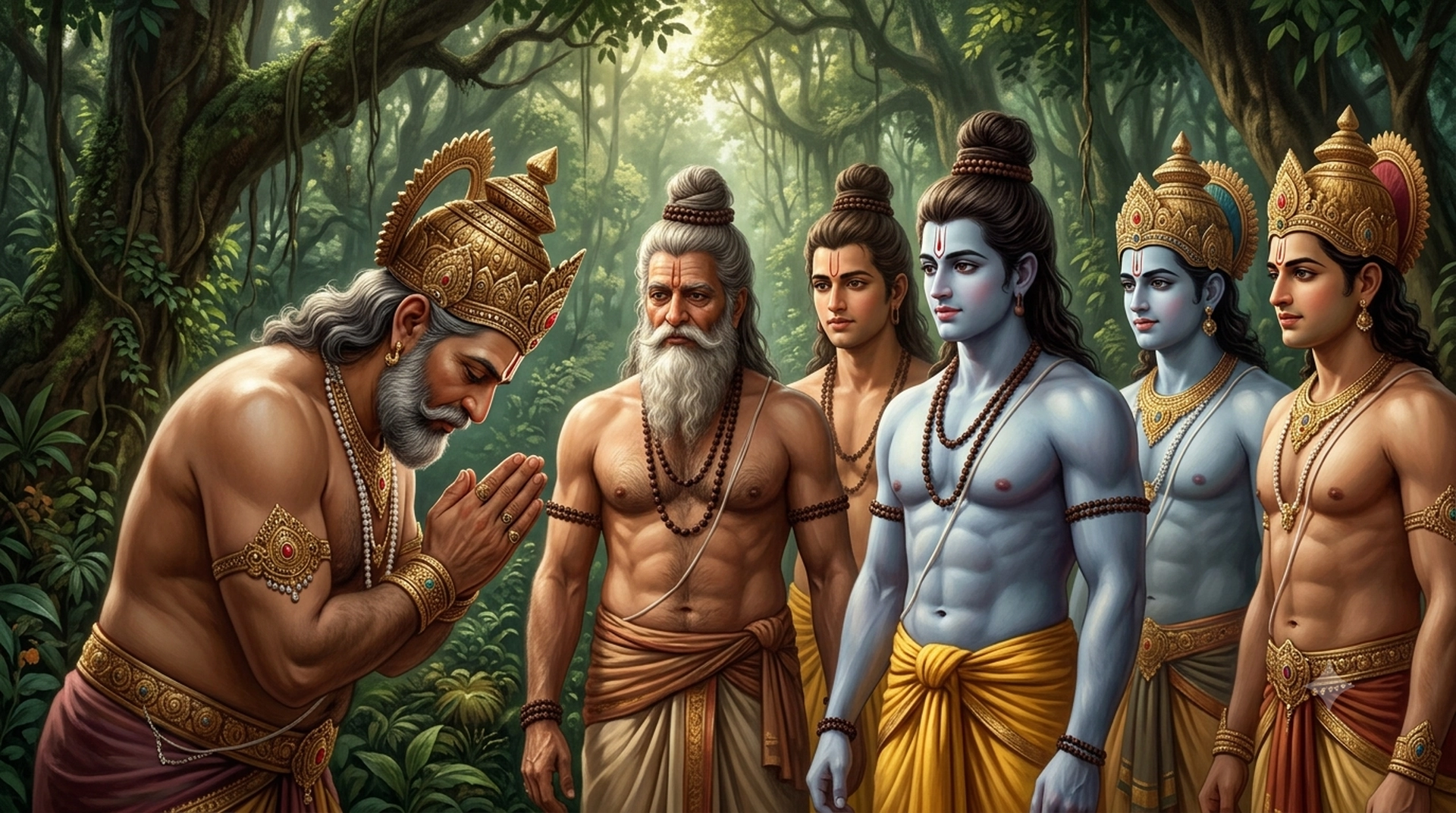
जनकजी का पहुँचना, कोल किरातादि की भेंट, सबका परस्पर मिलाप – King Janak arrives at Chitrakoot, forest dwellers bring gifts, and everyone meets each other
दोहा :
* गुर समाज भाइन्ह सहित राम राजु पुर होउ।
अछत राम राजा अवध मरिअ माग सबु कोउ॥273॥
भावार्थ:-गुरु, समाज और भाइयों समेत श्री रामजी का राज्य अवधपुरी में हो और श्री रामजी के राजा रहते ही हम लोग अयोध्या में मरें। सब कोई यही माँगते हैं॥273॥
…and may Shri Ram reign over the Kingdom of Ayodhya, guided by His Guru Vashishth, supported by His councillors, and accompanied by all His Brothers. And may we breathe our last in Ayodhya, with Lord Ram still upon the throne.” Such was the prayer in every heart.
चौपाई :
* सुनि सनेहमय पुरजन बानी। निंदहिं जोग बिरति मुनि ग्यानी॥
एहि बिधि नित्यकरम करि पुरजन। रामहि करहिं प्रनाम पुलकि तन॥1॥
भावार्थ:-अयोध्या वासियों की प्रेममयी वाणी सुनकर ज्ञानी मुनि भी अपने योग और वैराग्य की निंदा करते हैं। अवधवासी इस प्रकार नित्यकर्म करके श्री रामजी को पुलकित शरीर हो प्रणाम करते हैं॥1॥
Hearing the citizens’ affectionate words, even the enlightened Sages felt that their own detachment and asceticism paled in comparison. Thus, the citizens went about their daily duties, offering heartfelt obeisance to Shri Ram, their bodies thrilling with deep and joyous emotions.
* ऊँच नीच मध्यम नर नारी। लहहिं दरसु निज निज अनुहारी॥
सावधान सबही सनमानहिं। सकल सराहत कृपानिधानहिं॥2॥
भावार्थ:-ऊँच, नीच और मध्यम सभी श्रेणियों के स्त्री-पुरुष अपने-अपने भाव के अनुसार श्री रामजी का दर्शन प्राप्त करते हैं। श्री रामचन्द्रजी सावधानी के साथ सबका सम्मान करते हैं और सभी कृपानिधान श्री रामचन्द्रजी की सराहना करते हैं॥2॥
Men and women of every rank, high, middle, and low, gazed upon Shri Ram, each with their own heartfelt sentiments. In return, Shri Ram honoured each one with respect and care, and all responded by praising Him, the ocean of mercy.
* लरिकाइहि तें रघुबर बानी। पालत नीति प्रीति पहिचानी॥
सील सकोच सिंधु रघुराऊ। सुमुख सुलोचन सरल सुभाऊ॥3॥
भावार्थ:-श्री रामजी की लड़कपन से ही यह बान है कि वे प्रेम को पहचानकर नीति का पालन करते हैं। श्री रघुनाथजी शील और संकोच के समुद्र हैं। वे सुंदर मुख के (या सबके अनुकूल रहने वाले), सुंदर नेत्र वाले (या सबको कृपा और प्रेम की दृष्टि से देखने वाले) और सरल स्वभाव हैं॥3॥
They said, “Since childhood, Shri Ram has upheld a solemn vow to honour both righteousness and the love others bear for Him. Shri Raghuveer is an ocean of calmness and humility, endowed with a handsome countenance, eyes that enchant with their gracious gaze, and a nature of utmost simplicity.”
* कहत राम गुन गन अनुरागे। सब निज भाग सराहन लागे॥
हम सम पुन्य पुंज जग थोरे। जिन्हहि रामु जानत करि मोरे॥4॥
भावार्थ:-श्री रामजी के गुण समूहों को कहते-कहते सब लोग प्रेम में भर गए और अपने भाग्य की सराहना करने लगे कि जगत में हमारे समान पुण्य की बड़ी पूँजी वाले थोड़े ही हैं, जिन्हें श्री रामजी अपना करके जानते हैं (ये मेरे हैं ऐसा जानते हैं)॥4॥
In this way, they joyfully spoke of Shri Ram’s virtues, gave thanks for their good fortune, and exclaimed, “Truly, there are few in this world as blessed as we, whom Shri Ram counts as His own!”
दोहा :
* प्रेम मगन तेहि समय सब सुनि आवत मिथिलेसु।
सहित सभा संभ्रम उठेउ रबिकुल कमल दिनेसु॥274॥
भावार्थ:-उस समय सब लोग प्रेम में मग्न हैं। इतने में ही मिथिलापति जनकजी को आते हुए सुनकर सूर्यकुल रूपी कमल के सूर्य श्री रामचन्द्रजी सभा सहित आदरपूर्वक जल्दी से उठ खड़े हुए॥274॥
At that moment, everyone was wholly under the spell of Shri Ram’s love. Upon hearing of the arrival of the Lord of Mithila, Shri Janak, the entire assembly, along with the Sun of the lotus-like Solar clan, Shri Ram, immediately rose in joyful anticipation to receive him.
चौपाई :
* भाइ सचिव गुर पुरजन साथा। आगें गवनु कीन्ह रघुनाथा॥
गिरिबरु दीख जनकपति जबहीं। करि प्रनामु रथ त्यागेउ तबहीं॥1॥
भावार्थ:-भाई, मंत्री, गुरु और पुरवासियों को साथ लेकर श्री रघुनाथजी आगे (जनकजी की अगवानी में) चले। जनकजी ने ज्यों ही पर्वत श्रेष्ठ कामदनाथ को देखा, त्यों ही प्रणाम करके उन्होंने रथ छोड़ दिया। (पैदल चलना शुरू कर दिया)॥1॥
Shri Raghunath led the way, joined by His Brothers, Minister Sumantra, Guru Vashishth, and the citizens, as they proceeded to welcome King Janak. The moment King Janak beheld the majestic Kamadgiri mountain, he offered it reverent salutations, alighted from his chariot, and continued the journey on foot.
* राम दरस लालसा उछाहू। पथ श्रम लेसु कलेसु न काहू॥
मन तहँ जहँ रघुबर बैदेही। बिनु मन तन दुख सुख सुधि केही॥2॥
भावार्थ:-श्री रामजी के दर्शन की लालसा और उत्साह के कारण किसी को रास्ते की थकावट और क्लेश जरा भी नहीं है। मन तो वहाँ है जहाँ श्री राम और जानकीजी हैं। बिना मन के शरीर के सुख-दुःख की सुध किसको हो?॥2॥
Filled with deep longing and eager anticipation to behold Shri Ram, Janak ji and his entourage felt not the slightest fatigue or hardship. Their hearts were fixed upon the place where Shri Raghuveer and Vidhehi ji (Sita ji) were, and when the mind is absorbed elsewhere, who can feel any bodily pain or pleasure?
* आवत जनकु चले एहि भाँती। सहित समाज प्रेम मति माती॥
आए निकट देखि अनुरागे। सादर मिलन परसपर लागे॥3॥
भावार्थ:-जनकजी इस प्रकार चले आ रहे हैं। समाज सहित उनकी बुद्धि प्रेम में मतवाली हो रही है। निकट आए देखकर सब प्रेम में भर गए और आदरपूर्वक आपस में मिलने लगे॥3॥
Thus, Janak ji and his party moved forward, their hearts intoxicated with love. As the two groups drew near, a wave of deep affection swept over all, and warm greetings were exchanged.
* लगे जनक मुनिजन पद बंदन। रिषिन्ह प्रनामु कीन्ह रघुनंदन॥
भाइन्ह सहित रामु मिलि राजहि। चले लवाइ समेत समाजहि॥4॥
भावार्थ:-जनकजी (वशिष्ठ आदि अयोध्यावासी) मुनियों के चरणों की वंदना करने लगे और श्री रामचन्द्रजी ने (शतानंद आदि जनकपुरवासी) ऋषियों को प्रणाम किया। फिर भाइयों समेत श्री रामजी राजा जनकजी से मिलकर उन्हें समाज सहित अपने आश्रम को लिवा चले॥4॥
Janak ji bowed at the feet of the Sages from Ayodhya’s side, while Shri Raghunandan offered homage to the Sages who had accompanied Janak ji, including Sage Shatanand and his companions. Thereafter, Shri Ram, joined by His Brothers, warmly welcomed Janak ji and led him, along with the entire entourage, to the hermitage.
दोहा :
* आश्रम सागर सांत रस पूरन पावन पाथु।
सेन मनहुँ करुना सरित लिएँ जाहिं रघुनाथु॥275॥
भावार्थ:-श्री रामजी का आश्रम शांत रस रूपी पवित्र जल से परिपूर्ण समुद्र है। जनकजी की सेना (समाज) मानो करुणा (करुण रस) की नदी है, जिसे श्री रघुनाथजी (उस आश्रम रूपी शांत रस के समुद्र में मिलाने के लिए) लिए जा रहे हैं॥275॥
Shri Ram’s hermitage was like a sacred ocean, filled with the calm waters of peace and devotion. King Janak’s gathering was like a river of compassion, which Shri Raghunath was gently guiding to join that ocean of serenity.
चौपाई :
* बोरति ग्यान बिराग करारे। बचन ससोक मिलत नद नारे॥
सोच उसास समीर तरंगा। धीरज तट तरुबर कर भंगा॥1॥
भावार्थ:-यह करुणा की नदी (इतनी बढ़ी हुई है कि) ज्ञान-वैराग्य रूपी किनारों को डुबाती जाती है। शोक भरे वचन नद और नाले हैं, जो इस नदी में मिलते हैं और सोच की लंबी साँसें (आहें) ही वायु के झकोरों से उठने वाली तरंगें हैं, जो धैर्य रूपी किनारे के उत्तम वृक्षों को तोड़ रही हैं॥1॥
This river of compassion had risen so high that it was flooding the banks of wisdom and detachment. Words filled with grief were like streams and rivulets flowing into it, while the deep sighs of sorrow formed waves stirred by gusts of wind, breaking the fine trees of patience that lined its shores.
* बिषम बिषाद तोरावति धारा। भय भ्रम भवँर अबर्त अपारा॥
केवट बुध बिद्या बड़ि नावा। सकहिं न खेइ ऐक नहिं आवा॥2॥
भावार्थ:-भयानक विषाद (शोक) ही उस नदी की तेज धारा है। भय और भ्रम (मोह) ही उसके असंख्य भँवर और चक्र हैं। विद्वान मल्लाह हैं, विद्या ही बड़ी नाव है, परन्तु वे उसे खे नहीं सकते हैं, (उस विद्या का उपयोग नहीं कर सकते हैं) किसी को उसकी अटकल ही नहीं आती है॥2॥
The fierce current of this river was the dreadful flow of grief, while fear and delusion formed its countless whirlpools and eddies. The wise were like boatmen, and knowledge was the great boat, yet they could not row it forward, for no one knew how to navigate its unfathomable waters.
* बनचर कोल किरात बिचारे। थके बिलोकि पथिक हियँ हारे॥
आश्रम उदधि मिली जब जाई। मनहुँ उठेउ अंबुधि अकुलाई॥3॥
भावार्थ:-वन में विचरने वाले बेचारे कोल-किरात ही यात्री हैं, जो उस नदी को देखकर हृदय में हारकर थक गए हैं। यह करुणा नदी जब आश्रम-समुद्र में जाकर मिली, तो मानो वह समुद्र अकुला उठा (खौल उठा)॥3॥
The helpless foresters, along with hunters and tribals, were like weary travellers who, on seeing this river, lost heart and grew tired. When this river of compassion reached the ocean of the hermitage, it was as if that ocean itself grew restless and surged.
* सोक बिकल दोउ राज समाजा। रहा न ग्यानु न धीरजु लाजा॥
भूप रूप गुन सील सराही। रोवहिं सोक सिंधु अवगाही॥4॥
भावार्थ:-दोनों राज समाज शोक से व्याकुल हो गए। किसी को न ज्ञान रहा, न धीरज और न लाज ही रही। राजा दशरथजी के रूप, गुण और शील की सराहना करते हुए सब रो रहे हैं और शोक समुद्र में डुबकी लगा रहे हैं॥4॥
Both royal assemblies (of Ayodhya and Janakpur) were overcome with grief; all sense of wisdom, patience, and modesty was lost. Praising King Dashrath’s appearance, virtues, and noble nature, they wept bitterly, as if plunging into an ocean of sorrow.
छन्द :
* अवगाहि सोक समुद्र सोचहिं नारि नर ब्याकुल महा।
दै दोष सकल सरोष बोलहिं बाम बिधि कीन्हो कहा॥
सुर सिद्ध तापस जोगिजन मुनि देखि दसा बिदेह की।
तुलसी न समरथु कोउ जो तरि सकै सरित सनेह की॥
भावार्थ:-शोक समुद्र में डुबकी लगाते हुए सभी स्त्री-पुरुष महान व्याकुल होकर सोच (चिंता) कर रहे हैं। वे सब विधाता को दोष देते हुए क्रोधयुक्त होकर कह रहे हैं कि प्रतिकूल विधाता ने यह क्या किया? तुलसीदासजी कहते हैं कि देवता, सिद्ध, तपस्वी, योगी और मुनिगणों में कोई भी समर्थ नहीं है, जो उस समय विदेह (जनकराज) की दशा देखकर प्रेम की नदी को पार कर सके (प्रेम में मग्न हुए बिना रह सके)।
As they sank deeper into the ocean of sorrow, both men and women were overwhelmed with grief. All voiced their anguish, exclaiming, “What has cruel fate done?” Tulsidas ji writes that among the assembly of Demigods, enlightened saints, hermits, ascetics, and sages, none could swim across the river of love when they beheld the condition of King Janak at that time.
सोरठा :
* किए अमित उपदेस जहँ तहँ लोगन्ह मुनिबरन्ह।
धीरजु धरिअ नरेस कहेउ बसिष्ठ बिदेह सन॥276॥
भावार्थ:-जहाँ-तहाँ श्रेष्ठ मुनियों ने लोगों को अपरिमित उपदेश दिए और वशिष्ठजी ने विदेह (जनकजी) से कहा- हे राजन्! आप धैर्य धारण कीजिए॥276॥
The great Sages present there offered countless words of wisdom to the gathering, and Sage Vashishth consoled King Janak, urging him to remain composed.
चौपाई :
* जासु ग्यान रबि भव निसि नासा। बचन किरन मुनि कमल बिकासा॥
तेहि कि मोह ममता निअराई। यह सिय राम सनेह बड़ाई॥1॥
भावार्थ:-जिन राजा जनक का ज्ञान रूपी सूर्य भव (आवागमन) रूपी रात्रि का नाश कर देता है और जिनकी वचन रूपी किरणें मुनि रूपी कमलों को खिला देती हैं (आनंदित करती हैं), क्या मोह और ममता उनके निकट भी आ सकते हैं? यह तो श्री सीता-रामजी के प्रेम की महिमा है! (अर्थात राजा जनक की यह दशा श्री सीता-रामजी के अलौकिक प्रेम के कारण हुई, लौकिक मोह-ममता के कारण नहीं। जो लौकिक मोह-ममता को पार कर चुके हैं, उन पर भी श्री सीता-रामजी का प्रेम अपना प्रभाव दिखाए बिना नहीं रहता)॥1॥
He whose wisdom, like the Sun, destroys the night of worldly existence (the cycle of birth and death), and whose words, like sunrays, make the lotus-like hearts of Sages blossom with joy, can attachment and worldly affection even come near such a one? This is the glory of love for Shri Ram and Sita ji! (In other words, King Janak’s condition arose from the divine love for Shri Ram and Sita ji, not from worldly attachment. Even those who have transcended worldly bonds cannot remain untouched by the influence of this love.)
* बिषई साधक सिद्ध सयाने। त्रिबिध जीव जग बेद बखाने॥
राम सनेह सरस मन जासू। साधु सभाँ बड़ आदर तासू॥2॥
भावार्थ:-विषयी, साधक और ज्ञानवान सिद्ध पुरुष- जगत में तीन प्रकार के जीव वेदों ने बताए हैं। इन तीनों में जिसका चित्त श्री रामजी के स्नेह से सरस (सराबोर) रहता है, साधुओं की सभा में उसी का बड़ा आदर होता है॥2॥
According to the Vedas, there are three types of individuals: the Materialistic, the Seekers, and the Saintly. Among them, only the one whose heart overflows with love for Shri Ram is honoured in the assembly of Saints.
* सोह न राम पेम बिनु ग्यानू। करनधार बिनु जिमि जलजानू॥
मुनि बहुबिधि बिदेहु समुझाए। राम घाट सब लोग नहाए॥3॥
भावार्थ:-श्री रामजी के प्रेम के बिना ज्ञान शोभा नहीं देता, जैसे कर्णधार के बिना जहाज। वशिष्ठजी ने विदेहराज (जनकजी) को बहुत प्रकार से समझाया। तदनंतर सब लोगों ने श्री रामजी के घाट पर स्नान किया॥3॥
Without devotion to Shri Ram, knowledge is dim, like a ship without a captain. Sage Vashishth comforted Janak ji in many ways, and afterwards, everyone bathed at Ram Ghat on the sacred banks of the Mandakini River.
* सकल सोक संकुल नर नारी। सो बासरु बीतेउ बिनु बारी॥
पसु खग मृगन्ह न कीन्ह अहारू। प्रिय परिजन कर कौन बिचारू॥4॥
भावार्थ:-स्त्री-पुरुष सब शोक से पूर्ण थे। वह दिन बिना ही जल के बीत गया (भोजन की बात तो दूर रही, किसी ने जल तक नहीं पिया)। पशु-पक्षी और हिरनों तक ने कुछ आहार नहीं किया। तब प्रियजनों एवं कुटुम्बियों का तो विचार ही क्या किया जाए?॥4॥
All the men and women were overcome with grief, and that day they did not take even a drop of water (let alone any food, sitting the entire night in sorrow). Even the animals, birds, and deer abstained from eating. In such a moment, thoughts of their own loved ones were far from everyone’s mind.
दोहा :
* दोउ समाज निमिराजु रघुराजु नहाने प्रात।
बैठे सब बट बिटप तर मन मलीन कृस गात॥277॥
भावार्थ:- निमिराज जनकजी और रघुराज रामचन्द्रजी तथा दोनों ओर के समाज ने दूसरे दिन सबेरे स्नान किया और सब बड़ के वृक्ष के नीचे जा बैठे। सबके मन उदास और शरीर दुबले हैं॥277॥
The next day, King Janak of the Nimi Kingdom (a name tracing back to his ancestor King Nimi), together with Shri Raghunath and the people of both Ayodhya and Janakpur, bathed at dawn and assembled beneath a great banyan tree. Their hearts were weighed down with sorrow, and their bodies were frail.
चौपाई :
* जे महिसुर दसरथ पुर बासी। जे मिथिलापति नगर निवासी॥
हंस बंस गुर जनक पुरोधा। जिन्ह जग मगु परमारथु सोधा॥1॥
भावार्थ:-जो दशरथजी की नगरी अयोध्या के रहने वाले और जो मिथिलापति जनकजी के नगर जनकपुर के रहने वाले ब्राह्मण थे तथा सूर्यवंश के गुरु वशिष्ठजी तथा जनकजी के पुरोहित शतानंदजी, जिन्होंने सांसारिक अभ्युदय का मार्ग तथा परमार्थ का मार्ग छान डाला था,॥1॥
The Brahmins from King Dashrath’s city of Ayodhya and from King Mithila’s kingdom, along with Guru Vashishth of the Solar dynasty and Sage Shatanand, the revered family priest of King Janak, well-versed in the path to the Supreme Truth,…
* लगे कहन उपदेस अनेका। सहित धरम नय बिरति बिबेका॥
कौसिक कहि कहि कथा पुरानीं। समुझाई सब सभा सुबानीं॥2॥
भावार्थ:-वे सब धर्म, नीति वैराग्य तथा विवेकयुक्त अनेकों उपदेश देने लगे। विश्वामित्रजी ने पुरानी कथाएँ (इतिहास) कह-कहकर सारी सभा को सुंदर वाणी से समझाया॥2॥
…offered many wise and enlightening discourses on righteousness, governance, and detachment. Sage Kaushik, also known as Vishwamitra ji (who had accompanied King Janak), narrated tales from the ancient Scriptures and explained them to the assembly with gentle and gracious words.
* तब रघुनाथ कौसिकहि कहेऊ। नाथ कालि जल बिनु सुब रहेऊ॥
मुनि कह उचित कहत रघुराई। गयउ बीति दिन पहर अढ़ाई॥3॥
भावार्थ:-तब श्री रघुनाथजी ने विश्वामित्रजी से कहा कि हे नाथ! कल सब लोग बिना जल पिए ही रह गए थे। (अब कुछ आहार करना चाहिए)। विश्वामित्रजी ने कहा कि श्री रघुनाथजी उचित ही कह रहे हैं। ढाई पहर दिन (आज भी) बीत गया॥3॥
Shri Raghunath then said to Sage Kaushik, “Lord, yesterday everyone refrained from drinking water, (let alone eating any food)”. The Sage replied, “You are right; even today, seven and a half hours have already passed.”
* रिषि रुख लखि कह तेरहुतिराजू। इहाँ उचित नहिं असन अनाजू॥
कहा भूप भल सबहि सोहाना। पाइ रजायसु चले नहाना॥4॥
भावार्थ:-विश्वामित्रजी का रुख देखकर तिरहुत राज जनकजी ने कहा- यहाँ अन्न खाना उचित नहीं है। राजा का सुंदर कथन सबके मन को अच्छा लगा। सब आज्ञा पाकर नहाने चले॥4॥
Hearing Sage Vishwamitra’s response, Janak ji, the King of the Tirhut (Janakpur) Kingdom, said, “Eating grains at this place is not appropraite.” The King’s wise words appealed to everyone, and, seeking his permission, they proceeded to bathe.
दोहा :
* तेहि अवसर फल फूल दल मूल अनेक प्रकार।
लइ आए बनचर बिपुल भरि भरि काँवरि भार॥278॥
भावार्थ:-उसी समय अनेकों प्रकार के बहुत से फल, फूल, पत्ते, मूल आदि बहँगियों और बोझों में भर-भरकर वनवासी (कोल-किरात) लोग ले आए॥278॥
At that moment, the forest dwellers arrived, carrying many baskets filled with a variety of fruits, flowers, leaves, and roots.
चौपाई :
* कामद भे गिरि राम प्रसादा। अवलोकत अपहरत बिषादा॥
सर सरिता बन भूमि बिभागा। जनु उमगत आनँद अनुरागा॥1॥
भावार्थ:-श्री रामचन्द्रजी की कृपा से सब पर्वत मनचाही वस्तु देने वाले हो गए। वे देखने मात्र से ही दुःखों को सर्वथा हर लेते थे। वहाँ के तालाबों, नदियों, वन और पृथ्वी के सभी भागों में मानो आनंद और प्रेम उमड़ रहा है॥1॥
By the divine grace of Lord Ram, the mountains yielded all that was desired, and even a glimpse of these offerings washed away people’s sorrows. In Chitrakoot, every lake, river, forest, and meadow bloomed with joy and bliss.
* बेलि बिटप सब सफल सफूला। बोलत खग मृग अलि अनुकूला॥
तेहि अवसर बन अधिक उछाहू। त्रिबिध समीर सुखद सब काहू॥2॥
भावार्थ:-बेलें और वृक्ष सभी फल और फूलों से युक्त हो गए। पक्षी, पशु और भौंरें अनुकूल बोलने लगे। उस अवसर पर वन में बहुत उत्साह (आनंद) था, सब किसी को सुख देने वाली शीतल, मंद, सुगंध हवा चल रही थी॥2॥
The creepers and trees were adorned with sweet fruits and vibrant flowers, while birds, animals, and bumblebees joined in melodious harmony. Three kinds of breezes (cool, gentle, and fragrant) blew, bringing joy to all.
* जाइ न बरनि मनोहरताई। जनु महि करति जनक पहुनाई॥
तब सब लोग नहाइ नहाई। राम जनक मुनि आयसु पाई॥3॥
देखि देखि तरुबर अनुरागे। जहँ तहँ पुरजन उतरन लागे॥
दल फल मूल कंद बिधि नाना। पावन सुंदर सुधा समाना॥4॥