
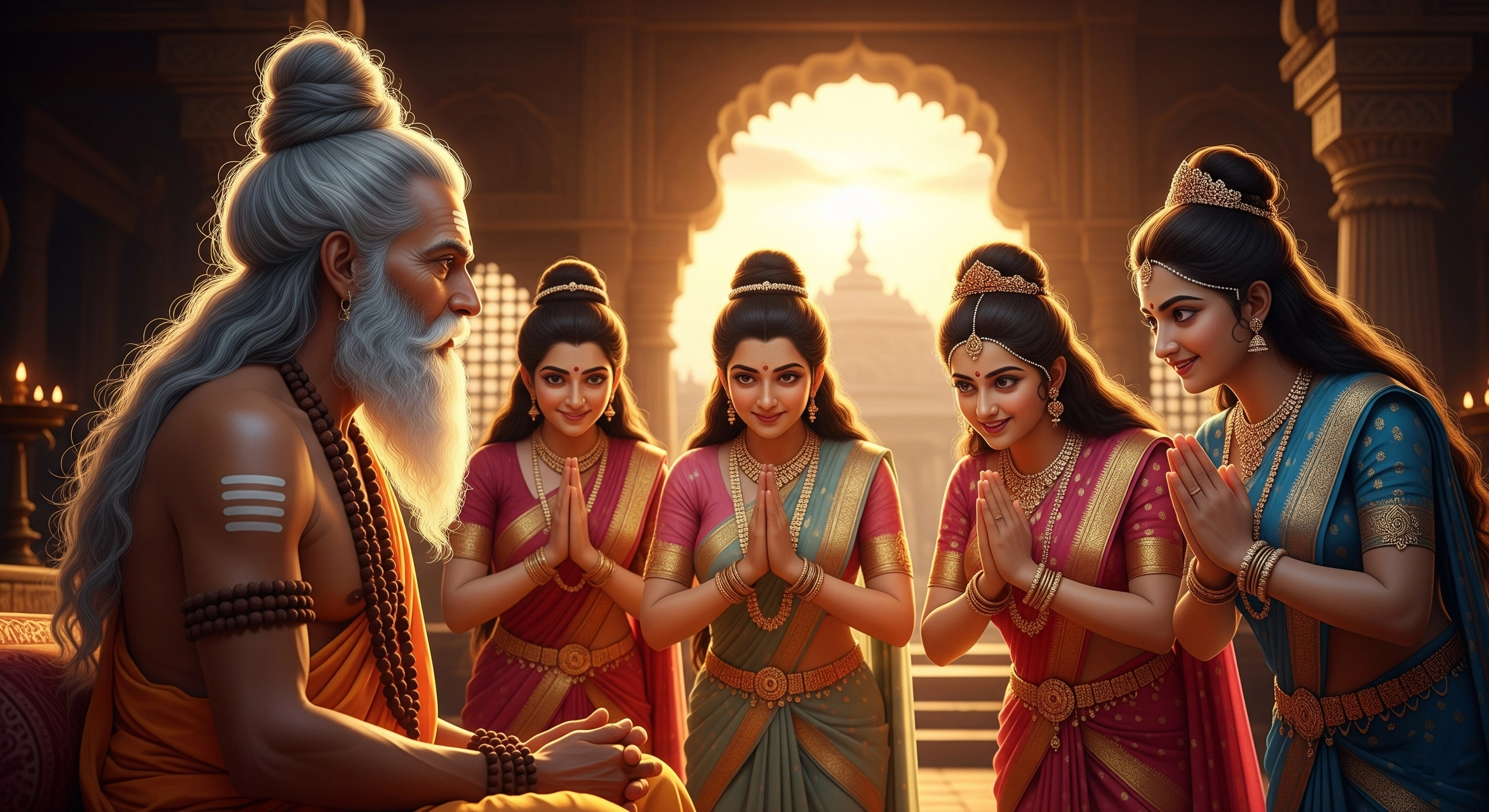
भरद्वाज द्वारा भरत का सत्कार – Sage Bhardwaj extends his hospitality to Shri Bharat
दोहा :
* राम बिरह ब्याकुल भरतु सानुज सहित समाज।
पहुनाई करि हरहु श्रम कहा मुदित मुनिराज॥213॥
भावार्थ:-मुनिराज ने प्रसन्न होकर कहा- छोटे भाई शत्रुघ्न और समाज सहित भरतजी श्री रामचन्द्रजी के विरह में व्याकुल हैं, इनकी पहुनाई (आतिथ्य सत्कार) करके इनके श्रम को दूर करो॥213॥
The Chief of Sages joyfully instructed all the divine supernatural powers, “Bharat, his younger brother Shatrughan, and their entire company are weary and heartbroken in Shri Ram’s absence. Go forth and extend your gracious hospitality to ease their sorrow and fatigue.”
चौपाई :
* रिधि सिधि सिर धरि मुनिबर बानी। बड़भागिनि आपुहि अनुमानी॥
कहहिं परसपर सिधि समुदाई। अतुलित अतिथि राम लघु भाई॥1॥
भावार्थ:-ऋद्धि-सिद्धि ने मुनिराज की आज्ञा को सिर चढ़ाकर अपने को बड़भागिनी समझा। सब सिद्धियाँ आपस में कहने लगीं- श्री रामचन्द्रजी के छोटे भाई भरत ऐसे अतिथि हैं, जिनकी तुलना में कोई नहीं आ सकता॥1॥
Riddhi and Siddhi humbly obeyed the Sage’s command, considering themselves truly blessed. The assembly of divine powers said among themselves, “Bharat, the noble younger Brother of Shri Ram, is an exceptional and incomparable guest…
* मुनि पद बंदि करिअ सोइ आजू। होइ सुखी सब राज समाजू॥
अस कहि रचेउ रुचिर गृह नाना। जेहि बिलोकि बिलखाहिं बिमाना॥2॥
भावार्थ:-अतः मुनि के चरणों की वंदना करके आज वही करना चाहिए, जिससे सारा राज-समाज सुखी हो। ऐसा कहकर उन्होंने बहुत से सुंदर घर बनाए, जिन्हें देखकर विमान भी विलखते हैं (लजा जाते हैं)॥2॥
…After bowing at the Sage’s feet, we must now act in a way that brings joy to the entire royal assembly”. Saying this, they built many splendid homes, so exquisite that even the celestial chariots felt humbled upon seeing them.
* भोग बिभूति भूरि भरि राखे। देखत जिन्हहि अमर अभिलाषे॥
दासीं दास साजु सब लीन्हें। जोगवत रहहिं मनहि मनु दीन्हें॥3॥
भावार्थ:-उन घरों में बहुत से भोग (इन्द्रियों के विषय) और ऐश्वर्य (ठाट-बाट) का सामान भरकर रख दिया, जिन्हें देखकर देवता भी ललचा गए। दासी-दास सब प्रकार की सामग्री लिए हुए मन लगाकर उनके मनों को देखते रहते हैं (अर्थात उनके मन की रुचि के अनुसार करते रहते हैं)॥3॥
Those dwellings were adorned with countless opulent items of luxury and sensual delight, so enchanting that even the Demigods felt a tinge of longing. Attentive male and female attendants brought forth all necessities, serving the guests generously and wholeheartedly, staying alert to their wishes.
* सब समाजु सजि सिधि पल माहीं। जे सुख सुरपुर सपनेहुँ नाहीं॥
प्रथमहिं बास दिए सब केही। सुंदर सुखद जथा रुचि जेही॥4॥
भावार्थ:-जो सुख के सामान स्वर्ग में भी स्वप्न में भी नहीं हैं, ऐसे सब सामान सिद्धियों ने पल भर में सजा दिए। पहले तो उन्होंने सब किसी को, जिसकी जैसी रुचि थी, वैसे ही, सुंदर सुखदायक निवास स्थान दिए॥4॥
All the comforts that one could not even dream of in Heaven were manifested within moments by the Siddhis, the divine supernatural powers. First and foremost, they offered each guest a delightful and comfortable dwelling, perfectly suited to their heart’s desire.
दोहा :
* बहुरि सपरिजन भरत कहुँ रिषि अस आयसु दीन्ह।
बिधि बिसमय दायकु बिभव मुनिबर तपबल कीन्ह॥214॥
भावार्थ:-और फिर कुटुम्ब सहित भरतजी को दिए, क्योंकि ऋषि भरद्वाजजी ने ऐसी ही आज्ञा दे रखी थी। (भरतजी चाहते थे कि उनके सब संगियों को आराम मिले, इसलिए उनके मन की बात जानकर मुनि ने पहले उन लोगों को स्थान देकर पीछे सपरिवार भरतजी को स्थान देने के लिए आज्ञा दी थी।) मुनि श्रेष्ठ ने तपोबल से ब्रह्मा को भी चकित कर देने वाला वैभव रच दिया॥214॥
Thereafter, in accordance with Sage Bhardwaj’s instructions, accommodations were offered to Bharat ji and his family. (Bharat ji’s heart longed for his citizens to be settled first, and the Sage, aware of his noble intent, fulfilled that unspoken wish). By the power of his penance, Sage Bhardwaj manifested such divine splendour that even Lord Brahma, the Creator, stood in awe.
चौपाई :
* मुनि प्रभाउ जब भरत बिलोका। सब लघु लगे लोकपति लोका॥
सुख समाजु नहिं जाइ बखानी। देखत बिरति बिसारहिं ग्यानी॥1॥
भावार्थ:-जब भरतजी ने मुनि के प्रभाव को देखा, तो उसके सामने उन्हें (इन्द्र, वरुण, यम, कुबेर आदि) सभी लोकपालों के लोक तुच्छ जान पड़े। सुख की सामग्री का वर्णन नहीं हो सकता, जिसे देखकर ज्ञानी लोग भी वैराग्य भूल जाते हैं॥1॥
When Bharat ji beheld the Sage’s divine creation, all the grandeur of the celestial Realms and the splendour of the Guardians of the Universe seemed trivial in comparison. The luxurious comfort and abundance of every item defied description. Even the wisest of Sages would forget their detachment upon witnessing such opulence.
* आसन सयन सुबसन बिताना। बन बाटिका बिहग मृग नाना॥
सुरभि फूल फल अमिअ समाना। बिमल जलासय बिबिध बिधाना॥2॥
भावार्थ:-आसन, सेज, सुंदर वस्त्र, चँदोवे, वन, बगीचे, भाँति-भाँति के पक्षी और पशु, सुगंधित फूल और अमृत के समान स्वादिष्ट फल, अनेकों प्रकार के (तालाब, कुएँ, बावली आदि) निर्मल जलाशय,॥2॥
There were plush sofas, soft beds, fine clothing, grand pavilions, serene forests and lush gardens filled with a variety of birds and animals. Fragrant blossoms, nectar-like fruits, and crystal-clear reservoirs (wells, ponds, and lakes) enhanced the beauty and charm of the divine setting.
* असन पान सुचि अमिअ अमी से। देखि लोग सकुचात जमी से॥
सुर सुरभी सुरतरु सबही कें। लखि अभिलाषु सुरेस सची कें॥3॥
भावार्थ:-तथा अमृत के भी अमृत-सरीखे पवित्र खान-पान के पदार्थ थे, जिन्हें देखकर सब लोग संयमी पुरुषों (विरक्त मुनियों) की भाँति सकुचा रहे हैं। सभी के डेरों में (मनोवांछित वस्तु देने वाले) कामधेनु और कल्पवृक्ष हैं, जिन्हें देखकर इन्द्र और इन्द्राणी को भी अभिलाषा होती है (उनका भी मन ललचा जाता है)॥3॥
The food and drinks were so pure and divine that even nectar of Heaven would find them sweeter than itself. Yet, the citizens of Ayodhya hesitated like ascetics, modest and restrained (they had been fasting for Shri Ram’s well-being and now felt shy accepting delights that even the Demigods would crave). In every dwelling stood the celestial wish-fulfilling cow, Surabhi, and the divine tree, Kalpavriksh. Their presence was so enchanting that even Lord Indra and his consort Sachi would have felt tempted.
* रितु बसंत बह त्रिबिध बयारी। सब कहँ सुलभ पदारथ चारी॥
स्रक चंदन बनितादिक भोगा। देखि हरष बिसमय बस लोगा॥4॥
भावार्थ:-वसन्त ऋतु है। शीतल, मंद, सुगंध तीन प्रकार की हवा बह रही है। सभी को (धर्म, अर्थ, काम और मोक्ष) चारों पदार्थ सुलभ हैं। माला, चंदन, स्त्री आदि भोगों को देखकर सब लोग हर्ष और विषाद के वश हो रहे हैं। (हर्ष तो भोग सामग्रियों को और मुनि के तप प्रभाव को देखकर होता है और विषाद इस बात से होता है कि श्री राम के वियोग में नियम-व्रत से रहने वाले हम लोग भोग-विलास में क्यों आ फँसे, कहीं इनमें आसक्त होकर हमारा मन नियम-व्रतों को न त्याग दे)॥4॥
It was the season of Spring, with three kinds of cool, fragrant, and soothing breezes gently flowing through the air. All four goals of life (righteousness, wealth, pleasure, and liberation) were effortlessly within reach. Garlands, sandalwood paste, graceful women, and objects of sensual delight adorned the surroundings. Witnessing this divine hospitality (born of the Sage’s immense penance) the guests were filled with both joy and sorrow (joy at the Sage’s boundless grace, and sorrow because, in a time meant for renunciation and austerity, they were being offered the very luxuries they had chosen to forgo).
दोहा :
* संपति चकई भरतु चक मुनि आयस खेलवार।
तेहि निसि आश्रम पिंजराँ राखे भा भिनुसार॥215॥
भावार्थ:-सम्पत्ति (भोग-विलास की सामग्री) चकवी है और भरतजी चकवा हैं और मुनि की आज्ञा खेल है, जिसने उस रात को आश्रम रूपी पिंजड़े में दोनों को बंद कर रखा और ऐसे ही सबेरा हो गया। (जैसे किसी बहेलिए के द्वारा एक पिंजड़े में रखे जाने पर भी चकवी-चकवे का रात को संयोग नहीं होता, वैसे ही भरद्वाजजी की आज्ञा से रात भर भोग सामग्रियों के साथ रहने पर भी भरतजी ने मन से भी उनका स्पर्श तक नहीं किया।)॥215॥
The splendour and exquisite pleasures manifested by the Sage’s penance were like a female Chakwa bird, while Bharat ji symbolized the male Chakwa. The Sage’s command became the playful act that brought them face to face. Yet, that night, Bharat ji neither glanced at the opulence nor touched any of it. Just like the Chakwa and Chakwi birds, who, even when caged together, refrain from uniting during the night. Bharat ji spent the entire night in restraint, his heart absorbed in Shri Ram, awaiting the light of dawn.
मासपारायण, उन्नीसवाँ विश्राम – Pause 19 of 30 Day Recitation
चौपाई :
* कीन्ह निमज्जनु तीरथराजा। नाई मुनिहि सिरु सहित समाजा।
रिषि आयसु असीस सिर राखी। करि दंडवत बिनय बहु भाषी॥1॥
भावार्थ:-(प्रातःकाल) भरतजी ने तीर्थराज में स्नान किया और समाज सहित मुनि को सिर नवाकर और ऋषि की आज्ञा तथा आशीर्वाद को सिर चढ़ाकर दण्डवत् करके बहुत विनती की॥1॥
At the break of dawn, Bharat ji bathed in the sacred waters of Prayag. Then, along with the entire entourage, he approached Sage Bhardwaj and bowed low at his feet. With deep reverence, he accepted the Sage’s instructions and received his blessings. Bharat ji then prostrated before him and offered numerous heartfelt and humble supplications.
* पथ गति कुसल साथ सब लीन्हें। चले चित्रकूटहिं चितु दीन्हें॥
रामसखा कर दीन्हें लागू। चलत देह धरि जनु अनुरागू॥2॥
भावार्थ:-तदनन्तर रास्ते की पहचान रखने वाले लोगों (कुशल पथप्रदर्शकों) के साथ सब लोगों को लिए हुए भरतजी त्रिकूट में चित्त लगाए चले। भरतजी रामसखा गुह के हाथ में हाथ दिए हुए ऐसे जा रहे हैं, मानो साक्षात् प्रेम ही शरीर धारण किए हुए हो॥2॥
Accompanied by wise guides and the entire company, Bharat ji set forth with his heart firmly fixed on Chitrakoot. With a surge of emotion coursing through his being, he gently held the hand of Shri Ram’s dear friend, Guh, and walked beside him, as if they were the very embodiments of pure love and devotion.
* नहिं पद त्रान सीस नहिं छाया। पेमु नेमु ब्रतु धरमु अमाया॥
लखन राम सिय पंथ कहानी। पूँछत सखहि कहत मृदु बानी॥3॥
भावार्थ:-न तो उनके पैरों में जूते हैं और न सिर पर छाया है, उनका प्रेम नियम, व्रत और धर्म निष्कपट (सच्चा) है। वे सखा निषादराज से लक्ष्मणजी, श्री रामचंद्रजी और सीताजी के रास्ते की बातें पूछते हैं और वह कोमल वाणी से कहता है॥3॥
Bharat ji walked barefoot, without shoes on his feet or an umbrella over his head. His love, self-restraint, penance, and righteousness were pure, untouched by deceit or selfishness. With deep emotion, he asked his friend Guh to recount all that had transpired during Ram ji, Lakshman ji, and Sita ji’s journey through the forest. Guh softly narrated each event, his voice gentle and filled with reverence.
* राम बास थल बिटप बिलोकें। उर अनुराग रहत नहिं रोकें॥
देखि दसा सुर बरिसहिं फूला। भइ मृदु महि मगु मंगल मूला॥4॥