
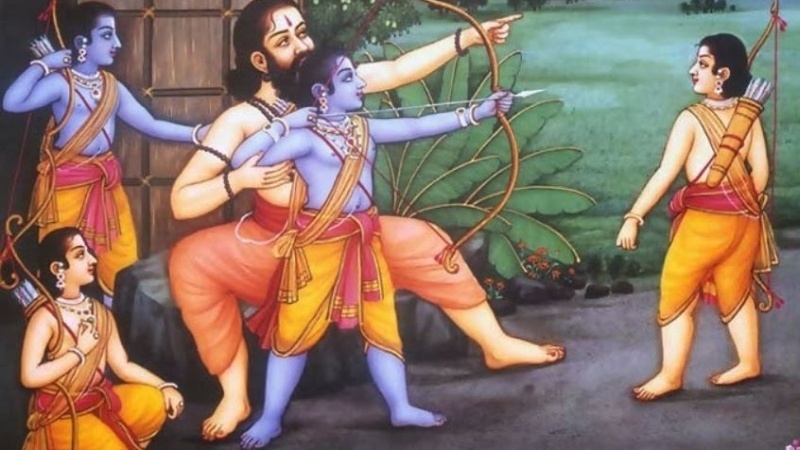
Importance of Guru in Life has been illustrated in Shri Ramcharitmanas
Guru or a Teacher has been given the highest stature in Shri Ramcharitmanas
Shri Ramcharitmanas teaches us that to achieve success at any stage of life—whether as a child, a student, a youth, a professional, a retiree, or someone in the quest for spiritual enlightenment—one requires a guru. Despite being the incarnation of God, Lord Ram, during His earthly existence, sought guidance from gurus, emphasizing the indispensable role of mentors in one’s journey.
Importance of Guru
It is the Lord himself who, in His benevolence, connects us with a good Guru. In fact, the position of Guru is considered higher than that of God, as it is only through a Guru that one can reach the Almighty.
गुरु गोविंद दोऊ खड़े काके लागू पाय बलिहारी गुरु आपकी गोविंद दियो बताए
This couplet, attributed to the revered saint Kabirdas ji, underscores the profound reverence for the Guru in spiritual practice. Kabirdas ji expressed that if faced with the presence of both His Guru and the Lord, he would first bow to His Guru, as it was through the Guru’s guidance that he attained connection with the Divine.
Before embarking on the composition of the holy scripture Shri Ramcharitmanas, Tulsidas ji initiates with paying homage to the Trinity – Lord Hari, Lord Shiv (His first Guru), and Brahma ji. Subsequently, he acknowledges the Saints and the Brahmins. It’s important to note that “Brahmins” in this context refers not to a specific clan but rather to individuals who are deeply immersed in contemplation of the Divine (Brahm). These saintly souls engage in constant chanting and meditation on the Lord in all aspects of their lives, whether working, eating, or sleeping.
Guru is considered above the Lord in the Hindu Sanatan Dharam (Eternal Religion) philosophy.
According to our scriptures, Lord Krishna is described as the universal guru, while Lord Shiv is hailed as the guru of the three worlds. In essence, there is no distinction between Lord Shiv and Lord Narayan (Lord Krishna or Lord Ram, who are avatars of Narayan).
In the journey of life, one encounters various gurus. Initially, the mother and father serve as the first gurus of a child, guiding and nurturing them. As the child grows, teachers at school become gurus, imparting knowledge and wisdom. Similarly, in the professional sphere, a boss can also play the role of a guru, providing guidance and mentorship. In essence, a guru is always someone who leads and inspires a student to excel in their endeavors.
One of the avatars of Narayan bhagwan is Lord Dattatreya who made 24 gurus in His life from nature’s creation.
In Shri Ramcharitmanas, the role and blessings of gurus are mentioned extensively. Lord Ram’s gurus, Vashishth ji and Vishwamitra ji, are revered for their guidance. Additionally, the guru of Goddess Parvati, Narad ji, and the gurus of other notable figures such as Kak Bhasundi ji, Sage Sutikshan, Rishi Agastya ji, and Mata Shabri, are also highlighted, emphasizing the significant influence of gurus in the lives of devotees.
Finding a Guru in Life
Finding a good guru in life is indeed a blessing bestowed by the Lord. While it’s true that one may actively seek out a guru, it’s also possible for a guru to come to a disciple. The belief that Krishna and Shiv are universal gurus suggests that the Divine facilitates the connection between a seeker and a guru. Therefore, it is believed that the almighty manifests as a guru in the lives of devotees, often appearing in the form of a person to guide and enlighten them.
The Universal guru
Hindu scriptures have described Lord Krishna (an avatar of Lord Narayan like Lord Ram) as a universal guru and Lord Shiv as a guru of three worlds. Krishna is the teacher who taught, in Bhagavad Gita, the basic principles of life.
कृष्णं वन्दे जगत गुरुं
Meaning: Salutations to Sri Krishna, the Guru of the entire universe.
Guru of the Three Worlds
Lord Shiv is revered as the Guru not only of this world but also of all three worlds in our universe. He was pleased by the innocent inquiries of Goddess Parvati when she sought to understand the nature of Lord Ram and how He could embody both Nirgun (formless) Brahm and Sagun (as an avatar of Lord Narayan in human form). In response to Her questions, Lord Shiv began narrating the entire Ramcharitmanas to provide Her with answers and insights.
तुम्ह त्रिभुवन गुर बेद बखाना। आन जीव पाँवर का जाना॥
प्रस्न उमा कै सहज सुहाई। छल बिहीन सुनि सिव मन भाई॥
Meaning: The Vedas have proclaimed you as the guru of the three worlds. What sinful being would be aware of this? Lord Shiv’s heart was greatly pleased to hear Parvati’s beautiful and sincere question, devoid of any deceit.
Guru (Teacher) has been Glorified throughout Shri Ramcharitmanas
Here are some instances:
Lord Ram as Shiv ji’s Guru
After the loss of His is first wife, Sati, Lord Shiv became an ascetic for many years. Sati was later reborn as Goddess Parvati. Lord Ram appeared before Lord Shiv and requested Him to marry Parvati ji, who was undergoing penance to win Lord Shiv’s hand in marriage. Despite being perpetually devoted to asceticism and meditation on His supreme Lord Ram, Lord Shiv initially showed reluctance to marry. However, upon Lord Ram’s insistence, Lord Shiv uttered the following words:
मातु पिता गुर प्रभु कै बानी। बिनहिं बिचार करिअ सुभ जानी॥
तुम्ह सब भाँति परम हितकारी। अग्या सिर पर नाथ तुम्हारी॥
Meaning: The words of mother, father, guru, and master should be regarded as auspicious without any hesitation. You are my ultimate benefactor in every aspect of life. Lord, Your command rests upon my head.
Goddess Parvati ji and Her Guru Narad ji
Narad ji, who is Goddess Parvati’s guru, instructed Her to undertake penance and meditate upon Her beloved Lord Shiv in order to win His acceptance as His wife. Parvati underwent rigorous penance for more than four thousand years in the Himalayas. At the culmination of Her penance, the great Seven Sages approached Parvati and, to test Her devotion, began dissuading Her from Her primary goal, urging Her to not marry the ascetic Lord Shiv. Despite hearing their harsh words about Lord Shiv, Parvati remained steadfast in Her penance, refusing to give up Her pursuit of Her guru Narad’s advice. She conveyed Her determination to the great Seven Sages with these words:
नारद बचन न मैं परिहरऊँ। बसउ भवनु उजरउ नहिं डरउँ॥
गुर कें बचन प्रतीति न जेही। सपनेहुँ सुगम न सुख सिधि तेही॥
Meaning: Therefore, I shall not abandon the words of Narad ji, whether my home prospers or falls into ruin, I fear it not. For those who lack faith in the words of their guru, happiness and success are not easily attained, not even in their dreams.
King Pratap Bhanu glorifies Guru
Then King Pratap Bhanu also emphasized the power of Brahmin (one who is constantly immersed in thoughts of Brahm) and Guru in the following verse:
सत्य नाथ पद गहि नृप भाषा। द्विज गुर कोप कहहु को राखा॥
राखइ गुर जौं कोप बिधाता। गुर बिरोध नहिं कोउ जग त्राता॥
Meaning: Pratapbhanu grasped the feet of the sage and spoke, “O’ Lord, indeed that is true. Who can shield a person from the wrath of a Brahmin or a guru? When the creator is angered, it is the guru who provides protection. However, if one opposes a guru, there is no one on this earth who can save them.”
King Dashrath and his Guru Vashishth ji
One should withhold no secrets from a guru. The guidance of a guru assists a devotee in overcoming any challenging situation in life. King Dashrath, who had been childless for a long time, sought the counsel of his guru Vashishth. Through the blessings and the application of both scientific and spiritual methods recommended by his guru, Lord Dashrath was blessed with four beautiful sons: Shri Ram, Shri Lakshman, Shri Bharat, and Shri Shatrughan.
निज दुख सुख सब गुरहि सुनायउ। कहि बसिष्ठ बहुबिधि समुझायउ॥
धरहु धीर होइहहिं सुत चारी। त्रिभुवन बिदित भगत भय हारी॥
Meaning: King Dashrath confided in Guru Vashishth about all his joys and sorrows. Guru Vashishth provided him with solace in numerous ways and reassured him, saying, “Please be patient. You will have four sons who will be renowned in all three worlds (earth, heaven, and the subterranean region). They will alleviate the fears of devotees.”
Lord Ram and His Guru Vashith ji
Lord Ram when growing up was an ideal son. He and His brothers bow to parents and guru ji every day and do all acts after taking their permission.
प्रातकाल उठि कै रघुनाथा। मातु पिता गुरु नावहिं माथा॥
आयसु मागि करहिं पुर काजा। देखि चरित हरषइ मन राजा॥
Meaning: Lord Ram wakes up early in the morning and humbly bows His head before His parents and His guru, seeking their blessings before attending to the affairs of the kingdom. He respectfully seeks permission from them before proceeding with His duties. King Dasharath is deeply pleased by Ram ji’s exemplary character and conduct.
Lord Ram and Lakshman and their Guru Vishwamitra ji
Lord Ram and Lakshman ji exemplify the qualities of devoted disciples. Throughout Their journey with Guru Vishwamitra, They would massage Their guru’s feet after a long day of travel and service, and They would only retire to Their quarters once Their guru had fallen asleep.
तेइ दोउ बंधु प्रेम जनु जीते। गुर पद कमल पलोटत प्रीते॥
बार बार मुनि अग्या दीन्ही। रघुबर जाइ सयन तब कीन्ही॥
Meaning: Both the brothers (Lord Ram and Lakshman ji) who are won by selfless love are lovingly pressing the lotus feet of Their Guru. When the sage gives orders repeatedly, only then finest of Raghu dynasty, Lord Shri Ram, finally retire to rest.
Lord Ram and Guru Vishwamitra ji
Lord Ram ji, following in the footsteps of His father King Dashrath, never hesitated to inform His gurus of any significant events occurring in His life. When He first beheld His prospective wife, Goddess Sita, He promptly shared all the details with His guru. The guru serves as a guiding star for all the events, whether good or bad, that unfold in a disciple’s life.
हृदयँ सराहत सीय लोनाई। गुर समीप गवने दोउ भाई॥
राम कहा सबु कौसिक पाहीं। सरल सुभाउ छुअत छल नाहीं॥
Meaning: Ram ji appreciates Sita’s beauty in His heart, later both the brothers went to Their Guru. Lord Ram told everything to Sage Vishwamitra, because He has a simple nature, deceit does not even touch Him.
When Sita ji’s marriage event, where a competition was held to find a suitable groom, was underway, Lord Ram ji rose to break Lord Shiv’s bow only after receiving instructions from His guru. This underscores the belief that seeking the blessings and guidance of one’s guru is essential for the success of any auspicious act.
सुनि गुरु बचन चरन सिरु नावा। हरषु बिषादु न कछु उर आवा॥
ठाढ़े भए उठि सहज सुभाएँ। ठवनि जुबा मृगराजु लजाएँ॥
Meaning: Hearing the words of the Guru, Lord Ram bowed His head at the guru’s feet. There was neither joy nor sadness in His heart, and He stood up naturally and gracefully that would put even a young lion to shame.
Lord Ram talks about importance of Guru to His devotee Mata Shabri
When Ram ji met mata Shabri, upon asking about Navda bhakti (nine-fold devotion), Ram ji explained that serving once guru’s feet is one of the nine-folds bhakti.
गुर पद पंकज सेवा तीसरि भगति अमान।
चौथि भगति मम गुन गन करइ कपट तजि गान॥
Meaning: The third devotion (of the nine types of devotion) is to serve the lotus feet of the guru without any pride and the fourth devotion is to give up deceit and sing of God’s virtues.
Lord Ram glorifies Guru to Vibhishan
To Vibhishan ji Lord Ram explains the importance of devotion in the feet of a guru and a Brahmin in the following verse:
कवच अभेद बिप्र गुर पूजा।
एहि सम बिजय उपाय न दूजा॥
Meaning: Prayers to Brahmin and Guru is like in piercing armour that protects a person. There is no other way for a person to win in this battle of life.
Kakbhashundi ji explains importance of Guru to Garud ji
Even Kakbhashundi ji explain the importance of Guru to the King of Birds, Garud ji, in the following verse:
बिनु गुर होइ कि ग्यान ग्यान कि होइ बिराग बिनु।
गावहिं बेद पुरान सुख कि लहिअ हरि भगति बिनु॥
Meaning: Can there be any knowledge without a guru? Or can there be knowledge anywhere without detachment? Vedas and Puranas proclaim this. What happiness can be attained without devotion to Shri Hari (Lord Ram)?
After gaining the prime knowledge of love for the lotus feet of Guru and Lord Shri Ram, Kak Bhasundi says:
गुर बिनु भव निध तरइ न कोई। जौं बिरंचि संकर सम होई॥
संसय सर्प ग्रसेउ मोहि ताता। दुखद लहरि कुतर्क बहु ब्राता॥
Meaning: Without a Guru, no one can cross the ocean of birth and death, even if they possess qualities like Lord Brahma or Lord Shiv. Garud ji lamented, stating that he had been bitten by a snake in the form of doubt. Just as venom causes painful sensations, Garud ji experienced numerous agonizing sensations in his body in the form of illogical and sorrowful thoughts.
A Word of Caution when choosing a Guru in life
A word of caution here, when choosing a guru in life you have to be very careful. There are many cheaters and impostors posing as gurus out there in our present age of Kaliyug and instead of giving any benefits can give a lot of pain and agony.
This has also been seen in Shri Ramcharitmanas when one of the kings Raja Pratap Bhanu chose a wrong guru and had to suffer not only in this but in his next life also.
In Shri Ramcharitmanas Uttar Kaand, Kakbhashundi talks about the present age of Kaliyug. If we read some of these verses, we can see that so much of this is already ringing true in our present day world.
If you are looking for an ideal guru in today’s world, tread carefully and choose one carefully. Even a guru should keep vigilant when dealing with his disciples.
Learn more about the Importance of Guru as described in the Baal Kaand.
A guru who should be discarded
Having unwavering faith and trust in the words of the Guru is paramount for attaining success in life. Similarly, it is the Guru’s foremost duty to guide their disciple along the path of righteousness at all times, serving as the intermediary between the disciple and the Divine. A Guru who opposes the Divine should be respectfully released from their role.
There are many examples of this in the Ramcharitmanas. Bharat ji let go of His mother Kaikeyi (who is considered as the first Guru in life), when she went against Lord Ram and instructed Him to go to the forest for 14 years. Vibhishan let go of his Guru-like elder brother – Ravan, when Ravan refused to acknowledge Lord Ram as God, refused to respectfully release Sita ji whom he had kidnapped, and instead chose to go to war with Lord Ram. There is one other example of demon King Bali, who let go of his Guru – Shukracharya, when he stops Bali from worshipping Lord Vishnu.