
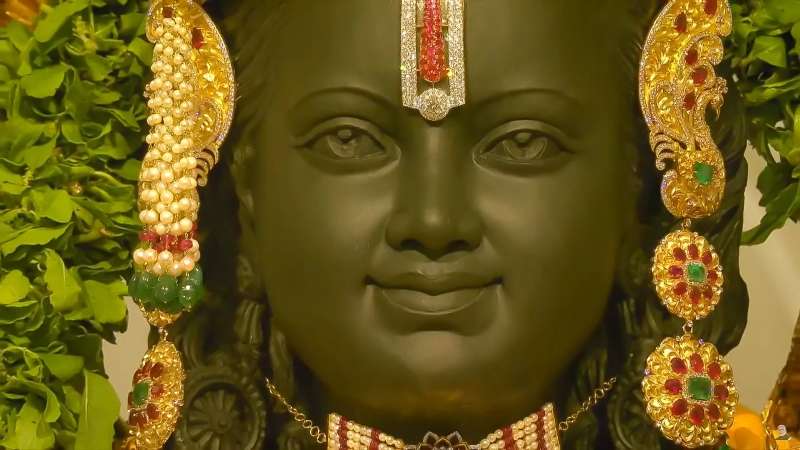
The Heritage of Lord Ram Ingrained in the Vision of a New Era for India
Lord Ram’s Everlasting Impact on the Indian Identity
Lord Ram has always been ingrained in the cultural fabric of the Indian Subcontinent. Now, with the construction of a monumental temple commemorating his birthplace, the spirit of every patriotic Indian is uplifted.
On January 22, 2024, a grand celebration marked the 500th anniversary of Lord Ram’s return, signaling the dawn of a new era. The establishment of Shri Ram’s temple is akin to a seal of approval from destiny, indicating the commencement of a new phase in Bharat’s (India’s) progress as a global leader.
In this era, other nations will glean valuable lessons from Bharat and its people, understanding the profound values they hold for humanity.
The fundamental principle of being a true Bhartiya or Indian is to recognize the divine in all and bow to them with reverence. As eloquently portrayed in the ‘Salutations to all living beings’ episode of BaalKaand in Shri Ramcharitmanas:
सीय राममय सब जग जानी। करउँ प्रनाम जोरि जुग पानी॥1॥
All living creatures are part and parcel of the Supreme Lord Shri Ram and Sita ji. I bow to all of them with folded hands.
Shri Ram’s Temple in Ayodhya Poised to become the Top Destination in India
Many Indians express a strong desire to see Lord Ram’s temple in Ayodhya become the most favoured destination in India, surpassing the once-popular tourist attraction, the Taj Mahal. This sentiment is rooted in the acknowledgment that while the Taj Mahal boasts remarkable architectural beauty and stands as a testament to Mughal architecture, it is essential to consider the historical context. The Mughals, as invaders, brought pain through the killing and forced conversions of people. Notably, many Mughal emperors ascended to the throne through familial conflicts, involving fights against siblings or fathers.
In contrast, Lord Ram’s character embodies qualities that stand in stark opposition to this tumultuous history.
Shri Ram’s exemplary character is a beacon of virtue, showcasing qualities such as humility, truthfulness, compassion, respect, forgiveness, courage, generosity, self-discipline, austerity, patience, allegiance, dedication, devotion, loyalty, and diligence.
His life story serves as an abundant source of inspiration, encouraging us to integrate these virtues into our own lives for personal growth and spiritual development.
It is inherent in nature that visiting a cursed place or associating with negativity or unwise individuals leads to a decline, while visiting holy places and associating with saintly individuals fosters progress in life.
In the Baalkaand, this notion is explored in the episode: Contrast between saints and evil-minded people.
Heralding a new era for India, a Torchbearer for Global Leadership
India is not merely a developing country; it has emerged as a formidable force that commands recognition and respect from developed nations. Across diverse fields such as science, medicine, engineering, telecom, technology, and information technology, India stands at the forefront, poised for even greater growth.
Initiatives like Chandrayaan, a series of lunar exploration missions, and Aditya-L1, a spacecraft designed for studying the solar atmosphere, both developed by the Indian Space Research Organisation (ISRO), underscore India’s progress in areas where no other nation has ventured before.
The “Make in India” campaign is a testament to India’s self-sufficiency and prowess. The outcomes of this campaign showcase the country’s capability to produce and innovate independently, marking a significant stride towards self-reliance and global recognition.
One Unified Bharat: Beyond Caste and Religion, a Vision of Unity
The government led by Mr. Modi has played a significant role in advancing India to its current stage of development. Unlike some previous administrations that focused on divisive politics, today’s Indians are often regarded as discerning and understanding of their best interests.
Many appreciate Mr. Modi’s policies for being perceived as fair to everyone, with no discrimination based on religion, caste, and other factors.
While there are opinions suggesting that Mr. Modi aims to transform India into a Hindu state from a secular state, such claims are often deemed untrue.
Hinduism, viewed by many as not merely a religion but a way of life, is grounded in the principles of the Ramayan or Shri Ramcharitmanas.
These principles entail equality and respect for all beings, extending beyond humans to encompass all living entities, irrespective of size or form.
This perspective challenges the notion that the government’s actions are intended to convert India into a Hindu state, emphasizing the inclusive and diverse nature of the country’s cultural and religious fabric.
The Hindu Rashtra (Kingdom)
The establishment of Ram’s kingdom hinges on the utmost importance, mental purity. When a leader forsakes his ego, focusing on the dignity and needs of the impoverished, when the universal emperor (Shri Ram) embraces a poor and marginalized individual (Nishad), honouring him in his palace, then Ram Rajya will effortlessly be established. The actions of India’s successful Prime Minister, Shri Modi, such as washing the feet of sanitation workers, personally showering flowers on labourers, interacting with beneficiaries of government schemes, and visiting their homes, are steps towards establishing Ram Rajya. Only a person imbued with mental purity can perform such deeds.
In his speech at the consecration ceremony of the Ram temple in Ayodhya, Mr. Modi talked about the dawn of a new era for India. However, it doesn’t signify a shift to an entirely Hindu state. Instead, it symbolizes a commitment to embracing the principles of love, acceptance, and inclusion, following in the footsteps of Lord Ram. As Mr. Modi aptly stated, “Ram belongs to everyone.”
In today’s Bharat, no religion, group, or sect needs to fear exclusion or mistreatment. All are considered equal, contributing to the unity of India.
The collective consciousness of millions of Indians, both within the country and around the world, is at peace, jubilant, proud, and hopeful for a bright and flourishing India, akin to the prosperity of Ram Rajya when Lord Ram returned to Ayodhya after His exile. The happiness extends beyond just the Hindu community; people of various faiths are content, viewing the event as the delivery of justice and the initiation of a new era.
The profound epic Shri Ramcharitmanas, or simply Manas, plays a significant role in cultivating love for the Divine. It promotes recognizing the divine essence in all beings and underscores the importance of treating them with respect and equality. The Manas also imparts invaluable lessons on navigating relationships within families, friends, nations and society at large.
Significance of 500 years
Some criticize the construction of the Ram temple on ruins of a mosque. But they have heard only half-baked truth. It is well known that Ayodhya is the birth place of Lord Ram and Lord Ram is synonymous with Bharat or India. Now why any hue or cry or concern if the Lord’s temple has been built where it was always meant to be? With science-based evidence it has been proven that Lord Ram’s temple existed on the site, which was demolished by invaders who installed the Babri Masjid on the same site. The idols of Lord Ram and other Gods were placed in tents for almost 500 years.
There was a long drawn court battle to prove that the site rightfully belongs to Lord Ram, and after years of emotional suffering and waiting, now the temple has finally been built and the Lord has returned to His original home as Ram Lalla (Lord Ram as a child). The joy, pomp and show celebrations are similar to how Ayodhya had celebrated Lord Ram’s return after 14 years from His exile. Only now it is on a much grander scale for it is after 500 years.
A Reflection of Lord Ram’s Treta Era Rajya: The Blueprint for an ideal Hindu Rashtra (Kingdom)
Here are a few lines from the Uttarkaand, the final chapter of Shri Ramcharitmanas which talks about the glory of the Kingdom when Shri Ram returns to Ayodhya and is enthroned as the King. The Treta era was a period of truth, righteousness, self-confidence, discipline, abundance, harmony, self-sufficiency, compassion, altruism, equality, devotion and happiness all across Bharat.
दोहा :
* बरनाश्रम निज निज धरम निरत बेद पथ लोग।
चलहिं सदा पावहिं सुखहि नहिं भय सोक न रोग॥
भावार्थ:-सब लोग अपने-अपने वर्ण और आश्रम के अनुकूल धर्म में तत्पर हुए सदा वेद मार्ग पर चलते हैं और सुख पाते हैं। उन्हें न किसी बात का भय है, न शोक है और न कोई रोग ही सताता है॥
In Lord Ram’s Kingdom, society was organized into four primary categories, with each person happily performing their duties and roles as outlined in the Vedas and Scriptures. These categories included the Brahmins, who served as priests, teachers, and intellectuals; the Kshatriyas, who were warriors, kings, and administrators; the Vaishyas, who worked as agriculturalists, traders, and farmers; and the Shudras, who were workers, labourers, and artisans. In addition to this social structure, individuals followed a life path divided into four stages: beginning with student life, progressing to married life, transitioning to asceticism, and finally reaching the stage of renunciation. Walking on the path of righteousness, people lived happily without any fear, sorrow or diseases.
चौपाई :
* दैहिक दैविक भौतिक तापा। राम राज नहिं काहुहि ब्यापा॥
सब नर करहिं परस्पर प्रीती। चलहिं स्वधर्म निरत श्रुति नीती॥
भावार्थ:-‘रामराज्य’ में दैहिक, दैविक और भौतिक ताप किसी को नहीं व्यापते। सब मनुष्य परस्पर प्रेम करते हैं और वेदों में बताई हुई नीति (मर्यादा) में तत्पर रहकर अपने-अपने धर्म का पालन करते हैं॥
In Lord Ram’s Kingdom, no one suffered from the three types of afflictions: physical and mental ailments such as illness and stress, natural disasters including wind, storms, floods, frost, and thunderstorms, and disturbances from various beings such as plants, animals, birds, snakes, mosquitoes, pests, or even ghosts and spirits. All men and women were affectionate towards one another and each followed their prescribed duties, adhering to the rules set forth by the Vedas.
* चारिउ चरन धर्म जग माहीं। पूरि रहा सपनेहुँ अघ नाहीं॥
राम भगति रत नर अरु नारी। सकल परम गति के अधिकारी॥
भावार्थ:-धर्म अपने चारों चरणों (सत्य, शौच, दया और दान) से जगत् में परिपूर्ण हो रहा है, स्वप्न में भी कहीं पाप नहीं है। पुरुष और स्त्री सभी रामभक्ति के परायण हैं और सभी परम गति (मोक्ष) के अधिकारी हैं॥
Righteousness, upheld by its four pillars of truth, purity, compassion, and charity, prevailed throughout the world. Not even in dreams was there any trace of sin. All men and women were devoted to the worship of Shri Ram and were deemed worthy of liberation.
* अल्पमृत्यु नहिं कवनिउ पीरा। सब सुंदर सब बिरुज सरीरा॥
नहिं दरिद्र कोउ दुखी न दीना। नहिं कोउ अबुध न लच्छन हीना॥
भावार्थ:-छोटी अवस्था में मृत्यु नहीं होती, न किसी को कोई पीड़ा होती है। सभी के शरीर सुंदर और निरोग हैं। न कोई दरिद्र है, न दुःखी है और न दीन ही है। न कोई मूर्ख है और न शुभ लक्षणों से हीन ही है॥
No one died young, and no one suffered from any kind of pain. Everyone was beautiful, with bodies free from ailments. There was no poverty, sadness, or misery, and no one was dull-witted or lacking in good qualities.
*सब निर्दंभ धर्मरत पुनी। नर अरु नारि चतुर सब गुनी॥
सब गुनग्य पंडित सब ग्यानी। सब कृतग्य नहिं कपट सयानी॥
भावार्थ:-सभी दम्भरहित हैं, धर्मपरायण हैं और पुण्यात्मा हैं। पुरुष और स्त्री सभी चतुर और गुणवान् हैं। सभी गुणों का आदर करने वाले और पण्डित हैं तथा सभी ज्ञानी हैं। सभी कृतज्ञ (दूसरे के किए हुए उपकार को मानने वाले) हैं, कपट-चतुराई (धूर्तता) किसी में नहीं है॥
Everyone was free from false pride and followed the path of righteousness. All men and women were expert scholars and possessed admirable qualities. They recognized the merits of others, were learned and wise, and acknowledged the services and benefits they received. There was no cunning or deceit among them.
* सब उदार सब पर उपकारी। बिप्र चरन सेवक नर नारी॥
एकनारि ब्रत रत सब झारी। ते मन बच क्रम पति हितकारी॥
भावार्थ:-सभी नर-नारी उदार हैं, सभी परोपकारी हैं और ब्राह्मणों के चरणों के सेवक हैं। सभी पुरुष मात्र एक पत्नीव्रती हैं। इसी प्रकार स्त्रियाँ भी मन, वचन और कर्म से पति का हित करने वाली हैं॥
Everyone in Lord Ram’s Kingdom is benevolent and generous. Men and women are devoted to the service of Brahmins. Every husband is committed to a vow of monogamy, and the wives are equally devoted to their husbands in thought, word, and deed.
चौपाई :
* फूलहिं फरहिं सदा तरु कानन। रहहिं एक सँग गज पंचानन॥
खग मृग सहज बयरु बिसराई। सबन्हि परस्पर प्रीति बढ़ाई॥
भावार्थ:-वनों में वृक्ष सदा फूलते और फलते हैं। हाथी और सिंह (वैर भूलकर) एक साथ रहते हैं। पक्षी और पशु सभी ने स्वाभाविक वैर भुलाकर आपस में प्रेम बढ़ा लिया है॥
The forests blossomed, and trees bore fruit year-round. Elephants and lions roamed together, while animals and birds of every kind moved about freely, setting aside their natural animosities and forming friendly relationships with one another.
* कूजहिं खग मृग नाना बृंदा। अभय चरहिं बन करहिं अनंदा॥
सीतल सुरभि पवन बह मंदा। गुंजत अलि लै चलि मकरंदा॥
भावार्थ:-पक्षी कूजते (मीठी बोली बोलते) हैं, भाँति-भाँति के पशुओं के समूह वन में निर्भय विचरते और आनंद करते हैं। शीतल, मन्द, सुगंधित पवन चलता रहता है। भौंरे पुष्पों का रस लेकर चलते हुए गुंजार करते जाते हैं॥
Many types of birds sang sweet melodies, while various groups of animals roamed the woods in distinct herds, moving about fearlessly and joyfully. A calm, fragrant, and cool breeze blew, while bumblebees, laden with nectar, hummed as they moved from flower to flower.
* लता बिटप मागें मधु चवहीं। मनभावतो धेनु पय स्रवहीं॥
ससि संपन्न सदा रह धरनी। त्रेताँ भइ कृतजुग कै करनी॥
भावार्थ:-बेलें और वृक्ष माँगने से ही मधु (मकरन्द) टपका देते हैं। गायें मनचाहा दूध देती हैं। धरती सदा खेती से भरी रहती है। त्रेता में सत्ययुग की करनी (स्थिति) हो गई॥
The creepers and trees released honey upon request, and cows provided milk to one’s heart’s content. The Earth was perpetually lush with crops. The virtues of the Satya Yug prevailed in the Treta Yug under Lord Ram’s rule.
* प्रगटीं गिरिन्ह बिबिधि मनि खानी। जगदातमा भूप जग जानी॥
सरिता सकल बहहिं बर बारी। सीतल अमल स्वाद सुखकारी॥
भावार्थ:-समस्त जगत् के आत्मा भगवान् को जगत् का राजा जानकर पर्वतों ने अनेक प्रकार की मणियों की खानें प्रकट कर दीं। सब नदियाँ श्रेष्ठ, शीतल, निर्मल और सुखप्रद स्वादिष्ट जल बहाने लगीं॥
Recognizing that the ruler of the Earth was none other than the Universal Soul, the mountains revealed various mines of precious stones and gems. All the rivers flowed with cool, pure, and pleasant tasting water.
* सागर निज मरजादाँ रहहीं। डारहिं रत्न तटन्हि नर लहहीं॥
सरसिज संकुल सकल तड़ागा। अति प्रसन्न दस दिसा बिभागा॥
भावार्थ:-समुद्र अपनी मर्यादा में रहते हैं। वे लहरों द्वारा किनारों पर रत्न डाल देते हैं, जिन्हें मनुष्य पा जाते हैं। सब तालाब कमलों से परिपूर्ण हैं। दसों दिशाओं के विभाग (अर्थात् सभी प्रदेश) अत्यंत प्रसन्न हैं॥
The oceans stayed within their bounds and scattered jewels on the shores for people to collect. The ponds were filled with lotuses, and all the ten directions and quarters were filled with extreme bliss.
दोहा :
*बिधु महि पूर मयूखन्हि रबि तप जेतनेहि काज।
मागें बारिद देहिं जल रामचंद्र कें राज॥
भावार्थ:-श्री रामचंद्रजी के राज्य में चंद्रमा अपनी (अमृतमयी) किरणों से पृथ्वी को पूर्ण कर देते हैं। सूर्य उतना ही तपते हैं, जितने की आवश्यकता होती है और मेघ माँगने से (जब जहाँ जितना चाहिए उतना ही) जल देते हैं॥
During Lord Ram’s reign, the Moon filled the Earth with its light, and the Sun provided just the right amount of warmth. The clouds showered the right amount of rain, where needed, at a mere request.
* सब कें गृह गृह होहिं पुराना। राम चरित पावन बिधि नाना॥
नर अरु नारि राम गुन गानहिं। करहिं दिवस निसि जात न जानहिं॥
भावार्थ:-सबके यहाँ घर-घर में पुराणों और अनेक प्रकार के पवित्र रामचरित्रों की कथा होती है। पुरुष और स्त्री सभी श्री रामचंद्रजी का गुणगान करते हैं और इस आनंद में दिन-रात का बीतना भी नहीं जान पाते॥
Everywhere, in every household, people recited the Scriptures and the various holy exploits of Shri Ram. Men and women sang praises of Lord Ram’s virtues, and days and nights passed without anyone noticing the passage of time.
दोहा :
* अवधपुरी बासिन्ह कर सुख संपदा समाज।
सहस सेष नहिं कहि सकहिं जहँ नृप राम बिराज॥
भावार्थ:-जहाँ भगवान् श्री रामचंद्रजी स्वयं राजा होकर विराजमान हैं, उस अवधपुरी के निवासियों के सुख-संपत्ति के समुदाय का वर्णन हजारों शेषजी भी नहीं कर सकते॥
The bliss and grandeur of the citizens of Ayodhya, where Lord Ram reigned as King, was so immense that even thousands of Lord Shehsas, each with a thousand mouths, could not fully describe them.
राजघाट सब बिधि सुंदर बर। मज्जहिं तहाँ बरन चारिउ नर॥
Rajghat (the royal river bank) is beautiful and excellent in every way, where men of all four varnas take bath.
The description of Lord Ram’s kingdom is perhaps one of the most important and empowering texts, illustrating unity, harmony, and collaboration among all citizens, regardless of their social class or line of work.
Lord Ram’s Exemplary Conduct: A Blueprint for a New Era for India
The concepts of equality have been explored in many other episodes of Shri Ramcharitmanas. Shri Ram bestowed the honour and respect of a father upon the vulture Jatayu by personally performing his last rites. He held Hanuman ji in high regard as His devotee, treating him with the same respect as His own brothers Lakshman ji and Bharat ji. Lord Ram formed a friendship with Guh, a tribal, treating him as if he were one of His own brothers. Additionally, Lord Ram affectionately consumed the half-eaten fruits offered by Shabri, a tribal woman, displaying a profound connection as if she were His own mother.
These actions collectively illustrate the qualities of compassion, inclusivity, and reverence that define a virtuous human being, as exemplified by Lord Ram.
Lord Ram’s return made Ayodhya Prosper then, and now it will herald a new era for India or Hindu Rashtra (Kingdom)
The majority of the people of India stand united in the belief that the return of Lord Ram as Ram Lalla to His rightful birthplace after 500 years, is similar to the return of Lord Ram to Ayodhya after an exile of 14 years.
The above description from Uttarkaand about the glories of Ayodhya and Bharat or Ram Rajya (Lord Ram’s rule) once Lord Ram was enthroned as King upon His return, forms the basis of the vision of Mr. Modi’s government for India, now that Ram Lalla has been installed in His rightful place.
Ram Lalla has ignited not just a vision but also a mission, a purpose, a drive amongst Indians to make India as glorious as possible. The blue print of Hindu Rashtra (Hindu Kingdom) aims at bringing India as close to Ram Rajya, as possible, acknowledging the fact that we are living in an entirely different era. It also acknowledges the fact that multiple religions exist and flourish in India.
The vision of Ram Rashtra does not aim at promoting or enforcing Hinduism as a religion, it aims at growth, peace, prosperity, strength and forward thinking for India, collectively with all it’s citizens, regardless of gender, caste and religion.
All of this is can be built or achieved only on a strong foundation. And that strong footing is provided by Hinduism, or the principles followed by Shri Ram. One does not have to be a Hindu to practice or imbibe these virtues or qualities, for more than religion, Hinduism is a way of life.
We talked about the qualities of Lord Ram and the subtle messages propounded in Shri Ramcharitmanas. Now only if all Indians can unite by putting away their individual, religious or sectarian bias and not attach any ulterior motives behind the vision of a Hindu Rashtra, we will see Shri Ram for His values, and what India can be by following His values.
If we draw parallels with Ram Rajya, the ideals in Hindu Rashtra could include healthy and harmonious relationships across all faiths and religions, unity, righteousness, gender equality, justice, devotion, reduction of poverty, reduction of crime, literacy drive, a crackdown on corruption, judicious use of natural resources, protection of biodiversity, expansion and growth across all sectors, strength as an autonomous state, power as a nation which will not bow down to external enemies.
To be successful as a nation or to be achieve the vision of a Hindu Rashtra, the collective mindset should be to respect one another, empower each citizen, work together, and allow India to grow and prosper. Bharat (India) has an important role to play internationally, especially given the current geopolitical and economic state of affairs. It could be the nation other countries wish to emulate, learn from, and look up with admiration.
India’s PM Modi often uses the Sanskrit expression “Vasudhaiva Kutumbakam“, which translates to “The world is one family.” This phrase communicates the concept that all individuals and nations on Earth are interlinked, emphasizing the importance of treating each other with unity, empathy, and shared responsibility.